

Fashion
CBI says UK retail sales have been weak in August


Published
August 28, 2025
A Deutsche Bank report this week has sent the share prices of a number of UK retailers down on the back of falling consumer confidence, and it looks like retailer confidence is low too if the latest CBI retail report is a guide.
First, a quick look at that Deutsche Bank report. It showed UK consumer confidence at a post-pandemic low and raised fears that autumn will be tough for discretionary retailers. Big names such as Next, M&S and Primark owner ABF saw their share prices falling with ABF’s price down as much as 6% in recent days.
It coincided with the latest CBI retailer survey that showed retail sales volumes “fell at a strong pace in the year to August, extending the downturn to an 11th consecutive month”.
That said, the business body reported retailers expecting the pace of decline to ease in September. So perhaps those share price falls may be reversed soon?
Regardless, the CBI report wasn’t exactly upbeat. It said weak demand and gloomy sentiment continue to weigh on retailers’ investment and hiring plans. Price pressures remain elevated, with selling prices rising at their fastest rate since November 2023.
Year-on-year retail sales volumes fell at a strong pace in August with a weighted balance of -32% from -34% in July. Sales are expected to decline at a slower rate next month (-16%).
First though, an explanation. Those figures don’t mean that the volume of sales fell by 34%. Instead, the weighted balance showed 34% of retailers saying their sales fell to one degree or another.
Back with the report, retail sales for the time of year were judged to be “poor”, to a somewhat greater extent than in July (-19% from -10% in July). Next month’s sales are set to remain below seasonal norms to a similar degree (-20%).
Sentiment among retailers remained poor, with their business situation expected to deteriorate over the coming quarter, but to a lesser extent than last quarter (-10% from -29% in May).
Retailers also expect to reduce capital expenditure over the next 12 months (compared to the previous 12) to a slightly lesser degree than in May (-42% from -47% in May), but intentions remain poor by historical standards (long-run average of -3%).
Meanwhile retail employment continued to decline at a broadly unchanged rate in the year to August (-14% from -15% in May). Headcount is expected to fall at a slightly quicker pace next month (-19%).
And the survey showed retail selling prices rose in the year to August at the fastest rate since November 2023 (+65% from +35% in May). Retailers anticipate selling prices to increase at a relatively slower pace in September (+43%).
Online retail sales volumes were broadly flat in the year to August (+3% from +4% in July) but are expected to contract at a fast rate in September (-35%).
Martin Sartorius, CBI Principal Economist, said of this: “Retailers endured another tough month in August. Weak demand and higher labour costs continue to put pressure on margins, dampening sentiment across the retail and wider distribution sector. This downbeat outlook is reflected in firms’ plans to scale back investment and hiring.
“The government’s fiscal decisions are continuing to bite, and retailers’ struggles send a clear signal: business cannot be asked to balance the books again at the Autumn Budget. Building business confidence through delivery must be the priority — starting with a rethink of the Employment Rights Bill, which risks piling on unnecessary costs and holding back jobs and investment.”
Copyright © 2025 FashionNetwork.com All rights reserved.











The package establishes a modern framework for both sides, enabling frictionless access to a market of 460 million consumers in key sectors, delivering economic benefits to both parties.
European Commission President Ursula von der Leyen and Swiss President Guy Parmelin yesterday signed a broad package of agreements aimed at deepening and expanding EU-Switzerland ties.
By aligning standards and rules in closely integrated areas, it will provide legal certainty, simplify trade in goods like medical devices and food products, and ease cross-border supply for businesses on both sides.
By aligning standards and rules in closely integrated areas, it will provide legal certainty, simplify trade in goods like medical devices and food products, and ease cross-border supply for businesses on both sides of the border.
Additionally, it will ensure more consistent rules for individuals who live, work or study across the EU-Swiss border. Switzerland will contribute to the development of legislation in the areas covered by the package and will have the opportunity to influence these rules as they are being designed.
“By modernising and deepening our ties across key sectors, from trade and transport to health and energy—we are strengthening legal certainty, fostering innovation and creating new opportunities for our citizens and businesses,” von der Leyen said in a release from the Commission.
The package includes updates to four already existing agreements, which already give Switzerland access to the EU internal market, regarding air transport, land transport, the free movement of persons and mutual recognition of conformity assessment.
New agreements on food safety, electricity, health and Switzerland’s participation in the EU Agency for the Space Programme were signed. A new agreement introduced a permanent and fair financial contribution by Switzerland to economic and social cohesion within the EU.
Apart from a protocol on parliamentary cooperation, the package includes also a joint declaration on the establishment of a high-level dialogue on the broad bilateral package.
Fibre2Fashion News Desk (DS)

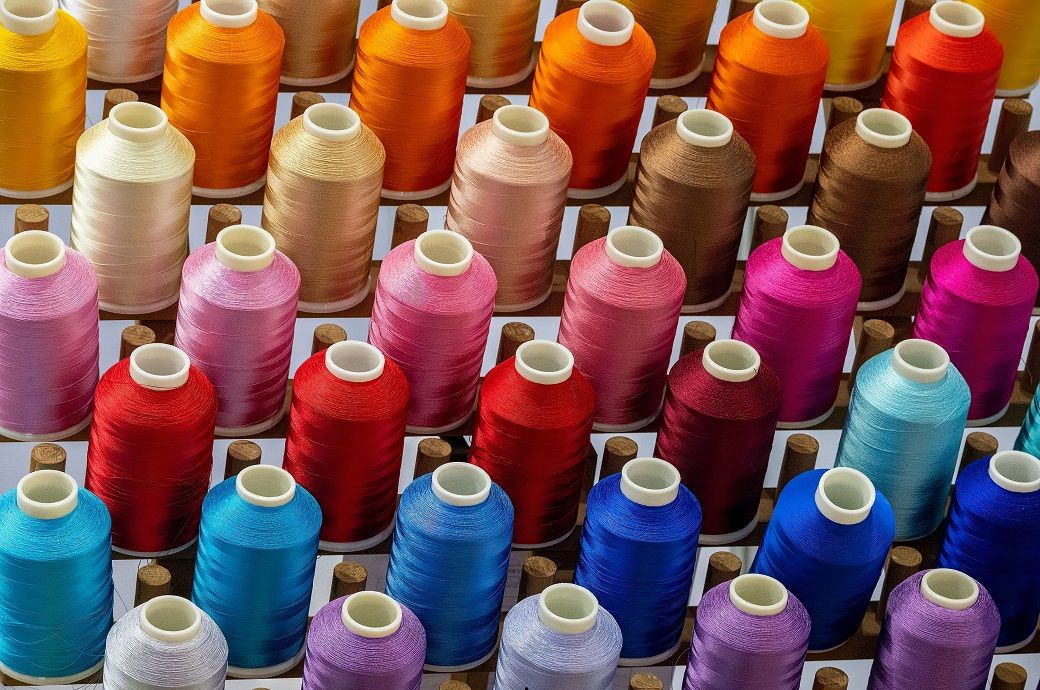
Following earlier increases in purified terephthalic acid (PTA), melt and PSF, Indian producers have now raised PFY prices. POY, FDY and PTY prices have been increased by ****;* per kg across all deniers and lustres with effect from March *, reflecting rapid cost pass-through amid heightened volatility in crude-linked value chains, according to the market sources.
In the previous weekly revision effective February **, ****, PTA was increased by ****;*.** per kg to ****;**.** per kg, while monoethylene glycol (MEG) was retained at ****;**.** per kg. Polyester melt prices were raised by ****;*.** per kg to ****;**.** per kg. Downstream PSF prices were also revised upward by ****;*.** per kg from March *.


MLB Rank 2026: Ranking baseball’s top 100 players

How many countries has US bombed since 9/11, and what has it cost?

Google’s Pixel 10a May Not Be Exciting, but It’s Still an Unbeatable Value

India Us Trade Deal: Fresh look at India-US trade deal? May be ‘rebalanced’ if circumstances change, says Piyush Goyal – The Times of India

Households set for lower energy bills amid price cap shake-up

What are Iran’s ballistic missile capabilities?

-
Business5 days ago
India Us Trade Deal: Fresh look at India-US trade deal? May be ‘rebalanced’ if circumstances change, says Piyush Goyal – The Times of India
-
Business1 week ago
Households set for lower energy bills amid price cap shake-up
-
 Politics6 days ago
What are Iran’s ballistic missile capabilities?
-

 Politics7 days ago
US arrests ex-Air Force pilot for ‘training’ Chinese military
-

 Sports1 week ago
Top 50 USMNT players of 2026, ranked by club form: USMNT Player Performance Index returns
-
 Business6 days ago
Attock Cement’s acquisition approved | The Express Tribune
-

 Fashion6 days ago
Policy easing drives Argentina’s garment import surge in 2025
-

 Sports7 days ago
Sri Lanka’s Shanaka says constant criticism has affected players’ mental health