

Fashion
Nigerian designer pushes “Afro-lux” onto the global fashion scene

By
AFP
Published
August 28, 2025
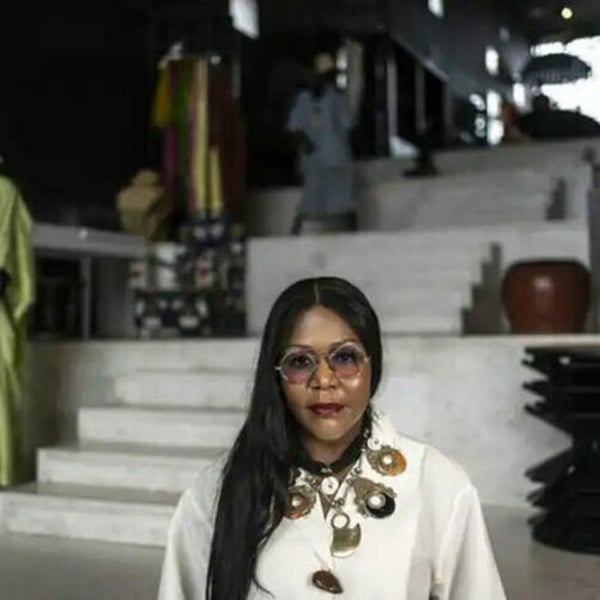
Its striking architecture, framed by latticework inspired by traditional Yoruba textiles, makes Alara — west Africa’s first fashion and design “concept store” — an imposing landmark in Lagos, Nigeria’s bustling commercial capital.
Founded by Reni Folawiyo a decade ago, Alara embodies her vision of “Afro-lux,” a concept she defines as designs that balance tradition with modernity while positioning African fashion on the global stage.
Inside the store, upscale African labels share space with international brands, decorative art, and books — part of Folawiyo’s mission to place African creativity on equal footing with established global names. The building’s distinctive lattice is inspired by adire, a textile popular among the Yoruba people of southwest Nigeria.
“A lot of the beautiful things that people were making in different parts of Africa were not celebrated in the way that I thought they should be,” said the 60-year-old, explaining how rural craftsmanship often inspires Alara’s collections. “I felt very strongly in my belief that these objects and these people had value.”
Music stars become style ambassadors
West African design is experiencing a cultural moment, Folawiyo noted in an interview in Lagos, where she wore sunglasses with vivid pink lenses.
In May, Nigerian music stars Burna Boy, Tems, and Ayra Starr appeared at New York’s Met Gala, dressed by British-Ghanaian designer Ozwald Boateng.
But for Folawiyo, global recognition requires more than occasional runway appearances. “At the moment, the best way to platform designers outside Africa is to partner and collaborate with institutions that are of repute,” she said, citing her recent pop-up store and exhibition at the Brooklyn Museum and a collaboration with the Los Angeles County Museum of Art.
Drawing from her Yoruba heritage — with its intricate textiles, bold colors, and elaborate ceremonies — Folawiyo also finds inspiration in Senegal’s rugged aesthetics and the Ivory Coast’s refined sophistication. “Alara is my own idea of what a celebration of Africa looks like,” she said.
Culture through cuisine
Behind the boutique lies NOK, a restaurant led by executive chef Pierre Thiam, the Senegalese culinary pioneer who has brought west African food to U.S. diners.
While still high-end, NOK offers more accessible prices than Alara’s fashion and design pieces — a delicate balance in a country marked by extremes: wealthy elites in the oil and tech sectors, a shrinking middle class strained by inflation, and millions of informal workers.
Amid Alara’s stark interior of black walls and white concrete, luxury items stand out as bold statements. A green dress by Nigerian label Eki Kere carries a price tag of 325,000 naira (around $210), while a sculptural table from Senegalese-Nigerian studio Salu Iwadi can fetch up to ten times more, underscoring the store’s blend of accessible fashion and high-end design.
Folawiyo herself comes from Lagos’s elite, as the wife of businessman Tunde Folawiyo and daughter of the late attorney general of Nigeria’s former Western Region, Lateef Adegbite.
But building her vision of African luxury was not easy. Convincing investors and partners to believe in “Afro-lux” proved challenging. “I was very committed to it and I had great belief in myself and my idea,” she said.
Now firmly established in Nigeria, Folawiyo also organizes international fashion showcases, including at Barbados’s Carifesta XV this month. But for her, the industry’s long-term success depends on “passing on knowledge to future generations.”
Copyright © 2025 AFP. All rights reserved. All information displayed in this section (dispatches, photographs, logos) are protected by intellectual property rights owned by Agence France-Presse. As a consequence you may not copy, reproduce, modify, transmit, publish, display or in any way commercially exploit any of the contents of this section without the prior written consent of Agence France-Presses.












“We are thrilled to welcome Erinn Murphy to Kontoor Brands,” said executive vice president, chief financial officer & global head of operations, Joe Alkire. “Having led investor relations and corporate strategy from within a high-growth consumer brand and nearly twenty years of experience covering global lifestyle brands as a respected senior equity analyst, she understands what drives long-term value creation from every angle. Her perspective will expand the operational and strategic depth of the Helly Hansen leadership team as we focus on accelerating growth and expanding the brand’s global reach, while also strengthening how Kontoor engages with the investment community.”
Kontoor Brands has named Erinn Murphy VP, global head of finance & operations for Helly Hansen and Corporate Investor Relations, starting May in Oslo.
She joins from Crocs, Inc., bringing nearly two decades of experience across investor relations, strategy and equity research.
Michael Karapetian will expand his role and return in Q3 2026 to support transition and investor engagement.
Murphy joins Kontoor from Crocs, Inc., a global leader in innovative casual footwear, where she served as Senior Vice President, Investor Relations and Corporate Strategy. Prior to that, she served as Managing Director of Consumer Equity Capital Markets for leading investment bank, Piper Sandler. She was recently appointed as a member of the board of directors for Revolve Group, Inc. (NYSE: RVLV).
Murphy’s appointment coincides with an expanded role for Michael Karapetian, who will serve as Vice President, Global Brand & Operations Finance and Corporate Investor Relations, with responsibility for all aspects of global brand and supply chain finance and corporate investor relations. Karapetian will return from his international assignment at Helly Hansen in the third quarter of 2026 to allow for a transition period.
Note: The headline, insights, and image of this press release may have been refined by the Fibre2Fashion staff; the rest of the content remains unchanged.
Fibre2Fashion News Desk (RM)
The group reported first-quarter (Q1) 2026 revenue of €3,568 million (~$4,210.24 million), down 6 per cent year-over-year (YoY) on a reported basis but stable on a comparable basis, signalling early signs of recovery despite geopolitical pressures.
Kering’s Q1 2026 revenue reached €3,568 million (~$4,210.24 million), down 6 per cent YoY but stable comparably, signalling early recovery.
Retail fell 2 per cent, while wholesale rose 6 per cent.
Fashion & Leather Goods sales went down 9 per cent.
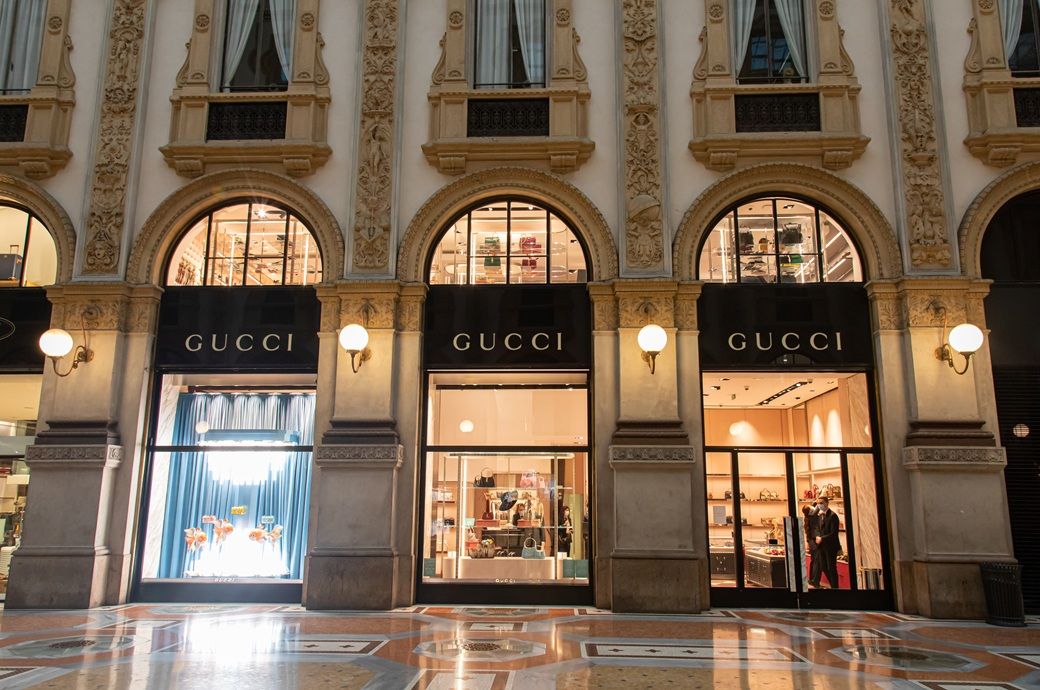
Gucci declined 14 per cent to €1,347 million (~$1,589.46 million).
Middle East retail dropped 11 per cent, contributing 5 per cent of sales.
“In the first quarter of 2026, group revenue stabilised, marking an important first step in our recovery and a further sequential improvement. This performance reflects the first tangible effects of our actions, despite a challenging geopolitical environment,” said Luca de Meo, CEO of Kering.
Retail sales, including e-commerce, declined 2 per cent on a comparable basis, reflecting uneven regional demand. Wholesale revenue rose 6 per cent, Kering said in a press release.
Kering’s Fashion & Leather Goods posted a revenue of €2,852 million, down 9 per cent reported and 3 per cent comparable. Direct retail sales fell 4 per cent. Growth was driven by Saint Laurent, Bottega Veneta, Balenciaga and Brioni, particularly in North America.
Saint Laurent saw strong traction in shoes and ready-to-wear, while Bottega Veneta performed well in Asia-Pacific. Balenciaga continued to benefit from leather goods demand, and Brioni maintained positive momentum. Wholesale revenue for the segment increased 2 per cent.
Gucci posted €1,347 million (~$1,589.46 million) in revenue, down 14 per cent reported and 8 per cent comparable. Retail sales declined 9 per cent. North America grew 8 per cent, but this was offset by declines in Asia-Pacific and Western Europe.
“Gucci remains our top priority. A comprehensive turnaround is underway, with decisive actions across client, distribution and, above all, the offer,” added de Meo. “We have reset the product architecture and strengthened category focus, with new collections rolling out progressively in stores throughout the year.”
Regionally, the Middle East remains a key area of focus, contributing around 5 per cent of retail revenue. The Group operates 79 stores and employs approximately 1,100 people in the region. Retail revenue there declined 11 per cent in Q1 following earlier growth, amid geopolitical tensions. However, all stores are currently operational.
Kering continued to strengthen its operational structure and growth platforms during the quarter.
“The first quarter of 2026 marked continued progress, as we executed with pace and focus. We have launched a Group platform designed to support the growth of our Houses and enhance efficiency,” said de Meo.
Kering remains focused on restoring growth and improving margins in 2026 through disciplined execution and strategic repositioning.
Fibre2Fashion News Desk (SG)
The May 2026 contract settled at 75.11 cents per pound, up 0.77 cent or 1 per cent. The most traded contract of July 2026 rallied 0.90 cent or 1.20 per cent to settle at 77.42 cents per pound. It had touched an intraday high of 77.75 cents, marking its highest level since July 2024. Other contracts also rose to reach a high level.
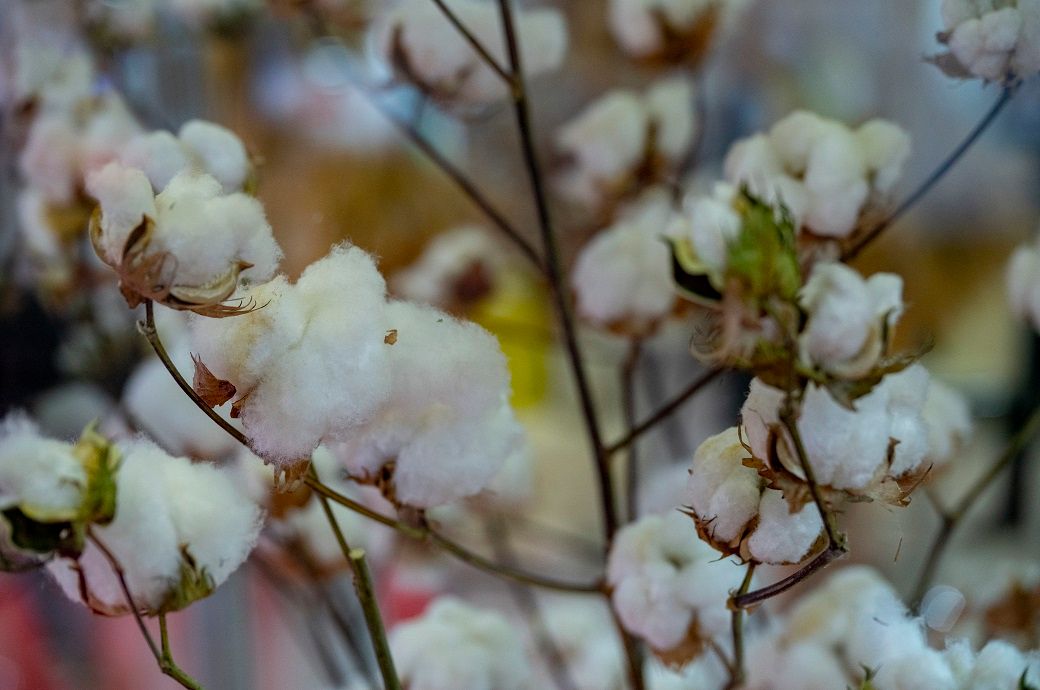
ICE cotton surged to a 22-month high, led by a weaker US dollar, firm crude oil and drought concerns in key US regions.
The July 2026 contract hit its highest since July 2024.
Strong trading volumes and rising synthetic fibre costs supported demand, while weather risks and macro factors kept market sentiment firmly bullish.
Deliverable stocks remained unchanged, signalling tight supply conditions.
Total trading volume was recorded at 98,489 contracts, reflecting strong participation and sustained buying interest.
Crude oil prices remained firm as supply disruption concerns persisted due to ongoing geopolitical tensions involving Iran. Markets reacted to mixed signals after statements indicating a possible end to the US-Iran conflict, but uncertainty kept oil prices supported. The conflict has effectively disrupted flows through the Strait of Hormuz, which handles nearly 20 per cent of global oil and gas shipments along with key commodities like fertilisers. Elevated crude oil prices are increasing polyester fibre production costs, thereby supporting cotton demand as a substitute fibre.
The US dollar index edged lower and traded in a narrow range as investors assessed the likelihood of renewed US-Iran negotiations. A weaker dollar made US cotton more competitive in global markets, providing additional support to export demand.
According to market analysts, high crude oil prices and rising synthetic fibre costs are key drivers supporting the cotton market, along with the impact of a weaker dollar.
The ongoing drought conditions in the United States also continued to pose risks to crop development unless weather conditions improve. Weather conditions in major US cotton-producing regions remain dry, reinforcing concerns over crop health, yield potential, and overall supply outlook.
ICE data showed that deliverable No. 2 cotton futures stocks remained unchanged at 159,512 bales as of April 14.
Broader financial markets showed strength, with the S&P 500 and Nasdaq closing at record highs driven by strong corporate earnings and optimism around geopolitical developments. CBOT wheat futures rose for the third consecutive session and have gained nearly 4 per cent so far this week due to drought conditions in the US Plains impacting crop prospects.
Cotton futures remain in a strong bullish phase with prices at multi-month highs, supported by macroeconomic factors such as a weaker dollar and firm crude oil, along with fundamental support from adverse US weather conditions. Market sentiment continues to favour further upside in the near term.
This morning (Indian Standard Time), ICE cotton for May 2026 was trading at 75.98 cents per pound (up 0.87 cent), cash cotton at 73.11 cents (up 0.77 cent), the July 2026 contract at 78.32 cents (up 0.90 cent), the October 2026 contract at 78.94 cents (up 1.37 cent), the December 2026 contract at 79.10 cents (up 0.75 cent) and the March 2027 contract at 79.85 cents (up 0.66 cent). A few contracts remained at their previous closing levels, with no trading recorded so far today.
Fibre2Fashion News Desk (KUL)

Netflix co-founder Reed Hastings to step down as chairman

N.J. governor: FIFA should pay extra train costs to MetLife for World Cup

Bryan Cranston takes a jab at Shia LaBeouf: ‘Get Some Help’

-

 Entertainment1 week ago
Queen Elizabeth II emotional message for Archie, Lilibet sparks speculation
-

 Tech1 week ago
Azure customers up in arms over ‘full’ UK South region | Computer Weekly
-
 Tech1 week ago
As the Strait of Hormuz Reopens, Global Shipping Will Take Months to Recover
-

 Fashion1 week ago
CII submits 20-pt agenda to Indian govt to back firms hit by Iran war
-

 Tech1 week ago
This AI Button Wearable From Ex-Apple Engineers Looks Like an iPod Shuffle
-

 Politics7 days ago
Indian airlines hit hardest after Dubai limits foreign flights until May 31
-

 Entertainment4 days ago
Palace left in shock as Prince William cancels grand ceremony
-

 Politics6 days ago
Chinese, Taiwanese will unite, Xi tells Taiwan opposition leader