

Business
CDC takes down more than a dozen webpages on sexual and gender identity, health equity


A sign for the CDC sits outside of their facility at the Centers for Disease Control and Prevention Roybal campus in Atlanta, Georgia, U.S., May 30, 2025.
Megan Varner | Reuters
More than a dozen pages on the Centers for Disease Control and Prevention website related to sexual and gender identity, health equity, and other topics have been taken down, CNBC has learned.
The CDC received a directive from the Health and Human Services Department, which oversees the agency, to remove certain webpages by the end of the day Sept. 19, according to an internal CDC email viewed by CNBC, which was sent that day to some employees whose work is related to the pages.
The pages include one about sexually transmitted infections and gay men, another about healthy equity for people with disabilities, and additional fact sheets on asexuality and bisexuality. Some health equity advocates say removing such resources could create gaps in access to critical health information, especially for marginalized groups, and undermine efforts to promote equitable care.
The removal of “critical materials from trusted government resources endangers the health of patients and the public,” a spokesperson for the LBGT PA Caucus, a nonprofit promoting LGBTQ+ health-care equity, said in a statement.
“Stripping away resources on gender identity does not erase the need, it only erodes trust, creates confusion, and places patients at greater risk,” the spokesperson said. “Clinicians and the communities they serve rely on accessible, accurate, and inclusive guidance to deliver safe and effective care.”
The email did not provide details on why HHS directed the CDC to remove the pages or why it targeted certain topics. But the topics of some of the resources taken down are longtime targets of the Trump administration, which has issued a series of executive actions that limit transgender and nonbinary people’s rights and rolled back efforts to increase diversity, equity and inclusion.
In a statement, an HHS spokesperson said the “CDC continues to align their website with Administration priorities and Executive Orders.” The CDC directed CNBC to HHS for comment.
CDC web page on health equity for people with disabilities was online on Aug. 27, according to the Wayback Machine, but is offline as of Sept. 26.
CDC website, Wayback Machine
It’s not the first time that the administration has targeted health resources on federal agency websites.
Thousands of pages across websites for the CDC and Food and Drug Administration, among other agencies, were abruptly pulled down beginning in late January under President Donald Trump‘s executive order barring references to gender identity in federal policies and documents. In February, a federal judge ordered HHS, the CDC and FDA to temporarily restore public access to the pages while litigation moves forward.
That same judge ruled in July that the government unlawfully ordered the mass removal of health resources from federal sites and required agencies to review and restore the affected pages. Following that ruling, the Trump administration reported to the court on Sept. 19 that most agencies have finished restoring the pages, with 185 back in compliance and only 11 CDC pages still under review, according to court documents. It is unclear how many of the pages taken down this month were at issue in the lawsuit.
It is unclear which pages were still under review as of Sept. 19, and why the CDC took down more pages on that same day following the ruling.
Attached to the internal CDC email was a spreadsheet of more than a dozen pages that the agency said had been taken down as of Sept. 19. A separate spreadsheet compiled by agency employees and viewed by CNBC included an additional site that appears to be offline.
CNBC verified that the following pages are now offline. The digital archive site Wayback Machine also shows when they were last active. Several pages were online as recently as early September, according to Wayback Machine, but it is unclear when the CDC officially removed all of them.
Some pages listed on the spreadsheet attached to the internal CDC email are still online. That includes a page that monitors laboratory-confirmed hospitalizations among children and adults associated with respiratory syncytial virus.









Last Updated:
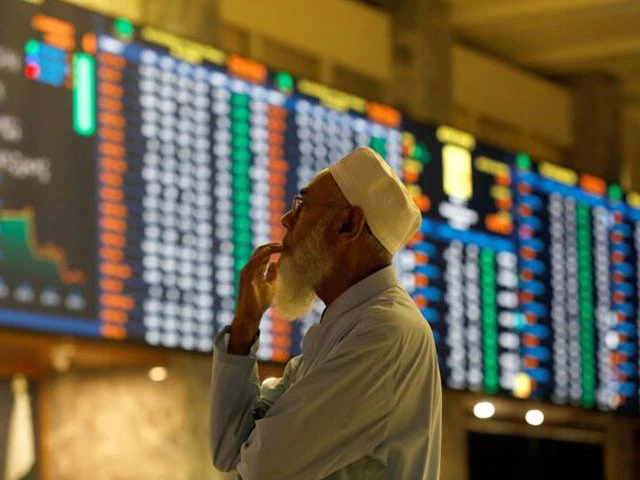
India’s Sensex and Nifty correct 6-7%, with 80% of stocks in bear territory. Monarch AIF reports 64% of stocks over Rs 1,000 crore market cap has fallen 30%.




Hundreds of midcap and smallcap companies have quietly lost significant value.
India’s benchmark indices may not show it, but a large part of the market is already in deep correction. According to a report by Monarch AIF, while the Sensex and Nifty have corrected only about 6-7 per cent from their record highs, nearly 80 per cent of listed stocks are already in bear market territory.
The data highlights a sharp divergence between headline indices and the broader market.
Majority of Stocks Deep In Correction
The report analysed companies with a market capitalisation above Rs 1,000 crore.
It found that over 64 per cent of these stocks have fallen more than 30 per cent from their all-time highs. Nearly 78 per cent have declined over 20 per cent.
In simple terms, most stocks in the market have already seen a brutal correction even though benchmark indices remain relatively elevated.
This unusual divergence has been playing out for the past 18 months.
Why Indices Are Still Holding Up
According to the report, Indian markets are witnessing a rare phase of simultaneous time and value correction.
A narrow set of large-cap stocks has kept the benchmark indices elevated. Meanwhile, hundreds of midcap and smallcap companies have quietly lost significant value.
This has created a misleading picture where the indices appear stable but the broader market has been under sustained pressure.
Now A New Shock: Middle East War
The situation has become more complicated after the recent escalation in West Asia.
Following US-Israel strikes on Iran, global markets have turned volatile and crude oil prices have surged.
Amid these developments, the Sensex recently fell over 1,000 points, while the Nifty slipped below the 24,900 level.
For investors, the challenge is that a market already weakened by months of selling is now facing geopolitical risks and a potential oil shock.
Should Investors Buy Or Wait?
Aakash Shah, Technical Research Analyst at Choice Equity Broking, advised caution. “Amid persistent global uncertainties and elevated volatility, market participants are advised to maintain discipline and adopt a selective approach, focusing on fundamentally strong stocks during corrective phases. Fresh long positions should ideally be considered only after a decisive and sustained breakout above the 25,000 mark on the Nifty, which would signal improving sentiment and confirm the development of a stronger bullish structure,” he said.
Key Risk For India: Rising Oil
V K Vijayakumar, chief investment strategist at Geojit Investments, said the biggest concern for India is rising crude prices.
“With the war escalating and crude rising, markets are going into a period of heightened uncertainty. Nobody knows how long this conflict will go on and what will be the extent of the havoc it could wreck. From the perspective of India, which relies on imports for around 85% of her oil requirements, the real concern is the potential inflation and its consequences on economic growth. From the market perspective, the impact of potentially widening trade deficit, depreciating currency, higher inflation and perhaps lower growth is the real issue. If this fear materialises, corporate earnings will be impacted,” he said.
However, he added that the impact may be temporary if the conflict ends quickly.
“If it ends in, say 3 to 4 weeks, things will be back to normal,” he said.
Don’t Panic, Use Corrections
Despite the volatility, Vijayakumar advised investors not to panic. “Experience tells us that panicking and getting out of the market during uncertain times like these is not the right thing to do. Markets have an uncanny ability to surprise and climb all walls of worries,” he said.
According to him, investors with a long investment horizon and higher risk appetite can gradually accumulate quality stocks during corrections.
He added that sectors such as banking, pharmaceuticals, automobiles and defence may offer attractive long-term opportunities.
 Click here to add News18 as your preferred news source on Google.
Follow News18 on Google. Join the fun, play games on News18. Stay updated with all the latest business news, including market trends, stock updates, tax, IPO, banking finance, real estate, savings and investments. To Get in-depth analysis, expert opinions, and real-time updates. Also Download the News18 App to stay updated.
March 04, 2026, 13:39 IST
Read More
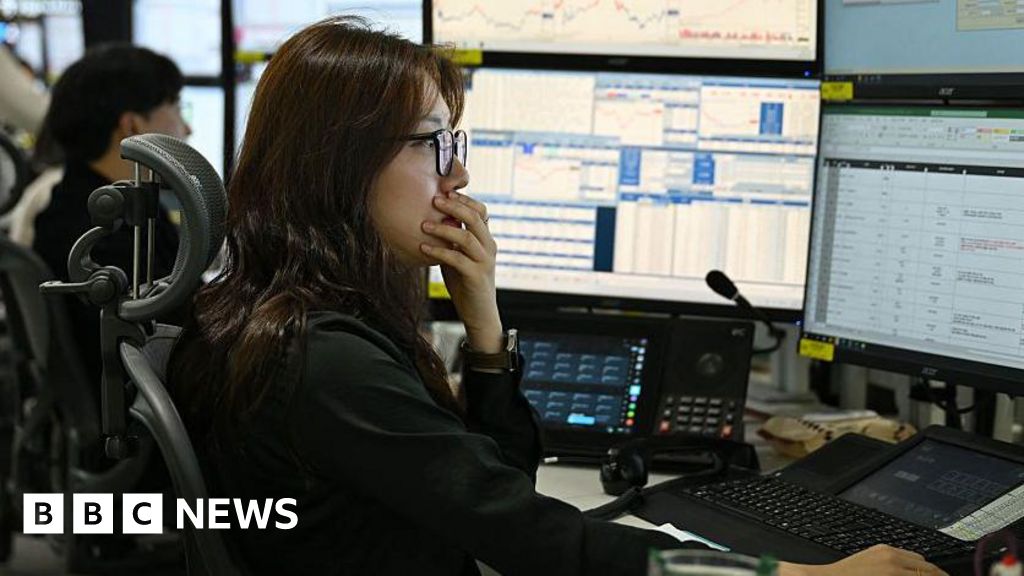
The conflict in the Middle East has rattled financial markets and global energy prices have soared.
Source link

Last Updated:
Petrol, Diesel Price On March 4: Check City-Wise Rates Across India Including In Delhi, Mumbai and Chennai.
Petrol, Diesel Prices On March 4.
Petrol and Diesel Prices on March 4, 2026: OMCs update petrol and diesel prices daily at 6 AM, aligning them with fluctuations in global crude oil prices and currency exchange rates. This daily revision promotes transparency and ensures consumers have access to the most up-to-date and accurate fuel prices.
Petrol Diesel Price Today In India
Check city-wise petrol and diesel prices on March 4:
| City | Petrol (₹/L) | Diesel (₹/L) |
|---|---|---|
| New Delhi | 94.72 | 87.62 |
| Mumbai | 104.21 | 92.15 |
| Kolkata | 103.94 | 90.76 |
| Chennai | 100.75 | 92.34 |
| Ahmedabad | 94.49 | 90.17 |
| Bengaluru | 102.92 | 89.02 |
| Hyderabad | 107.46 | 95.70 |
| Jaipur | 104.72 | 90.21 |
| Lucknow | 94.69 | 87.80 |
| Pune | 104.04 | 90.57 |
| Chandigarh | 94.30 | 82.45 |
| Indore | 106.48 | 91.88 |
| Patna | 105.58 | 93.80 |
| Surat | 95.00 | 89.00 |
| Nashik | 95.50 | 89.50 |
Key Factors Behind Petrol and Diesel Rates
Petrol and diesel prices in India have remained unchanged since May 2022, following tax reductions by the central and several state governments.
Oil Marketing Companies (OMCs) update fuel prices daily at 6 am, adjusting for fluctuations in global crude oil markets. While these rates are technically market-linked, they are also influenced by regulatory measures such as excise duties, base pricing frameworks, and informal price caps.
Key Factors Influencing Fuel Prices in India
-
Crude Oil Prices: Global crude oil prices are a primary driver of fuel prices, as crude is the main input in petrol and diesel production.
-
Exchange Rate: Since India relies heavily on crude oil imports, the value of the Indian rupee against the US dollar significantly affects fuel costs. A weaker rupee typically translates to higher prices.
-
Taxes: Central and state-level taxes constitute a major portion of retail fuel prices. Tax rates vary across states, leading to regional price differences.
-
Refining Costs: The cost of processing crude oil into usable fuel impacts retail prices. These costs can fluctuate depending on crude quality and refinery efficiency.
-
Demand-Supply Dynamics: Market demand also influences fuel pricing. Higher demand can push prices up as supply adjusts to consumption trends.
How to Check Petrol and Diesel Prices via SMS
You can easily check the latest petrol and diesel prices in your city through SMS. For Indian Oil customers, text the city code followed by “RSP” to 9224992249. BPCL customers can send “RSP” to 9223112222, and HPCL customers can text “HP Price” to 9222201122 to receive the current fuel prices.
Click here to add News18 as your preferred news source on Google.
Follow News18 on Google. Join the fun, play games on News18. Stay updated with all the latest business news, including market trends, stock updates, tax, IPO, banking finance, real estate, savings and investments. To Get in-depth analysis, expert opinions, and real-time updates. Also Download the News18 App to stay updated.
March 04, 2026, 07:33 IST
Read More


Transfer rumors, news: Man Utd, Chelsea, Liverpool eye USMNT star Adams
80% Stocks Already In Bear Market; Should You Buy The Dip Or Run For Safety?

Barkbox Offers: Themed Dog Toys, All-Natural Treats, and Subscription Deals

-
 Business1 week ago
Households set for lower energy bills amid price cap shake-up
-

 Politics6 days ago
US arrests ex-Air Force pilot for ‘training’ Chinese military
-

 Politics6 days ago
What are Iran’s ballistic missile capabilities?
-
 Business6 days ago
Attock Cement’s acquisition approved | The Express Tribune
-

 Fashion6 days ago
Policy easing drives Argentina’s garment import surge in 2025
-

 Sports1 week ago
Top 50 USMNT players of 2026, ranked by club form: USMNT Player Performance Index returns
-

 Sports6 days ago
Sri Lanka’s Shanaka says constant criticism has affected players’ mental health
-
 Business1 week ago
Lucid widely misses earnings expectations, forecasts continued EV growth in 2026