

Fashion
Chanel reinvents luxury experience at Shanghai’s Plaza 66: FashionNetwork.com exclusive


Published
November 21, 2025
With the addition of a new watches and fine jewellery space, Chanel has made a definitive statement on the future of luxury retail with the significant renovation of its landmark boutique at Shanghai’s Plaza 66. Going beyond a mere refresh, this strategic investment—described by an executive as an essential moment—solidifies the brand’s profound commitment to the Chinese market.
Chanel fashion and Chanel SAS’s president Bruno Pavlovsky, affirmed to FashionNetwork.com in an exclusive interview the location’s importance, calling it “one of the key boutiques that we have in the world.” The primary objective of the renovation is to optimise the client journey, adapting to the post-pandemic trend of clients returning to high-contact physical retail spaces.
The Plaza 66 boutique is positioned as Chanel’s strategic core in China, focusing intently on “offering the best of Chanel.” The location holds unparalleled strategic value, standing as one of Chanel’s most vital global boutiques, consistently ranking as one of the top-performing locations in the country, and situated in one of the most commercially active luxury malls.
Designed by renowned architect and long-time Chanel collaborator Peter Marino, this major renovation is a dynamic expression of Parisian refinement and house codes. The stunning, three-storey space offers a truly luxurious shopping experience, featuring expansive displays of ready-to-wear, bags, and shoes, and introducing a new, exclusive Watches & Fine Jewellery boutique.
The space is meticulously crafted to equally serve the brand’s two core client segments: established top clients and new patrons making a singular purchase. The aim is to ensure all visitors encounter the best service possible, a philosophy signifying the highest degree of sophisticated and meaningful brand engagement.

Chanel employs a differentiated strategy across its three key Shanghai locations—Plaza 66, IFC, and Peninsula—consciously avoiding a standardised approach. While Plaza 66 and IFC function as the primary high-traffic hubs, welcoming the majority of the brand’s clientele, the Peninsula location is positioned as a unique destination boutique. The latter store caters specifically to traveling VICs seeking a more intimate, less conventional experience, described metaphorically as a “little chain” to connect with these clients. The unifying principle across the entire network is the “one boutique is one story” model, which ensures that each location narrates a distinct, city-relevant narrative, reinforcing its role as an experience generator rather than a simple replication.
The brand’s success is anchored in dual strategic pillars: innovation and emotion. Chanel firmly asserts it “never replicates” a boutique; and brings genuine value to the local context rather than engaging in a mere competition for size. “We never replicate,” said Pavlovsky. “Every market is a specific market with a dedicated brief. For each boutique, we sit down with Peter Marino and the team to ensure the design is adequate for that city and its context within the mall. We are not interested in competing to have the biggest boutique. Our focus is purely on what is best for our client—what are their expectations, and what do they want to see from Chanel. What we have achieved in China, through this dedicated approach, is our great fortune and the true centre of our success.”

This focus on bespoke design is also mirrored in the launch of the Chanel & Moi initiative, deemed “key” and “strategic” for cementing future client relationships. This program transforms previously “invisible” after-sales services into “visible” experiences, allowing clients to observe craftspeople and technicians working on their products. By validating the importance of the aftercare moment alongside the purchasing moment, the brand fosters long-term relationships built on trust and consideration, ensuring clients feel “taken into consideration,” beyond the initial sale.
Pavlovsky says, “The Chanel & Moi initiative is extremely important for us and for the House of Chanel. Previously, this essential service was largely invisible. By bringing everything under the Chanel & Moi banner, we aim to make this dedication to service visible to our clients, while simultaneously making our teams proud to deliver it.”
By fostering an environment where clients feel truly “taken into consideration,” this approach is earning deeper trust, allowing clients to feel comfortable raising concerns or discussing product changes. This positive shift is viewed not as an overnight transformation, but as a continuous “journey” that has placed the brand in a significantly better position than it occupied just two years ago, with continuous improvements expected in the coming years.

The brand is confident that its current strategy is moving in the right direction, evidenced by its visible results. Crucially, this positive momentum is heavily amplified by the Chinese market, where the local team is lauded as a “super activator.” This team’s exceptional ability to implement and embody the client-centric strategy ensures that the desired level of customer engagement is being realised efficiently. In summation, Chanel is relying on sustained effort, the strategic visibility of its services, and superior local execution in markets like China to build stronger, deeper client relationships that secure its position for the future.
Chanel maintains an optimistic outlook for the remainder of 2025 and into 2026, driven by its positive business performance. However, according to Pavlovsky, the brand’s formula for sustained success is measured overwhelmingly by client experience and satisfaction. He highlights that offering the best experience makes the sales process a “follower”—meaning revenue naturally tails exceptional service.
Consequently, Chanel’s strategy is focused on consistently delivering superior engagement and products to reinforce the brand’s unique identity in fashion and luxury. Despite facing an economic environment that is “not always easy,” Pavlovsky is confident in the performance of the Chanel teams, making their positive forecast for the future robust.
By Sissi Chu
Copyright © 2025 FashionNetwork.com All rights reserved.











Total apparel shipments fell by 2.66 per cent year on year to $425.44 million in January 2026, compared with $437.07 million in the corresponding month of 2025. The performance underscored uneven global demand conditions that continue to influence sourcing patterns and order flows for Sri Lankan manufacturers.
Sri Lanka’s apparel exports declined 2.66 per cent YoY to $425.44 million in January 2026 amid weak global demand.
Shipments to the US and EU softened, while the UK remained stable with slight growth.
Other markets saw sharper contraction.
JAFF highlighted DCTS benefits and tariff changes while suggesting diversification and efficiency to sustain competitiveness.
Exports to the United States, the country’s largest market, decreased by 2.73 per cent to $165.11 million, while shipments to the European Union excluding the United Kingdom, declined by 1.93 per cent to $126.99 million. In contrast, exports to the UK remained broadly stable, rising marginally by 0.23 per cent to $61.71 million. Apparel shipments to other markets dropped more sharply by 6.07 per cent to $71.63 million.
JAAF noted that the UK’s steady performance offers a constructive signal for the sector, particularly as the revised Developing Countries Trading Scheme (DCTS), effective January 1, 2026, is expected to enhance sourcing flexibility and strengthen Sri Lanka’s competitive position in the British market.
The industry body also highlighted the introduction of a uniform 10 per cent temporary tariff in the US market as a relatively supportive development, reducing the impact of previously higher country-specific rates and providing greater short-term pricing predictability for exporters.
Commenting on the January outcome, JAAF said the moderate decline reflects ongoing volatility in global demand. The association emphasised that the industry remains committed to reinforcing resilience through market diversification, product innovation and operational efficiency, while collaborating with stakeholders to sustain Sri Lanka’s standing as a reliable apparel sourcing destination.
Fibre2Fashion News Desk (KUL)
Profitability remained robust despite a more challenging trading backdrop. Group EBIT stood at €913.4 million, broadly stable year on year (YoY), translating into a 29.2 per cent margin versus 29.5 per cent in FY24. Net profit reached €626.7 million compared with €639.6 million a year earlier, reflecting higher net financial expenses, while maintaining a 20 per cent margin.
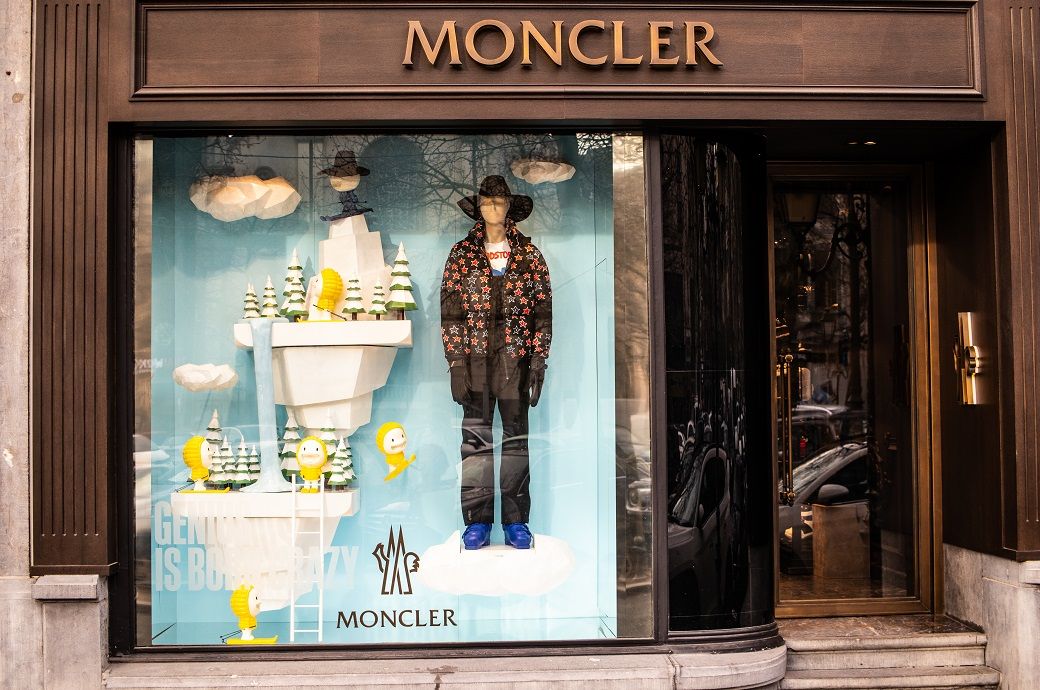
Moncler has reported revenues of €3.13 billion (~$3.69 billion) in FY25, up 3 per cent at constant exchange rates, with net profit of €626.7 million (~$739.5 million).
Asia led regional growth, while DTC channels strengthened across brands.
Q4 revenues rose 7 per cent, driven by robust Moncler and Stone Island performance, as the group prepares for continued investment and leadership transition.
Regionally, the group recorded strong momentum in Asia, where revenues rose 7 per cent at constant exchange rates to €1.42 billion, supported by demand in China and Korea and a recovery in tourist flows. The Americas increased 5 per cent to €391.1 million, whereas Europe, Middle East and Africa (EMEA) declined 3 per cent amid subdued tourism-related traffic, Moncler said in a press release.
Channel performance highlighted the continued shift towards direct engagement. Moncler’s direct-to-consumer (DTC) revenues rose 4 per cent to €2.36 billion, accounting for nearly 87 per cent of brand sales, while wholesale declined 4 per cent as the group continued to enhance distribution quality. Stone Island’s DTC channel expanded 11 per cent to €226.4 million, whereas wholesale decreased 4 per cent.
The group’s financial position strengthened further, with net cash reaching €1.46 billion at year-end after dividend payments of €353.2 million. The board proposed a dividend of €1.4 per share and approved the consolidated sustainability statement.
Remo Ruffini, chairman and CEO of Moncler, said: “Moncler and its board of directors wish to express their most sincere thanks to Gabriele Galateri di Genola for his dedication and the highly valuable contribution he has made throughout his more than ten-year term of office. His significant experience, the vision developed over many years in senior leadership positions at leading industrial and financial organisations, as well as his constant commitment to good governance, have represented a key point of reference for our work. With gratitude, we extend our best wishes to Gabriele Galateri di Genola for the future.”
In the fourth quarter (Q4), the group delivered accelerated momentum, with revenues rising 7 per cent at constant exchange rates to €1.29 billion (~$1.52 billion). Moncler brand revenues reached €1.17 billion, up 6 per cent, while Stone Island posted €123.1 million, surging 16 per cent with double-digit growth across all regions.
Moncler’s DTC channel advanced 7 per cent despite a demanding comparable base in the quarter, supported by Asia and the Americas, while wholesale returned to growth, rising 2 per cent. Stone Island recorded broad-based acceleration, with DTC revenues increasing 16 per cent and wholesale climbing 17 per cent, partly reflecting delivery timing shifts from the previous quarter.
Looking ahead, the group emphasised continued investment in brand development and organisational strengthening, including the appointment of Leo Rongone as group chief executive officer from April 2026, as it seeks to sustain long-term growth and value creation.
Fibre2Fashion News Desk (SG)

OpenAI Fires an Employee for Prediction Market Insider Trading
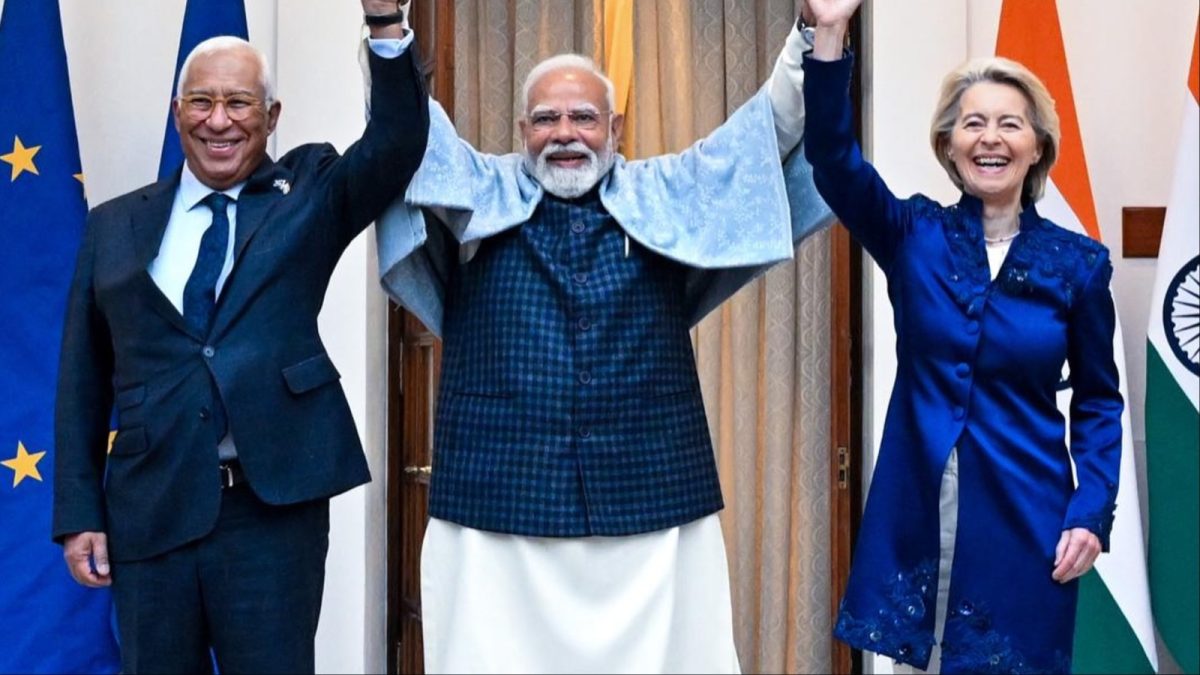
India, EU Commit To Provide Most-Favoured Nation Treatment For 5 Yrs, Shows Provisional FTA Text

Fino Payments Bank MD Rishi Gupta Arrested; CFO Ketan Merchant Named Interim Head

A $10K Bounty Awaits Anyone Who Can Hack Ring Cameras to Stop Sharing Data With Amazon
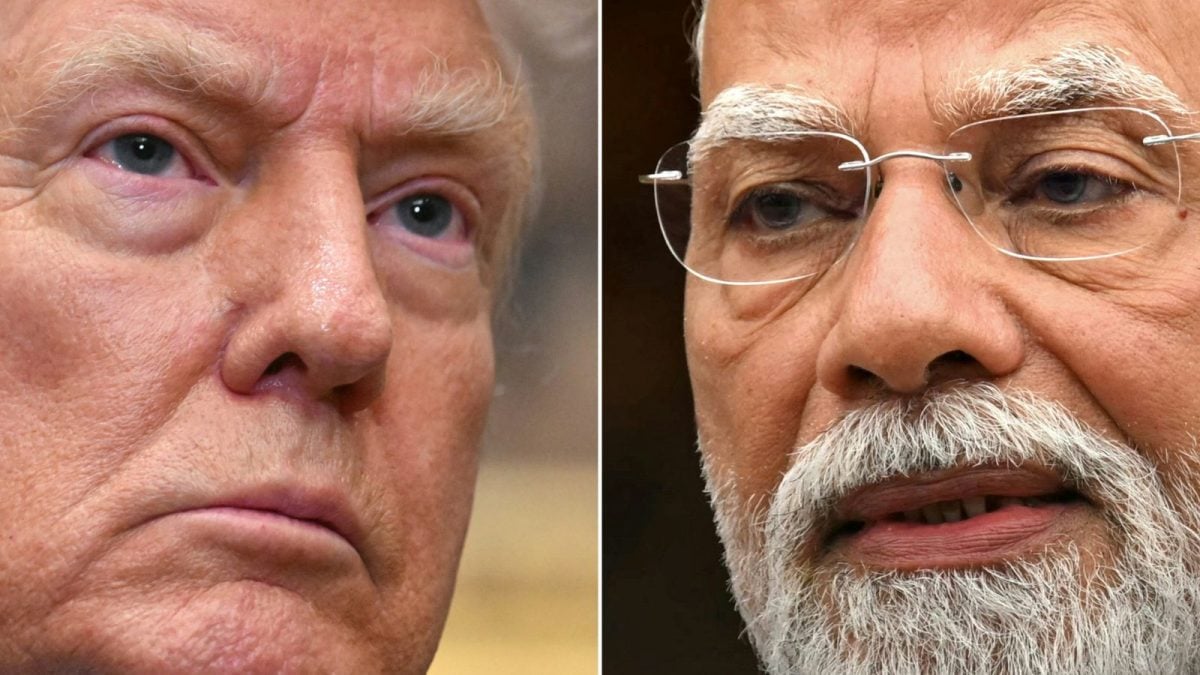
US Top Court Blocks Trump’s Tariff Orders: Does It Mean Zero Duties For Indian Goods?

Donald Trump Jr.’s Private DC Club Has Mysterious Ties to an Ex-Cop With a Controversial Past

-
 Tech1 week ago
A $10K Bounty Awaits Anyone Who Can Hack Ring Cameras to Stop Sharing Data With Amazon
-
Business1 week ago
US Top Court Blocks Trump’s Tariff Orders: Does It Mean Zero Duties For Indian Goods?
-
 Tech1 week ago
Donald Trump Jr.’s Private DC Club Has Mysterious Ties to an Ex-Cop With a Controversial Past
-

 Fashion1 week ago
ICE cotton ticks higher on crude oil rally
-
 Fashion1 week ago
India’s $28 bn reset: How 5 trade deals will reprice its T&A exports
-

 Entertainment1 week ago
The White Lotus” creator Mike White reflects on his time on “Survivor
-
 Politics1 week ago
US Supreme Court strikes down Trump’s trade tariff measures
-
 Business6 days ago
Eye-popping rise in one year: Betting on just gold and silver for long-term wealth creation? Think again! – The Times of India