

Fashion
Chanel reinvents luxury experience at Shanghai’s Plaza 66: FashionNetwork.com exclusive


Published
November 21, 2025
With the addition of a new watches and fine jewellery space, Chanel has made a definitive statement on the future of luxury retail with the significant renovation of its landmark boutique at Shanghai’s Plaza 66. Going beyond a mere refresh, this strategic investment—described by an executive as an essential moment—solidifies the brand’s profound commitment to the Chinese market.
Chanel fashion and Chanel SAS’s president Bruno Pavlovsky, affirmed to FashionNetwork.com in an exclusive interview the location’s importance, calling it “one of the key boutiques that we have in the world.” The primary objective of the renovation is to optimise the client journey, adapting to the post-pandemic trend of clients returning to high-contact physical retail spaces.
The Plaza 66 boutique is positioned as Chanel’s strategic core in China, focusing intently on “offering the best of Chanel.” The location holds unparalleled strategic value, standing as one of Chanel’s most vital global boutiques, consistently ranking as one of the top-performing locations in the country, and situated in one of the most commercially active luxury malls.
Designed by renowned architect and long-time Chanel collaborator Peter Marino, this major renovation is a dynamic expression of Parisian refinement and house codes. The stunning, three-storey space offers a truly luxurious shopping experience, featuring expansive displays of ready-to-wear, bags, and shoes, and introducing a new, exclusive Watches & Fine Jewellery boutique.
The space is meticulously crafted to equally serve the brand’s two core client segments: established top clients and new patrons making a singular purchase. The aim is to ensure all visitors encounter the best service possible, a philosophy signifying the highest degree of sophisticated and meaningful brand engagement.

Chanel employs a differentiated strategy across its three key Shanghai locations—Plaza 66, IFC, and Peninsula—consciously avoiding a standardised approach. While Plaza 66 and IFC function as the primary high-traffic hubs, welcoming the majority of the brand’s clientele, the Peninsula location is positioned as a unique destination boutique. The latter store caters specifically to traveling VICs seeking a more intimate, less conventional experience, described metaphorically as a “little chain” to connect with these clients. The unifying principle across the entire network is the “one boutique is one story” model, which ensures that each location narrates a distinct, city-relevant narrative, reinforcing its role as an experience generator rather than a simple replication.
The brand’s success is anchored in dual strategic pillars: innovation and emotion. Chanel firmly asserts it “never replicates” a boutique; and brings genuine value to the local context rather than engaging in a mere competition for size. “We never replicate,” said Pavlovsky. “Every market is a specific market with a dedicated brief. For each boutique, we sit down with Peter Marino and the team to ensure the design is adequate for that city and its context within the mall. We are not interested in competing to have the biggest boutique. Our focus is purely on what is best for our client—what are their expectations, and what do they want to see from Chanel. What we have achieved in China, through this dedicated approach, is our great fortune and the true centre of our success.”

This focus on bespoke design is also mirrored in the launch of the Chanel & Moi initiative, deemed “key” and “strategic” for cementing future client relationships. This program transforms previously “invisible” after-sales services into “visible” experiences, allowing clients to observe craftspeople and technicians working on their products. By validating the importance of the aftercare moment alongside the purchasing moment, the brand fosters long-term relationships built on trust and consideration, ensuring clients feel “taken into consideration,” beyond the initial sale.
Pavlovsky says, “The Chanel & Moi initiative is extremely important for us and for the House of Chanel. Previously, this essential service was largely invisible. By bringing everything under the Chanel & Moi banner, we aim to make this dedication to service visible to our clients, while simultaneously making our teams proud to deliver it.”
By fostering an environment where clients feel truly “taken into consideration,” this approach is earning deeper trust, allowing clients to feel comfortable raising concerns or discussing product changes. This positive shift is viewed not as an overnight transformation, but as a continuous “journey” that has placed the brand in a significantly better position than it occupied just two years ago, with continuous improvements expected in the coming years.

The brand is confident that its current strategy is moving in the right direction, evidenced by its visible results. Crucially, this positive momentum is heavily amplified by the Chinese market, where the local team is lauded as a “super activator.” This team’s exceptional ability to implement and embody the client-centric strategy ensures that the desired level of customer engagement is being realised efficiently. In summation, Chanel is relying on sustained effort, the strategic visibility of its services, and superior local execution in markets like China to build stronger, deeper client relationships that secure its position for the future.
Chanel maintains an optimistic outlook for the remainder of 2025 and into 2026, driven by its positive business performance. However, according to Pavlovsky, the brand’s formula for sustained success is measured overwhelmingly by client experience and satisfaction. He highlights that offering the best experience makes the sales process a “follower”—meaning revenue naturally tails exceptional service.
Consequently, Chanel’s strategy is focused on consistently delivering superior engagement and products to reinforce the brand’s unique identity in fashion and luxury. Despite facing an economic environment that is “not always easy,” Pavlovsky is confident in the performance of the Chanel teams, making their positive forecast for the future robust.
By Sissi Chu
Copyright © 2025 FashionNetwork.com All rights reserved.












The company said the agreement marks a key milestone in its transformation journey, reflecting continued support from capital partners.
Saks Global has secured $500 million in exit financing under a restructuring support agreement as it progresses through Chapter 11, targeting emergence by summer.
The company is advancing its reorganisation plan, strengthening brand partnerships and inventory flows, with over 650 brands resuming shipments.
Improved inventory has boosted customer engagement, while it aims for double-digit EBITDA margins.
“Achieving this important milestone underscores the progress we are making on our transformation and reflects our capital partners’ confidence in our go-forward vision,” said Geoffroy van Raemdonck, CEO at Saks Global.
Saks Global is currently engaging with stakeholders on a formal Plan of Reorganisation, expected to be filed in the coming weeks. The retailer aims to emerge from Chapter 11 by summer with a strengthened financial structure, targeting double-digit adjusted EBITDA margins and long-term sustainable growth, the company said in a press release.
The company plans to leverage an integrated retail model, combining optimised physical stores in key luxury markets with distinct e-commerce platforms and remote selling capabilities. It also intends to enhance its curated product offering through stronger brand partnerships and deeper customer insights.
Operationally, Saks Global reported progress since filing for bankruptcy protection. Over 650 brand partners have resumed shipments, unlocking $1.5 billion in retail receipts and covering more than 90 per cent of expected inventory for the first quarter of fiscal 2026. March inventory receipts rose 18 per cent year on year (YoY).
Improved inventory flow has translated into stronger customer engagement, with spend per store visit increasing 6 per cent and online conversion rising 11 per cent. The company also noted gains in full-price selling across its banners, including Saks Fifth Avenue, Neiman Marcus and Bergdorf Goodman.
“As we advance the restructuring process, our focus remains on strengthening brand relationships and delivering personalised luxury experiences,” added van Raemdonck, highlighting confidence in completing the restructuring with sufficient liquidity and positioning the business for future growth.
Fibre2Fashion News Desk (SG)

Following talks between his CDU party and its coalition partners, Chancellor Friedrich Merz said his government has decided to cut the tax on petrol and diesel by around 17 euro cents ($0.19) for two months.
Germany yesterday announced a €1.6-billion ($1.9-billion) fuel price relief package for households and businesses struggling with the energy shock triggered by the Middle East conflict.
Chancellor Friedrich Merz said his government has decided to cut the tax on petrol and diesel by around $0.19 for two months.
The funds for the relief measures would be financed by higher taxes on tobacco.
The announcement followed another surge in oil prices after the US-Iran peace talks collapsed and US President Donald Trump’s decision to blockade the Strait of Hormuz.
The war “is the root cause of the problems we face in our own country”, said Merz, stressing that Berlin is doing all it could to try to end the conflict.
“This will very quickly improve the situation for drivers and businesses in the country, and above all for those who, mainly for professional reasons, spend a great deal of time on the road,” he told a news conference in Berlin.
The funds for the relief measures would be financed by higher taxes on tobacco, a finance ministry spokesman was cited as saying by global newswires.
Employers can also pay staff tax-free bonuses of up to €1,000 ($1,170) to mitigate the impacts of inflation, which has already started rising in Germany, the government announced.
“At the same time, we cannot offset every single outcome on the market with government funds… The state cannot absorb all uncertainties, not all risks, not all disruptions in global politics,” Merz cautioned.
He said the war’s effects are likely to last long. “The German economy will face a significant burden over an extended period,” he added.
Fibre2Fashion News Desk (DS)
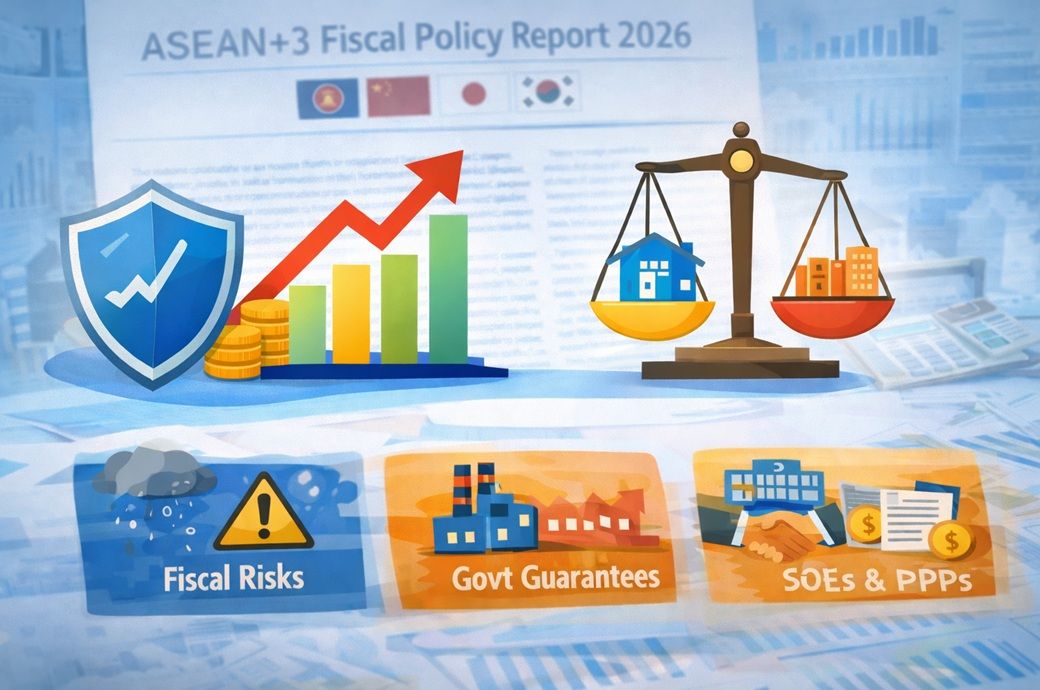
At the same time, growing demands on fiscal policy require governments not only to respond to immediate shocks, but also to support growth, facilitate structural transformation and reduce poverty and inequality over the medium to long term, it noted.
With fiscal positions weakened and policy space narrowed, ASEAN+3 policymakers must safeguard fiscal sustainability and rebuild buffers, the ASEAN+3 Fiscal Policy Report 2026 said.
Governments should also support growth, facilitate structural transformation and reduce poverty and inequality over the medium to long term, it noted.
Particular attention should be given to liabilities outside the budget.
ASEAN+3 comprises members of the Association of Southeast Asian Nations, along with China, South Korea and Japan.
These competing demands are compounded by sluggish revenue growth and rigid budget structures. Addressing these challenges will require stronger fiscal management frameworks, including improvements in risk management, fiscal aggregate management, strategic resource allocation, spending efficiency and revenue mobilisation.
The report also highlights the importance of comprehensive fiscal risk management, urging policymakers to strengthen the identification, assessment and disclosure of fiscal risks.
Particular attention should be given to liabilities outside the budget, including borrowing by off-budget public entities and government arrears.
Systematic monitoring and proactive management of contingent liabilities are essential, especially those related to government guarantees, public-private partnerships, state-owned enterprises and social security obligations, the report remarked.
Enhancing fiscal aggregate management, alongside improving strategic resource allocation and spending efficiency, will be critical to meeting rising expenditure demands in line with national priorities, while safeguarding fiscal sustainability and rebuilding buffers, it added.
The report further encourages policymakers to implement comprehensive and durable revenue-enhancing measures, including strengthening tax administration—particularly through digitalisation—rationalising tax expenditures and advancing structural reforms to major taxes.
Fibre2Fashion News Desk (DS)


US’ Saks Global secures $500 mn as it eyes post-bankruptcy exit

Trump doubles down in criticising Pope Leo over Iran
Lidl and Iceland ads banned under new ‘less healthy’ food rules

-

 Fashion1 week ago
India’s exports face reset as EU links trade to carbon metrics: EY
-

 Entertainment1 week ago
Queen Elizabeth II emotional message for Archie, Lilibet sparks speculation
-
 Tech7 days ago
As the Strait of Hormuz Reopens, Global Shipping Will Take Months to Recover
-

 Entertainment1 week ago
Lamar Odom shocking response to Khloé Kardashian account of his overdose
-

 Tech7 days ago
Azure customers up in arms over ‘full’ UK South region | Computer Weekly
-

 Fashion1 week ago
CII submits 20-pt agenda to Indian govt to back firms hit by Iran war
-

 Tech6 days ago
This AI Button Wearable From Ex-Apple Engineers Looks Like an iPod Shuffle
-

 Tech1 week ago
A Single Strike Won’t Shut Off the Gulf’s Desalination System