

Tech
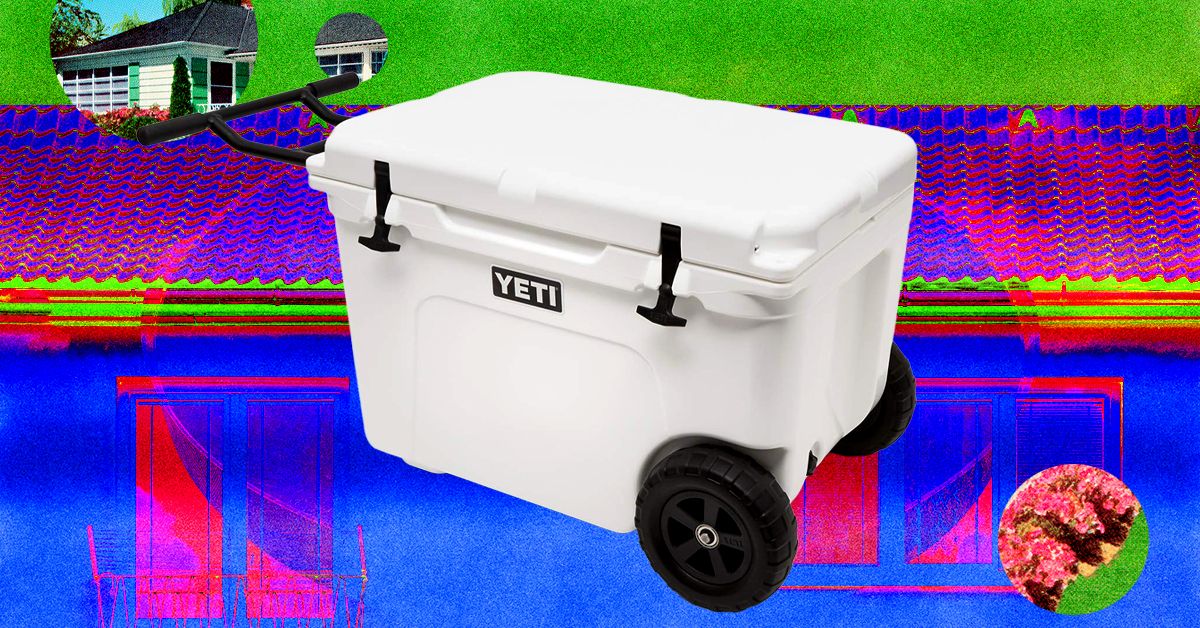
Chill Out With the Best Coolers We’ve Tried













Food handling is an area of work that still relies heavily on humans. Fruit, vegetables, meat, and other foods need to be handled quickly but gently. It is also hard to automate because no two pieces of fruit, vegetables, or chicken nuggets look exactly the same.
Eka’s demos suggest that the company may be onto something big. I found myself mentally comparing their robots to GPT-1, OpenAI’s first large language model, developed four years before ChatGPT. GPT-1 was often incoherent but showed glimmers of general linguistic intelligence.
The robots I saw seem to have a similar kind of nascent physical intelligence. When I watched a video of one reaching for a set of keys in slow motion, I noticed it did something that seemed remarkably human: It touched the tips of its grippers to the table and slid them along the surface before making contact with the keys and securing them between its digits. Eka’s algorithms seem to know instinctively how to recover from a fumble. This kind of thing is difficult for other robots to learn, unless the humans training them deliberately make a wide range of mistakes.
Unlike with any other robot I can think of, it’s almost possible to imagine what the world is like for the robot. Its sensors seem to feel the weight of its arm, the inertia as it sweeps toward the keys and slows down. Once it has the keys in its grasp, it seems to sense the weight of them dangling from its claw.
I don’t know if Eka’s approach really is the route to a ChatGPT-like breakthrough in robotics. Some very smart experts believe that mixing human demonstration with simulation will yield better results than simulation alone. Maybe some combination of the two approaches will ultimately be necessary? But it does seem clear that robots will eventually need to have the kind of tactile, physical intelligence that Eka is working on if they are to obtain humanlike dexterity.
Agrawal tells me that the same general approach should work for finer manipulation. The fiddly dexterity required to build an iPhone, for instance, could be achieved by building different actuators and sensors and practicing the task in simulation.
After spending a few hours at Eka, I decide to stop by the restaurant downstairs. I watch from the counter as the staff prepare food and make coffee. A descendant of the machine upstairs may be able to do these things just as well, if not better. But given how much I enjoy chatting with the people who work there, I think I would pay extra to keep humans around. Unless, that is, my hands get automated away too.
Let us know what you think about this article. Submit a letter to the editor at [email protected].
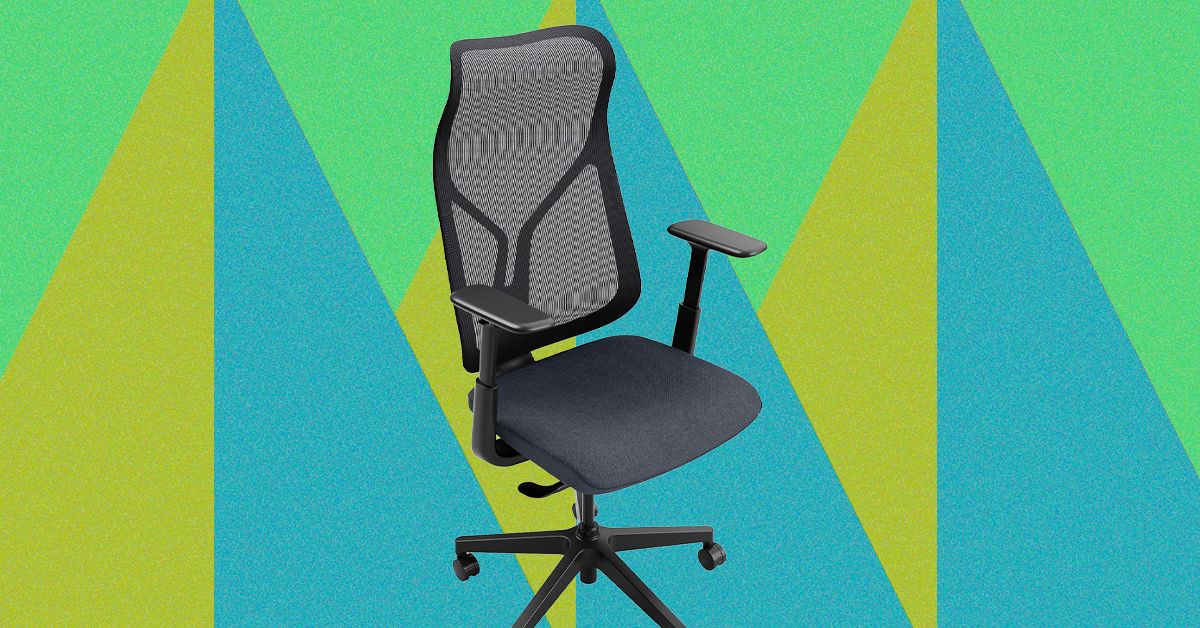
Like the brand’s easy-to-assemble desks, the Align chair has a deceptive simplicity with relatively few parts. The chair required less than 15 minutes and only three screws to put together, using an Allen wrench that came in the box. (While the QR code, on a chair released in March, did not yet link up to the right URL for the assembly instructions, I mostly didn’t need them.)
The simplicity stems mostly from the decision to limit the chair’s components: a cushion atop the wheels and casters and a single-piece mesh top held aloft by a suspension system that allows for a quite generous lean.
The chair’s spec sheet says one can lean back about 20 degrees, but I found there to be significantly more play on my large frame: I could lean back closer to 45 degrees while still feeling full support and no tipping danger. This makes for a lot of room to stretch.
Customization Concerns
Video: Matthew Korfhage
Even though the chair is constructed from minimal parts, Vari has managed to trundle in a surprising amount of adjustability. The seat can be moved about four inches up and down, shifted forward and back, and the lumbar support tilted to your liking using a five-position adjustable ratchet behind the chair. The effect isn’t dramatic visually, but it leads to vastly different degrees of pressure at the lower back.
The armrests can also be pivoted inward or outward and moved forward or back, though these positions cannot be locked. If you’re prone to fiddling, you may find yourself playing with the position of the armrests in idle moments. The armrests are also only lightly padded, and while I didn’t feel any discomfort, those who like a feeling of plushness might look elsewhere.
Note that while the armrests can pivot in place, their width cannot be adjusted. The seat cushion is also on the wide side, about 20 inches across. This means that while the chair accommodates wide frames handily, those who are a more petite may find the armrests too far apart. I loved the high-backed support, as a tall and long-bodied man. But smaller people may feel like they’re swimming in the chair, with its 27-inch-tall back.
Overall, I was impressed by the chair’s somewhat ingenious simplicity, which has the welcome side effect of keeping the price low. This balanced mix of breathability, support, value, and customizability makes the Align a very strong contender in the mid-price range—and the integrated headrest represents a serious step up from the company’s previous-generation Vari Task Chair. My one worry about the Align is that I’ll actually fall asleep in it.
Power up with unlimited access to WIRED. Get best-in-class reporting and exclusive subscriber content that’s too important to ignore. Subscribe Today.

OpenAI has a goblin problem.
Instructions designed to guide the behavior of the company’s latest model as it writes code have been revealed to include a line, repeated several times, that specifically forbids it from randomly mentioning an assortment of mythical and real creatures.
“Never talk about goblins, gremlins, raccoons, trolls, ogres, pigeons, or other animals or creatures unless it is absolutely and unambiguously relevant to the user’s query,” read instructions in Codex CLI, a command-line tool for using AI to generate code.
It is unclear why OpenAI felt compelled to spell this out for Codex—or indeed why its models might want to discuss goblins or pigeons in the first place. The company did not immediately respond to a request for comment.
OpenAI’s newest model, GPT-5.5, was released with enhanced coding skills earlier this month. The company is in a fierce race with rivals, especially Anthropic, to deliver cutting-edge AI, and coding has emerged as a killer capability.
In response to a post on X that highlighted the lines, however, some users claimed that OpenAI’s models occasionally become obsessed with goblins and other creatures when used to power OpenClaw, a tool that lets AI take control of a computer and apps running on it in order to do useful things for users.
“I was wondering why my claw suddenly became a goblin with codex 5.5,” one user wrote on X.
“Been using it a lot lately and it actually can’t stop speaking of bugs as ‘gremlins’ and ‘goblins’ it’s hilarious,” posted another.
The discovery quickly became its own meme, inspiring AI-generated scenes of goblins in data centers, and plug-ins for Codex that put it in a playful “goblin mode.”
AI models like GPT-5.5 are trained to predict the word—or code—that should follow a given prompt. These models have become so good at doing this that they appear to exhibit genuine intelligence. But their probabilistic nature means that they can sometimes behave in surprising ways. A model might become more prone to misbehavior when used with an “agentic harness” like OpenClaw that puts lots of additional instructions into prompts, such as facts stored in long-term memory.
OpenAI acquired OpenClaw in February not long after the tool became a viral hit among AI enthusiasts. OpenClaw can use any AI model to automate useful tasks like answering emails or buying things on the web. Users can select any of various personae for their helper, which shapes its behavior and responses.
OpenAI staffers appeared to acknowledge the prohibition. In response to a post highlighting OpenClaw’s goblin tendencies, Nik Pash, who works on Codex, wrote, “This is indeed one of the reasons.”
Even Sam Altman, OpenAI’s CEO, joined in with the memes, posting a screenshot of a prompt for ChatGPT. It read: “Start training GPT-6, you can have the whole cluster. Extra goblins.”


LVMH sees 70% footfall drop in Middle East, digital stable

Prince William, Kate Middleton anniversary picture includes surprise guests

Chill Out With the Best Coolers We’ve Tried

-

 Politics1 week ago
UK’s Starmer seeks to deflect blame over Mandelson appointment
-
 Business1 week ago
How Trump’s psychedelics executive order could unlock stalled cannabis reform
-

 Entertainment1 week ago
Lee Anderson, Zarah Sultana kicked out of UK Parliament for calling PM ‘liar’
-
 Business1 week ago
Us-India Trade Talks: US–India trade deal: Where do talks stand & what to expect – explained – The Times of India
-

 Fashion1 week ago
India, US to resume BTA talks today
-

 Tech1 week ago
A Humanoid Robot Set a Half-Marathon Record in China
-

 Sports1 week ago
‘It’s his superpower’: Inside Fernando Mendoza’s extraordinary rise to No. 1
-
 Business1 week ago
UK inflation accelerates after Iran war drives sharp rise in fuel prices