

Tech
When Robots Have Their ChatGPT Moment, Remember These Pincers


Food handling is an area of work that still relies heavily on humans. Fruit, vegetables, meat, and other foods need to be handled quickly but gently. It is also hard to automate because no two pieces of fruit, vegetables, or chicken nuggets look exactly the same.
Eka’s demos suggest that the company may be onto something big. I found myself mentally comparing their robots to GPT-1, OpenAI’s first large language model, developed four years before ChatGPT. GPT-1 was often incoherent but showed glimmers of general linguistic intelligence.
The robots I saw seem to have a similar kind of nascent physical intelligence. When I watched a video of one reaching for a set of keys in slow motion, I noticed it did something that seemed remarkably human: It touched the tips of its grippers to the table and slid them along the surface before making contact with the keys and securing them between its digits. Eka’s algorithms seem to know instinctively how to recover from a fumble. This kind of thing is difficult for other robots to learn, unless the humans training them deliberately make a wide range of mistakes.
Unlike with any other robot I can think of, it’s almost possible to imagine what the world is like for the robot. Its sensors seem to feel the weight of its arm, the inertia as it sweeps toward the keys and slows down. Once it has the keys in its grasp, it seems to sense the weight of them dangling from its claw.
I don’t know if Eka’s approach really is the route to a ChatGPT-like breakthrough in robotics. Some very smart experts believe that mixing human demonstration with simulation will yield better results than simulation alone. Maybe some combination of the two approaches will ultimately be necessary? But it does seem clear that robots will eventually need to have the kind of tactile, physical intelligence that Eka is working on if they are to obtain humanlike dexterity.
Agrawal tells me that the same general approach should work for finer manipulation. The fiddly dexterity required to build an iPhone, for instance, could be achieved by building different actuators and sensors and practicing the task in simulation.
After spending a few hours at Eka, I decide to stop by the restaurant downstairs. I watch from the counter as the staff prepare food and make coffee. A descendant of the machine upstairs may be able to do these things just as well, if not better. But given how much I enjoy chatting with the people who work there, I think I would pay extra to keep humans around. Unless, that is, my hands get automated away too.
Let us know what you think about this article. Submit a letter to the editor at [email protected].
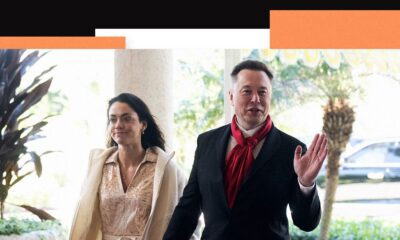










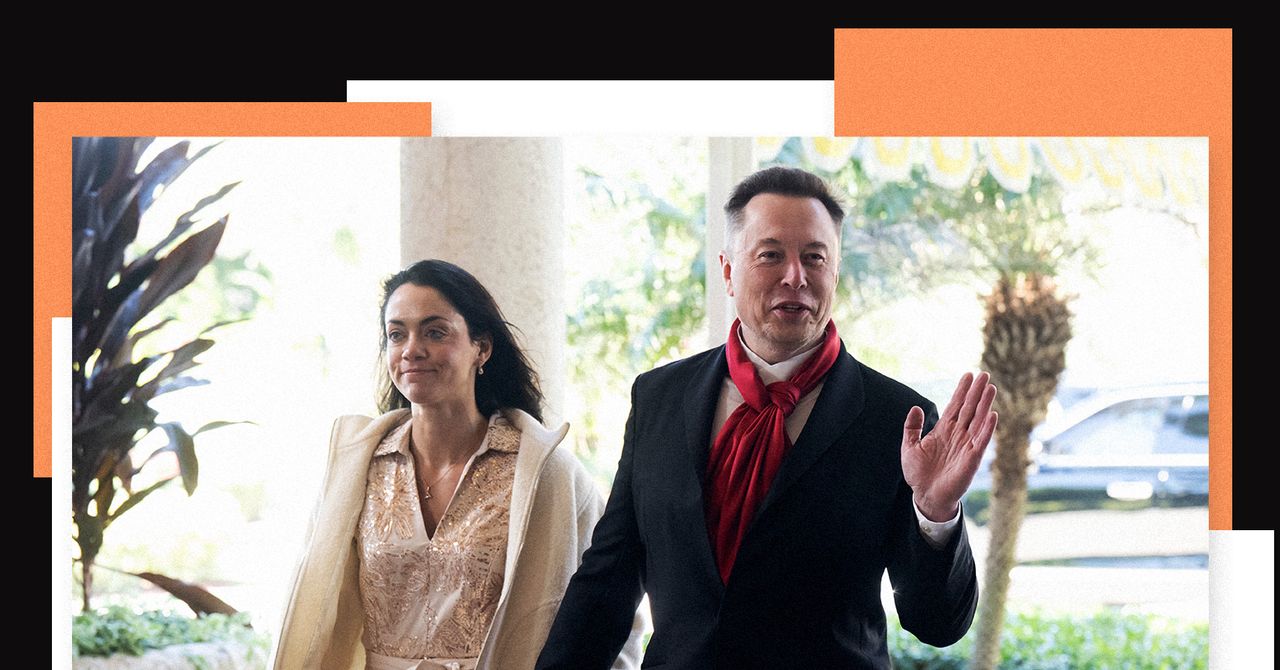
As the first week of trial in Musk v. Altman comes to a close, one person has emerged as a critical behind-the-scenes manager of communications and egos in OpenAI’s early years: Shivon Zilis.
A longtime employee of Musk and the mother to four of his children, Zilis first joined OpenAI as an advisor in 2016. She later served as a director of its nonprofit board from 2020 until 2023 and has also worked as an executive at Musk’s other companies, Neuralink and Tesla.
When asked about the nature of his relationship with Zilis in court, Musk offered several answers. At one point, he called her a “chief of staff.” Later, a “close advisor.” At another point, he said “we live together and she’s the mother of four of my children,” though Zilis said in a deposition that Musk is more of a regular guest and maintains his own residence. Last September, Zilis told OpenAI’s attorneys that she became romantic with Musk around 2016 after she had become an informal advisor to OpenAI. They had their first two children in 2021, she said.
But OpenAI’s lawyers have made the case in witness testimonies and evidence that her most important role, as it pertains to this lawsuit, is being a covert liaison between OpenAI and Musk, even years after he left the nonprofit’s board in February 2018.
“Do you prefer I stay close and friendly to OpenAI to keep info flowing or begin to disassociate? Trust game is about to get tricky so any guidance for how to do right by you is appreciated,” Zilis wrote in a text message to Musk on February 16, 2018, days before OpenAI announced he was leaving the board. Musk responded, “Close and friendly, but we are going to actively try to move three or four people from OpenAI to Tesla. More than that will join over time, but we won’t actively recruit them.”
When asked about this exchange on the witness stand, Musk said he “wanted to know what’s going on.”
In the same text thread, Musk said “there is little chance of OpenAI being a serious force if I focus on Tesla AI.” Zilis reaffirmed him, saying: “There is very low probability of a good future if someone doesn’t slow Demis down,” referring to the leader of Google DeepMind, who Musk has said he didn’t trust to control a superintelligent AI system. “You don’t realize how much you have an ability to influence him directly or otherwise slow him down. I think you know I’m not a malicious person but in this case it feels fundamentally irresponsible to not find a way to slow or alter his path.”
Roughly two months later, in an email from April 23, 2018, Zilis updated Musk on OpenAI’s fundraising efforts and progress on a project to develop an AI that could play video games. In the same message, she said she had reallocated most of her time away from OpenAI to his other companies, Neuralink and Tesla, but told him, “if you’d prefer I pull more hours back to OpenAI oversight please let me know.”
Almost a year earlier, in the summer of 2017, OpenAI’s cofounders had started negotiating changes to the organization’s corporate structure—Musk wanted control of the company to start out. In an email from August 28, 2017, Zilis wrote to Musk that she had met with Greg Brockman and Ilya Sutskever to discuss how equity would be divided up in the new company. She summarized points from the meeting, including that Brockman and Sutskever thought one person shouldn’t have unilateral power over AGI, should they develop it. Musk wrote back to Zilis, “This is very annoying. Please encourage them to go start a company. I’ve had enough.”
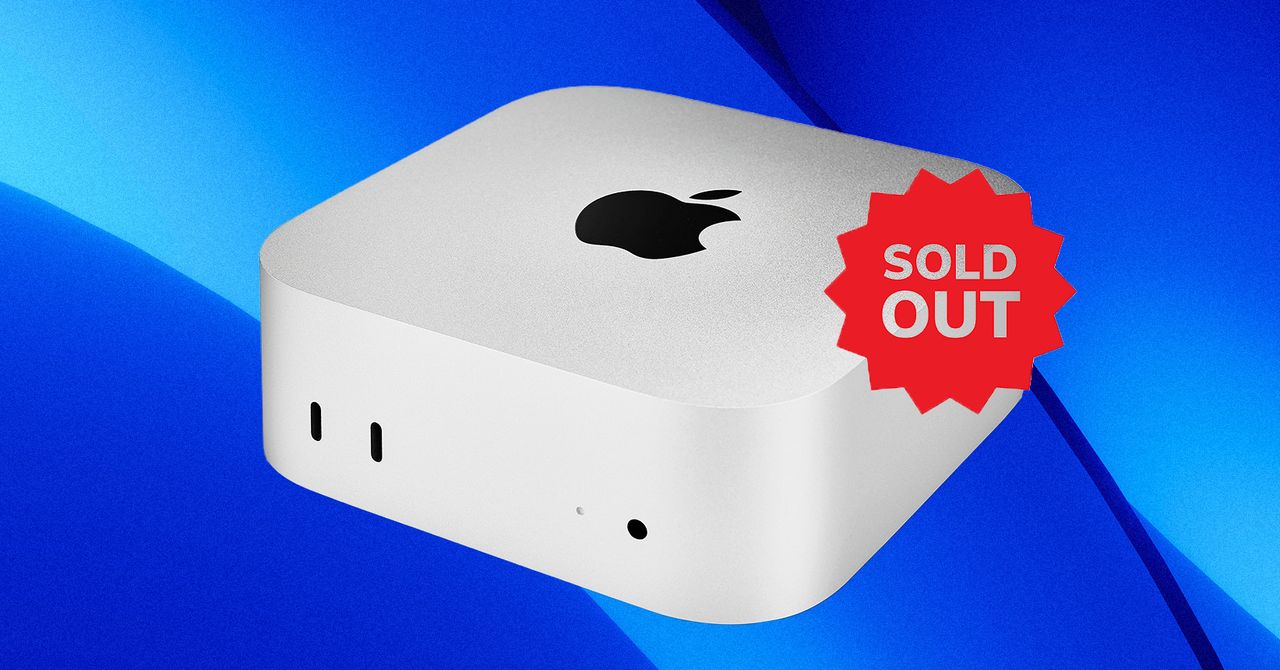
Apple CEO Tim Cook said on the company’s earnings call on Thursday that it could take “several months” to meet skyrocketing demand for the Mac Mini, the company’s compact but mighty, screen-free desktop computer. Cook’s remarks come after coders determined in recent months that the Mac Mini was the perfect machine for agentic AI tasks.
“On the Mac Mini and Mac Studio, both of these are amazing platforms for AI and agentic tools,” Cook said on the earnings call, in response to analyst questions. “And customer adoption of that is happening faster than we expected.”
The news comes amid another record-setting quarter for the company. iPhone sales came up shorter than expected, though demand for the iPhone 17 has been super high and Apple’s subscription services business has continued to grow.
Apple faced supply constraints on both the iPhone and the Mac product line this quarter. iPhone shortages are being driven mostly by a limited supply of the advanced chips that power the phones. But as Cook made clear, at least two different factors are driving shortages in Apple’s Mac business: The rapid adoption of generative AI, and unexpected demand for the company’s new, colorful, and more affordable MacBook Neo laptop.
Mac sales are typically a fraction of what iPhone sales are—$8.4 billion this quarter, compared to nearly $57 billion in sales of the iPhone—and the Mac Mini, specifically, is a fraction of that. But with the launch of OpenClaw earlier this year, an open-source AI tool, Mac Minis began flying off the shelves because they offer both enough power and a dedicated computing environment for agentic AI tasks.
Some eager customers have already been waiting for months for their Mac Minis. MacRumors reported last month that Apple had stopped selling a configuration of the computer that included 512 GB of memory. As of last week, the base model of Mac Mini was entirely sold out.
Cook, and his soon-to-be-successor John Ternus, also addressed Cook’s transition out of the CEO role later this year. Cook said on the earnings call that it’s the “right moment” to step into the executive chairman role for a “number of reasons,” including that Apple is well-positioned financially and that its upcoming product roadmap is “incredible.” He called Ternus a “person of remarkable character and a born leader.”
Ternus then joined the call for a minute to vouch for Cook as a business leader, and assure investors he’d take a similarly deliberate and thoughtful approach in leading the company. He, too, mentioned the company’s roadmap.
Both men were scant on details around this supposedly very exciting product roadmap, but hopefully, it includes more … road Macs.
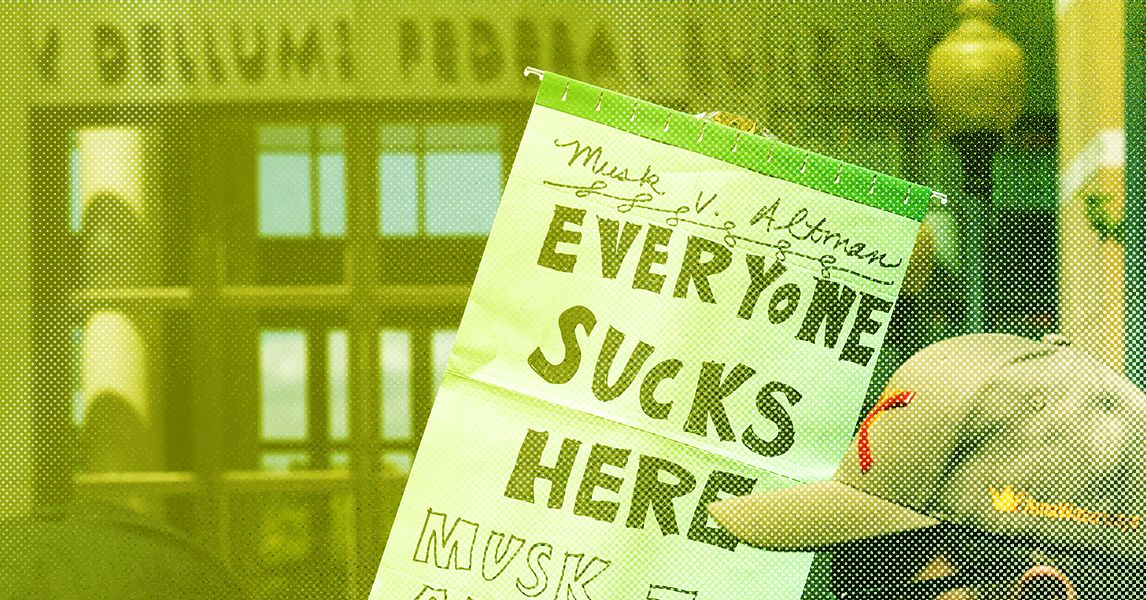
In this episode of Uncanny Valley, we get into how the Elon Musk-Sam Altman trial goes way beyond their rivalry and could have major implications both for OpenAI and also the AI industry at large.
Source link


Germany’s Adidas posts strong Q1 on DTC momentum, broad demand

Gross GST collections hit record high of Rs 2.43 lakh crore in April 2026 despite US-Iran war concerns – The Times of India

De-risking from China just got easier with India-New Zealand FTA

-

 Sports1 week ago
PSL 11: Hyderabad Kingsmen opt to field after winning toss against Multan Sultans
-
 Business1 week ago
Trump administration in advanced talks for a rescue package for Spirit Airlines, source says
-

 Entertainment1 week ago
Anne Hathaway shares major news about ‘Princess Diaries 3’
-
 Business1 week ago
Gold prices in Pakistan Today – April 23, 2026 | The Express Tribune
-
 Tech1 week ago
Microsoft faces court battle in £2bn Windows Server class action | Computer Weekly
-

 Entertainment1 week ago
Mike Vrabel to miss Patriots’ final NFL draft day —here’s why
-
 Business1 week ago
High-Skilled Immigration: US tightens screws on high-skilled immigration: Denial rates surge across key visa categories – The Times of India
-
 Fashion1 week ago
Canada forms new advisory committee to strengthen US trade relations