

Politics
China calls for restraint over US blockade of Hormuz, supports talks

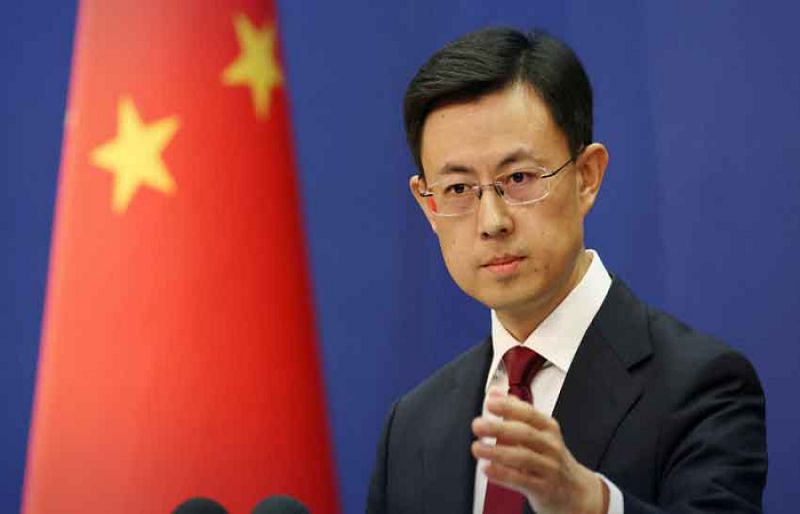

China urged calm and restraint by all sides on Monday, following US President Donald Trump’s threat to blockade the Strait of Hormuz after the failure of weekend talks in Islamabad aimed at ending the Iran war.
Before the war, most Iranian oil exports were shipped to China, the top global importer of crude.
Keeping the key Strait of Hormuz waterway safe, stable and unimpeded served the interest of the international community, foreign ministry spokesperson Guo Jiakun told a regular press conference, when asked about the blockade threat.
“China hopes the relevant parties will abide by the temporary ceasefire arrangements, remain committed to resolving disputes through political and diplomatic means, and avoid a resumption of hostilities,” he said.
China stood ready to “play a positive and constructive role” in resolving the crisis, Guo added, calling the opening talks in the Pakistani capital a step in a direction conducive to easing tension.
After the marathon talks failed, the US Central Command said its forces would begin a blockade of all maritime traffic with Iranian ports from 10 am ET (1400 GMT) on Monday.
China and Pakistan had backed peace talks in March while urging an immediate ceasefire in the Iran war and restoration of normal navigation in the Strait of Hormuz, a conduit for about a fifth of global oil and gas supplies.
Guo rejected reports that China had plans to supply weapons to Iran as “groundless smears and malicious associations”.
Last week, Trump threatened immediate tariffs of 50%, with no exemptions, on imports from countries supplying Iran with military weapons.
“China has consistently taken a prudent and responsible approach to arms exports,” Guo said, adding that its strict controls were in line with domestic laws and international obligations.
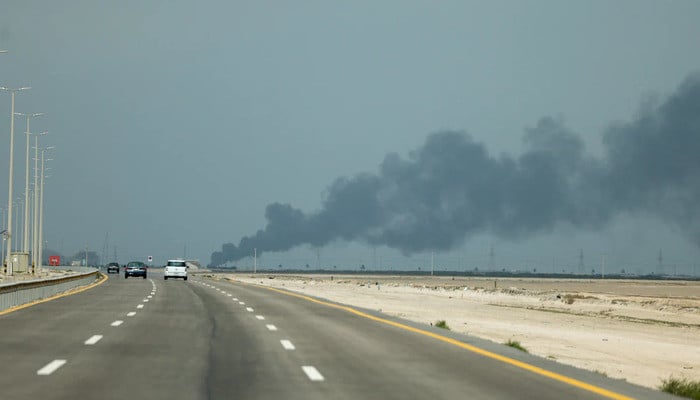
It will take about two years to recover the energy output lost in the Middle East from the conflict there, Fatih Birol, the head of the International Energy Agency, was quoted as saying on Friday in an interview with the Neue Zuercher Zeitung newspaper.
“That will vary from country to country. In Iraq, for example, it will take much longer than in Saudi Arabia. However, we estimate it will take approximately two years overall to reach pre-war levels again,” Birol told the Swiss newspaper.
Birol added that the market was underestimating the consequences of a prolonged closure of the Strait of Hormuz.
Shipments of oil and gas that were already en route to their destinations before the war in Iran began have now arrived, mitigating the impact of shortages, he said.
“But no new tankers were loaded in March. There were no new deliveries of oil, gas or fuels to Asian markets. This gap is now becoming apparent. If the Strait of Hormuz is not reopened, we must prepare for significantly higher energy prices.”
Asked whether the IEA could carry out another release of emergency oil reserves after its March move, Birol said the agency was ready to act immediately and decisively.
“We’re not there yet, but it’s definitely under consideration,” Birol said.

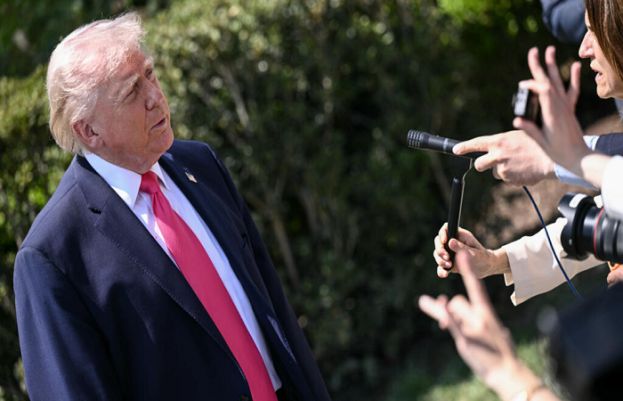
US President Donald Trump said on Thursday that a deal with Iran was “very close” and fresh negotiations could take place later this week, adding he may visit Islamabad if an agreement is reached.
Speaking to reporters at the White House, Trump said there had been significant progress in talks aimed at ending six weeks of conflict and ensuring Tehran does not acquire nuclear weapons.
“They’ve agreed to give us back the nuclear dust,” Trump said, referring to Iran’s enriched uranium stockpile.
“There’s a very good chance we’re going to make a deal.”
Emphasising the core issue, he said: “We had to make sure that Iran never gets a nuclear weapon… They’ve totally agreed to that. They’ve agreed to almost everything, so maybe if they can get to the table, there’s a difference.”
Trump added that negotiations were advancing and a breakthrough could come soon. “Something’s going to happen [that is] very positive,” he said.
Asked if he might travel to Pakistan to sign an agreement, Trump added: I might go, yeah. If the deal is signed in Islamabad, I might go.“
He warned, however, that failure to reach a deal would lead to renewed hostilities. “If there’s no deal, fighting resumes,” he said.
The US president also said Iran had indicated willingness to give up its enriched uranium reserves, which Washington says could be used to build nuclear weapons.
Trump claimed that US military actions had significantly degraded Iran’s naval and air capabilities and said Tehran was now more open to terms it had previously resisted.
He added that the ceasefire with Iran could be extended if needed, but warned that war would resume if talks collapsed.
Highlighting Pakistan’s role, Trump said: “Pakistan has played a very strong role. The Prime Minister [Shehbaz Sharif] and the Field Marshal [Syed Asim Munir] have done a tremendous job.”
He also said global oil prices were declining and claimed credit for brokering multiple ceasefires worldwide, adding that “very soon something important is going to happen.”
Vice President JD Vance led a US delegation to Islamabad last weekend for talks with Iranian officials but came away empty-handed.
Commenting on the regional situation, Trump said a 10-day ceasefire had been agreed between Lebanon and Israel, with Hezbollah also part of the arrangement.
He said he would meet Israeli Prime Minister Benjamin Netanyahu and Lebanese President Joseph Aoun, without specifying dates.
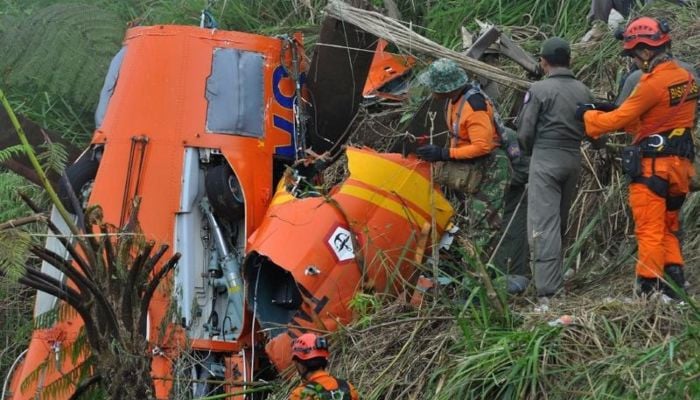
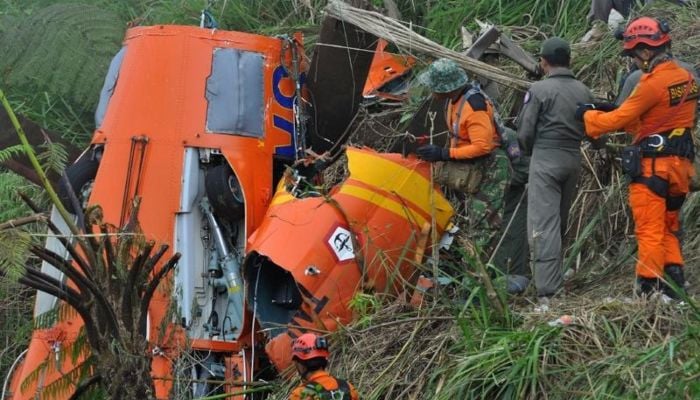
- Private helicopter crashes in forest on Borneo island.
- Victims’ bodies shifted to provincial capital of Pontianak.
- One victim of the crash was a Malaysian national.
JAKARTA: Two crew members and six passengers were killed when a private helicopter crashed in dense forest on Indonesia’s Borneo island, the transport ministry said Friday.
The Airbus helicopter, owned by local firm Matthew Air Nusantara, lost contact with air traffic control about five minutes after takeoff in the West Kalimantan province on Thursday morning.
All eight on board were men and one was a Malaysian national, civil aviation director general Lukman F Laisa said in a statement.
“The joint search and rescue team had successfully located the crash site of the aircraft and, based on information from the field, all passengers and crew members have been confirmed dead,” he said.
Rescuers found the crash victims Thursday evening in a dense forest area with steep slopes, search and rescue agency head I Made Junetra told AFP Friday.
The bodies were being flown to the provincial capital of Pontianak, Made added.
Indonesia, a vast archipelago in Southeast Asia, relies heavily on air transport to connect its thousands of islands.
The country has a poor aviation safety record, with several fatal accidents in recent years.
A turboprop plane chartered by the fisheries ministry crashed into a mountain on the island of Sulawesi in January, killing all 10 people on board.
In September last year, a helicopter carrying six passengers and two crew members crashed in South Kalimantan province, killing all on board.
Four people were killed less than two weeks later when another helicopter crashed in the remote Papua district of Ilaga.


FTAs, PTAs in focus as Sri Lanka aims for growth

Tesco will do ‘whatever it can’ to keep down food prices amid Iran war

Sangeet Syntex showcases innovations at FABTEX 2026

-

 Tech1 week ago
As the Strait of Hormuz Reopens, Global Shipping Will Take Months to Recover
-

 Tech1 week ago
This AI Button Wearable From Ex-Apple Engineers Looks Like an iPod Shuffle
-

 Politics1 week ago
Indian airlines hit hardest after Dubai limits foreign flights until May 31
-

 Entertainment4 days ago
Palace left in shock as Prince William cancels grand ceremony
-

 Sports4 days ago
The case for Man United’s Fernandes as Premier League’s best
-

 Politics1 week ago
Chinese, Taiwanese will unite, Xi tells Taiwan opposition leader
-

 Entertainment6 days ago
Dua Lipa hits major career high ahead of wedding with Callum Turner
-
 Business4 days ago
UK could adopt EU single market rules under new legislation