

Fashion
China’s textile sector needs $40.8 bn to halve emissions by 2030


China produces over half of the world’s fibre output and accounts for more than 30 per cent of global apparel exports, valued at $294 billion, positioning it as a pivotal force in lowering fashion’s carbon footprint. However, while national ‘dual carbon’ targets, green finance policies, and clean energy progress have created a favourable backdrop, decarbonisation efforts remain uneven in practice, Aii and Development Finance International (DFI) said in their latest report, ‘Landscape and Opportunities for the Decarbonization of China’s Textile and Apparel Manufacturing Sector’.
Aii identified around 44,000 ‘scaled enterprises’—companies with annual turnover above CN¥20 million (~$2.85 million)—as the segment best positioned to act. These manufacturers, many clustered in industrial parks, have the operational scale, emissions impact, and data readiness to drive near-term reductions, but face persistent barriers beyond financing.
China’s textile and apparel sector needs at least $40.8 billion to cut emissions by 50 per cent by 2030, as per Aii.
Despite supportive ‘dual carbon’ policies, decarbonisation remains uneven.
Around 44,000 scaled enterprises are best placed to act but face technical and financing gaps.
Industrial parks, green finance, and coordinated action are seen as key to scaling emissions reductions.
Manufacturers report gaps in technical know-how, planning tools, and localised support, alongside difficulty interpreting evolving brand and regulatory requirements. Although domestic green finance is widely available, aligning standard loan and equity models with diverse factory needs remains a challenge.
International financial institutions are playing a growing role, with $4.3 billion across eight active green credit lines confirmed as of 2024. However, uptake is often limited as local loans priced at 3-4 per cent are preferred over IFI-backed financing, which ranges from 3-7 per cent and can involve stricter conditions.
Industrial parks are highlighted as a strategic platform for scaling action. More than 11,000 textile enterprises operate across over 1,300 parks, offering shared infrastructure and governance models that can lower transition costs. China’s nationwide zero-carbon industrial park initiative, launched in 2025, further strengthens this pathway.
The report also pointed to emerging best practices, including digital tools, factory-level diagnostics, and bundled solutions piloted by local governments, brands, and technical partners. Aii’s Climate Solutions Portfolio identified priority interventions such as energy efficiency upgrades, renewable energy adoption, chemical innovation, and thermal energy recovery.
Aii calls for stronger collaboration across brands, manufacturers, financial institutions, and local authorities. Key recommendations include diversifying financing mechanisms, improving alignment between brand expectations and supplier capabilities, embedding low-carbon planning into core business strategy, expanding local technical assistance, and strengthening data-sharing platforms.
The report added that coordinated action and aggregated demand will be critical to translating strong climate ambition into tangible emissions reductions across China’s textile and apparel value chain.
Fibre2Fashion News Desk (SG)












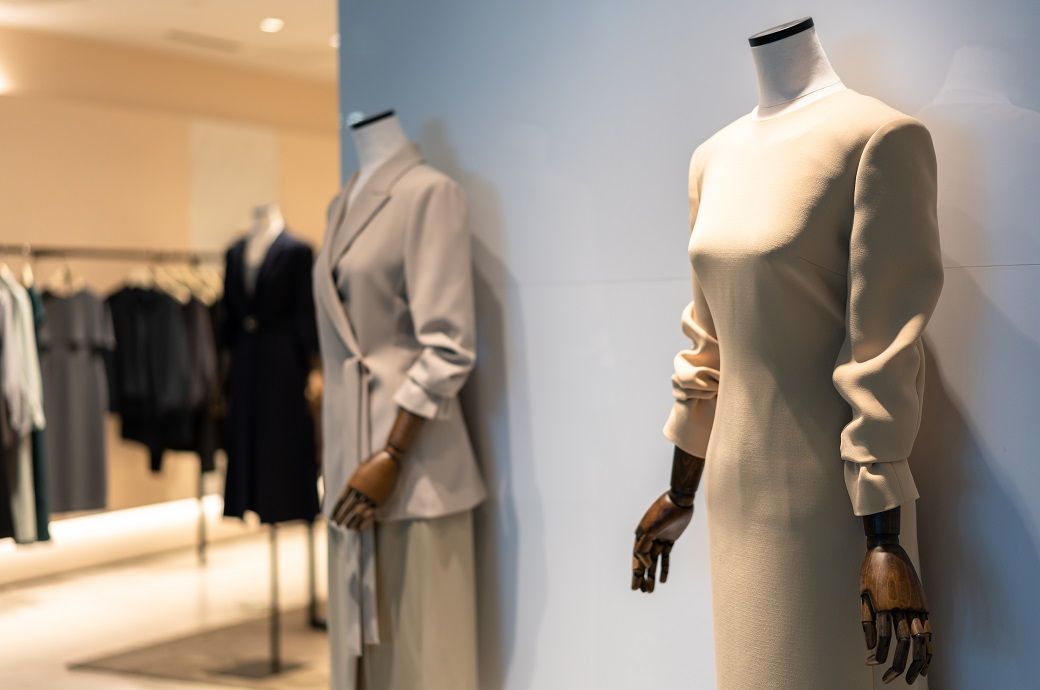
Ind-Ra expects sector revenues to grow around 9 per cent year on year (YoY) in FY26 and 10.5 per cent YoY in FY27 following uneven and subdued growth through FY24 and early FY25; the growth in FY25 was 8 per cent YoY.
Ind-Ra expects India’s apparel retail sector revenues to grow around 9 per cent YoY in FY26 and 10.5 per cent YoY in FY27 following uneven and subdued growth through FY24 and early FY25.
Premium, branded and ethnic players are expected to see steadier, high single-digit growth trends.
Ind-Ra feels value retailers will outperform other segments within apparel, with robust revenue growth.
Ind-Ra feels value retailers will outperform other segments within apparel, with robust revenue growth through healthy same store sales growth and rapid store additions, albeit at a lower profitability.
Healthy growth in operating profit coupled with strong inventory turns is expected to result in value retailers demonstrating stronger-than-industry return indicators and credit metrics.
Premium, branded and ethnic players are expected to see steadier, high single-digit growth trends as consumer confidence rebuilds with a better spread out wedding calendar than in FY26 and early signs of normalisation seen in the first nine months of FY26.
Listed apparel retail players from Ind-Ra’s sample set reported revenue growth of around 10 per cent YoY in these nine months as the government’s consumption push through lower taxation and mild inflation resulted in higher disposable income and improved affordability.
The operating profit margins also improved to 15.6 per cent in the nine months compared to 15.2 per cent in FY25 due to various cost optimisation measures adopted by companies.
Organised retailers are pivoting from aggressive expansion to productivity-led growth. After elevated store additions in FY24-FY25, Indian apparel retailers are moderating store roll-outs, sharpening site selection, right-sizing formats and targeting faster ramp-ups of recent openings, with omni-channel execution and scalable franchise models enhancing reach and capital efficiency, Ins-Ra said in a press note.
It expects store additions to ease to nearly 7 per cent YoY in FY26 and 6 per cent YoY in FY27, even as retail area continues to rise by 9 per cent YoY in FY26 and by 9.5 per cent YoY in FY27, reflecting larger average store sizes and assortments designed to lift footfalls, average transaction values and sales per square foot.
Value and luxury segments are set to lead sector performance. Value formats benefit from GST rationalisation at lower price points, improved affordability, and rising private-label penetration, while luxury gains from a widening affluent base and deeper global-brand access.
Fast fashion continues to capture Gen-Z-led, content-driven demand. Casual and athleisure remain ahead of ethnic-casual and formal wear, in line with comfort- and lifestyle-led dressing trends.
Ind-Ra expects profitability to improve gradually as cost optimisation, better sourcing/mix, disciplined advertising and marketing promotions, and operating leverage offset residual pressures from expansion and fixed costs.
The working capital cycle for value retailers is likely to improve YoY in FY27, due to higher inventory turns and improved store level operating metrics.
Overall, as the consumption upturn broadens and retailers prioritise productivity over pace, Ind-Ra expects a stable, sustainable improvement in revenues and operating metrics for organised apparel retailers over FY26–FY27.
The luxury segment is also expected to benefit from an increase in target customer segment through widening affluent base and deeper global-brand access.
Mid-premium and several incumbent retailers witnessed slower growth in FY25, due to entry price mix-shifts and loss of market share to value retailers. This, coupled with investments in store format revamps, has stressed their margin profiles. Profitability pressures and a dip in inventory turns have slightly weakened credit metrics for segment players.
Fibre2Fashion News Desk (DS)
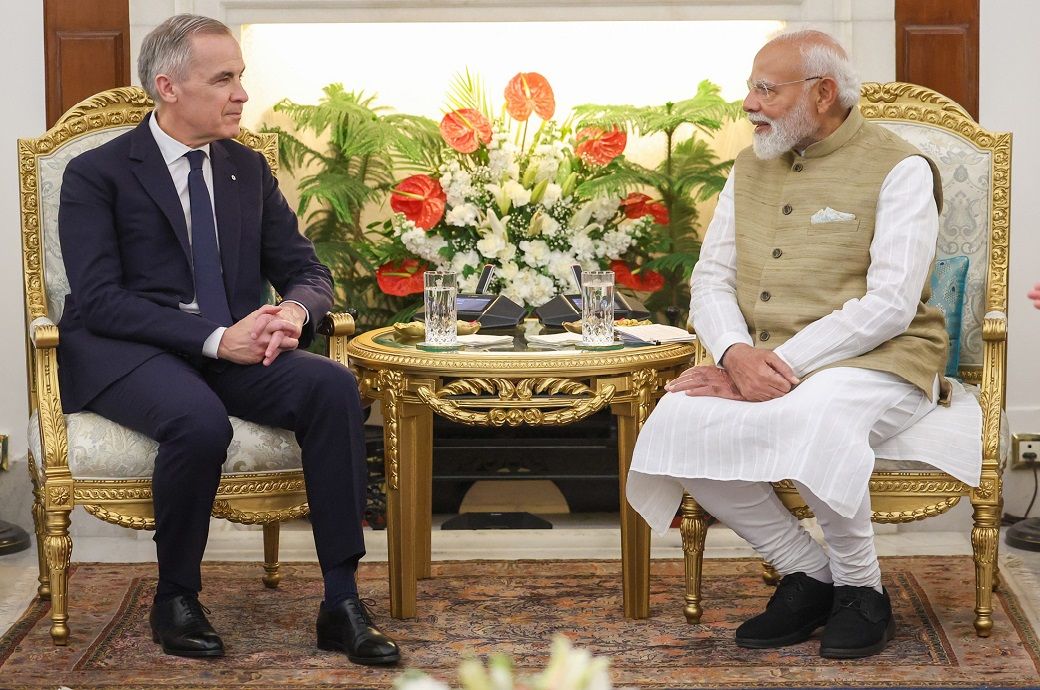
He was addressing the Canada-India Forum in Mumbai. He is on a four-day visit to India.
“This is an enormous opportunity for both our countries.. but it is one that is about to move to the next level. We should aim much higher, and we are aiming much higher, and to be more strategic in our partnership. And that’s why, immediately after my election last year, our government set out to renew our relationship with India,” he was cited as saying by Indian media outlets.
PM Mark Carney during the Canada-India Forum in Mumbai said Canada is negotiating a comprehensive economic partnership agreement with India to double bilateral trade to $50 billion by 2030.
It is expected to be signed by 2026 end.
Canada could also be India’s strategic partner in critical minerals and metals for the latter’s manufacturing, clean tech and nuclear industries, he noted.
As the visit’s focus is on core areas where both sides can work together to create more sovereignty, choice and prosperity, food and energy are the natural first choices, given Canada’s position as a food and energy superpower, Carney said.
It also extends to nuclear co-operation, from being the most reliable long-term supplier of uranium to building large-scale and small modular reactors, he said.
“We could also be India’s strategic partner in critical minerals and metals for your manufacturing, for your clean tech, and for your nuclear industries. And in the other respect, India can help us to double our grid with clean power by 2040,” he added.
India’s leadership in artificial intelligence (AI) and digital economy aligns well with Canada’s mission to develop and commercialise those technologies to deepen its defence innovation, Carney asserted.
In a separate set of agreements, Canadian Foreign Affairs Minister Anita Anand and his Indian counterpart S Jaishankar also exchanged several memoranda of understanding covering critical mineral cooperation, promotion of renewable energy use and cultural cooperation.
After India, Carney is scheduled to continue his tour with stops in Australia and Japan, according to the official itinerary released by his government.
Fibre2Fashion News Desk (DS)

This year’s gala theme, Threads of Impact, underscores the shared vision of FIT and Gap Inc. and recognizes Dickson’s legacy of brand reinvigoration, highlighting his career-long dedication to treating creativity as both a cultural force and a business imperative.
The Fashion Institute of Technology will honour Richard Dickson, president and CEO of Gap Inc., at its Annual Gala on April 14, 2026, at the Cathedral of St. John the Divine, New York City.
Celebrating his brand transformation leadership at Gap Inc. and Mattel, the event supports the FIT Foundation, which awarded over $3 million in scholarships in 2025.
“Gap Inc. is a house of iconic American brands guided by our purpose — to bridge gaps to create a better world. That includes bridging the opportunity gap. FIT embodies that same spirit, bringing education and industry together to unlock talent and expand what’s possible. We’re committed to opening doors, investing in emerging creatives, and building meaningful pathways into this industry for the next generation,” said Richard Dickson, President and CEO, Gap Inc. “I’m truly honored by this recognition and proud to champion the students and future leaders who will shape what’s next in design and fashion.”
“We are thrilled to celebrate Richard Dickson at FIT’s Annual Gala, in recognition of his remarkable achievements and leadership,” said FIT President Jason S. Schupbach. “Richard’s commitment to empowering the next generation reflects the heart of our mission—and inspires the entire FIT community. We are grateful for his generous support, as his work affirms what FIT has always shown: that when industry and education work as one, they are the catalyst for real-world change that shifts our culture.”
Dickson was appointed president and CEO of Gap Inc. in July 2023 and leads the company’s portfolio of iconic American brands, including Old Navy, Gap, Banana Republic, and Athleta. Before stepping into this role, he was the president and chief operating officer of Mattel, where he was a lead architect in a global corporate transformation that reinvigorated Mattel’s storied brands, including Barbie, Hot Wheels, and Fisher-Price, re-enforcing Mattel as a key industry leader and cultural cornerstone. He also served as executive producer of the Barbie movie. While at Mattel, Dickson was appointed to the Gap Inc. Board of Directors in November 2022.
Under his leadership, Gap Inc. is progressing into one of the most celebrated companies in fashion, where purpose and profit are aligned to matter, creating positive impacts for people and the planet. Throughout his career, Dickson has been a committed champion of this belief, earning recognition including The Elizabeth Taylor Commitment to End AIDS Award and the Chief Executives for Corporate Purpose Force for Good Award.
The FIT Annual Gala, attended by distinguished guests and alumni from the fashion and creative industries, benefits the FIT Foundation, which is dedicated to uplifting the next generation of FIT students. In addition to facilitating programs and developing new initiatives, the Foundation provided scholarships totaling more than $3 million in 2025.
Note: The headline, insights, and image of this press release may have been refined by the Fibre2Fashion staff; the rest of the content remains unchanged.
Fibre2Fashion News Desk (RM)


Ind-Ra expects India’s apparel retail revenues to grow 9% YoY in FY26

Yamal is eclipsing young Ronaldo, Messi. Are Barcelona too dependent on him already?
Prices for home heating oil in NI rise as Middle East conflict escalates

-

 Politics5 days ago
What are Iran’s ballistic missile capabilities?
-
 Business6 days ago
Households set for lower energy bills amid price cap shake-up
-

 Sports5 days ago
Sri Lanka’s Shanaka says constant criticism has affected players’ mental health
-
 Business6 days ago
Lucid widely misses earnings expectations, forecasts continued EV growth in 2026
-

 Sports1 week ago
Top 50 USMNT players of 2026, ranked by club form: USMNT Player Performance Index returns
-

 Fashion5 days ago
Policy easing drives Argentina’s garment import surge in 2025
-

 Sports5 days ago
Cristiano Ronaldo purchases 25% stake in Spanish club Almeria
-

 Sports1 week ago
South Africa thrash India by 76 runs in T20 World Cup Super 8 – SUCH TV