

Politics
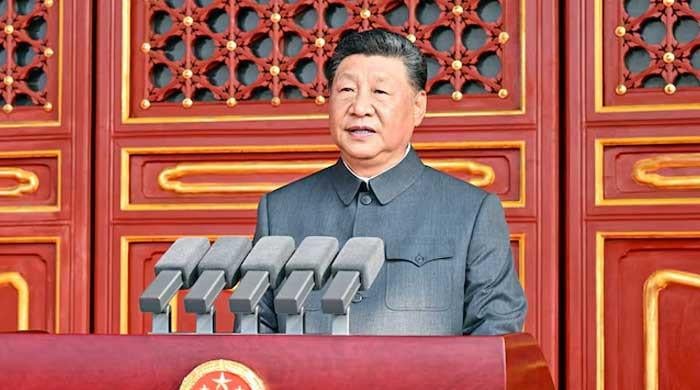
China’s Xi shows he’s ‘totally in charge’

- China seizing on anti-Trump sentiment in foreign affairs blitz.
- Xi projects healthy image at parade, meetings, Tibet trip.
- Parade shifts domestic narrative from economic concerns.
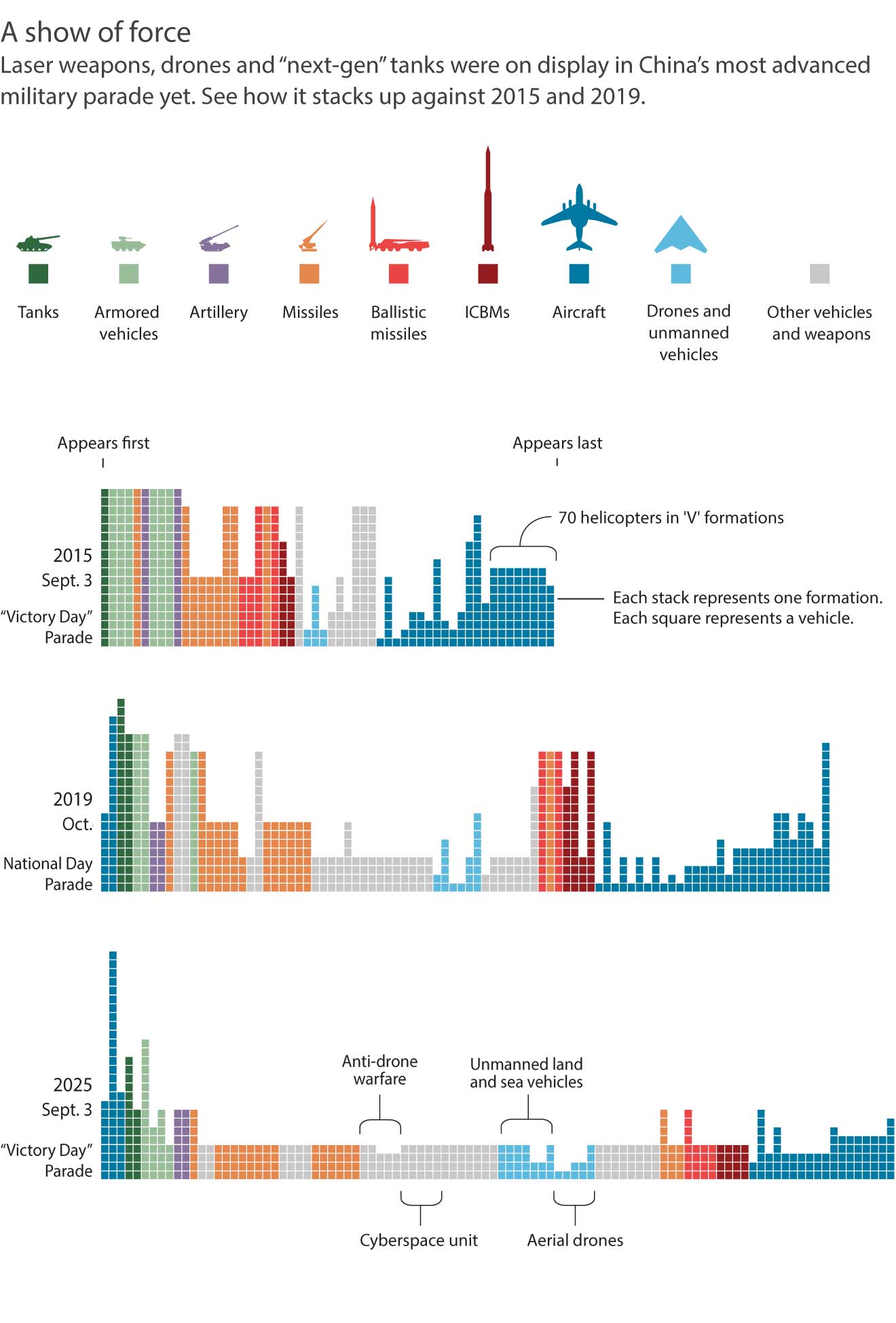
When Chinese leader Xi Jinping organised his first parade to mark the anniversary of the end of World War Two, in 2015, he placed his two predecessors by his side in a show of respect and continuity of leadership.
Ten years on and having eliminated domestic opposition as he serves an unprecedented third term as president, Xi was flanked on Wednesday at the 80th anniversary parade by Russia’s Vladimir Putin and North Korea’s Kim Jong Un.
Chinese Communist Party leaders were interspersed among overseas guests.
The parade followed Xi’s high-profile summit with Indian Prime Minister Narendra Modi at a weekend meeting of the Shanghai Cooperation Organisation (SCO) in Tianjin, and the Chinese leader’s rare visit to Tibet last month.
This display of diplomatic clout, stamina and geopolitical ambition has helped quell concerns among some China observers about the 72-year-old president’s vitality, linked to sporadic absences and — so far unknown — succession plans. It has also helped divert domestic attention from slowing growth, experts say.
Longevity was on the leaders’ minds as they walked up to the rostrum at Beijing’s Tiananmen Square — Xi and Putin were caught in a hot mic moment discussing organ transplants and the possibility that humans could live to 150 years old.
“This week of triumphant diplomacy for Xi shows that he remains totally in charge of the elite politics of the Communist Party,” said Neil Thomas of the Asia Society, a New York-based think tank. Unable to get the same legitimacy from economic growth as his predecessors, Xi has turned toward nationalism “to try and make up for it”, Thomas said.
“It’s a way to divert attention from economic challenges and to make his citizens proud to be Chinese, even if it’s harder to feel that from the day-to-day experiences of unemployment, falling house prices and stagnant wages.”
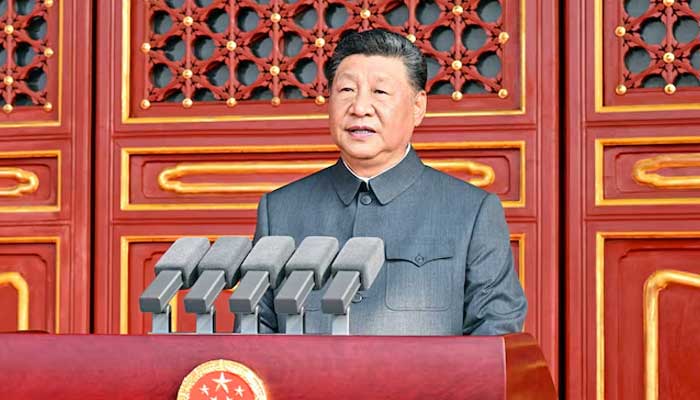
Xi underscored his elder statesman image with fashion choices: a grey suit in the style of those worn by Mao Zedong, matching his greying hair, in contrast to the black suits of his counterparts and his own black attire from a decade earlier.
His number two, Premier Li Qiang, whose role has diminished at home, was charged with relatively minor meetings with leaders of Malaysia and Uzbekistan. High-profile engagements with Kim, Modi, Turkish President Tayyip Erdogan and several others fell to Cai Qi, who heads the party’s Central Secretariat, responsible for its sprawling administration.
In response to a Reuters request for comment, China’s foreign ministry referred to news conference transcripts related to the recent diplomatic events, showcasing China’s partnerships with developing nations and positioning Beijing as committed to peaceful development and international cooperation.
Many countries that sent their leaders to China in the past week have been hit by US President Donald Trump’s trade tariffs this year, including India, which remains a significant buyer of Russian oil, hit by sanctions over Putin’s invasion of Ukraine.
In one of the most memorable moments in the flurry of diplomatic encounters, Modi and Putin walked over for a chat with Xi while holding hands, underscoring personal tensions between Trump and Modi, as well as Washington’s failure to draw historically non-aligned India in to counter Russia and China.
“Ultimately, one of the biggest driving factors of the SCO show of solidarity has been US policy,” said Even Pay, a director at strategic advisory firm Trivium China.
Trump, who called the military parade “beautiful” and “very, very impressive”, made a barbed post on social media saying China was working with Putin and Kim to “conspire against The United States of America”.
The Kremlin responded that they were not conspiring and suggested Trump’s remarks were ironic.
Hit by Trump, welcomed by Xi
Analysts say Xi’s whirlwind of activity underscores China’s ambition in presenting itself as a reliable partner to developing nations on the global stage, offering advantages like investment opportunities and even a new development bank — a major step forward for the SCO, which has expanded markedly over past decades to also include Pakistan, India and Iran.
“China’s message as a more reliable, stable alternative to the United States is resonating with large swathes of the world, particularly across Asia, which sees the United States as an increasingly belligerent force in world affairs,” said Eric Olander, editor-in-chief of the China-Global South Project, a research agency.
“A lot of developing countries and middle-power states may still be a bit ambivalent about what China’s proposing with its new governance and development initiatives, but at least what China is talking about is forward-looking, which is crucial for economies with large populations of young people looking for better employment opportunities,” Olander said.
Xi faces considerable challenges in managing this large and often fractious coalition as he eyes a potential fourth term of office in 2027 to further cement his legacy as the most powerful Chinese leader since Mao.
Entrenched Chinese foreign policy positions, including territorial disputes and industrial subsidies that have flooded foreign markets with cheap exports, will likely remain friction points, experts say, while India’s deep distrust of China will not dissipate because of one brief meeting.
“It’s not necessarily a big-picture shift towards a more China-led international order,” said the Asia Society’s Thomas.
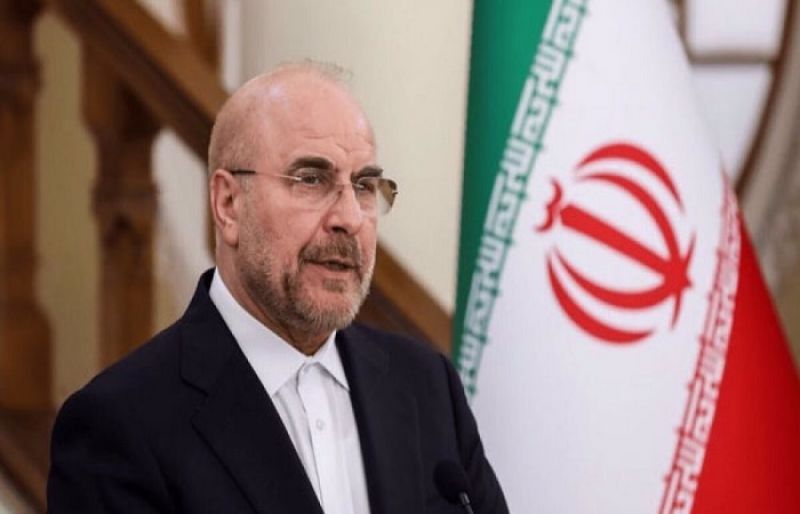
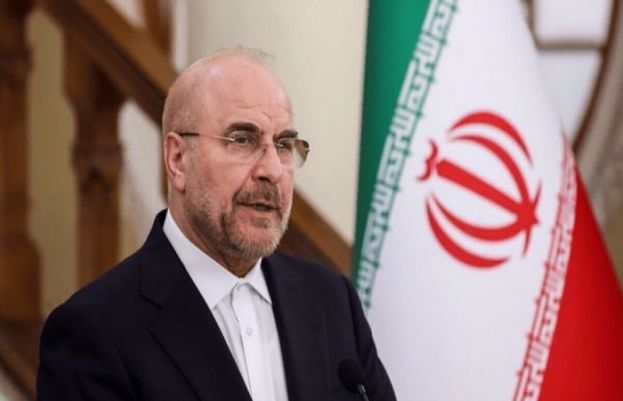
Iran’s Majlis (Parliament) speaker has warned that the United States’ efforts at sustaining military escalation near the Strait of Hormuz could trigger a fresh global financial crisis at a time when Washington’s national debt already stands at a whopping $39 trillion.
Mohammad-Baqer Qalibaf made the remarks in a post on X on Thursday after it was reported that yields on 30-year US Treasury bonds had climbed above five percent for the first time since before the 2008 global financial crisis, amid mounting concerns over inflation and war-driven energy costs.
“So you’re funding [Pete] Hegseth the failed TV host at rates unheard of since 2007, so he can cosplay as Secretary of War in our backyard in Hormuz?” Qalibaf wrote, referring to the US official’s former career in television.
The top legislator noted how the US’s funding crisis had caused the debt to snowball and its continued aggressive posture at astronomical costs only served a “live action role-playing (LARP)” in Hormuz.
“You know what’s crazier than $39 trillion in debt? Paying a pre-GFC (global financial crisis) premium to fund a LARP and all you’ll get is a brand new GFC,” he wrote.
On April 13, US President Donald Trump announced continuation of an illegal blockade of Iran’s vessels and ports in violation of the terms of a ceasefire he had announced earlier that month.
Iran, which had already shut down the strait to enemies and their allies in retaliation for the unprovoked American-Israeli aggression that targeted the country from February 28 to April 7, then began imposing far stricter controls over the waterway.
The Islamic Republic has refused to rejoin negotiations with Washington unless Tehran’s demands, including removal of the blockade, realization of a definitive end to whatever aggression on all fronts, and provision of compensation, were met.
Both Hegseth and Trump have been painting victorious pictures of either the war or the current American posture towards Iran.
Numerous reports, however, have been proving otherwise, including those pointing to the US secretary of war’s misleading Trump about “American success” against the Islamic Republic.
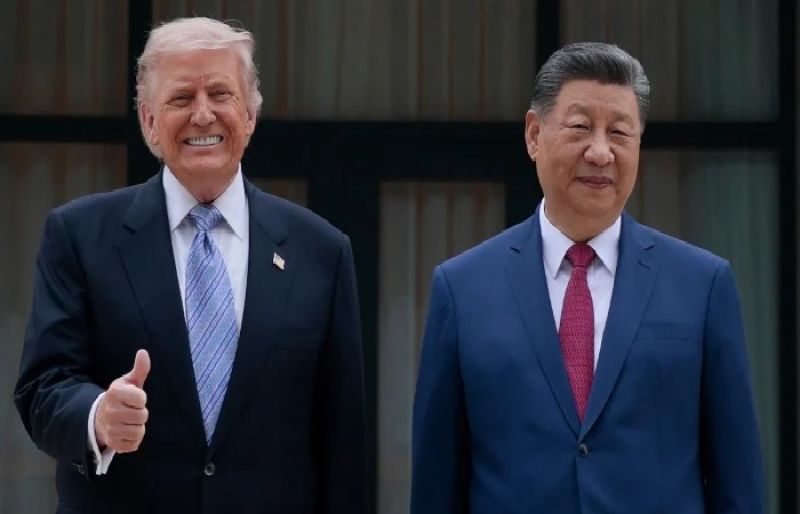
US President Donald Trump departed China on Friday touting business deals that gave markets little to cheer, while Beijing warned Washington about mishandling Taiwan and said its war with Iran should never have started.
Trump’s visit to America’s main strategic and economic rival, the first by a US president since his last trip in 2017, had aimed for tangible results to beef up his dented approval ratings ahead of crucial midterm elections.
The summit was filled with pageantry, from grand receptions with goose-stepping soldiers to lavish banquets and private tours of a secret garden, while Trump repeatedly heaped praise on his host, commenting on his warmth and stature.
“It’s been an incredible visit. I think a lot of good has come of it,” Trump told Xi at their final meeting at the Zhongnanhai complex, a former imperial garden housing the offices of Chinese leaders, before they dined on a menu of lobster balls and Kung Pao scallops.
But just before Friday’s meeting, China’s foreign ministry issued a blunt statement outlining its frustration with the United States and Israel’s war with Iran.
“This conflict, which should never have happened, has no reason to continue,” the ministry said, adding that China was supporting efforts to reach a peace deal in a war that had severely affected energy supplies and the global economy.
At Zhongnanhai, Trump said the leaders had discussed Iran and felt “very similar”, though Xi did not comment.
Trump had been expected to urge China to use its leverage with Iran to make a deal. But analysts doubt Xi will be willing to push Tehran hard or end support for its military, given Iran’s value to Beijing as a strategic counterweight to the US.
A brief US summary of Thursday’s talks highlighted what the White House called the leaders’ shared desire to reopen the Strait of Hormuz off Iran, through which a fifth of global oil and gas once flowed, and Xi’s apparent interest in American oil purchases to pare its dependence on the Middle East.
“What’s notable is that there’s no Chinese commitment to do anything specific with regards to Iran,” said Patricia Kim, a foreign policy fellow at the Brookings Institution.
Boeing shares slide on underwhelming deal
US officials said they had also agreed deals to sell farm goods and made progress on setting up mechanisms to manage future trade, with both sides expected to identify $30 billion of non-sensitive goods.
There were scant details of the deals, however, and no signs of a breakthrough on selling Nvidia’s advanced H200 AI chips to China, despite CEO Jensen Huang’s dramatic last-minute addition to the trip.
Trump told Fox News that China had agreed to order 200 Boeing jets, its first purchase of US-made commercial jets in nearly a decade, but that was far short of the roughly 500 expected by markets, and Boeing shares fell more than 4%.
“For the market, the summit can be strategically reassuring while underwhelming in substance,” said Chim Lee, senior China analyst at the Economist Intelligence Unit.
Chinese stocks slid on Friday as the summit between the leaders of the world’s top two economies produced few deals to excite investors.
The summit’s main achievement may be maintaining a fragile trade truce struck when the leaders last met in October and Trump suspended triple-digit tariffs on Chinese goods while Xi backed away from choking off supplies of vital rare earths.
It has not yet been decided whether to extend the truce beyond its expiry later this year, US Trade Representative Jamieson Greer, accompanying Trump, told Bloomberg TV on Friday.
Such an extension would be “the most basic benchmark” for the summit, said the Brookings’ Kim.
Stark warning on Taiwan
Xi’s remarks to Trump that mishandling Taiwan, the democratically governed island Beijing claims, could lead to conflict, delivered a sharp, if not unprecedented, warning during a summit that otherwise appeared friendly and relaxed.
Taiwan, just 50 miles (80 km) off China’s coast, has long been a flashpoint in ties, with Beijing refusing to rule out use of military force to gain control of the island and the US bound by law to provide it the means of self-defence.
“US policy on the issue of Taiwan is unchanged as of today,” Secretary of State Marco Rubio, who is also travelling with Trump, told NBC News, adding the Chinese “always raise it … we always make clear our position and we move on.”
Taiwan Foreign Minister Lin Chia-lung thanked the United States on Friday for repeatedly expressing its support.
While they may not have clinched many deals, both sides celebrated a steadier footing in a relationship Xi called the most important in the world.
“We must make it work and never mess it up,” he said at Thursday’s state banquet.
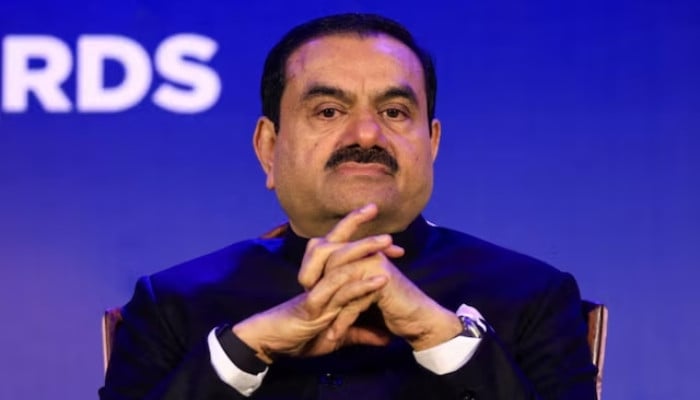
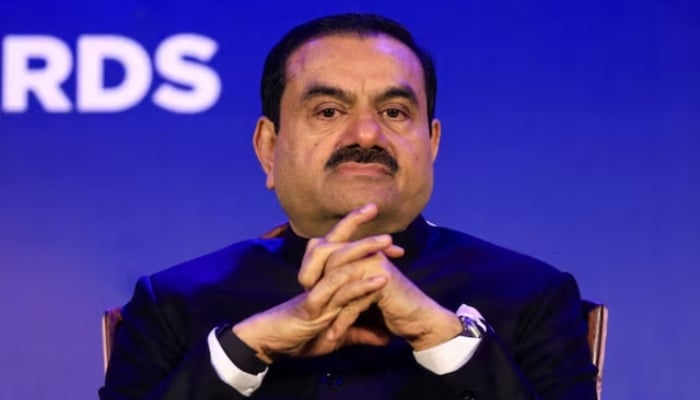
Indian billionaire industrialist Gautam Adani has agreed to pay a multi-million-dollar settlement in a US civil court case linked to corruption without admitting guilt, his company said Friday.
The November 2024 indictment in New York accused the industrialist and multiple subordinates of deliberately misleading international investors as part of a vast bribery scheme.
Adani was accused of having participated in an estimated $250 million scheme to bribe Indian officials for lucrative solar energy supply contracts.
Adani, along with his nephew Sagar Adani, agreed to the “payment of a civil penalty” totalling $18 million, while noting that it came “without admitting or denying the allegations made in the civil complaint”, a letter from Adani Green Energy to the Mumbai stock exchange read.
The penalty payment comes as US prosecutors are reported to be set to drop charges against Adani, The New York Times reported on Thursday.
The Adani letter, which noted that the final judgement of the US court is still awaited, stressed that the “company is not a party to this proceeding, and no charges have been brought against it”.
The New York Times said the move to abandon the charges, brought under President Joe Biden’s administration, came after Adani hired a new legal team led by Robert Giuffra, one of President Donald Trump’s personal lawyers.
With a business empire spanning coal, airports, cement, and media, the chairman of Adani Group has been rocked in recent years by corporate fraud allegations and a stock crash.
Adani, a close ally of Indian Prime Minister Narendra Modi, was born in Ahmedabad in Gujarat state to a middle-class family but dropped out of school at 16.
He moved to India’s financial capital, Mumbai, to find work in the city’s lucrative gem trade.
After a short stint in his brother’s plastics business, he launched the flagship family conglomerate that bears his name in 1988 by branching out into the export trade.
His big break came seven years later with a contract to build and operate a commercial shipping port in Gujarat.


Luzon Economic Corridor expands partnership to include 7 more nations

Build a Radio Wave Detector With Balls of Aluminum Foil!

Bangladesh BGMEA, Germany’s GIZ sign MoU for green RMG transformation

-
 Tech1 week ago
A new frontier: Identity stack evolves for agentic systems | Computer Weekly
-

 Tech7 days ago
‘Orbs,’ ‘Saucers,’ and ‘Flashes’ on the Moon: Pentagon Drops New UFO Files
-
 Fashion1 week ago
New orders in German manufacturing up 5% MoM in Mar 2026: Destatis
-
 Tech7 days ago
Nick Bostrom Has a Plan for Humanity’s ‘Big Retirement’
-
 Tech1 week ago
What Microsoft Executives Really Thought About OpenAI in 2018
-
 Sports7 days ago
Shaheen Afridi achieves landmark feat during opening Test against Bangladesh
-

 Fashion7 days ago
US’ Carter’s taps retail veteran Sharon Price John as new CEO
-
 Entertainment7 days ago
Rihanna embraces new tattoo given by children