

Politics
China’s Xi to welcome Putin, Modi in grand show of solidarity

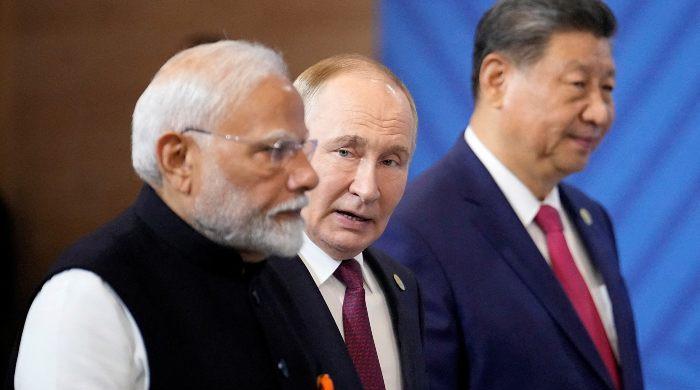
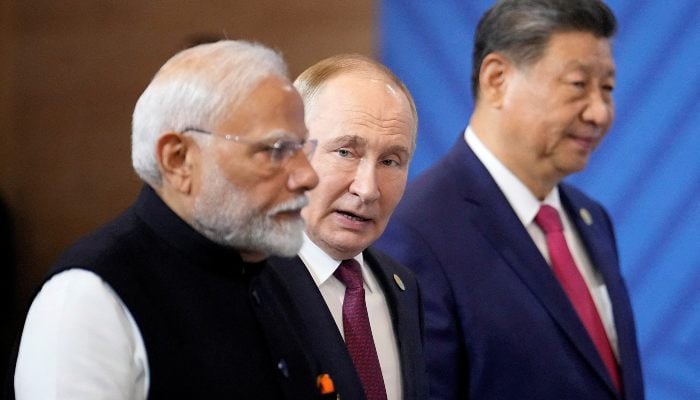
- China will seek to demonstrate Global South solidarity at SCO.
- Xi-Modi meeting will be one key event on summit sidelines.
- Putin to stay for World War Two military parade in Beijing.
BEIJING: President Xi Jinping will gather more than 20 world leaders at a regional security forum in China next week in a powerful show of Global South solidarity in the age of Donald Trump while also helping sanctions-hit Russia pull off another a diplomatic coup.
Aside from Russian President Vladimir Putin, leaders from Central Asia, the Middle East, South Asia and Southeast Asia have been invited to the Shanghai Cooperation Organisation (SCO) summit, to be held in the northern port city of Tianjin from August 31 to September 1.
The summit will feature Indian Prime Minister Narendra Modi’s first visit to China in more than seven years as the two neighbours work on further defusing tensions roiled by deadly border clashes in 2020.
Modi last shared the same stage with Xi and Putin at last year’s BRICS summit in Kazan, Russia, even as Western leaders turned their backs on the Russian leader amid the war in Ukraine. Russian embassy officials in New Delhi last week said Moscow hopes trilateral talks with China and India will take place soon.
“Xi will want to use the summit as an opportunity to showcase what a post-American-led international order begins to look like and that all White House efforts since January to counter China, Iran, Russia, and now India have not had the intended effect,” said Eric Olander, editor-in-chief of The China-Global South Project, a research agency.
“Just look at how much BRICS has rattled (US President) Donald Trump, which is precisely what these groups are designed to do.”
This year’s summit will be the largest since the SCO was founded in 2001, a Chinese foreign ministry official said last week, calling the bloc an “important force in building a new type of international relations”.
The security-focused bloc, which began as a group of six Eurasian nations, has expanded to 10 permanent members and 16 dialogue and observer countries in recent years. Its remit has also enlarged from security and counter-terrorism to economic and military cooperation.
‘Fuzzy’ implementation
Analysts say expansion is high on the agenda for many countries attending, but agree the bloc has not delivered substantial cooperation outcomes over the years and that China values the optics of Global South solidarity against the United States at a time of erratic policymaking and geopolitical flux.
“What is the precise vision that the SCO represents and its practical implementation are rather fuzzy. It is a platform that has increasing convening power, which helps in narrative projection,” said Manoj Kewalramani, chairperson of the Indo-Pacific Research Programme at the Takshashila Institution thinktank in Bangalore.
“But the SCO’s effectiveness in addressing substantial security issues remains very limited.”
Frictions remain between core members Pakistan and India. The June SCO defence ministers’ meeting was unable to adopt a joint statement after India raised objections, saying it omitted reference to the deadly April 22 attack on Hindu tourists in Indian Illegally Occupied Jammu and Kashmir (IIOJK) which led to the worst fighting in decades between Pakistan and India.
New Delhi also refused to join the SCO’s condemnation of Israeli attacks on Iran, a member state, earlier in June.
But the recent detente between India and China after five years of heightened border frictions, as well as renewed tariff pressure on New Delhi from the Trump administration, are driving expectations for a positive meeting between Xi and Modi on the sidelines of the summit.
“It’s likely (New Delhi) will swallow their pride and put this year’s SCO problems behind them in a bid to maintain momentum in the détente with China, which is a key Modi priority right now,” said Olander.
Analysts expect both sides to announce further incremental border measures such as troop withdrawals, the easing of trade and visa restrictions, cooperation in new fields including climate, and broader government and people-to-people engagement.
Despite the lack of substantive policy announcements expected at the summit, experts warn that the bloc’s appeal to Global South countries should not be underestimated.
“This summit is about optics, really powerful optics,” added Olander.
Modi is expected to depart from China after the summit, while Putin will stay on for a World War Two military parade in Beijing later in the week for an unusually long spell outside of Russia.
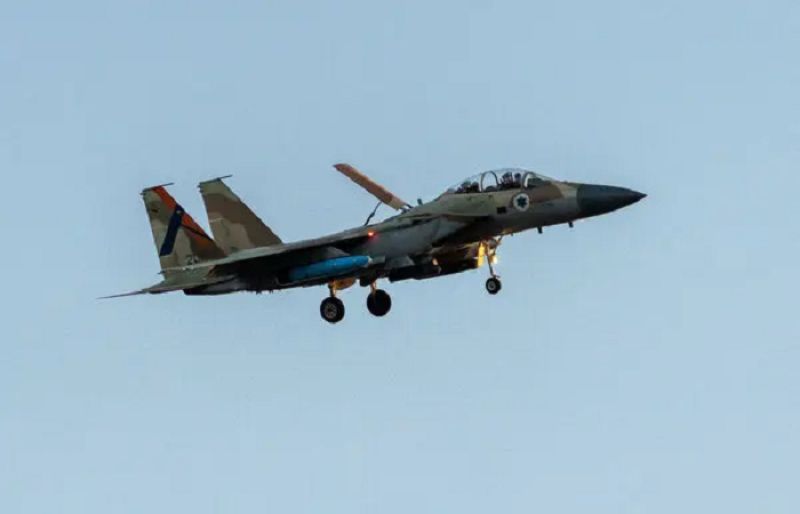
Iran’s Revolutionary Guards have claimed that their air defence system shot down a warplane over the Gulf while also launching missile strikes on multiple locations in Israel.
The attacks reportedly targeted key military sites, causing explosions and fires in several areas.
The Iranian Navy said a fighter jet was downed near Qeysham Island, releasing a video of the incident.
The Guards also claimed that the US aircraft carrier Abraham Lincoln was targeted with cruise missiles, accompanied by video footage.
According to Iranian sources, missile strikes hit Israeli bases in Tel Aviv and Eilat, destroying military installations.
Some missiles reportedly landed in populated areas, starting fires, and Iran claimed Israel’s missile defence system failed to intercept the attacks.
No official response has been issued by Israeli authorities.
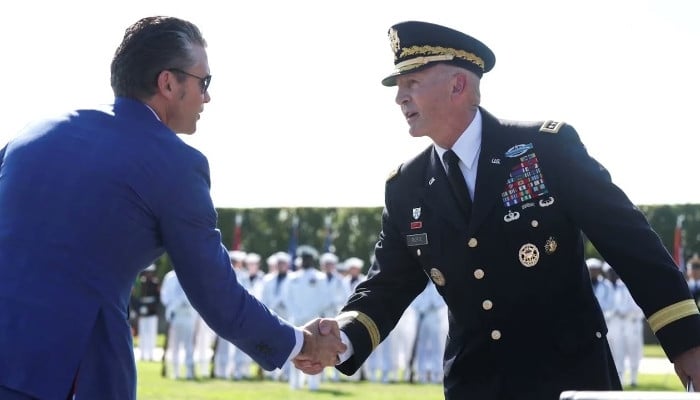
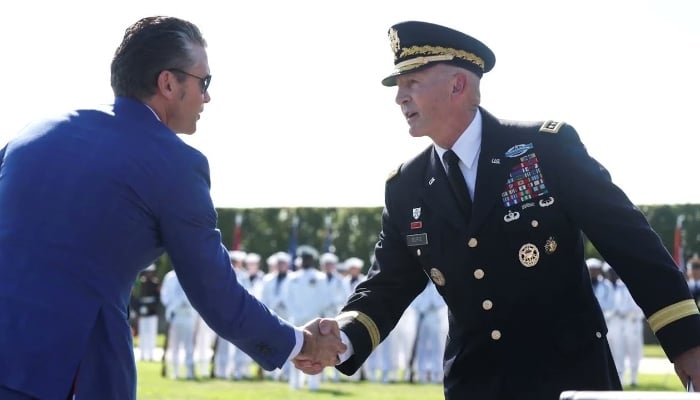
- Hegseth rapidly reshaping Pentagon leadership.
- No official reason given for George’s removal.
- General LaNeve to serve as acting Army chief.
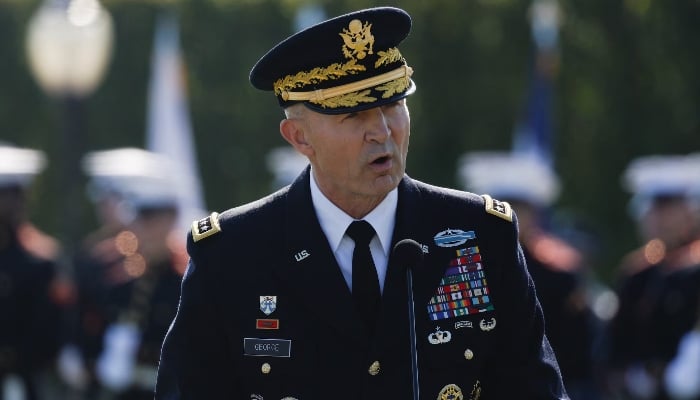
WASHINGTON: US Army Chief of Staff Randy George was fired on Thursday by Defence Secretary Pete Hegseth, three US defence officials told Reuters, in the latest purge among the Pentagon’s most senior ranks.
Even as Hegseth, a former Fox News host, has moved quickly to reshape the department, firing a general during wartime is nearly without precedent.
The Pentagon confirmed that George, who had more than a year left in his term, “will be retiring from his position as the 41st Chief of Staff of the Army effective immediately.”
The Pentagon said in a statement it was grateful for George’s decades of service. “We wish him well in his retirement,” it said.
Two of the officials, speaking on the condition of anonymity, said Hegseth has also fired General David Hodne, who leads the Army’s Transformation and Training Command, and Major General William Green, head of the Army’s Chaplain Corps.
The department did not give a reason for George’s departure, which comes as the US military builds up its forces in the Middle East while carrying out operations against Iran.
The US strikes in the region are largely being carried out by the Navy and Air Force, although US Army soldiers have been dispatched to the Middle East for air defence systems. The Army is the largest branch of the US military, with about 450,000 active-duty soldiers.
Thousands of soldiers from the US Army’s elite 82nd Airborne Division have also started arriving in the Middle East, potentially for ground operations in Iran.
Latest upheaval at Pentagon
There had been no public signs of friction between Hegseth and George, even as Hegseth pursued controversial moves such as firing the Army’s top lawyer and arranging a massive military parade to celebrate the Army’s 250th birthday, which coincided with Trump’s birthday.
Earlier this week, Hegseth also reversed an Army decision to investigate Army pilots who were flying attack helicopters near singer Kid Rock’s house, in an apparent show of support for the vocal Trump backer.
CBS News, which first reported the dismissal, said it was not related to the Kid Rock incident.
One of the officials said Hegseth’s former military aide and Army vice chief of staff, General Christopher LaNeve, will take over George’s role in an acting capacity.
Another of the officials added that senior Army leadership learned about George’s firing at the same time as it was made public.
George, an infantry officer who served in Iraq and Afghanistan, was confirmed to the top Army post in 2023. Terms in that role usually run for four years.
Prior to holding the top job, George was the vice chief of the Army and, before that, the senior military adviser to then-Defence Secretary Lloyd Austin.
He was considered close to Army Secretary Dan Driscoll. The two worked together to take on large defence companies, in the Army’s drive to speed up weapons development and drive down costs.
George’s removal adds to recent upheaval at all levels of leadership at the Pentagon, including the firing last year of the previous chairman of the Joint Chiefs of Staff, Air Force General CQ Brown, as well as the chief of naval operations and Air Force vice chief of staff.
The office for George did not immediately respond to a request for comment.
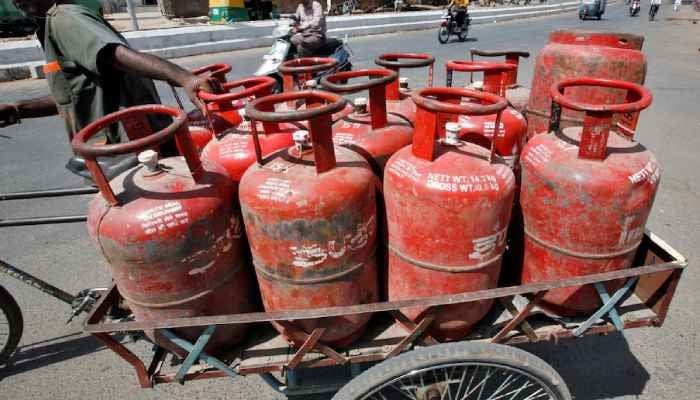
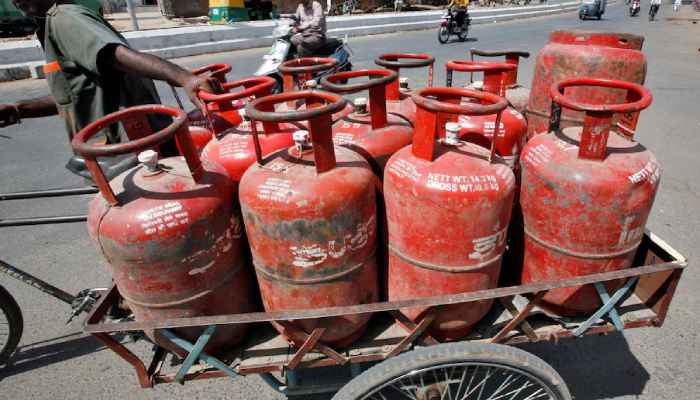
Indian police this week seized 414 cooking‑gas canisters hidden in a graveyard in Hyderabad city and arrested those involved in trying to sell them on the black market amid shortages due to the Iran war, a government official said on Thursday.
Authorities have stepped up raids to curb hoarding of liquefied petroleum gas canisters after the US-Israeli war against Iran disrupted shipping, causing supply shortages. India, the world’s No 2 LPG importer, meets about 60% of its demand through overseas purchases, mostly from the Middle East.
“Just yesterday, around 2,600 raids were carried out and about 700 cylinders were seized,” Sujata Sharma, a senior official in the Ministry of Petroleum and Natural Gas, told a regular briefing on the Middle East crisis.
“In addition, around 400 cylinders were recently found at one location inside a graveyard in Hyderabad. Ten people have been detained there, and the distributor involved has been suspended,” she said.
Police said the accused had been selling both commercial and domestic canisters from the graveyard at nearly three times the current market price. A commercial canister that costs about 2,100 Indian rupees ($22) had been sold for as much as 6,000 rupees.
The total value of the seized canisters and some vehicles used by the accused was nearly 2.2 million rupees, police said. Reuters could not immediately contact the accused or their representatives.
“The supply of natural gas to domestic consumers is 100% assured,” Sharma said. “With regard to LPG supply, prices have remained stable despite international volatility, and there has been no increase in the price of domestic LPG cylinders.”
To ease the pressure on LPG supplies, India has been promoting the use of alternatives such as kerosene, coal and biogas, while accelerating the rollout of piped natural gas for households.


Iran downs warplane, launches missile strikes on Israel

How Brandon Bussi’s brother, Dylan, inspired his NHL journey

Kerosene oil prices rises after petrol and diesel hike – SUCH TV

-
 Fashion1 week ago
Ho Chi Minh City bizs adjust production plans, seek new supply chains
-

 Entertainment7 days ago
Lee Sang-bo dies at 45: Funeral details revealed
-

 Fashion1 week ago
India’s Gen Z to drive half of fashion market by 2030: Reedseer
-
 Fashion6 days ago
EU apparel imports slump 15.48% YoY in Jan; Bangladesh hardest hit
-

 Sports7 days ago
Illinois defense gets tough, ousts Houston to reach Elite Eight
-
 Business7 days ago
How do you spot a fake online review?
-

 Sports5 days ago
2026 NCAA men’s hockey tournament: Schedule, results
-
 Business1 week ago
Co-op boss quits after ‘toxic culture’ claims reported by BBC