

Sports
‘Coastal Chaos’ and 7-5 Duke: Can the ACC’s longstanding problems ever get resolved?

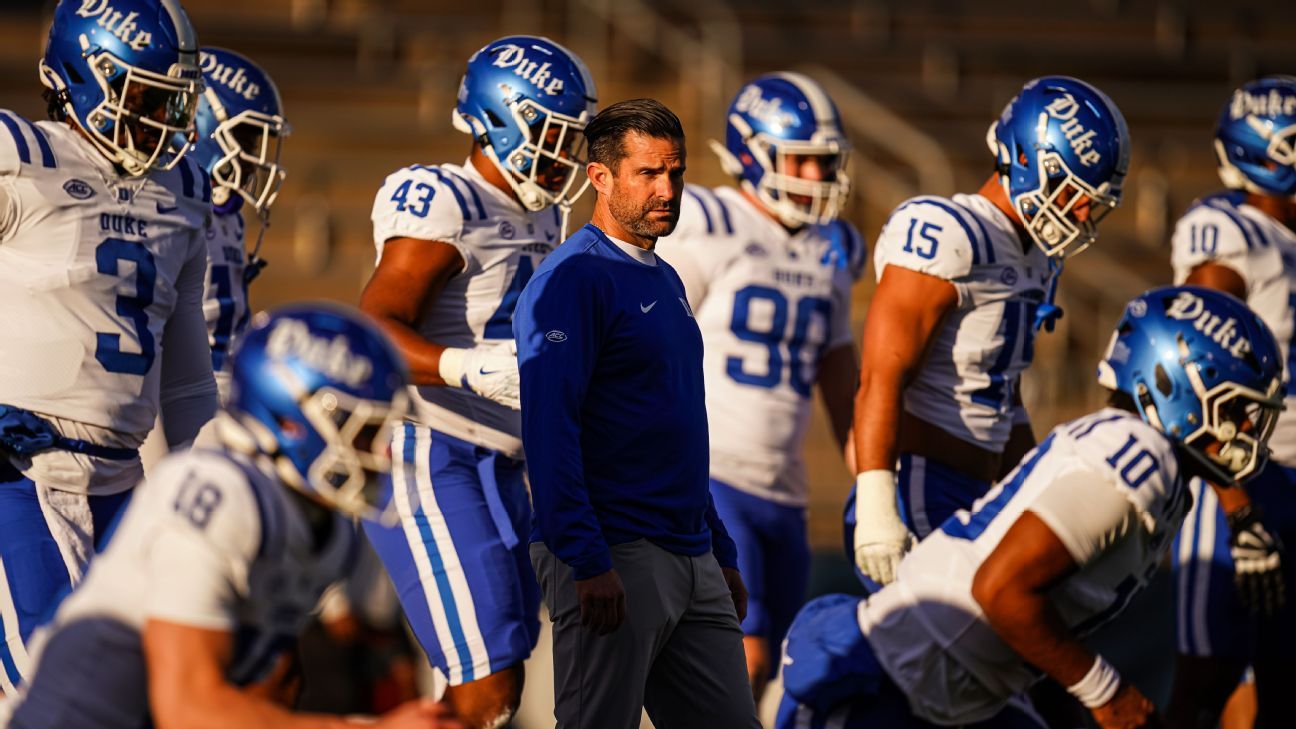
THERE ARE TWO ways of looking at the situation the ACC faces entering Saturday’s championship game in which Duke, a 7-5 team with multiple losses outside the Power 4, could win the conference and, in doing so, keep the league out of the College Football Playoff altogether.
The first is that it’s simply a quirk of modern college football — sprawling conferences with limited crossover between teams inevitably leading to a scenario where esoteric tiebreakers come into play. The ACC’s system isn’t much different than other conferences, the policy was approved by coaches and ADs, and Duke, for all its flaws, went 6-2 in league play.
The other perspective, however, is that the ACC — for reasons rational, coincidental and, perhaps, metaphysical — attracts the unusual.
The latter philosophy might be a charming quirk of the conference if the stakes weren’t so high. The ACC’s Wheel of Destiny, “Coastal Chaos” and the social media stalwart #goacc have been fundamental to the league’s identity for nearly two decades. But as the business of college football has gotten bigger, the rewards of success richer, and the battles for conference supremacy more intense, the ACC’s role as college football’s most colorful band of swashbuckling misfits isn’t so fun for the coaches whose careers hang in the balance and the programs desperate to keep pace in a rapidly evolving landscape in which the ACC often feels woefully behind.
“The ACC is becoming a laughingstock,” one former ACC coach said. “It’s not a cool place to be.”
Duke’s presence in Charlotte on Saturday (vs. Virginia, 8 p.m. ET on ABC) is a result of a five-way tie for second place in the league, but also, according to a dozen current and former ACC coaches and administrators who spoke to ESPN, a symptom of longstanding problems — issues some coaches and ADs saw coming more than a decade ago — that have put the conference in increasingly difficult circumstances.
The responses varied from relative optimism: “It’s cyclical,” one current coach said. “The portal and NIL definitely were a problem, but revenue sharing will level that back out in the coming years”
To pessimism: “It’s resources,” another current coach said. “The SEC and Big Ten have more to spend on football, and they have big collectives to supplement their cap.”
To frustration: “The league has a basketball-first mentality,” one administrator said. “And it drives me fricking crazy.”
To exhaustion: “How much time have you got?” another coach added.
FIRST, A REALITY check: The ACC distributes the third-most revenue to its members of any conference, a figure that has doubled over the past decade. The ACC has as many national championships and title game participants in the playoff era as the Big Ten, and more than any league but the SEC since the advent of the BCS championship. The conference is one of three with a fully distributed TV network, had two playoff teams a year ago and has had eight different teams ranked in the AP Top 25 this year alone. Commissioner Jim Phillips has worked to revamp revenue distribution models to better support the biggest brands, and his efforts have widely been commended by the coaches and ADs who spoke with ESPN.
If the sky is falling, it’s happening gradually, but increasingly publicly.
“The ACC has two problems,” one former ACC coach said. “The real ones and the narrative.”
Yes, the narrative. Even in good times, the national perspective is that the ACC is living on borrowed time.
When Phillips was pressed on whether his league was treated fairly — including by its TV partner — during the league’s kickoff event in July, he admitted he has his frustrations but ultimately put the onus on his own membership to change the talking points.
“You may feel that way, and sometimes I may feel that way,” Phillips said about being treated as a lesser league, “but … one of the things we have to do is we’ve got to perform better. We have to do our part.”
Many of the ACC’s wounds are self-inflicted.
Within the past year, two of the conference’s biggest brands — Clemson and Florida State — filed suit against the league in hopes of nullifying its grant of rights. Leaders of numerous schools have complained about a TV contract that puts the ACC well behind the Big Ten and SEC financially. A 2-11 bowl season last year — including two losses in the opening round of the playoff — offered ample evidence of the league’s shortcomings. Miami, the ACC’s clear-cut best team in 2025, might get left out of the playoff because, among other reasons, the Hurricanes didn’t reach the ACC championship game.
Even if the narrative is exaggerated, the reality still feels bleak.
“We were asleep at the wheel for years,” said one administrator, who included his own school as a culprit. “We watched investments, negotiations, people positioning for the future being done while we just sat there and looked around. We weren’t investing in football as a league, when everybody else knew that was the future. And we’re still not.”
FOR MOST OF its history, the ACC, more than any other power conference, reaped major money from men’s basketball. But by the early 2010s, what had been a roughly 50-50 split in revenue shifted hard toward football. Other leagues understood the pivot, according to numerous coaches and administrators who were in the ACC in that era, but the ACC remained steadfastly devoted to hoops.
Two former ACC coaches recalled a meeting in 2014, just after Florida State’s national championship and six years before Phillips would take over as commissioner, in which former Noles coach Jimbo Fisher conveyed an ominous future.
Fisher was one of the handful of ACC coaches eager to go toe-to-toe with the SEC on the recruiting trail, and for years, he won his share of battles. But as facilities at FSU atrophied, staff sizes at SEC schools ballooned, and the competition for elite talent stiffened, he realized the ACC was being lapped by its primary competitor. If the conference didn’t shift its priorities immediately, the ACC risked being left in the dust.
A few coaches nodded in agreement, but little changed.
“You could tell there was frustration,” said one of the former coaches who was a part of that meeting. “The ones recruiting against the SEC were starting to get their asses kicked. We all saw this coming.”
Many of the coaches and ADs who spoke with ESPN praised Phillips’ efforts to modernize the conference but said the culture that led the ACC to fall behind in the past remains embedded into the league’s DNA for too many schools. For all of Phillips’ efforts to push the ACC toward a more aggressive plan of action, he works for university presidents, who’ve too often been out of step with the modern college football landscape, according to nearly everyone who spoke with ESPN.
The league’s cultural identity as a basketball conference was a common complaint among coaches and ADs who spoke with ESPN, and an engrained philosophy of doing more with less convinced even bigger schools that investment wasn’t necessary. After all, if Frank Beamer, Bobby Bowden and a host of Miami coaches had won big without throwing millions of dollars at players and building massive football operations buildings, why couldn’t the new cast of coaches?
The ACC’s three biggest brands — Clemson, Miami and Florida State — each won at least eight games in 2013, 2015 and 2016. Since then, there has not been a single year in which they all finished with eight or more wins. It’s a problem Phillips has noted often. If the signature teams don’t win, the storylines move elsewhere. Unlike the rise of programs like Indiana and Vanderbilt, when teams like SMU or Virginia have success, the national perspective often suggests it’s the result of a down league, because the ACC’s signature brands haven’t met expectations.
Meanwhile, the SEC’s big three (Alabama, Georgia, LSU) and the Big Ten’s (Ohio State, Penn State, Michigan) have each hit the eight-win mark together six times since the ACC last did.
The reason, one coach who has worked across multiple Power 5 leagues said, is the arrivals of Nick Saban at Alabama and Urban Meyer at Ohio State.
“All colleges suffer from inertia,” the coach said, “but Saban came in and wrecked things.”
Saban and Meyer wielded massive influence and forced huge investments that dwarfed their competition. As a result, the competition — particularly at the top of both leagues — followed suit in an effort to keep up.
It took years before the results of those investments became obvious, but the SEC and Big Ten got a head start.
The ACC is just recently coming to the same conclusion.
IN THE ACC, Fisher left Florida State in 2017 in large part out of frustration over the lack of investment. Mario Cristobal came to Miami in 2022 only after promises for massive new influxes of cash. Bill Belichick required a $20 million investment in player acquisition before he accepted the North Carolina job last year, and Virginia Tech used a promised $249 million increase in athletics spending this fall to land James Franklin.
“Virginia Tech has money. Miami found the money. Schools didn’t have the wherewithal,” the coach said. “They were fooling themselves or didn’t have the urgency to compete on that stage.”
The question is whether it’s too little, too late.
In the early years of the NIL era, the ACC was woefully behind, with a number of schools late to develop and fund collectives, and many boosters at elite academic institutions reluctant to supplement what they viewed as a top-tier degree.
Even in the revenue-sharing era, which began in July 2025 and allowed ACC schools to spend directly on player acquisition, the ACC remains behind. SEC and Big Ten schools are able to supplement the $20.5 million revenue-sharing cap through collectives and other NIL avenues, while a number of ACC schools aren’t even fully funding their revenue share opportunities.
Coaches who’ve spoken with ESPN on the subject repeated a similar mantra: The best recruits increasingly see the SEC and Big Ten, with more money to spend on facilities, coaching staffs and player acquisition, as the “big leagues,” and the ACC isn’t viewed on the same plane.
“We lose to them all the time because of their brand,” one coach said.
That sets up an obvious catch-22: The league with less money to spend then needs to overpay to lure talent.
“Everything’s about money right now,” the coach said. “If you have more money, you can buy better players. If you have better players, you have a better product. If you have a better product, the narrative changes.”
The data tends to bear this out.
For the 2013-14 fiscal year — which included Florida State’s national title — the ACC distributed roughly the same amount to its membership on average ($20.8 million), according to financial reports, as the SEC ($20.9). By 2018, the SEC was distributing about $25 million per team more than the ACC. Similar trends hold for the ACC’s relative financial position against the Big Ten. For the 2023-24 fiscal year (the most recent data available), the ACC distributed $45 million per team on average, more than double what it delivered to membership 10 years earlier, but still nearly $20 million annually behind the Big Ten, and those disparities only figure to grow.
In the early 2010s, the ACC was firmly in second place behind the SEC in terms of talent acquisition and production. From 2013-15, for example, the ACC signed 80 blue-chip recruits, compared with 68 in the Big Ten. During that same period the ACC had 119 players selected in the NFL draft, compared with just 85 from the Big Ten. By the latter half of the decade, however, the roles had reversed. From 2018-20, the Big Ten had 85 blue chips and 121 NFL draft picks. The ACC had 70 blue chips and 100 draft picks. The gap has continued to widen with both the Big Ten and the SEC.
Between 2013 and 2018 — the year of FSU’s national title to Clemson’s second one — the ACC played even with the SEC on the field, too, with a 32-33 record in cross-conference matchups. Since then, the ACC has gone 25-48 vs. the SEC, including a 9-19 mark by the ACC’s ranked teams.
“You get what you pay for,” a longtime coach said. “The other two leagues we’re always being compared for have better TV contracts and a lot more money. And some universities are really investing more money into their football program.”
It’s not just the TV deal, however. After media rights, the next biggest revenue stream for most schools is ticket sales, and again, the ACC is lacking. While Clemson, Florida State and Virginia Tech continue to fill large stadiums, the ACC’s larger footprint is defined by smaller, private schools with limited alumni bases and often depressingly small crowds. While several ADs said they had argued in favor of conference expansion for years ahead of Texas and Oklahoma leaving the Big 12 for the SEC, kicking off the latest round of realignment, the ACC waited. Then, largely to secure its own TV deal in case some schools opted to leave, added more small, private schools or underfunded athletics departments in SMU, Stanford and Cal, because they “fit the image” of the ACC’s brand.
One administrator lamented the ACC’s Week 14 slate, which featured a blockbuster game between Miami and Pitt, two ranked teams, and another West Coast affair between SMU and Cal with huge conference championship implications and a pair of exciting QBs. Both games played in half-empty stadiums. A week earlier, Georgia Tech faced off against rival Georgia — originally a home date for the Jackets — at Atlanta’s Mercedes-Benz Stadium. Tech earned millions for playing at a neutral site, but the venue was overwhelmed by Bulldogs fans, and Georgia ultimately prevailed with a 16-9 win.
“Beyond the dollars and cents — and yes, that matters — but when you get into the passion, that leads into recruiting weekends and talent and competitiveness,” an ACC administrator said. “In the ACC, [rabid support happens] once in a blue moon. In the SEC, it’s there every game, every school. You can feel that. And over the past five, 10 years, that’s started to spin a whole lot quicker, and it’s a part of the competitive gap we’ve seen.”
Compare the expected attendance in Charlotte for the ACC championship game between Virginia and Duke with what the Big 12 figures to draw for its title game between Texas Tech and BYU. The ACC has the feel of a complete afterthought, with only the dark humor of a potential Duke win drawing national attention. The Big 12 is expecting a record turnout of more than 80,000 fans. The Big 12’s TV deal pays less than the ACC’s, but in terms of engagement, it dwarfs what many ACC schools manage.
That meager fan interest can morph into a vicious cycle. One former administrator at what’s traditionally seen as a basketball school lamented conversations with university leadership years ago about increasing investment in football.
“[Leadership] just didn’t think they’d get a return on investment,” he said. “And they may have been right.”
The up-and-down fan engagement also means ACC schools often play it safe. One coach noted Tennessee‘s failed hire of Jeremy Pruitt in 2018. As bad as it went on the field, he said, “They were still drawing 100,000 at Neyland [Tennessee’s stadium].” In other words, the revenue stream from ticket sales didn’t plummet and put the Volunteers into a downward spiral. In the ACC, the reward is almost never worth the risk, because a bad hire can set a program back years financially (see Willie Taggart and Florida State) which in turn means potentially missing the next big thing.
SO WHERE IS this all heading? Would a Duke win Saturday be another nail in the ACC’s coffin?
Revenue sharing has helped. While ADs are still scavenging to find money to meet budget needs, the ability to spend directly — rather than asking donors to fund collectives — has evened the playing field some. But coaches repeatedly said new regulations from the House settlement offer only minimal impediments for schools looking to go above and beyond. Because House rules didn’t go into effect until July 2025, many schools around the country front-loaded NIL contracts, too. Several coaches pointed to Texas Tech and its reported $30 million football roster, as a prime example of turning spending into results. The fear, they said, is the Red Raiders become the new blueprint, and the ACC will be once again chasing the market.
Without more money, there’s no sustainable way to keep pace.
“There needs to be a creative way to generate money,” a coach said. “We need more money. It’s all about money. It’s not for a lack of doing the right thing, and Jim has increased our revenue. But compared to those other two leagues, it’s not enough.”
The ACC does seem to be taking notice. Virginia Tech’s investment is encouraging, several coaches said. Cal and Boston College, two schools widely critiqued for underfunding their programs, have promised renewed spending. There’s hope the House settlement will result in more parity, a chance for ACC schools to compete on a somewhat level playing field. The lawsuits filed by Clemson and FSU were settled, the ACC agreed to a new revenue distribution that will shift more money to its most-watched schools, along with success initiatives that incentivize postseason play. The conference has also hired a new chief revenue officer and marketing leadership, sold new sponsorships for its championship games and was widely praised for offering new insider access to replay decisions during games this year.
But the ACC’s TV deal is set until 2036. Part of the settlement with FSU and Clemson was a drastically reduced financial penalty should a school decide to leave the conference in search of greener pastures. Regulation of NIL benefits has, thus far, been a mixed bag at best.
There is a path forward, but it’s a perilous one. No school, one administrator said, can manage it with a half-hearted approach to success.
Is the ACC ready for what it requires to win at the highest levels in modern college football?
Ironically for a league criticized as too focused on basketball, one administrator pointed to increased investment in that sport as a potential harbinger of better times ahead. In the past few seasons, the ACC’s hoops pedigree waned, as a bevy of Hall of Fame coaches exited for retirement. New blood was needed, but also new money. After the league didn’t see the type of success it traditionally has in 2024-25, a number of schools ponied up.
So far, the results have been better.
That can happen for football, too, the administrator said, if the same investments follow, only on a broader scale.
It’s a big “if” for a league that has spent much of the past decade short on cash and buried under a mountain of failures, missteps and jokes.
“‘It just means more’ is the slogan in the SEC,” a former coach said. “I can’t even remember what our slogan is.”
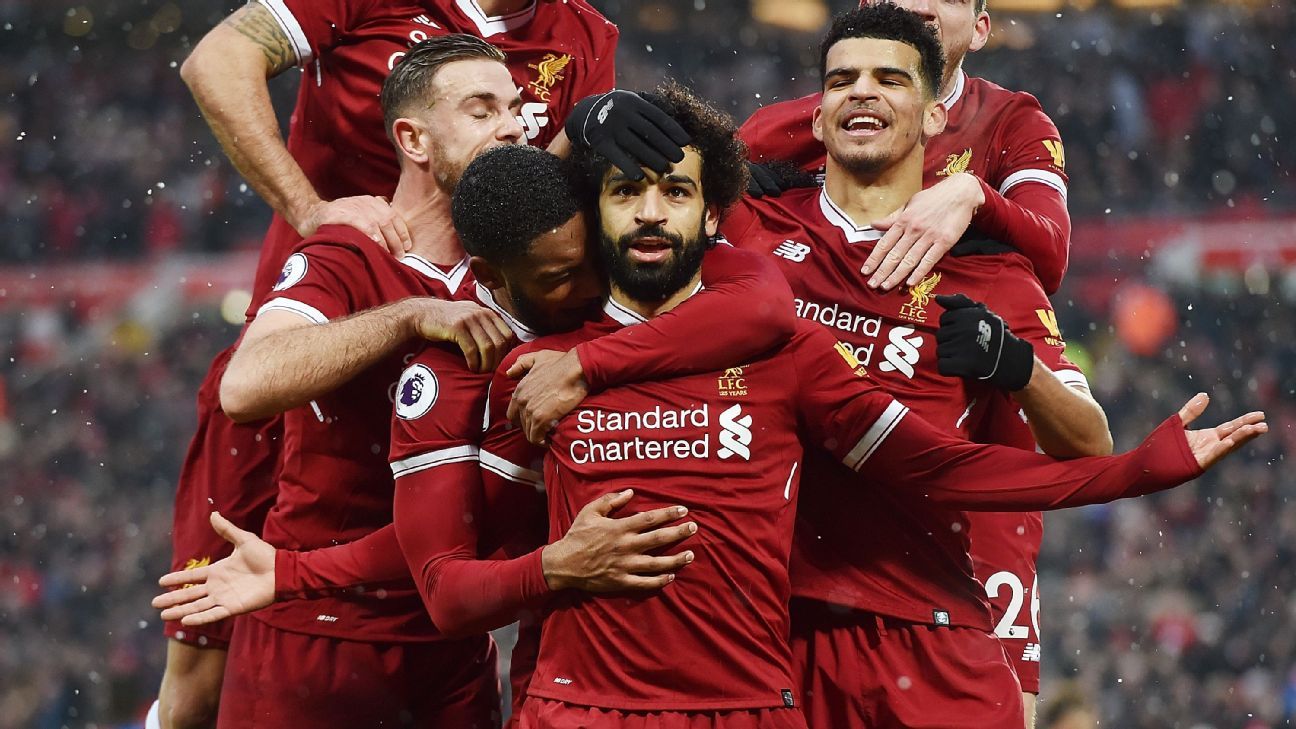
Mohamed Salah formally broke the news on Tuesday that many Liverpool fans had felt was coming for several months: that he will be cutting his contract short and leaving Anfield on a free transfer at the end of the season.
Salah signed a new two-year deal with the Reds last summer. However, since then a dip in form, a slip down the pecking order, an explosive public outburst and a subsequent nosedive in his relationship with head coach Arne Slot, has seen the Egypt international fail to get as much game time as he feels he deserves.
However, since arriving in 2017, Salah has firmly established himself as one of Liverpool’s greatest-ever players and will undoubtedly depart a hero regardless of the current circumstances.
– Why Salah beats Ronaldo, Henry as Premier League’s greatest
– Salah will get the Liverpool farewell, but he leaves a void to fill
– Liverpool’s ‘greatest’: Mohamed Salah saluted by teammates
The 33-year-old has scored 255 goals in 435 appearances for the club (putting him third on their all-time list) and been instrumental in two Premier League title triumphs, domestic cup successes and the UEFA Champions League trophy in 2018-19.
He has also collected a number of individual plaudits, including three PFA Players’ Player of the Year awards, two Premier League Player of the Season awards and four Premier League Golden Boots.
Salah was also bestowed with the illustrious Puskás Award as part of The Best FIFA Award gala night in 2018, which — unlike the majority of his vast array of prizes and trophies — raised more than a few quizzical eyebrows around the world.
The forward was handed world football’s Goal of the Year award via an online fan vote for his strike against Everton in December 2017, when he collected the ball on the edge of the box before darting between two defenders and curling an exquisite finish beyond the goalkeeper.
Of course, it was and remains a perfectly decent goal. Yet many at the time were baffled to see Salah’s effort deemed to be the most beautiful goal scored that year … when it wasn’t even his best goal of 2017-18, or anywhere close.
The sentiment was even echoed by teammate James Milner, who offered wry congratulations to his then-Liverpool teammate after the winner was announced, fending off competition from Cristiano Ronaldo, Gareth Bale and a clutch of scorching golazos from the 2018 FIFA World Cup.
“Congrats Mo Salah on your 7th best goal from last season winning goal of the year,” Milner wrote in a social-media post which also featured “#oneofmanyworldies” among several hashtags and emojis.
But was Milner right? By our count there were at least six Salah strikes from his imperious 2017-18 season that deserved a place on the Puskás short list ahead of his goal in the Merseyside derby. But, whether you agree with this subjective list or not, it serves as a reminder of just what a player Salah has been for Liverpool.
Salah scored twice in a 3-0 victory against Southampton including a lovely effort from outside the box. The precise, angled finish was fairly similar to his strike against Everton but from a little further out.
2. Nov. 29, 2017 vs. Stoke City
Another rampant 3-0 win saw Salah score the goal of the game when he connected with a dinked cross from Sadio Mané to thump a vicious volley past the goalkeeper. The powerful finish was actually voted Goal of the Month by Liverpool fans.
Liverpool inflicted a first Premier League defeat of 2017-18 on Manchester City with a frantic 4-3 victory over the leaders at Anfield that went down as the game of the season. The score went from 1-1 to 4-1 in the space of just nine hectic minutes with Salah scoring what proved to be the decisive goal with an audacious 35-yard lob.
Liverpool and Spurs contested another dramatic thriller that saw the two sides trade stoppage-time goals in a pulsating 2-2 draw at Anfield. Salah opened the scoring for the home side before Victor Wanyama pegged them back with an absolutely monstrous hit from distance. The Egypt international then looked to have snatched a 91st-minute win when he wriggled through a cluster of four defenders and belted it past Hugo Lloris. However, a 96-minute penalty from Harry Kane spoiled the party somewhat.
5. March 17, 2018 vs. Watford
Salah scored four goals (and assisted the other) in a 5-0 rout at Anfield on what proved to be one of many virtuoso displays for the nimble forward this season. His first was good, the second was slick and the third was nigh-on ingenious as the Reds star somehow fended off an entire pack of defenders before prodding an improvised finish past the goalkeeper.
6. April 24, 2018 vs. AS Roma
If you’ll forgive the obvious pun, Salah filed another five-star performance in Liverpool’s 5-2 thrashing of his former club in the first leg of the Champions League semifinal. He opened the scoring with his best goal of the night, curling an immaculate shot beyond the outstretched arm of future teammate Alisson Becker. He then dinked home a second before laying on assists for the Reds’ third and fourth goals of the evening.
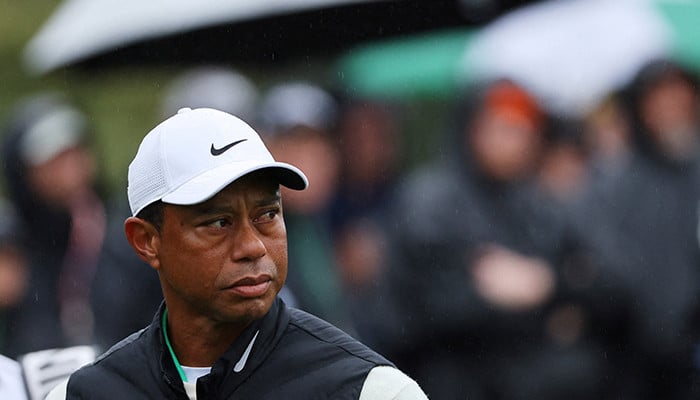
Tiger Woods’ turbulent career veered into fresh turmoil on Friday when the golf icon was arrested and charged with driving under the influence after a rollover crash near his Florida home, authorities said.
Woods, 50, escaped injury but was detained after his vehicle clipped a truck while attempting to overtake on a residential road on Jupiter Island, flipping onto its side before sliding to a stop.
Martin County Sheriff John Budensiek said Woods — who was arrested for driving under the influence in 2017 — showed signs of “impairment”, although he passed a breathalyser test.
“When it came time for us to ask for a urinalysis test, he refused, and so he’s been charged with DUI, with property damage and refusal to submit to a lawful test in the crash,” Budensiek said.
The 15-time major champion was released later on Friday, with Florida law requiring him to remain in jail for at least eight hours before he could post bail.
Budensiek said drug recognition experts who examined Woods at the scene found the golfer “lethargic” and believed he was impaired with “some kind of medication or drug.”
No drugs or medication were found in his vehicle and since Woods refused the urine test, his right under Florida law, authorities “will never get definitive results as to what he was impaired on at the time of the crash,” Budensiek said.
‘Could have been worse’
While neither Woods nor the driver of the other vehicle was injured, Budensiek said the incident on the two-lane road “could have been a lot worse.”
“Had somebody been moving in the opposite direction, we would not be having a conversation saying there was no injuries,” he said.
Budensiek said he didn’t know how fast Woods was driving in the moments before the crash.
He said the driver of the truck had slowed to make a turn, then tried to move to the side of the road when he saw Woods’s fast-moving vehicle attempting to overtake him.
“When I show you the photos, they kind of speak for themselves … you can see that [Woods] slid for a decent space before he came to a stop,” said the sheriff, who said that after the crash Woods climbed out of the passenger-side window of his Land Rover.
President Donald Trump expressed sympathy for Woods in remarks to reporters in Miami following the incident.
“He’s got some difficulty, there was an accident, and that’s all I know,” Trump said. “Very close friend of mine. He’s an amazing person, amazing man, but, uh, some difficulty.”
Woods was arrested in Jupiter in 2017 after police found him asleep at the wheel of his damaged car. Woods eventually pleaded guilty to reckless driving and said he had taken a mix of painkillers.
Five years ago, Woods was involved in a serious car crash in California that left him with severe right leg injuries that required pins inserted in his foot and ankle and a rod in his tibia as well as a follow-up surgery in 2023.
Woods returned from that crash at the 2022 Masters, where he struggled to walk all four rounds on the way to a 47th-place finish.
Woods, whose clean-cut image was left in tatters after a 2009 sex scandal that upended his career, has been working to return from an Achilles tendon rupture last March and back surgery last October.
He competed earlier this week in the TGL simulator indoor golf league finals and had not ruled out playing in next month’s Masters, where his five victories include his first major title in 1997 and his most recent in 2019.
“This body … it doesn’t recover like it did when it was 24, 25. It doesn´t mean I’m not trying,” Woods said. “I keep trying.”
Woods, whose 82 PGA Tour career victories are level with Sam Snead for the all-time record, has not competed on tour since missing the cut at the British Open in July 2024.
He last made the cut at the 2024 Masters, where he finished 60th.
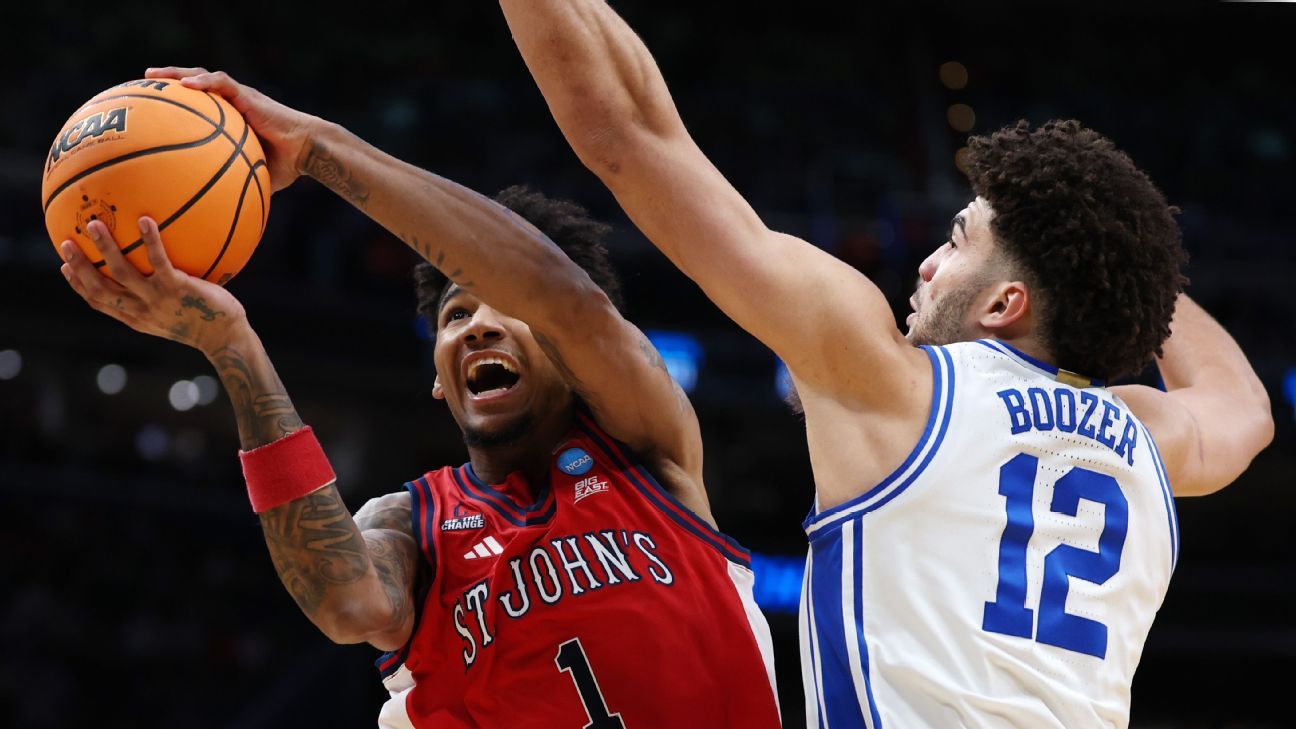
The first half of the Elite Eight is set with Arizona, Illinois, Purdue and Iowa punching their tickets Thursday. Who could join them in the regional finals of the 2026 men’s NCAA tournament?
ESPN reporters on-site in Chicago and Washington, D.C. tracking Friday’s Sweet 16 action in real-time.
Jump to: Game previews, predictions
SWEET 16 LIVE TRACKER

SWEET 16 PREVIEWS
All times Eastern.
9:45 p.m., CBS
Borzello’s prediction: UConn 68-64
Medcalf’s prediction: UConn 70-65
How Michigan State can advance to Elite Eight: Personnel matchups generate the most headlines during the NCAA tournament, but coaching matchups are equally — if not more — impactful. During a tenure that began in 1995, Tom Izzo has developed an uncanny ability to zero in on an opposing team’s top players and create problems for them. That’s the Spartans’ ticket to another Elite Eight.
Izzo’s primary mission against UConn is to limit Tarris Reed Jr.’s impact on the game. The Huskies are a different team when he’s a dominant presence in the post. If Reed is grabbing offensive rebounds and giving them an abundance of second-chance opportunities, Michigan State will be in a tough spot. The good news for the Spartans is that they are connecting on 35.9% of their 3-point attempts and capitalizing on second-chance opportunities with a No. 10 national ranking in offensive rebounding rate. It will be key for them to hit more 3s, extend UConn’s defense and create more paths to the basket for Jeremy Fears Jr. & Co. They have to give UConn a reason to guard on the perimeter — if the Spartans just allow the Huskies to sit in the lane, challenge shots around the rim and grab rebounds, Michigan State could lose.
Izzo has been in this position before — against better teams — and won. His experience will matter in a matchup against Dan Hurley.
How UConn can advance to the Elite Eight: To beat Izzo, UConn will have to show up as the top-notch defensive outfit that held UCLA to just a 39% clip inside the arc in the second round. The Huskies’ win over the Bruins served as a reminder that they can be a great defensive team when they want to be. In the Big Ten tournament, UCLA had produced 132 points per 100 possessions in a win over Michigan State. In the round of 32, the Bruins — who played without leading scorer Tyler Bilodeau (knee) — scored only 57 points, their second-lowest total of the season. UCLA star Donovan Dent had nine assists but also finished 2-for-9 shooting with a pair of turnovers. That’s the same attention UConn will need to give Fears. When he’s comfortable, Michigan State’s offense soars. The Huskies can’t let that happen.
On offense, Braylon Mullins could be an X factor. Reed had a double-double against UCLA but not the historic numbers he put up against Furman in the first round (31 points, 27 rebounds). Alex Karaban recorded a career-high 27 points against the Bruins, with Solo Ball and Silas Demary Jr. scoring two points combined. If Reed and Karaban can create a balanced inside-outside attack, Michigan State will have to find a way to disrupt that, which could give Mullins — who is averaging 14.5 points in two NCAA tournament games — more freedom and opportunities to make plays and create off the dribble or on off-ball screens.
The Huskies have a multitude of options to score, and as long as most of them are effective, they can get back to the Elite Eight. — Medcalf
10:10 p.m., TBS/truTV
Borzello’s prediction: Iowa State 67-65
Medcalf’s prediction: Iowa State 74-68
How Tennessee can advance to the Elite Eight: To beat Iowa State, Tennessee will have to play the same disciplined defense that stopped Virginia in the final minutes of Sunday’s second-round game. That task begins with Felix Okpara, who had four blocks against the Cavaliers and altered other shots, including a late drive by Thijs De Ridder that Okpara blocked during Virginia’s comeback attempt. Opposing players had made only 30% of their shots around the rim against Okpara entering Sunday’s game, per Synergy Sports data. He’ll have to protect the rim against Iowa State, which had a significant advantage in paint points against Kentucky (34-20) — but he won’t have to do it alone.
Tennessee has the personnel to handle every one-on-one matchup defensively. The Vols can guard at every spot. They will have to put pressure on Tamin Lipsey, sharpshooter Milan Momcilovic and Joshua Jefferson, if he plays, to win. That defensive effort coupled with standout performances from Ja’Kobi Gillespie and Nate Ament would be the formula for a Tennessee trip to the Elite Eight.
How Iowa State can advance to the Elite Eight: With or without Jefferson, Iowa State will have the same blueprint against Tennessee: Move the ball to find the best shot on offense, force turnovers with defensive pressure and score on fast breaks. Although they didn’t have Jefferson, who is a game-time decision because of an ankle injury, the Cyclones forced 20 turnovers in their second-round win over Kentucky. Playing through Lipsey — who finished with 26 points, 10 assists and only three turnovers against Kentucky — the Cyclones registered 150 points per 100 possessions and made 63% of their shots after halftime. They are 18-2 when Lipsey’s assist-to-turnover ratio is 3-to-1 or better.
Gillespie and Ament combined for five turnovers in Tennessee’s second-round win over Virginia. Iowa State can pressure that duo into the same mistakes Otega Oweh and Denzel Aberdeen (eight turnovers combined) made for Kentucky, even if Jefferson sits out another game. That’s how the Cyclones can advance. — Medcalf


Zayn Malik shares personal video message on ‘Mind of Mine’ 10th anniversary

EU Parliament, Council reach deal on major reform of Customs Code
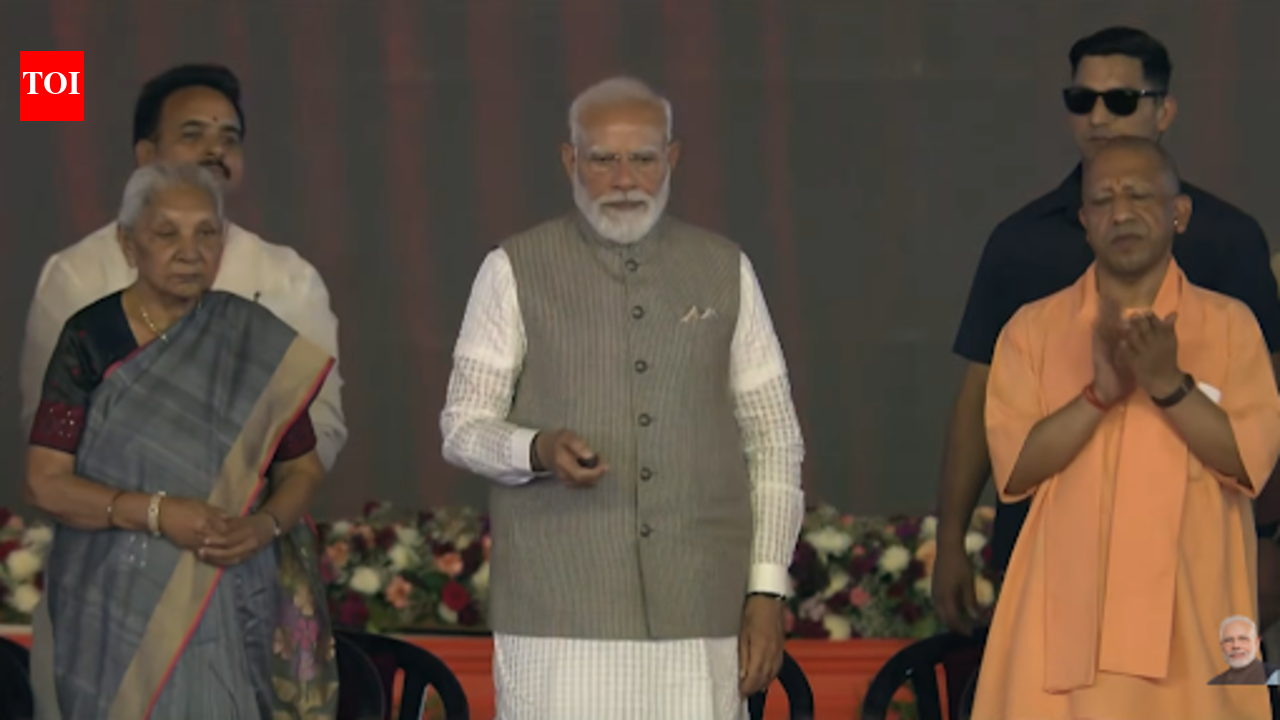
Noida International Airport inauguration: Delhi-NCR gets new airport – all you need to know – The Times of India

-
 Business1 week ago
Flipkart group CFO to leave co amid IPO plans – The Times of India
-
 Business1 week ago
Video: The Effects of High Oil Prices
-

 Fashion1 week ago
China’s textile & apparel exports surge 17% to $50 bn in Jan-Feb 2026
-

 Sports1 week ago
Rating Adidas’ 2026 World Cup away shirts: Argentina, Spain, Mexico and more
-

 Fashion1 week ago
The hidden $1.62 war tax now embedded in every garment you source
-

 Sports1 week ago
American Conference Commissioner Tim Pernetti thanks Trump for Army-Navy game executive order
-
Tech1 week ago
The Corsair 4000D RS PC Case Keeps Your System Cool
-

 Tech1 week ago
‘Uncanny Valley’: Nvidia’s ‘Super Bowl of AI,’ Tesla Disappoints, and Meta’s VR Metaverse ‘Shutdown’