

Sports
‘Coastal Chaos’ and 7-5 Duke: Can the ACC’s longstanding problems ever get resolved?

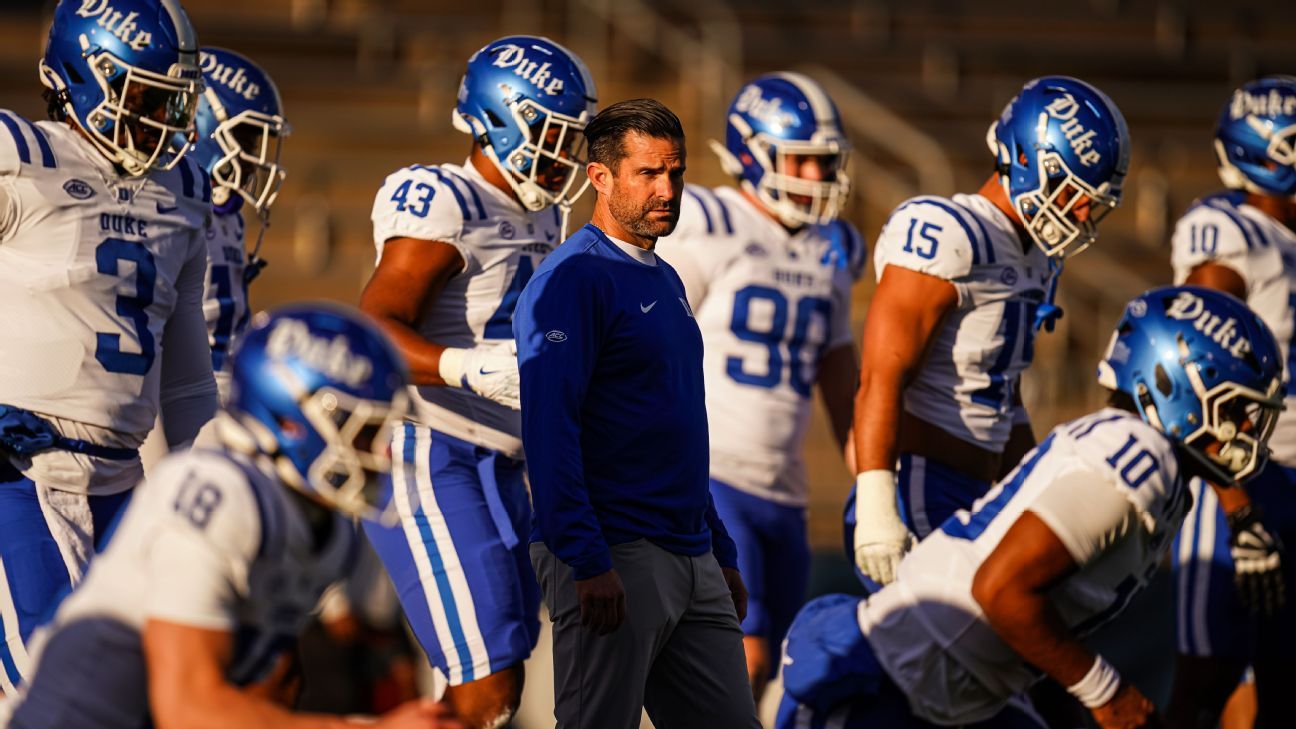
THERE ARE TWO ways of looking at the situation the ACC faces entering Saturday’s championship game in which Duke, a 7-5 team with multiple losses outside the Power 4, could win the conference and, in doing so, keep the league out of the College Football Playoff altogether.
The first is that it’s simply a quirk of modern college football — sprawling conferences with limited crossover between teams inevitably leading to a scenario where esoteric tiebreakers come into play. The ACC’s system isn’t much different than other conferences, the policy was approved by coaches and ADs, and Duke, for all its flaws, went 6-2 in league play.
The other perspective, however, is that the ACC — for reasons rational, coincidental and, perhaps, metaphysical — attracts the unusual.
The latter philosophy might be a charming quirk of the conference if the stakes weren’t so high. The ACC’s Wheel of Destiny, “Coastal Chaos” and the social media stalwart #goacc have been fundamental to the league’s identity for nearly two decades. But as the business of college football has gotten bigger, the rewards of success richer, and the battles for conference supremacy more intense, the ACC’s role as college football’s most colorful band of swashbuckling misfits isn’t so fun for the coaches whose careers hang in the balance and the programs desperate to keep pace in a rapidly evolving landscape in which the ACC often feels woefully behind.
“The ACC is becoming a laughingstock,” one former ACC coach said. “It’s not a cool place to be.”
Duke’s presence in Charlotte on Saturday (vs. Virginia, 8 p.m. ET on ABC) is a result of a five-way tie for second place in the league, but also, according to a dozen current and former ACC coaches and administrators who spoke to ESPN, a symptom of longstanding problems — issues some coaches and ADs saw coming more than a decade ago — that have put the conference in increasingly difficult circumstances.
The responses varied from relative optimism: “It’s cyclical,” one current coach said. “The portal and NIL definitely were a problem, but revenue sharing will level that back out in the coming years”
To pessimism: “It’s resources,” another current coach said. “The SEC and Big Ten have more to spend on football, and they have big collectives to supplement their cap.”
To frustration: “The league has a basketball-first mentality,” one administrator said. “And it drives me fricking crazy.”
To exhaustion: “How much time have you got?” another coach added.
FIRST, A REALITY check: The ACC distributes the third-most revenue to its members of any conference, a figure that has doubled over the past decade. The ACC has as many national championships and title game participants in the playoff era as the Big Ten, and more than any league but the SEC since the advent of the BCS championship. The conference is one of three with a fully distributed TV network, had two playoff teams a year ago and has had eight different teams ranked in the AP Top 25 this year alone. Commissioner Jim Phillips has worked to revamp revenue distribution models to better support the biggest brands, and his efforts have widely been commended by the coaches and ADs who spoke with ESPN.
If the sky is falling, it’s happening gradually, but increasingly publicly.
“The ACC has two problems,” one former ACC coach said. “The real ones and the narrative.”
Yes, the narrative. Even in good times, the national perspective is that the ACC is living on borrowed time.
When Phillips was pressed on whether his league was treated fairly — including by its TV partner — during the league’s kickoff event in July, he admitted he has his frustrations but ultimately put the onus on his own membership to change the talking points.
“You may feel that way, and sometimes I may feel that way,” Phillips said about being treated as a lesser league, “but … one of the things we have to do is we’ve got to perform better. We have to do our part.”
Many of the ACC’s wounds are self-inflicted.
Within the past year, two of the conference’s biggest brands — Clemson and Florida State — filed suit against the league in hopes of nullifying its grant of rights. Leaders of numerous schools have complained about a TV contract that puts the ACC well behind the Big Ten and SEC financially. A 2-11 bowl season last year — including two losses in the opening round of the playoff — offered ample evidence of the league’s shortcomings. Miami, the ACC’s clear-cut best team in 2025, might get left out of the playoff because, among other reasons, the Hurricanes didn’t reach the ACC championship game.
Even if the narrative is exaggerated, the reality still feels bleak.
“We were asleep at the wheel for years,” said one administrator, who included his own school as a culprit. “We watched investments, negotiations, people positioning for the future being done while we just sat there and looked around. We weren’t investing in football as a league, when everybody else knew that was the future. And we’re still not.”
FOR MOST OF its history, the ACC, more than any other power conference, reaped major money from men’s basketball. But by the early 2010s, what had been a roughly 50-50 split in revenue shifted hard toward football. Other leagues understood the pivot, according to numerous coaches and administrators who were in the ACC in that era, but the ACC remained steadfastly devoted to hoops.
Two former ACC coaches recalled a meeting in 2014, just after Florida State’s national championship and six years before Phillips would take over as commissioner, in which former Noles coach Jimbo Fisher conveyed an ominous future.
Fisher was one of the handful of ACC coaches eager to go toe-to-toe with the SEC on the recruiting trail, and for years, he won his share of battles. But as facilities at FSU atrophied, staff sizes at SEC schools ballooned, and the competition for elite talent stiffened, he realized the ACC was being lapped by its primary competitor. If the conference didn’t shift its priorities immediately, the ACC risked being left in the dust.
A few coaches nodded in agreement, but little changed.
“You could tell there was frustration,” said one of the former coaches who was a part of that meeting. “The ones recruiting against the SEC were starting to get their asses kicked. We all saw this coming.”
Many of the coaches and ADs who spoke with ESPN praised Phillips’ efforts to modernize the conference but said the culture that led the ACC to fall behind in the past remains embedded into the league’s DNA for too many schools. For all of Phillips’ efforts to push the ACC toward a more aggressive plan of action, he works for university presidents, who’ve too often been out of step with the modern college football landscape, according to nearly everyone who spoke with ESPN.
The league’s cultural identity as a basketball conference was a common complaint among coaches and ADs who spoke with ESPN, and an engrained philosophy of doing more with less convinced even bigger schools that investment wasn’t necessary. After all, if Frank Beamer, Bobby Bowden and a host of Miami coaches had won big without throwing millions of dollars at players and building massive football operations buildings, why couldn’t the new cast of coaches?
The ACC’s three biggest brands — Clemson, Miami and Florida State — each won at least eight games in 2013, 2015 and 2016. Since then, there has not been a single year in which they all finished with eight or more wins. It’s a problem Phillips has noted often. If the signature teams don’t win, the storylines move elsewhere. Unlike the rise of programs like Indiana and Vanderbilt, when teams like SMU or Virginia have success, the national perspective often suggests it’s the result of a down league, because the ACC’s signature brands haven’t met expectations.
Meanwhile, the SEC’s big three (Alabama, Georgia, LSU) and the Big Ten’s (Ohio State, Penn State, Michigan) have each hit the eight-win mark together six times since the ACC last did.
The reason, one coach who has worked across multiple Power 5 leagues said, is the arrivals of Nick Saban at Alabama and Urban Meyer at Ohio State.
“All colleges suffer from inertia,” the coach said, “but Saban came in and wrecked things.”
Saban and Meyer wielded massive influence and forced huge investments that dwarfed their competition. As a result, the competition — particularly at the top of both leagues — followed suit in an effort to keep up.
It took years before the results of those investments became obvious, but the SEC and Big Ten got a head start.
The ACC is just recently coming to the same conclusion.
IN THE ACC, Fisher left Florida State in 2017 in large part out of frustration over the lack of investment. Mario Cristobal came to Miami in 2022 only after promises for massive new influxes of cash. Bill Belichick required a $20 million investment in player acquisition before he accepted the North Carolina job last year, and Virginia Tech used a promised $249 million increase in athletics spending this fall to land James Franklin.
“Virginia Tech has money. Miami found the money. Schools didn’t have the wherewithal,” the coach said. “They were fooling themselves or didn’t have the urgency to compete on that stage.”
The question is whether it’s too little, too late.
In the early years of the NIL era, the ACC was woefully behind, with a number of schools late to develop and fund collectives, and many boosters at elite academic institutions reluctant to supplement what they viewed as a top-tier degree.
Even in the revenue-sharing era, which began in July 2025 and allowed ACC schools to spend directly on player acquisition, the ACC remains behind. SEC and Big Ten schools are able to supplement the $20.5 million revenue-sharing cap through collectives and other NIL avenues, while a number of ACC schools aren’t even fully funding their revenue share opportunities.
Coaches who’ve spoken with ESPN on the subject repeated a similar mantra: The best recruits increasingly see the SEC and Big Ten, with more money to spend on facilities, coaching staffs and player acquisition, as the “big leagues,” and the ACC isn’t viewed on the same plane.
“We lose to them all the time because of their brand,” one coach said.
That sets up an obvious catch-22: The league with less money to spend then needs to overpay to lure talent.
“Everything’s about money right now,” the coach said. “If you have more money, you can buy better players. If you have better players, you have a better product. If you have a better product, the narrative changes.”
The data tends to bear this out.
For the 2013-14 fiscal year — which included Florida State’s national title — the ACC distributed roughly the same amount to its membership on average ($20.8 million), according to financial reports, as the SEC ($20.9). By 2018, the SEC was distributing about $25 million per team more than the ACC. Similar trends hold for the ACC’s relative financial position against the Big Ten. For the 2023-24 fiscal year (the most recent data available), the ACC distributed $45 million per team on average, more than double what it delivered to membership 10 years earlier, but still nearly $20 million annually behind the Big Ten, and those disparities only figure to grow.
In the early 2010s, the ACC was firmly in second place behind the SEC in terms of talent acquisition and production. From 2013-15, for example, the ACC signed 80 blue-chip recruits, compared with 68 in the Big Ten. During that same period the ACC had 119 players selected in the NFL draft, compared with just 85 from the Big Ten. By the latter half of the decade, however, the roles had reversed. From 2018-20, the Big Ten had 85 blue chips and 121 NFL draft picks. The ACC had 70 blue chips and 100 draft picks. The gap has continued to widen with both the Big Ten and the SEC.
Between 2013 and 2018 — the year of FSU’s national title to Clemson’s second one — the ACC played even with the SEC on the field, too, with a 32-33 record in cross-conference matchups. Since then, the ACC has gone 25-48 vs. the SEC, including a 9-19 mark by the ACC’s ranked teams.
“You get what you pay for,” a longtime coach said. “The other two leagues we’re always being compared for have better TV contracts and a lot more money. And some universities are really investing more money into their football program.”
It’s not just the TV deal, however. After media rights, the next biggest revenue stream for most schools is ticket sales, and again, the ACC is lacking. While Clemson, Florida State and Virginia Tech continue to fill large stadiums, the ACC’s larger footprint is defined by smaller, private schools with limited alumni bases and often depressingly small crowds. While several ADs said they had argued in favor of conference expansion for years ahead of Texas and Oklahoma leaving the Big 12 for the SEC, kicking off the latest round of realignment, the ACC waited. Then, largely to secure its own TV deal in case some schools opted to leave, added more small, private schools or underfunded athletics departments in SMU, Stanford and Cal, because they “fit the image” of the ACC’s brand.
One administrator lamented the ACC’s Week 14 slate, which featured a blockbuster game between Miami and Pitt, two ranked teams, and another West Coast affair between SMU and Cal with huge conference championship implications and a pair of exciting QBs. Both games played in half-empty stadiums. A week earlier, Georgia Tech faced off against rival Georgia — originally a home date for the Jackets — at Atlanta’s Mercedes-Benz Stadium. Tech earned millions for playing at a neutral site, but the venue was overwhelmed by Bulldogs fans, and Georgia ultimately prevailed with a 16-9 win.
“Beyond the dollars and cents — and yes, that matters — but when you get into the passion, that leads into recruiting weekends and talent and competitiveness,” an ACC administrator said. “In the ACC, [rabid support happens] once in a blue moon. In the SEC, it’s there every game, every school. You can feel that. And over the past five, 10 years, that’s started to spin a whole lot quicker, and it’s a part of the competitive gap we’ve seen.”
Compare the expected attendance in Charlotte for the ACC championship game between Virginia and Duke with what the Big 12 figures to draw for its title game between Texas Tech and BYU. The ACC has the feel of a complete afterthought, with only the dark humor of a potential Duke win drawing national attention. The Big 12 is expecting a record turnout of more than 80,000 fans. The Big 12’s TV deal pays less than the ACC’s, but in terms of engagement, it dwarfs what many ACC schools manage.
That meager fan interest can morph into a vicious cycle. One former administrator at what’s traditionally seen as a basketball school lamented conversations with university leadership years ago about increasing investment in football.
“[Leadership] just didn’t think they’d get a return on investment,” he said. “And they may have been right.”
The up-and-down fan engagement also means ACC schools often play it safe. One coach noted Tennessee‘s failed hire of Jeremy Pruitt in 2018. As bad as it went on the field, he said, “They were still drawing 100,000 at Neyland [Tennessee’s stadium].” In other words, the revenue stream from ticket sales didn’t plummet and put the Volunteers into a downward spiral. In the ACC, the reward is almost never worth the risk, because a bad hire can set a program back years financially (see Willie Taggart and Florida State) which in turn means potentially missing the next big thing.
SO WHERE IS this all heading? Would a Duke win Saturday be another nail in the ACC’s coffin?
Revenue sharing has helped. While ADs are still scavenging to find money to meet budget needs, the ability to spend directly — rather than asking donors to fund collectives — has evened the playing field some. But coaches repeatedly said new regulations from the House settlement offer only minimal impediments for schools looking to go above and beyond. Because House rules didn’t go into effect until July 2025, many schools around the country front-loaded NIL contracts, too. Several coaches pointed to Texas Tech and its reported $30 million football roster, as a prime example of turning spending into results. The fear, they said, is the Red Raiders become the new blueprint, and the ACC will be once again chasing the market.
Without more money, there’s no sustainable way to keep pace.
“There needs to be a creative way to generate money,” a coach said. “We need more money. It’s all about money. It’s not for a lack of doing the right thing, and Jim has increased our revenue. But compared to those other two leagues, it’s not enough.”
The ACC does seem to be taking notice. Virginia Tech’s investment is encouraging, several coaches said. Cal and Boston College, two schools widely critiqued for underfunding their programs, have promised renewed spending. There’s hope the House settlement will result in more parity, a chance for ACC schools to compete on a somewhat level playing field. The lawsuits filed by Clemson and FSU were settled, the ACC agreed to a new revenue distribution that will shift more money to its most-watched schools, along with success initiatives that incentivize postseason play. The conference has also hired a new chief revenue officer and marketing leadership, sold new sponsorships for its championship games and was widely praised for offering new insider access to replay decisions during games this year.
But the ACC’s TV deal is set until 2036. Part of the settlement with FSU and Clemson was a drastically reduced financial penalty should a school decide to leave the conference in search of greener pastures. Regulation of NIL benefits has, thus far, been a mixed bag at best.
There is a path forward, but it’s a perilous one. No school, one administrator said, can manage it with a half-hearted approach to success.
Is the ACC ready for what it requires to win at the highest levels in modern college football?
Ironically for a league criticized as too focused on basketball, one administrator pointed to increased investment in that sport as a potential harbinger of better times ahead. In the past few seasons, the ACC’s hoops pedigree waned, as a bevy of Hall of Fame coaches exited for retirement. New blood was needed, but also new money. After the league didn’t see the type of success it traditionally has in 2024-25, a number of schools ponied up.
So far, the results have been better.
That can happen for football, too, the administrator said, if the same investments follow, only on a broader scale.
It’s a big “if” for a league that has spent much of the past decade short on cash and buried under a mountain of failures, missteps and jokes.
“‘It just means more’ is the slogan in the SEC,” a former coach said. “I can’t even remember what our slogan is.”
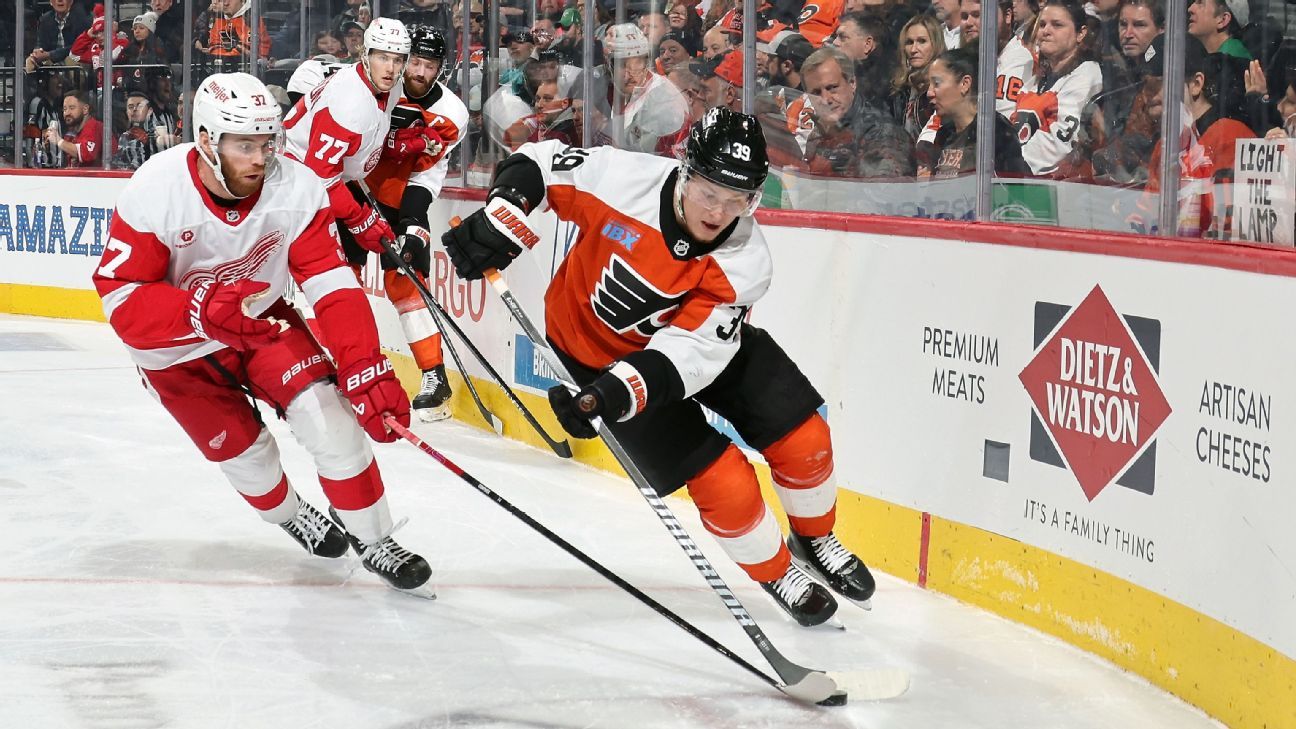
There are just three weeks until the start of the 2026 Stanley Cup playoffs. As chaotic as the standings have been the past few weeks, it’s only going to get wilder now that the pressure is ramped up.
NHL fans are in for a treat on what’s been dubbed Showdown Saturday, with 15 games throughout the course of the day.
And instead of the usual “eight games starting at 7 p.m. ET” trick, the start times have been staggered earlier in the day, too!
So without any further preamble, let’s dive right into the storylines ahead of each contest in regards to playoff positioning, the draft lottery and more:

Ottawa Senators at Tampa Bay Lightning
1 p.m. ET (ESPN+)
The Senators were in a playoff spot earlier this week, and are pushing to get there again. They enter play a point behind the Islanders and two behind the Bruins for the wild-card spots; importantly, Ottawa holds the regulation-wins tiebreaker over both of those clubs. On the other side, the Lightning still have designs on an Atlantic Division title; they are two points and two regulation wins behind the Sabres, with two games in hand.
Florida Panthers at New York Islanders
1 p.m. ET (ESPN+)
Well, we knew the Panthers might be a little out of sorts this season after two straight Cups (and a Cup Final appearance the year before that), and their playoff hopes are closing in on zero. However, they are in line for a top-10 draft pick, currently sitting No. 8 in the lottery standings. The Islanders are hanging on to a playoff spot by a thread; getting wins in games like this one against a non-playoff team are crucial.


Anaheim Ducks at Edmonton Oilers
3:30 p.m. ET (ESPN+)
If you’d told a hockey fan prior to the season that this game would pit a team with a five-point Pacific Division lead against one battling it out for the No. 2 or 3 seed, they’d likely have replied, “Wow, good for the Ducks to eke their way in!” Instead, it’s Connor McDavid and friends whose playoff lives are in a bit more peril. A win here by Anaheim would put it seven points ahead of Edmonton, while a decision the other way would drop the Ducks’ lead to three.


Minnesota Wild at Boston Bruins
5 p.m. ET (NHL Network)
This will be the final meeting of the season between U.S. Olympic teammates Charlie McAvoy and Jeremy Swayman (Bruins) with Quinn Hughes, Matt Boldy and Brock Faber (Wild) — unless they meet again in the Cup Final. The Wild are on the cusp of clinching a spot, with a magic number of two; the Bruins have quite a bit more work to do, with the Senators and Red Wings nipping at their heels. Also of note: the B’s are just two points back of the Canadiens for the No. 3 spot in the Atlantic.


Dallas Stars at Pittsburgh Penguins
5 p.m. ET (ESPN+)
Another green vs. yellow matchup! The Stars have clinched a postseason spot and are likely to be paired up with the Wild in Round 1, as they enter Saturday nine points back of the Avalanche for first in the Central. Pittsburgh has been swapping spots with the Blue Jackets and Islanders recently. As it stands heading into this one, the Penguins are the Metro’s No. 2 seed, one point and two regulation wins ahead of both Columbus and New York.


New Jersey Devils at Carolina Hurricanes
5 p.m. ET (ESPN+)
The Hurricanes appear destined to win another Metro crown, with an eight-point lead over the Penguins. What remains to be won is the Eastern Conference’s No. 1 seed; Carolina enters the day tied in the standings with Buffalo, but ahead on the games played tiebreaker. Of note, they have five fewer regulation wins than the Sabres. As for the Devils, a late-season surge has been encouraging for 2026-27, but a playoff spot would require an extraordinary amount of help from opponents of the teams ahead of them. New Jersey sits No. 12 in the draft lottery standings.

San Jose Sharks at Columbus Blue Jackets
5 p.m. ET (ESPN+)
Last season, the Blue Jackets remained in the playoff race until the final week of the season, ultimately just missing the cut by two points. This season, the Hockey Gods appear to be on their side, as they hold the Metro’s No. 3 spot heading into Saturday. They are a point behind the Penguins for second, and a tiebreaker ahead of the Islanders. San Jose finished 44 points out of a playoff spot in 2024-25, so the fact that they have any chance at all at this stage is a vast improvement. But if they are going to make it, they’ll need to start earning points more regularly; the Predators hold the second Western wild card six points ahead of the Sharks, and the Golden Knights are eight points ahead in the battle for third in the Pacific.


Seattle Kraken at Buffalo Sabres
5:30 p.m. ET (ESPN+)
The Kraken are even closer to the playoff mix than the Sharks — three points behind Nashville, five behind Vegas — but face an even more challenging opponent Saturday. The Sabres are on an epic run; as a result, they hold a two-point lead in the Atlantic Division, and are a tiebreaker behind Carolina for first overall in the East.


Toronto Maple Leafs at St. Louis Blues
7 p.m. ET (ESPN+)
This is the first matchup of the slate featuring two lottery-bound teams; unfortunately for the Leafs, their pick belongs to Boston unless it falls in the top five. As of now, Toronto is 10th in the lotto standings, in the middle of a cluster of eight teams between 71 and 76 points. One of the teams at the end of that cluster is the St. Louis Blues, who hold the No. 5 position with 71 points.


Montreal Canadiens at Nashville Predators
7 p.m. ET (ESPN+)
Is it a bigger surprise that the Canadiens are on pace for 104 points, or that the Predators are in line to earn a playoff spot after how dreadful last season (and the start of this one) went? Montreal is four points (and seven regulation wins) back of Tampa Bay for second in the Atlantic, and has a two-point edge on Boston to retain their No. 3 position. Nashville is just a point ahead of Los Angeles for the second Western wild card, and three points behind Utah for the first.

Winnipeg Jets at Colorado Avalanche
7 p.m. ET (ESPN+)
The NHL awards the Presidents’ Trophy to the team with the best regular-season record. In 2024-25, that team was the Jets. In 2025-26, that team will likely be the Avalanche. Sadly for the wonderful fans of Winnipeg, the Jets’ success last season didn’t carry over into this one, and they enter Saturday five points back of Nashville for the wild card. Maybe the club will have some lottery luck, and it enters the day in seventh in the draft standings.


Philadelphia Flyers at Detroit Red Wings
8 p.m. ET (ABC)
Time is running out for both of these teams to vault into a playoff spot. As play begins Saturday, the Red Wings are one point back of the second wild card, two back of the first, and four back of Montreal for the Atlantic’s No. 3 seed. The Flyers have four additional points to make up — although their pathway in the Metro is slightly easier, with the Blue Jackets five points ahead in the No. 3 spot and the Penguins six ahead for second.


Utah Mammoth at Los Angeles Kings
9 p.m. ET (ESPN+)
As the end of Anze Kopitar‘s career comes into sight, the Kings remain alive for a playoff berth, but must surpass the Predators for a wild card (they are one point back), the Golden Knights for No. 3 in the Pacific (they are three points behind) … or the Mammoth themselves, who are four points ahead. One wrinkle: Los Angeles will almost certainly need to get ahead of teams on standings points, as they are well behind everyone else in the regulation wins column.


Vancouver Canucks at Calgary Flames
10 p.m. ET (ESPN+)
Here’s our other draft lottery positioning game of the day — although it’s exceedingly unlikely that any team “catches” the Canucks, who are 15 points clear of anyone else in the No. 1 position in the draft lottery standings. Calgary enters the day in fourth in the lottery standings, one point behind the Blackhawks and three behind the Rangers.


Washington Capitals at Vegas Golden Knights
10:30 p.m. ET (ESPN+)
Will this be Alex Ovechkin‘s final visit to Las Vegas as a member of the Capitals? If so, his team could really use the points as it looks to chase down even a wild-card spot. As the slate begins, the Caps are six points back of the Isles and Blue Jackets, although if they do get back in the mix, their regulation-wins total (currently 31) might well beat out anyone if it comes down to tiebreakers. As for the hosts, the Golden Knights appear much more likely to return to the playoffs — largely because of the relative weakness of the Pacific Division — but could certainly use any additional points they can get to bolster their chances.
Every team has around 10 games remaining before the regular season concludes April 16, and we’ll help you keep track of it all here on the NHL playoff watch every day. As we traverse the final stretch, we’ll provide details on all the playoff races — along with the teams jockeying for position in the 2026 NHL draft lottery.
Note: Playoff chances are via Stathletes.
Jump ahead:
Current playoff matchups
Today’s schedule
Last night’s scores
Expanded standings
Race for No. 1 pick

Current playoff matchups
Eastern Conference
A1 Buffalo Sabres vs. WC1 Boston Bruins
A2 Tampa Bay Lightning vs. A3 Montreal Canadiens
M1 Carolina Hurricanes vs. WC2 New York Islanders
M2 Pittsburgh Penguins vs. M3 Columbus Blue Jackets
Western Conference
C1 Colorado Avalanche vs. WC2 Nashville Predators
C2 Dallas Stars vs. C3 Minnesota Wild
P1 Anaheim Ducks vs. WC1 Utah Mammoth
P2 Edmonton Oilers vs. P3 Vegas Golden Knights
Saturday’s games
Note: All times ET. All games not on TNT or NHL Network are available to stream on ESPN+ (local blackout restrictions apply).
Ottawa Senators at Tampa Bay Lightning, 1 p.m.
Florida Panthers at New York Islanders, 1 p.m.
Anaheim Ducks at Edmonton Oilers, 3:30 p.m.
Minnesota Wild at Boston Bruins, 5 p.m. (NHLN)
Dallas Stars at Pittsburgh Penguins, 5 p.m.
New Jersey Devils at Carolina Hurricanes, 5 p.m.
San Jose Sharks at Columbus Blue Jackets, 5 p.m.
Seattle Kraken at Buffalo Sabres, 5:30 p.m.
Toronto Maple Leafs at St. Louis Blues, 7 p.m.
Montreal Canadiens at Nashville Predators, 7 p.m.
Winnipeg Jets at Colorado Avalanche, 7 p.m.
Philadelphia Flyers at Detroit Red Wings, 8 p.m. (ABC)
Utah Mammoth at Los Angeles Kings, 9 p.m.
Vancouver Canucks at Calgary Flames, 10 p.m.
Washington Capitals at Vegas Golden Knights, 10:30 p.m.
Friday night’s scoreboard
Detroit Red Wings 5, Buffalo Sabres 2
New York Rangers 6, Chicago Blackhawks 1
Expanded standings
Atlantic Division
Points: 96
Regulation wins: 37
Playoff position: A1
Games left: 9
Points pace: 107.8
Next game: vs. SEA (Saturday)
Playoff chances: 99.9%
Magic number: 10
Tragic number: N/A
Points: 94
Regulation wins: 35
Playoff position: A2
Games left: 11
Points pace: 108.6
Next game: vs. OTT (Saturday)
Playoff chances: 99.9%
Magic number: 12
Tragic number: N/A
Points: 90
Regulation wins: 28
Playoff position: A3
Games left: 11
Points pace: 103.9
Next game: @ NSH (Saturday)
Playoff chances: 93.8%
Magic number: 16
Tragic number: N/A
Points: 88
Regulation wins: 29
Playoff position: WC1
Games left: 10
Points pace: 100.2
Next game: vs. MIN (Saturday)
Playoff chances: 65%
Magic number: 18
Tragic number: N/A
Points: 86
Regulation wins: 32
Playoff position: N/A
Games left: 10
Points pace: 97.9
Next game: @ TB (Saturday)
Playoff chances: 74.5%
Magic number: N/A
Tragic number: 19
Points: 86
Regulation wins: 28
Playoff position: N/A
Games left: 10
Points pace: 97.9
Next game: vs. PHI (Saturday)
Playoff chances: 32.1%
Magic number: N/A
Tragic number: 19
Points: 75
Regulation wins: 23
Playoff position: N/A
Games left: 9
Points pace: 84.3
Next game: @ STL (Saturday)
Playoff chances: ~0%
Magic number: N/A
Tragic number: 6
Points: 73
Regulation wins: 27
Playoff position: N/A
Games left: 11
Points pace: 84.3
Next game: @ NYI (Saturday)
Playoff chances: 0.1%
Magic number: N/A
Tragic number: 8
Metro Division
Points: 96
Regulation wins: 32
Playoff position: M1
Games left: 11
Points pace: 110.9
Next game: vs. NJ (Saturday)
Playoff chances: 99.9%
Magic number: 10
Tragic number: N/A
Points: 88
Regulation wins: 29
Playoff position: M2
Games left: 10
Points pace: 100.2
Next game: vs. DAL (Saturday)
Playoff chances: 90.1%
Magic number: 18
Tragic number: N/A
Points: 87
Regulation wins: 27
Playoff position: M3
Games left: 10
Points pace: 99.1
Next game: vs. SJ (Saturday)
Playoff chances: 82.1%
Magic number: 19
Tragic number: N/A
Points: 87
Regulation wins: 27
Playoff position: WC2
Games left: 9
Points pace: 97.7
Next game: vs. FLA (Saturday)
Playoff chances: 49.1%
Magic number: 19
Tragic number: N/A
Points: 82
Regulation wins: 22
Playoff position: N/A
Games left: 11
Points pace: 94.7
Next game: @ DET (Saturday)
Playoff chances: 10.8%
Magic number: N/A
Tragic number: 17
Points: 81
Regulation wins: 31
Playoff position: N/A
Games left: 9
Points pace: 91.0
Next game: @ VGK (Saturday)
Playoff chances: 2.3%
Magic number: N/A
Tragic number: 12
Points: 76
Regulation wins: 25
Playoff position: N/A
Games left: 11
Points pace: 87.8
Next game: @ CAR (Saturday)
Playoff chances: 0.3%
Magic number: N/A
Tragic number: 11

Points: 67
Regulation wins: 20
Playoff position: N/A
Games left: 9
Points pace: 75.3
Next game: vs. NYI (Sunday)
Playoff chances: 0%
Magic number: N/A
Tragic number: OUT
Central Division
Points: 106
Regulation wins: 42
Playoff position: C1
Games left: 11
Points pace: 122.4
Next game: vs. WPG (Saturday)
Playoff chances: 100%
Magic number: IN
Tragic number: N/A
Points: 97
Regulation wins: 33
Playoff position: C2
Games left: 10
Points pace: 110.5
Next game: @ PIT (Saturday)
Playoff chances: 100%
Magic number: IN
Tragic number: N/A
Points: 94
Regulation wins: 26
Playoff position: C3
Games left: 9
Points pace: 105.6
Next game: @ BOS (Saturday)
Playoff chances: 99.9%
Magic number: 2
Tragic number: N/A
Points: 80
Regulation wins: 28
Playoff position: WC1
Games left: 9
Points pace: 89.9
Next game: @ LA (Saturday)
Playoff chances: 96.4%
Magic number: 16
Tragic number: N/A
Points: 77
Regulation wins: 25
Playoff position: WC2
Games left: 10
Points pace: 87.7
Next game: vs. MTL (Saturday)
Playoff chances: 34.9%
Magic number: 19
Tragic number: N/A
Points: 72
Regulation wins: 24
Playoff position: N/A
Games left: 10
Points pace: 82.0
Next game: @ COL (Saturday)
Playoff chances: 2.3%
Magic number: N/A
Tragic number: 15
Points: 71
Regulation wins: 26
Playoff position: N/A
Games left: 11
Points pace: 82.0
Next game: vs. TOR (Saturday)
Playoff chances: 5.2%
Magic number: N/A
Tragic number: 16

Points: 67
Regulation wins: 20
Playoff position: N/A
Games left: 9
Points pace: 75.3
Next game: @ NJ (Sunday)
Playoff chances: 0.1%
Magic number: N/A
Tragic number: 8
Pacific Division
Points: 86
Regulation wins: 24
Playoff position: P1
Games left: 10
Points pace: 97.9
Next game: @ EDM (Saturday)
Playoff chances: 99.9%
Magic number: 10
Tragic number: N/A
Points: 81
Regulation wins: 27
Playoff position: P2
Games left: 9
Points pace: 91.0
Next game: vs. ANA (Saturday)
Playoff chances: 94%
Magic number: 15
Tragic number: N/A
Points: 79
Regulation wins: 24
Playoff position: P3
Games left: 9
Points pace: 88.7
Next game: vs. WSH (Saturday)
Playoff chances: 97.7%
Magic number: 17
Tragic number: N/A
Points: 76
Regulation wins: 19
Playoff position: N/A
Games left: 10
Points pace: 86.6
Next game: vs. UTA (Saturday)
Playoff chances: 38.2%
Magic number: N/A
Tragic number: 19
Points: 74
Regulation wins: 25
Playoff position: N/A
Games left: 11
Points pace: 85.5
Next game: @ BUF (Saturday)
Playoff chances: 5.9%
Magic number: N/A
Tragic number: 19
Points: 71
Regulation wins: 20
Playoff position: N/A
Games left: 12
Points pace: 83.2
Next game: @ CBJ (Saturday)
Playoff chances: 25.5%
Magic number: N/A
Tragic number: 18
Points: 68
Regulation wins: 23
Playoff position: N/A
Games left: 10
Points pace: 77.4
Next game: vs. VAN (Saturday)
Playoff chances: 0.1%
Magic number: N/A
Tragic number: 11
Points: 50
Regulation wins: 14
Playoff position: N/A
Games left: 11
Points pace: 57.8
Next game: @ CGY (Saturday)
Playoff chances: 0%
Magic number: N/A
Tragic number: OUT
Note: An “x” with a team’s name means the club has clinched a playoff spot. An “e” means that the club has been mathematically eliminated.
Race for the No. 1 pick
The NHL uses a draft lottery to determine the order of the first round, so the team that finishes in last place is not guaranteed the No. 1 selection. As of 2021, a team can move up a maximum of 10 spots if it wins the lottery, so only 11 teams are eligible for the draw for the No. 1 pick. Full details on the process can be found here. Atop draft boards for this summer is Gavin McKenna, a forward for Penn State.
Points: 50
Regulation wins: 14
Points: 67
Regulation wins: 20
Points: 67
Regulation wins: 20
Points: 68
Regulation wins: 23
Points: 71
Regulation wins: 26
Points: 71
Regulation wins: 20
Points: 72
Regulation wins: 24
Points: 73
Regulation wins: 27
Points: 74
Regulation wins: 25
Points: 75
Regulation wins: 23
Points: 76
Regulation wins: 19
Points: 76
Regulation wins: 25
Points: 81
Regulation wins: 31
Points: 82
Regulation wins: 22
Points: 86
Regulation wins: 28
Points: 86
Regulation wins: 32
*Note: The Maple Leafs’ pick belongs to the Bruins, unless it lands in the top five.
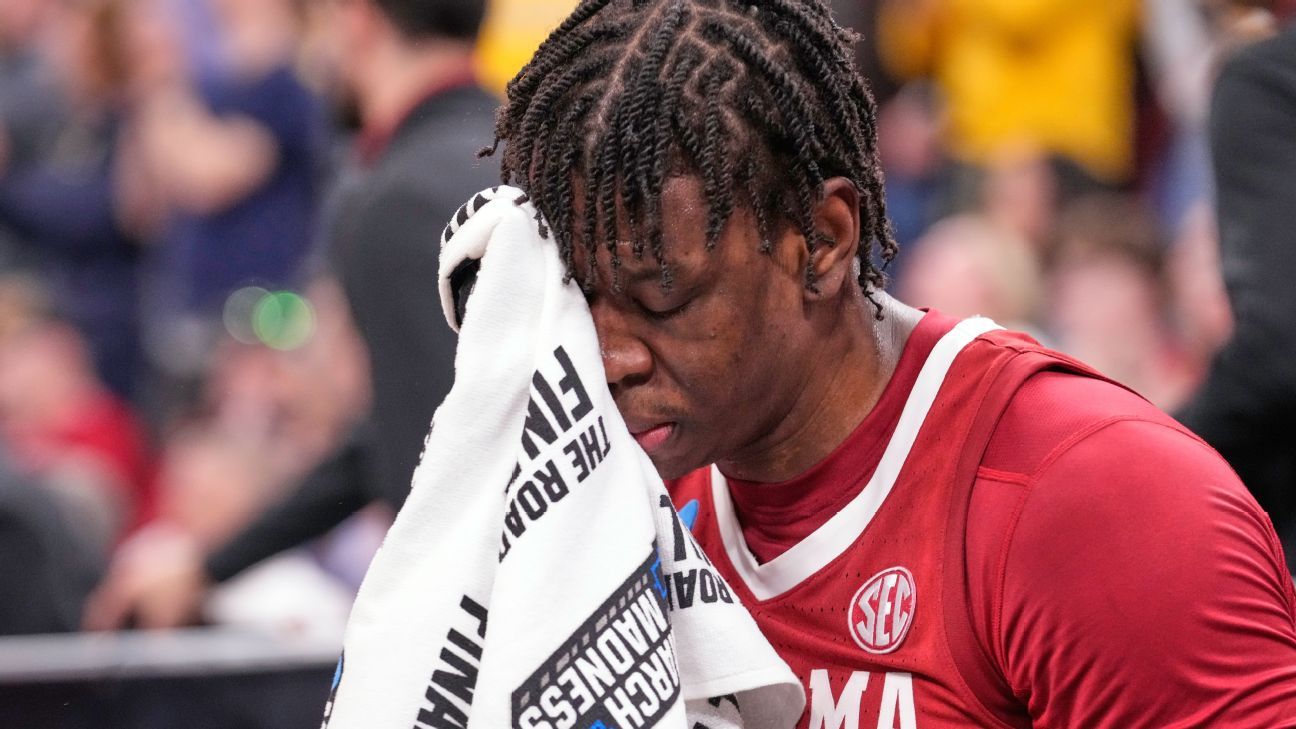
CHICAGO — Alabama players sat teary-eyed at their lockers Friday night at the United Center, still processing a season with plenty of twists before reaching its endpoint against Michigan in the Sweet 16.
The No. 4 seed Crimson Tide started their 14th different lineup against No. 1 seed Michigan, one that had carried them to two dominant wins in the NCAA tournament but ultimately wouldn’t measure up in a 90-77 loss. Alabama’s starters could have included center Charles Bediako and guard Aden Holloway, who both contributed during the season but are no longer with the team, albeit for very different reasons.
“We would not have gotten outrebounded by 13 tonight had we been able to continue to play [Bediako],” coach Nate Oats said.
Michigan held a 46-32 edge in rebounds and finished with 34 points in the paint, while the Tide had 20. Alabama’s Aiden Sherrell, a forward who had to play some center without another sizable low-post presence, acknowledged the season contained “some complicated things.”
“But as a team, we did a great job fighting all the adversity and keeping it between us,” he said.
Oats praised the group as one of the most enjoyable he has had, noting that the team’s leadership was the best he has seen in seven seasons at Alabama. The coach noted all the lineups Alabama used, and added that he “couldn’t be more proud of the group.”
The Tide played their third straight game without Holloway, their second-leading scorer (16.8 points per game) and a third-team All-SEC selection, who was arrested on a felony drug charge earlier this month. An Alabama judge granted Holloway’s request to travel Friday, but he did not join the team and remained banned from all school-related activities. Police found 2.1 pounds of marijuana in Holloway’s apartment after they executed a search warrant in Tuscaloosa.
Bediako’s absence was felt more in the Michigan loss, even though he last played for Alabama on Feb. 7 against Auburn. The 7-footer left Alabama for the NBA draft in 2023, signed a two-way NBA contract and played the past three seasons in the G League. He returned to play five games for the Tide and averaged 10 points and 4.6 rebounds while navigating the courts, but ultimately had a motion for a preliminary injunction denied by a state judge in February, ending his college career.
After Saturday’s loss, Oats referenced the case of Baylor center James Nnaji, another former NBA draft pick who never played in the league. Nnaji was cleared to play on Christmas Eve.
“We saw the opportunity to bring some size on after all the adversity we went through, after Nnaji was declared eligible, and most people, including ourselves, thought if they’re going to make Nnaji eligible, that Bediako would be eligible,” Oats said. “We had one judge who thought so. He would’ve definitely helped the situation with the rebounding.”
Guard Latrell Wrightsell Jr. and others said players have often talked about everything that transpired during the season, which is why they will never forget the 2025-26 team.
“We stayed together, we played for each other, we built off of continuous growth, selfless love and maximum effort,” Sherrell said. “We just stuck through this to those core values, and we went this far.”
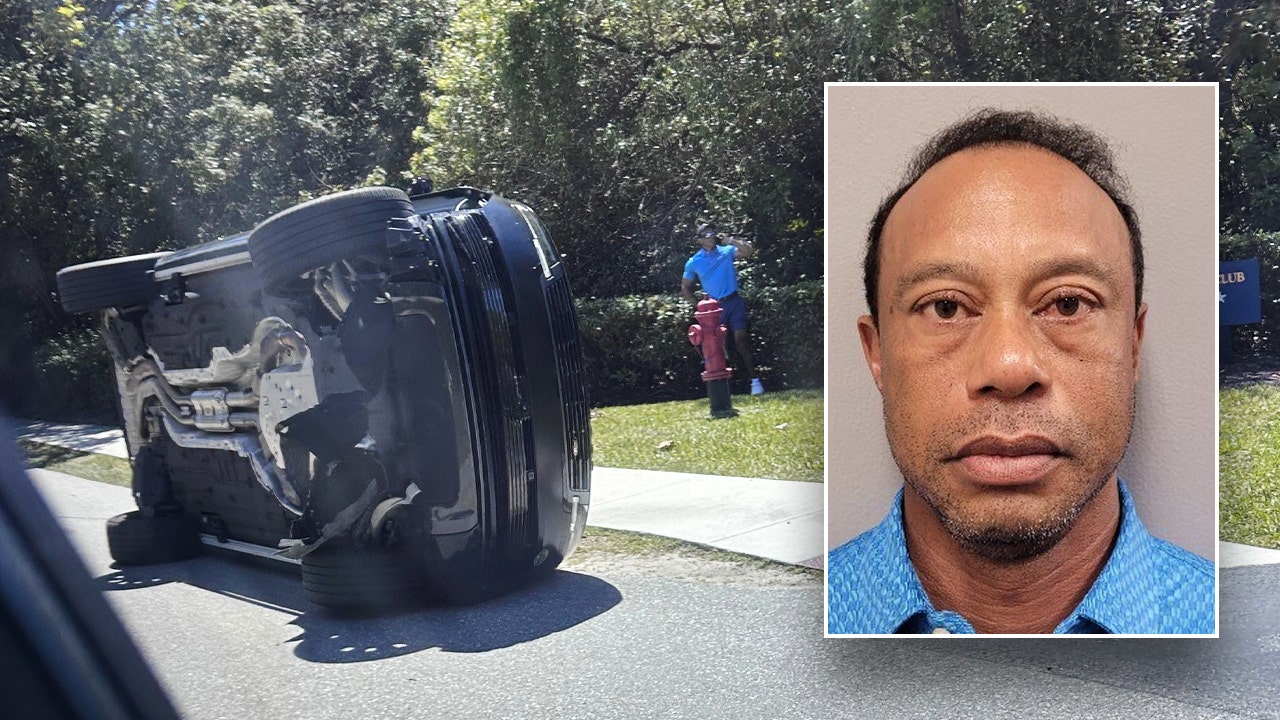
NEWYou can now listen to Fox News articles!
Tiger Woods was released from jail Friday night after he was arrested earlier in the day on a DUI charge following a car crash in Florida.
In a mugshot released hours after his arrest, Woods’ eyes appeared bloodshot, as he donned a blue polo inside the Martin County Jail in Florida.
Woods was seen leaving the jail in the passenger seat of a black SUV after his release on bail late Friday, according to The Associated Press.
Martin County Sheriff John Budensiek confirmed in a news conference that Woods was traveling at “a high rate of speed” when his vehicle collided with another car, resulting in his vehicle rolling over onto the driver’s side.
CLICK HERE FOR MORE SPORTS COVERAGE ON FOXNEWS.COM
Tiger Woods was booked into Martin County, Florida, jail on March 27, 2026. (AP)
Authorities said Woods “exemplified signs of impairment.” He blew “triple-zeroes” for alcohol but refused a urine test.
“DUI investigators came to the scene here, and Mr. Woods did exemplify signs of impairment. They did several tests on him. Of course, he did explain the injuries and the surgeries that he had. We did take that into account, but they did do some in-depth roadside tests,” Budensiek added.
“We really weren’t suspicious of alcohol being involved in this case, and that proved to be true at the jail. … But when it came time for us to ask for a urinalysis test, he refused. And, so, he’s been charged with DUI, with property damage and refusal to submit to a lawful test.”
Woods was spotted on the phone after the crash, wearing navy blue shorts.
Woods was charged with DUI, property damage and refusal to submit to a test, all misdemeanor charges. No one was injured, authorities said. Woods was alone in the car and crawled out of the passenger door after the crash.
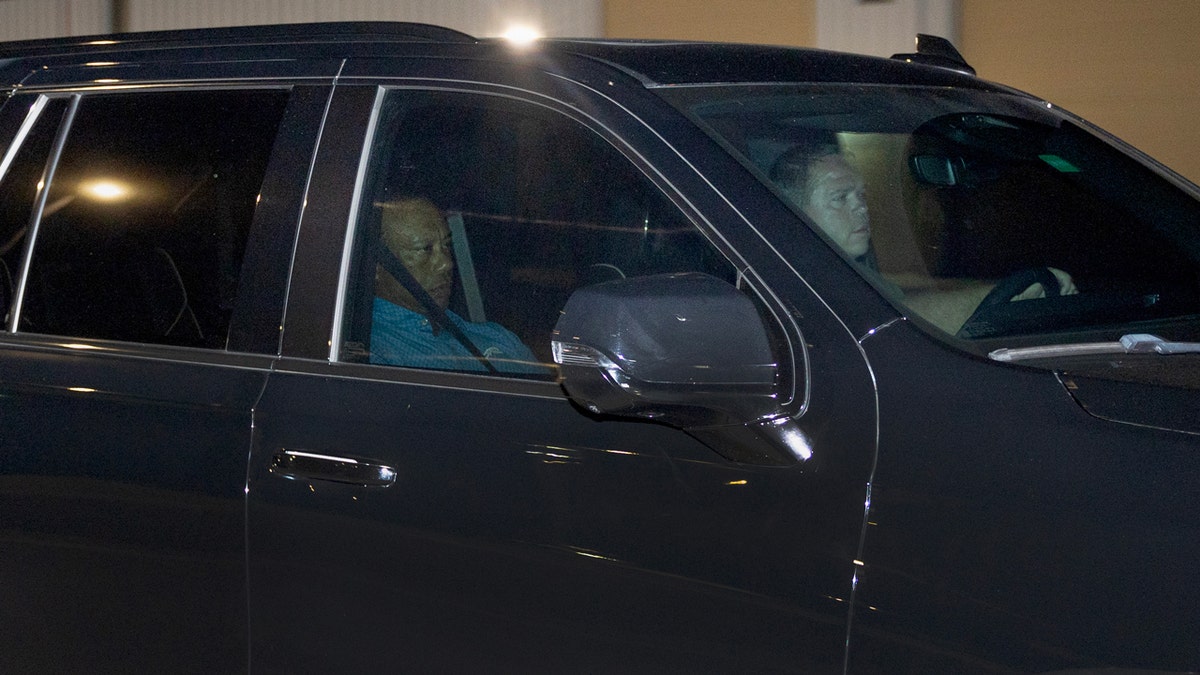
Tiger Woods was driven from the Martin County Jail after being arrested for driving under the influence following a car crash on March 27, 2026, in Stuart, Florida. (Joe Raedle/Getty Images)
VANESSA, KAI TRUMP TAKE IN TIGER WOODS’ RETURN TO GOLF AT TGL FINALS
“This could’ve been a lot worse,” Budensiek noted.
President Donald Trump commented on the arrest of his “very close friend.”
“I feel so badly. He’s got some difficulty,” Trump said. “There was an accident, and that’s all I know. Very close friend of mine. He’s an amazing person, an amazing man, but some difficulty.”
Woods has not commented on the arrest.
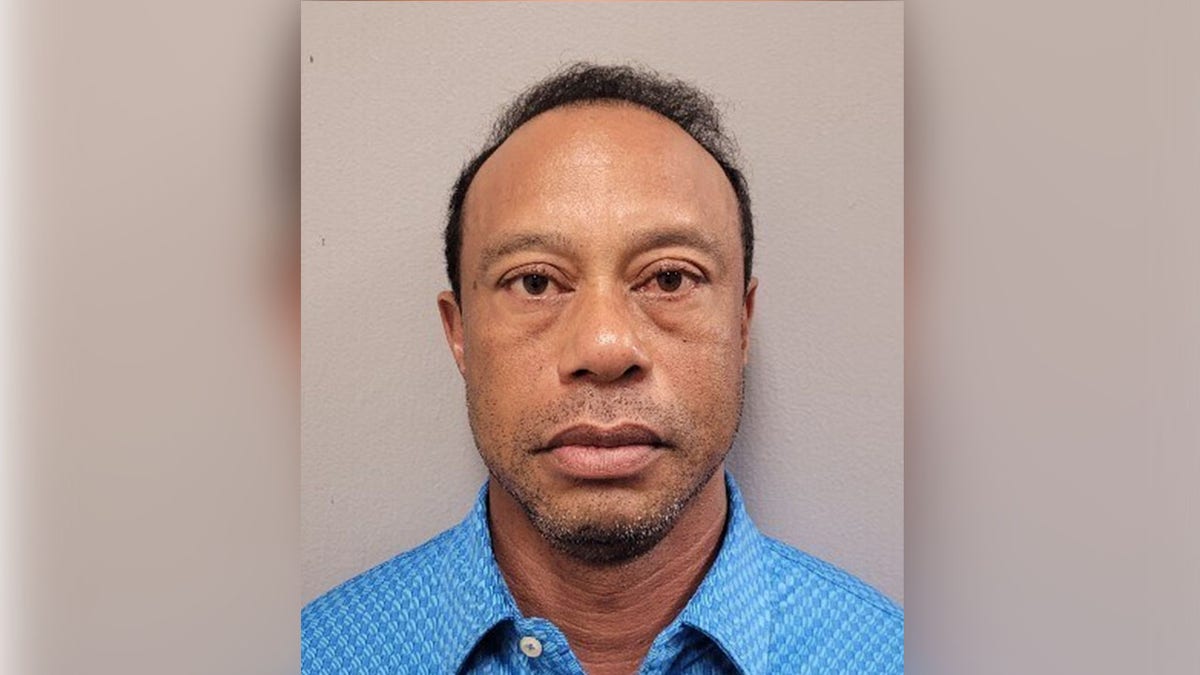
Tiger Woods was arrested on a DUI charge after getting into a car crash on Friday. (Associated Press)
Woods currently is dating Trump’s ex-daughter-in-law, Vanessa, whose daughter, Kai, is set to play college golf in Miami next week.
This is Woods’ second DUI arrest within the last decade. In 2017, he was taken into custody, also in Jupiter Island, after taking prescription drugs and being asleep behind the wheel of a running car at 3 a.m.
In 2021, he got into a wreck that resulted in serious leg injuries that kept him off the golf course for the entire year.
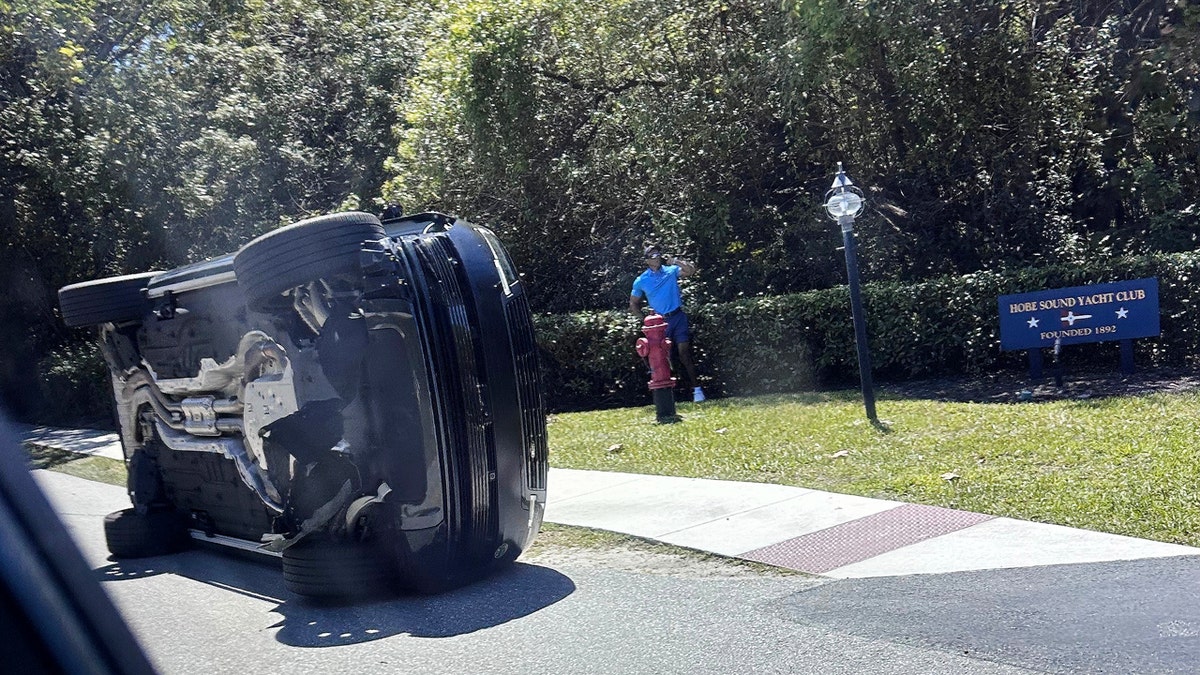
Golfer Tiger Woods stands by his overturned vehicle in Jupiter Island, Fla., Friday, March 27, 2026. (Jason Oteri/AP)
CLICK HERE TO GET THE FOX NEWS APP
Woods made his return to competitive golf earlier this week in the TGL championship after rupturing his Achilles just before last year’s Masters (this year’s tournament is in less than two weeks). Woods has not appeared on the links since the 2024 PGA Championship, in which he missed the cut.
Follow Fox News Digital’s sports coverage on X, and subscribe to the Fox News Sports Huddle newsletter


NHL playoff watch: Guide to all 15 games on Showdown Saturday

King Charles health update leaves Prince William worried: ‘upsetting’

Zayn Malik shares personal video message on ‘Mind of Mine’ 10th anniversary

-
 Business1 week ago
Flipkart group CFO to leave co amid IPO plans – The Times of India
-

 Fashion1 week ago
China’s textile & apparel exports surge 17% to $50 bn in Jan-Feb 2026
-
 Business1 week ago
Video: The Effects of High Oil Prices
-

 Sports1 week ago
Rating Adidas’ 2026 World Cup away shirts: Argentina, Spain, Mexico and more
-

 Sports1 week ago
American Conference Commissioner Tim Pernetti thanks Trump for Army-Navy game executive order
-
Tech1 week ago
The Corsair 4000D RS PC Case Keeps Your System Cool
-

 Tech1 week ago
‘Uncanny Valley’: Nvidia’s ‘Super Bowl of AI,’ Tesla Disappoints, and Meta’s VR Metaverse ‘Shutdown’
-

 Tech1 week ago
Gamers Hate Nvidia’s DLSS 5. Developers Aren’t Crazy About It, Either