

Fashion
Confident Meadowhall enjoys a year of strength


Published
December 19, 2025
There’s been quite a few end-of-year updates from shopping centres and all of them are upbeat after a busy 2025.
Sheffield’s Meadowhall is one of them, noting it has been a strong year of exchanges on new leases covering 300,000 sq ft of the destination, 80% retail and 20% hospitality, including renewals from 19 tenants.
It said visitor numbers “have also remained consistently high”, headlined by its busiest Black Friday weekend in six years (262,981 visitors across the three days), while October’s school half-term was also the strongest in six years (457,000 visitors representing a 9.7% year-on-year increase).
Meanwhile, commercial brand activations continued to “perform effectively” throughout 2025, including standout initiatives from Trinny London and Jo Malone.
And, of course, new openings and expansions are the lifeblood of any centre with Meadowhall announcing fast-expanding novelty retailer Miniso has just joined its roster while fashion lifestyle brand TK Maxx has extended its presence there, “concluding a strong year of leasing activity and retail performance”.
TK Maxx has added an adjacent unit to create a 19,000 sq ft space, complete with a 173-ft fully-glazed frontage on the Upper Level The Gallery, showcasing its mix of branded fashion, beauty, homeware, and accessories.
Miniso, meanwhile, has opened a 1,759 sq ft store on Lower Level High Street, introducing its range of lifestyle, homeware, and technology products, alongside the brand’s character collections.
These additions follow several major openings in 2025, including beauty majors Sephora and Superdrug.
These introductions round off a period in which several tenants have invested significantly in upgrading and expanding their stores. More than £47 million has been spent by brands alone across 2024 and 2025, with more than a third of Meadowhall’s operators undertaking new fitouts and refurbishments in that time.
Looking ahead to 2026, operator British Land said more than 25 brands have already committed, and will be bringing a further £8 million of investment to the centre.
Louisa Holmes, Asset Director at operator British Land, said: “This year’s level of investment, from new arrivals and long-standing tenants, reflects the confidence brands have in Meadowhall as a critical part of their national portfolio. In addition to that, the centre’s success means our brands are effectively competing to bring the best and latest shop fits and concepts here, elevating the experience for our visitors.”
Copyright © 2025 FashionNetwork.com All rights reserved.









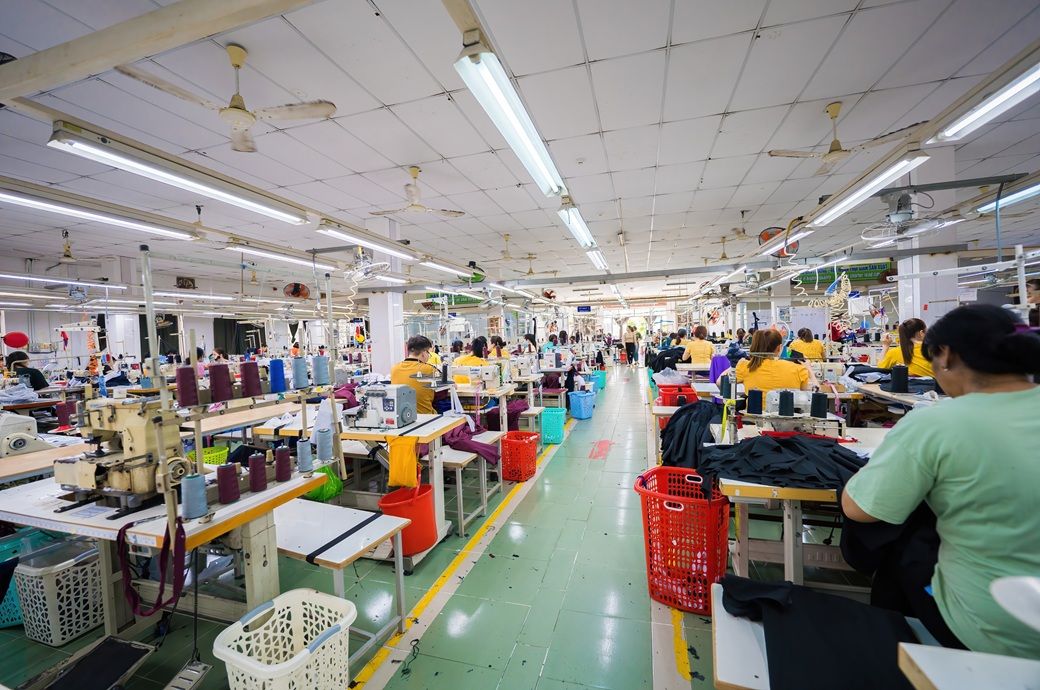
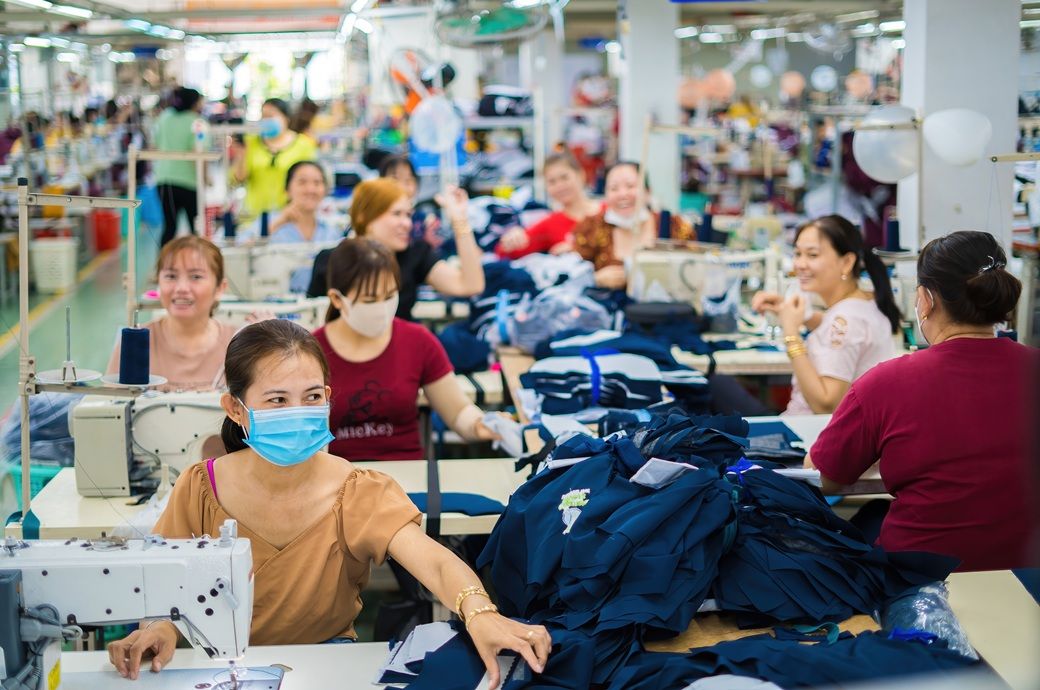
With sustainability benchmarks rising, companies are rethinking how they produce and deliver, pivoting toward greener, more circular models that reduce waste, emissions, and resource use.
The stakes are high. In 2025, Vietnam’s exports to the EU reportedly reached $56.2 billion, up 10.1 per cent year on year, underscoring how pivotal Europe is for the country’s manufacturing base.
Vietnam’s textile and footwear exporters are accelerating sustainability efforts as stricter EU regulations reshape market access requirements.
Rising compliance pressure from measures such as CBAM and ESPR is pushing manufacturers toward circular production, cleaner technologies and greater supply-chain transparency, though limited green finance remains a major challenge for smaller firms.
The EU market, nevertheless, comes with its own challenges as access to this market increasingly depends on meeting strict environmental and product-design requirements.
The EU is rolling out an ambitious sustainability agenda, including the Carbon Border Adjustment Mechanism (CBAM) and the Ecodesign for Sustainable Products Regulation (ESPR). Together, these measures are changing what global suppliers must document, design, and decarbonise.
ESPR shifts expectations toward durability, repairability, and recyclability, while pushing manufacturers to reduce products’ overall environmental footprint. Supply chains are also expected to become more transparent through Digital Product Passports, and practices such as destroying unsold goods being phased out gradually.
For Vietnam’s exporters, compliance is becoming a baseline requirement to keep EU orders and remain competitive.
Recognising this, both the Government and industry players are stepping up. Vietnam’s long-term development strategy for textiles and footwear, which stretches to 2030 with a vision toward 2035, places sustainability at its core. The plan charts a path toward efficient, environmentally responsible growth anchored in a circular economy, where materials are reused, waste is minimised, and production cycles are closed rather than linear.
Crucially, it also provides a legal backbone to help businesses align with global sustainability trends.
On the ground, change is already underway. Textile and apparel manufacturers are investing in renewable energy, upgrading machinery, and fine-tuning production processes to cut emissions and resource use. These shifts are not just about compliance; they are about future-proofing operations in a market where green credentials increasingly determine who wins contracts.
However, the transition has not been entirely seamless. A key barrier seems to be access to green finance, especially for small and medium-sized enterprises. Large firms can more readily fund clean technologies and certification, while smaller suppliers often struggle to fund the shift, risking exclusion from high-value export markets if they cannot keep pace.
There is also a growing recognition that policy support needs to go further. As Vietnam leans into a circular economy, industry voices are calling for a more cohesive and comprehensive framework, one that not only sets clear standards for circular products but also actively incentivises recycling, cleaner production, and sustainable innovation.
Without this, progress risks being uneven, with smaller firms left behind.
Momentum is, nevertheless, building as manufacturers and policymakers push for better-aligned standards and support mechanisms. The goal is to narrow the gap between sustainability ambition and day-to-day implementation across the sector.
The aim is clear: create an ecosystem where businesses of all sizes can invest in circular solutions, strengthen their export capabilities, and meet the EU’s exacting standards head-on.
Fibre2Fashion News Desk (DR)

The increase was driven primarily by higher reinvested earnings and intra-company loans, indicating continued engagement by existing investors with Bangladesh.
Reinvested earnings rose by 318.25 per cent, from $103.79 million in 2024 to $434.10 million in 2025, while intra-company loans increased by 25.68 per cent, from $621.96 million to $781.68 million.
Bangladesh’s net FDI inflows increased by 39.36 per cent last year to $1,770.42 million compared with $1,270.39 million in 2024, the Bangladesh Bank said.
The increase was driven primarily by higher reinvested earnings and intra-company loans.
Reinvested earnings rose by 318.25 per cent, from $103.79 million in 2024 to $434.10 million in 2025, while intra-company loans rose by 25.68 per cent.
Equity capital remained broadly stable, rising by 1.84 per cent, from $544.64 million to $554.64 million in 2025, a release from Bangladesh Investment Development Authority said.
Greenfield project announcements declined by 16 per cent in 2025.
Fibre2Fashion News Desk (DS)


EU green mandates and the Vietnam T&A industry

After provinces, Centre lifts austerity-driven business-hour curbs until May 31

Vietnam’s flat apparel exports hide the real trade signal

-

 Entertainment5 days ago
Conan O’Brien hat tricks as Oscar host
-

 Tech1 week ago
Could Contact-Tracing Apps Help With the Hantavirus? Not Really
-

 Fashion5 days ago
Italy’s Zegna Group’s Q1 growth boosted by strong organic performance
-

 Sports1 week ago
Bobby Cox, legendary Atlanta Braves manager who led 1995 World Series champions, dead at 84
-

 Entertainment1 week ago
Tom Brady gets back at Kevin Hart during Netflix roast
-

 Entertainment1 week ago
Martin Short: Facing tragedy with joy
-

 Entertainment1 week ago
Martha Stewart: How to make an omelet
-

 Sports1 week ago
Jacob Fatu unleashes vicious assault on Roman Reigns after World Heavyweight Championship loss at WWE Backlash