

Tech
Considerations for ensuring a minimum viable digital sovereign cloud | Computer Weekly


Server manufacturers have been working in recent years to adapt their datacentre products to meet the growing demand for artificial intelligence (AI). While major public cloud providers have the resources and scale to handle AI workloads, there is renewed interest in private clouds and on-premise AI. This shift is partly due to the realisation that public large language models (LLMs) are not well-suited for specific enterprise needs. Additionally, geopolitical uncertainties have raised concerns about relying solely on hyperscale cloud providers, prompting businesses to prioritise digital sovereignty and seek greater control over their IT infrastructure.
Lenovo, for instance, positions digital sovereignty in the context of customer requirements and AI deployment strategies. During its latest quarterly earnings call, Lenovo chairman Yuanqing Yang said: “User priorities are shifting towards personalisation and the private domain. This is accompanied by growing emphasis on efficiency, response speed, security, privacy and sustainability.”
The company answers the question of digital sovereignty through its hybrid AI advantage programme, which integrates AI hardware with AI-powered services and AI infrastructure to provide digital sovereignty and address customer privacy requirements.
Meanwhile, during HPE’s fiscal 2025 fourth-quarter earnings call, CEO and president Antonio Neri said: “Sovereign and enterprise bookings now account for more than 60% of the cumulative orders since Q1 of fiscal year 2023, demonstrating our strategy to prioritise profitable AI infrastructure build-out opportunities.”
The company recently introduced its first AMD Helios AI rack-scale architecture integrated with HPE Juniper networking, which it claims is designed to accelerate AI training and inferencing for sovereign clouds.
Similarly, Dell is ramping up efforts to place sovereign cloud capabilities, as Dell vice-chairman Jeffrey Clark explained during the company’s third-quarter 2026 earnings call. “Our salesforce is winning new opportunities across the neocloud customer base, sovereign customer base and enterprise customer base,” he said in response to a question about the factors contributing to incremental AI revenue of $5bn, which was referenced during the earnings call.
Given the trend among server manufacturers to offer digital sovereign capabilities, digital sovereignty is highly likely to be an area of focus for the tech sector in 2026 when targeting customer opportunities.
No regs for digital sovereignty
When looking at what is and what is not digital sovereignty, the authors of analyst Forrester’s Demystifying full digital sovereignty report note that there is no single regulation for digital sovereignty worldwide, which means it is not a compliance issue.
Instead, Forrester analysts Dario Maisto, Pascal Matzke, Lauren Nelson, Lorenzo Annicchiarico and Rachel Birrellone describe digital sovereignty as a risk mitigation exercise, where technology firms and IT service providers subject to foreign jurisdictions may affect an organisation’s ability to keep operations running. Rather than being considered a compliance issue, the Forrester analysts regard digital sovereignty as a request for proposal (RFP) when procuring new IT products and services.
Although it involves access to the organisation’s data, in terms of data residency, Forrester does not recommend treating digital sovereignty as a privacy and data protection issue.
In the report, the Forrester analysts note that data sovereignty concerns the ownership of data. “When you put your data in the infrastructure of a third-party subject to a foreign jurisdiction, such as the US hyperscalers’ datacentres in Europe, you may end up losing access to it,” they warn.
As an example, they note that while Microsoft’s sovereign public cloud ensures that customer data remains within Europe and only European nationals will be responsible for operations, this does not protect Microsoft customers from the risk of the US government “pulling the kill switch”.
Forrester recommends that organisations correctly frame the data sovereignty issue as a first step in gaining stable, long-lasting sovereign control of their data.
A balanced approach to in-country technology capacity
Power International Holding, which has headquarters in Qatar, is using Nutanix’s sovereign cloud capabilities and has adopted a private cloud to ensure sovereignty over its own data and AI models.
The company has been using Nutanix to tackle a proliferation of shadow AI projects when application development teams use external software-as-a-service (SaaS)-based LLMs without centralised controls, as CIO Jasim Rahman explains: “We selected Nutanix to do classical HCI (hyper-converged infrastructure) file management, but it has also allowed us to deploy our own models within the Nutanix AI stack, and this now powers a lot of our use cases in healthcare, IT, HR and facilities management.”
Nutanix Enterprise AI functions as a private cloud, allowing Power International Holding to create and use its own AI models, as well as fine-tune open source ones. It ensures data stays within the country where the company operates, maintaining data residency.
He says the company has a multi-layered approach to digital sovereignty, which includes in-country control over compute infrastructure and the development of AI models and platforms tailored to local needs “Our full-stack sovereignty has multiple stacks. We’re taking a very balanced approach to this, with both western and eastern clusters,” he says.
While Power International Holding is a private company, it participates in nation-building efforts, supporting the Qatar government to develop sovereign AI capabilities. Rahman says this makes it a key partner in advancing Qatar’s digital sovereignty and innovation goals.
“Governments need compute capacity to build models that are tuned for their country, culture, and language,” he adds.
For Rahman, digital sovereignty means ensuring that the compute infrastructure, models, platforms and physical AI remain within the country.
“Governments need a lot of compute capacity to build their AI models,” he says. “The risk is not just data residency. It’s data plus the models. Nobody can see what’s inside the model. It’s like a black box. So we’ve got to be able to intervene to make sure these models are tuned for the country, the culture and the languages spoken in that country.”
Rahman notes that the underlying graphics processing unit (GPU) infrastructure needed for AI requires a balanced approach to digital sovereignty. “In Qatar and the other countries we operate in, we’re taking a very balanced approach to GPU infrastructure. Not many countries produce chips. We are dependent on the west, the Americas and the east.”
This approach means Power International Holding takes into account the specifics of the countries in which it operates. Some of them are leaning west, while some lean east. The underlying stack is the GPU infrastructure. “We’re going to be providing a platform of GPU infrastructure that will allow these countries to have their own digital embassies within this GPU infrastructure. They can operate within that infrastructure independently as sovereign clouds,” says Rahman.
He defines digital embassies as secure, sovereign cloud environments hosted within Qatar’s GPU infrastructure. They are designed to serve as disaster recovery and continuity hubs for other countries and enable countries to store critical data and systems outside their borders, ensuring resilience in case of emergencies such as wars or natural disasters.
Qatar has diplomatic relationships with other nations, such as Rwanda, which facilitates establishing digital embassies for disaster recovery and continuity planning for these countries. “Rwanda wants to have a country business continuity plan outside of Rwanda. That’s where Qatar would come in,” says Rahman.
Minimum requirements
While there have been many discussions around on-premise and private clouds being built to enable digital sovereignty, that does not necessarily mean moving workloads and data out of hyperscale IT infrastructure.
Forrester advises IT and business leaders to determine the minimum level of digital sovereignty needed to meet their business goals. This should be practical and capable of supporting the organisation’s workload requirements. A digital sovereignty plan should focus on delivering useful outcomes, rather than just meeting compliance or avoiding risk, as these alone do not benefit the business.
As Rahman highlights, such a strategy must also consider the countries where the business operates and their geopolitical context. This means IT infrastructure may need to be deployed in a different country from where the business is based. For example, as noted in Forrester’s Demystifying full digital sovereignty report, Estonia’s data embassy is located in Luxembourg to protect its critical data and information.
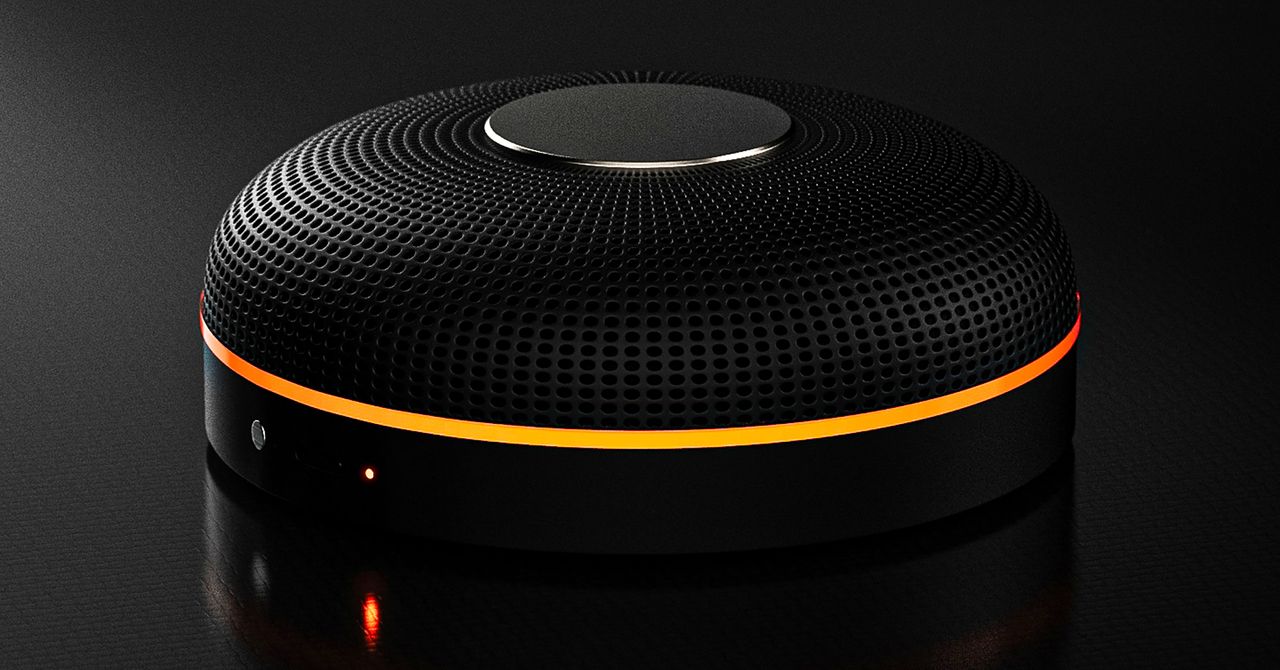
Deveillance also claims the Spectre can find nearby microphones by detecting radio frequencies (RF), but critics say finding a microphone via RF emissions is not effective unless the sensor is immediately beside it.
“If you could detect and recognize components via RF the way Spectre claims to, it would literally be transformative to technology,” Jordan wrote in a text to WIRED after he built a device to test detecting RF signatures in microphones. “You’d be able to do radio astronomy in Manhattan.”
Deveillance is also looking at ways to integrate nonlinear junction detection (NLJD), a very high-frequency radio signal used by security professionals to find hidden mics and bugs. NLJD detectors are expensive and used primarily in professional contexts like military operations.
Even if a device could detect a microphone’s exact location, objects around a room can change how the frequencies spread and interact. The emitted frequencies could also be a problem. There haven’t been adequate studies to show what effects ultrasonic frequencies have on the human ear, but some people and many pets can hear them and find them obnoxious or even painful. Baradari acknowledges that her team needs to do more testing to see how pets are affected.
“They simply cannot do this,” engineer and YouTuber Dave Jones (who runs the channel EEVblog) wrote in an email to WIRED. “They are using the classic trick of using wording to imply that it will detect every type of microphone, when all they are probably doing is scanning for Bluetooth audio devices. It’s totally lame.” Baradari reiterates that the Spectre uses a combination of RF and Bluetooth low energy to detect microphones.
WIRED asked Baradari to share any evidence of the Spectre’s effectiveness at identifying and blocking microphones in a person’s vicinity. Baradari shared a few short videoclips of people putting their phones to their ears listening to audioclips—which were presumably jammed by the Spectre—but these videos do little to prove that the device works.
Future Imperfect
Baradari has taken the critiques in stride, acknowledging that the tech is still in development. “I actually appreciate those comments, because they’re making me think and see more things as well,” Baradari says. “I do believe that with the ideas that we’re having and integrating into one device, these concerns can be addressed.”
People were quick to poke fun at the Spectre I online, calling the technology the cone of silence from Dune. Now, the Deveillance website reads, “Our goal is to make the cone of silence become reality.”
John Scott-Railton, a cybersecurity researcher at Citizen Lab, who is critical of the Spectre I, lauded the device’s virality as an indication of the real hunger for these kinds of gadgets to win back our privacy.
“The silver lining of this blowing up is that it is a Ring-like moment that highlights how quickly and intensely consumer attitudes have shifted around pervasive recording devices,” says Scott-Railton. “We need to be building products that do all the cool things that people want but that don’t have the massive privacy- and consent-violation undertow. You need device-level controls, and you need regulations of the companies that are doing this.”
Cooper Quintin, a senior staff technologist at the Electronic Frontier Foundation, echoed those sentiments, even if critics believe Deveillance’s efforts to be flawed.
“If this technology works, it could be a boon for many,” Quintin wrote in an email to WIRED. “It is nice to see a company creating something to protect privacy instead of working on new and creative ways to extract data from us.”
Portrait Light: You can change up the lighting in your portrait selfies after you take them by opening them up in Google Photos, tapping the Edit button, and heading to Actions > Portrait Light. This adds an artificial light you can place anywhere in the photo to brighten up your face and erase that 5 o’clock shadow. Use the slider at the bottom to tweak the strength of the light. It also works on older Portrait mode photos you may have captured. It works only on faces.
Health and Accessibility Features
Cough & Snore Detection (Tensor G2 and newer): On the Pixel 7 and newer, you can have your Pixel detect if you cough and snore when sleeping, provided you place your Pixel near your bed before you nod off. This will work only if you use Google’s Bedtime mode function, which you can turn on by heading to Settings > Digital Wellbeing & Parental Controls > Bedtime Mode.
Guided Frame (Tensor G2 and newer): For blind or low-vision people, the camera app can now help take a selfie with audio cues (it works with the front and rear cameras). You’ll need to enable TalkBack for this to work (Settings > Accessibility > TalkBack). Then open the camera app. It will automatically help you frame the shot.
Simple View: This mode makes the font size bigger, along with other elements on the screen, like widgets and quick-settings tiles. It also increases touch sensitivity, all of which hopefully makes it easier to see and use the screen. You can enable it by heading to Settings > Accessibility > Simple View.
Safety and Security Features
Theft Protection: This is a broader Android 15 feature, but essentially, Google’s algorithms can figure out if someone snatches your Pixel out of your hands. If they’re trying to get away, the device automatically locks. Additionally, with another device, you can use Remote Lock to lock your stolen Pixel with your phone number and a security answer. To toggle these features on, go to Settings > Security & privacy > Device unlock > Theft protection.
Identity Check: If your Pixel detects you’re in a new location, Identity Check will require your fingerprint or face authentication before you can make any changes to sensitive settings, offering extra peace of mind in case you lose your phone or if it’s stolen. You can enable this in Settings > Security & privacy > Device unlock > Theft protection > Identity Check.
Courtesy of Google
Private Space: Another Android 15 addition, Pixel phones finally have a feature that lets you hide and lock select apps. You can use a separate Google account, set a lock, and install any app to hide away. To set it all up, head to Settings > Security & privacy > Private space.
Satellite eSOS (Pixel 9 and Pixel 10 series, excluding Pixel 9a): Like Apple’s SOS feature on iPhones, you can now reach emergency contacts or emergency services even when you don’t have cell service or Wi-Fi connectivity. It’s not just available in the continental US, but also in Hawaii, Alaska, Canada, and even Europe.
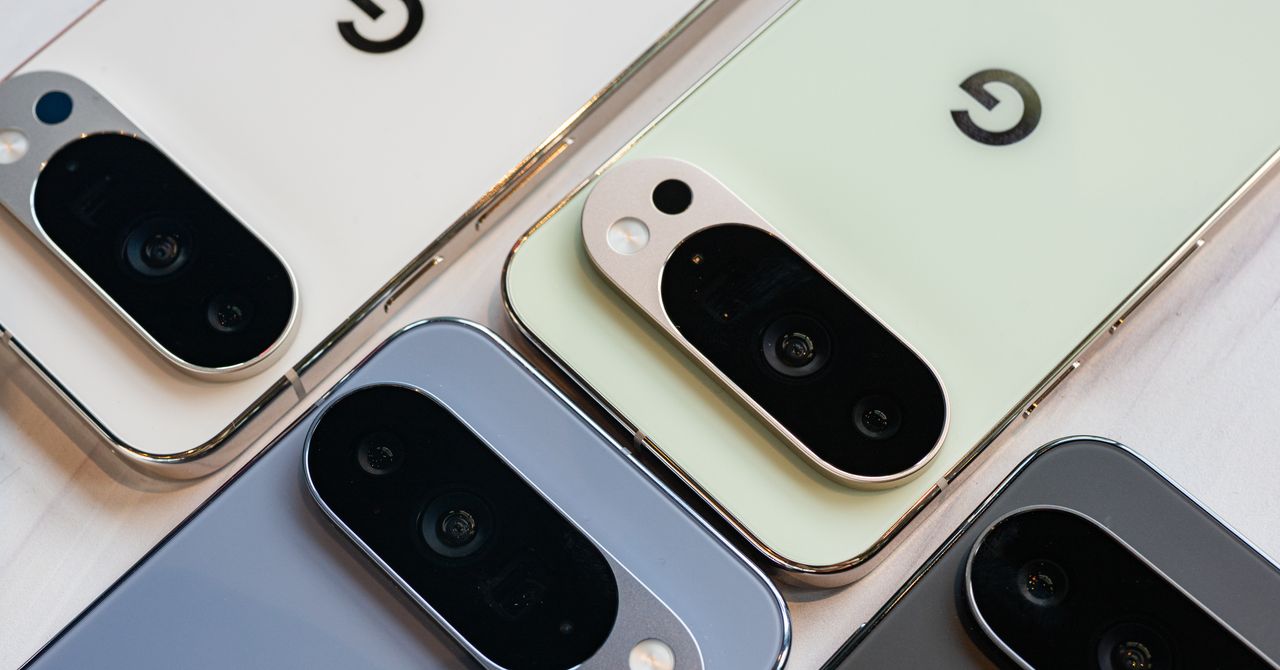
Portrait Light: You can change up the lighting in your portrait selfies after you take them by opening them up in Google Photos, tapping the Edit button, and heading to Actions > Portrait Light. This adds an artificial light you can place anywhere in the photo to brighten up your face and erase that 5 o’clock shadow. Use the slider at the bottom to tweak the strength of the light. It also works on older Portrait mode photos you may have captured. It works only on faces.
Health and Accessibility Features
Cough & Snore Detection (Tensor G2 and newer): On the Pixel 7 and newer, you can have your Pixel detect if you cough and snore when sleeping, provided you place your Pixel near your bed before you nod off. This will work only if you use Google’s Bedtime mode function, which you can turn on by heading to Settings > Digital Wellbeing & Parental Controls > Bedtime Mode.
Guided Frame (Tensor G2 and newer): For blind or low-vision people, the camera app can now help take a selfie with audio cues (it works with the front and rear cameras). You’ll need to enable TalkBack for this to work (Settings > Accessibility > TalkBack). Then open the camera app. It will automatically help you frame the shot.
Simple View: This mode makes the font size bigger, along with other elements on the screen, like widgets and quick-settings tiles. It also increases touch sensitivity, all of which hopefully makes it easier to see and use the screen. You can enable it by heading to Settings > Accessibility > Simple View.
Safety and Security Features
Theft Protection: This is a broader Android 15 feature, but essentially, Google’s algorithms can figure out if someone snatches your Pixel out of your hands. If they’re trying to get away, the device automatically locks. Additionally, with another device, you can use Remote Lock to lock your stolen Pixel with your phone number and a security answer. To toggle these features on, go to Settings > Security & privacy > Device unlock > Theft protection.
Identity Check: If your Pixel detects you’re in a new location, Identity Check will require your fingerprint or face authentication before you can make any changes to sensitive settings, offering extra peace of mind in case you lose your phone or if it’s stolen. You can enable this in Settings > Security & privacy > Device unlock > Theft protection > Identity Check.
Courtesy of Google
Private Space: Another Android 15 addition, Pixel phones finally have a feature that lets you hide and lock select apps. You can use a separate Google account, set a lock, and install any app to hide away. To set it all up, head to Settings > Security & privacy > Private space.
Satellite eSOS (Pixel 9 and Pixel 10 series, excluding Pixel 9a): Like Apple’s SOS feature on iPhones, you can now reach emergency contacts or emergency services even when you don’t have cell service or Wi-Fi connectivity. It’s not just available in the continental US, but also in Hawaii, Alaska, Canada, and even Europe.


Holly Willoughby spotted with Nicole Appleton as she prepares for Youtube comeback

Want To Buy A House In Karnataka? Know About The ‘Namma Mane’ Scheme With Affordable Housing & Subsidies

South Korea’s apparel imports slightly lower at $1 billion in January

-
 Business1 week ago
Attock Cement’s acquisition approved | The Express Tribune
-

 Politics1 week ago
What are Iran’s ballistic missile capabilities?
-
 Business1 week ago
India Us Trade Deal: Fresh look at India-US trade deal? May be ‘rebalanced’ if circumstances change, says Piyush Goyal – The Times of India
-

 Fashion1 week ago
Policy easing drives Argentina’s garment import surge in 2025
-

 Sports1 week ago
LPGA legend shares her feelings about US women’s Olympic wins: ‘Gets me really emotional’
-

 Entertainment1 week ago
Bobby J. Brown, “The Wire” and “Law & Order: SUV” actor, dies of smoke inhalation after reported fire
-

 Fashion1 week ago
South Korea’s Misto Holdings completes planned leadership transition
-

 Fashion1 week ago
Texwin Spinning showcasing premium cotton yarn range at VIATT 2026