

Business
Constellation Brands reiterates lower full-year guidance


Modelo beer is displayed on a shelf at a Safeway store on Oct. 6, 2025 in San Anselmo, California.
Justin Sullivan | Getty Images
Modelo owner Constellation Brands beat on the top and bottom lines in its fiscal second-quarter earnings report on Monday and reiterated its lowered full-year guidance due to macroeconomic headwinds.
Shares of the company rose roughly 3% in extended trading.
Here’s how the company performed in the second quarter, compared with what Wall Street was expecting based on a survey of analysts by LSEG:
- Earnings per share: $3.63 adjusted vs. $3.38 expected
- Revenue: $2.48 billion vs. $2.46 billion expected
For the period ending Aug. 31, the company reported net income of $466 million, or $2.65 per share, compared with a loss of $1.2 billion, or $6.59, the year prior. Excluding costs for restructuring and other items, the brewer reported earnings of $3.63 per share.
Constellation’s net sales dropped 15% from the same period last year to $2.48 billion, and the company’s operating margin fell 200 basis points due in part to aluminum tariffs.
“While we continue to navigate a challenging socioeconomic environment that has dampened consumer demand, our teams remain focused on executing against our strategic objectives, including driving distribution gains, disciplined innovation and investing behind our brands,” CEO Bill Newlands said in a statement.
In September, Constellation announced it was slashing its full fiscal year guidance due to a “challenging macroeconomic environment.” It cut its comparable earnings per share outlook to a range of $11.30 to $11.60, down from $12.60 to $12.90, and reaffirmed that outlook in Monday’s report.
The company also reiterated its previous estimate of organic net sales falling 4% to 6% for fiscal 2026, down from a previous expectation of 1% growth to a 2% decline.
Constellation also previously identified a trend of lower demand from Hispanic consumers, which it said was caused by concerns about President Donald Trump‘s immigration policies and potential job losses.
Constellation executives will hold a call with analysts tomorrow at 8 a.m. ET.



Business
Rupee falls to all-time low of 92.05 against dollar as oil surge, foreign outflows rattle markets – The Times of India
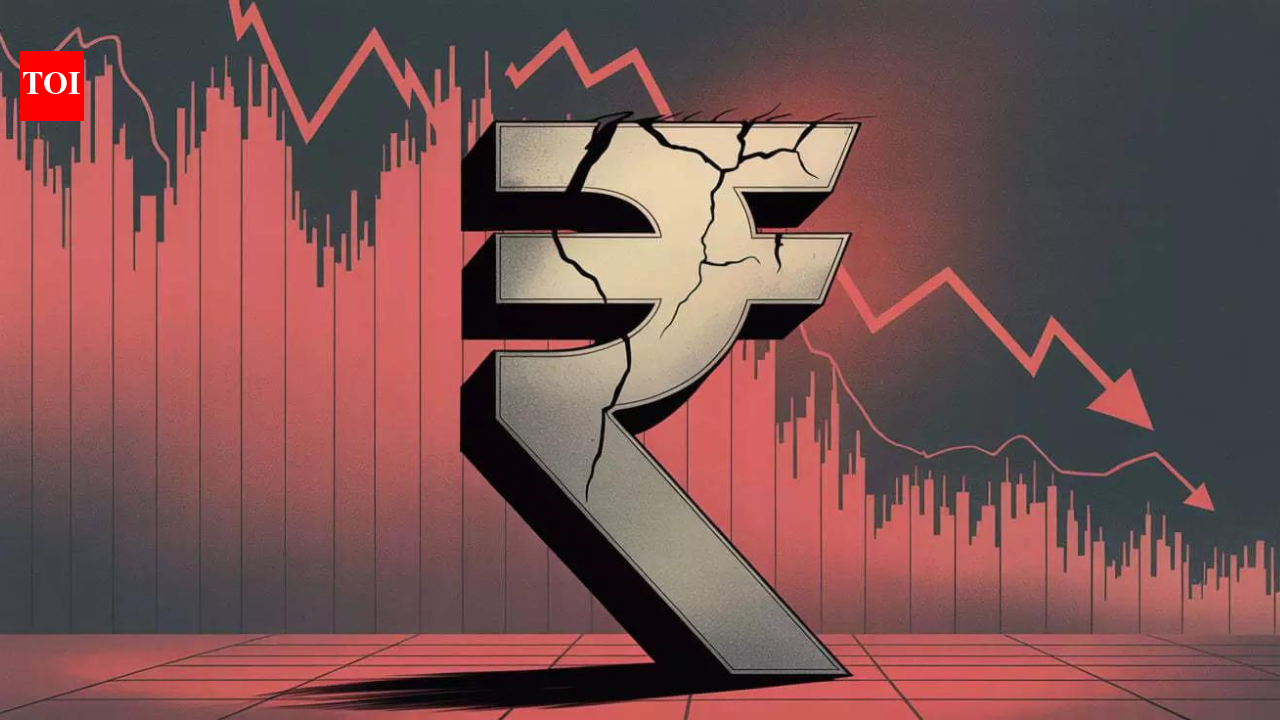
The Indian rupee weakened sharply on Wednesday, slipping to a record closing low of 92.05 against the US dollar as soaring crude oil prices and global risk aversion linked to the Iran crisis weighed heavily on the domestic currency.The rupee depreciated by 56 paise during the session, pressured by rising energy costs, foreign fund outflows and broad-based weakness in domestic equities, PTI reported.At the interbank foreign exchange market, the rupee opened at 92.05 and slid further to an intraday record low of 92.35 against the greenback. It eventually ended the session at 92.05, marking its lowest-ever closing level.The domestic forex market remained shut on Tuesday due to the Holi holiday. On Monday, the rupee had already fallen 41 paise to settle at 91.49 against the US dollar.Forex traders said the global risk-off mood triggered by the US-Iran conflict strengthened the dollar and intensified pressure on emerging market currencies, including the rupee.Foreign investors sold equities worth Rs 8,752.65 crore on a net basis on Wednesday, according to exchange data, further weighing on the currency.“A sharp escalation in Middle East conflict and the consequent spike in oil prices have reduced investor risk appetite. Higher oil prices increase inflation concerns and fiscal pressure on India (a major oil importer), leading to selling in bonds and rising yields,” said Anil Kumar Bhansali, Head of Treasury and Executive Director, Finrex Treasury Advisors LLP.Meanwhile, the dollar index, which measures the greenback against a basket of six currencies, was trading 0.23 per cent lower at 98.82.“The dollar index crossed 98 levels comfortably on the risk-off situation prevailing all around the globe with stocks and bond markets getting hit badly, along with Gold and Silver, with predominance of the dollar,” Bhansali said.Brent crude, the global oil benchmark, was trading 1.29 per cent higher at USD 82.46 per barrel in futures trade, as supply concerns intensified after US attacks on Iran and Tehran’s retaliatory actions raised fears over energy flows through the Strait of Hormuz.Dilip Parmar, Research Analyst at HDFC Securities, said, “The Indian rupee recorded its steepest two-session decline since May 2025, as soaring energy prices intensified fears of persistent inflation and a widening trade deficit.This prevailing risk-off sentiment, coupled with high energy costs, is expected to keep the currency under pressure in the near term. Investors are closely monitoring the longevity of the Middle East conflict, as a prolonged standoff would likely drive up the import cost of energy and precious metals while hindering export growth.”According to Parmar, the spot USDINR pair faces immediate resistance at 92.60, while key support is seen at 91.80.On the domestic equity market front, the BSE Sensex dropped 1,122.66 points to close at 79,116.19, while the NSE Nifty declined 385.20 points to settle at 24,480.50.

US President Donald Trump boards Air Force One before departing Palm Beach International Airport in West Palm Beach, Florida, on March 1, 2026, on his way back to Washington, DC.
Mandel Ngan | Afp | Getty Images
President Donald Trump has thrown his support behind crypto firms in their high-stakes battle with U.S. banks over whether they can offer interest-like returns on stablecoins.
Trump, in a social media post late Tuesday, ratcheted up pressure on banks to relent on the stablecoin yield issue.
That’s the key point of contention holding up passage in Congress of the Clarity Act, which is a companion bill to the Genius Act approved last year, setting up a framework for regulated stablecoins.
“The Genius Act is being threatened and undermined by the Banks, and that is unacceptable,” Trump said in his post. “They need to make a good deal with the Crypto Industry because that’s what’s in best interest of the American People.”
Coinbase shares surged as much as 13% in early trading Wednesday, while shares of JPMorgan Chase and Bank of America fell less than 1%.
While Trump’s decision to back the crypto industry could sway members of his Republican Party in the GOP-led Congress, it’s unclear whether his support is enough to ensure the bill’s passage. The move also raises fresh questions over potential conflict of interests, as the president and his family have reportedly generated hundreds of millions of dollars in wealth from interests in firms including the crypto platform World Liberty Financial.
The dispute between the industries centers on whether crypto firms like Coinbase can offer yields on stablecoins. While crypto companies see it as a consumer-friendly innovation that will let people earn money on their idle funds, banks have warned that the competing product could siphon trillions of dollars from their industry.
$6.6 trillion threat?
Executives from JPMorgan and Bank of America, the two largest American lenders by assets, have cited a Treasury study that indicated that banks could lose up to $6.6 trillion in deposits if stablecoins offered a yield.
That could destabilize some banks, especially smaller ones, and remove a source of funding for loans to businesses across the country.
Allowing the less-regulated crypto industry to behave like quasi-banks could heighten systemic risk, banks argue. Crypto firms say that the risks are contained and that stablecoins backed by Treasuries will boost demand for U.S. debt.
“It can’t be, you have these people doing one thing without any regulation, and these people doing another,” JPMorgan CEO Jamie Dimon told CNBC’s Leslie Picker on Monday. “If you do that, the public will pay. It will get bad.”
In recent months, the president has hosted a series of White House meetings between the two sides in hopes of brokering a deal, but the banks haven’t relented, according to people with knowledge of the gatherings.
Now, he is explicitly putting his weight behind crypto.
“Americans should earn money on their money,” Trump said in the post. “This industry cannot be taken from the People of America when it is so close to becoming truly successful.”
‘Full of s–t’
That phrasing is similar to language that Coinbase CEO Brian Armstrong has used in interviews. Coinbase is the largest U.S. crypto platform and provides yield to members through what critics in the banking industry call a “loophole” in current regulations.
Armstrong, seen by banks as their main adversary in this dispute, met with Trump at the White House shortly before the president’s social media post Tuesday, according to a person with knowledge of the meeting. That detail was reported earlier by Politico.
Both banks and crypto firms have reasons to support passage of the Clarity Act, but it’s unclear whether that will happen, given the disagreement. Earlier this year, Trump attempted to pressure banks to cap credit card interest rates, but the industry had enough support among both Republicans and Democrats to ward off that threat.
Tensions between Armstrong and banking CEOs have climbed since the Coinbase CEO publicly called out banks for their opposition to stablecoin yields.
In January, Dimon reportedly told Armstrong he was “full of s–t” during a chance interaction at the World Economic Forum in Davos, Switzerland.
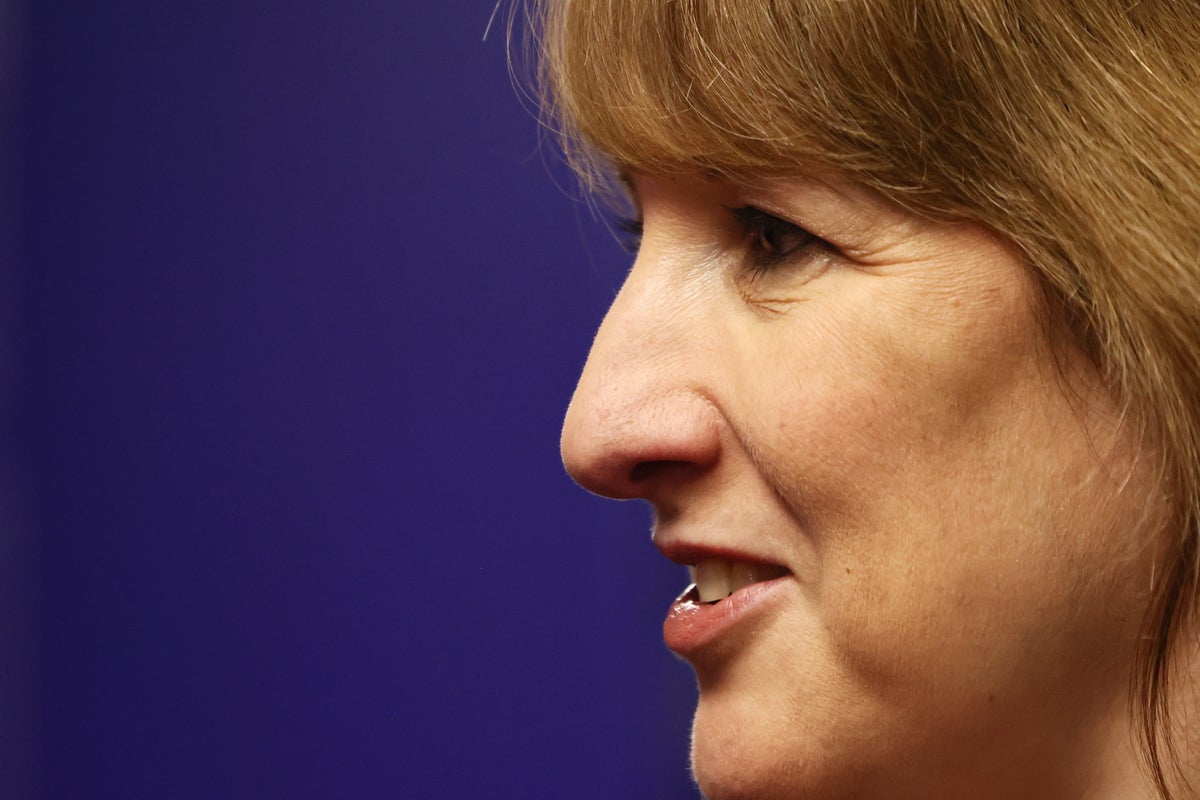
Rachel Reeves will reaffirm her commitment to “end” the windfall tax on North Sea oil and gas as she meets energy bosses.
The Chancellor is set to discuss the gas and oil prices sent soaring by the Middle East war in talks with firms including BP, TotalEnergies and Serica.
Ms Reeves came under pressure ahead of the Downing Street talks from Scottish First Minister John Swinney to axe the charge, which is officially known as the energy profits levy.
Introduced by the Tory government in the wake of the war in Ukraine – which sparked a sharp rise in energy prices – the charge was brought in to claw back some of these unexpected profits for the Treasury.
The Prime Minister’s spokesman told reporters: “The Chancellor will convene a meeting with industry leaders from oil and gas firms today… including BP, TotalEnergies and Serica.
“And they’ll discuss the ongoing volatility in the oil and gas prices due to the conflict in the Middle East.
“The Chancellor will make clear that she remains committed to end the energy profits levy and replace it with a more permanent and predictable regime.
“She’ll be reaffirming her commitment to support jobs and investment in the industry and look at ways to protect everyday people from the downstream impact of these costs.”
Earlier, Mr Swinney again insisted it was “utterly essential” that the UK Government scrapped the windfall tax, which he said was impacting upon investment in the North Sea and costing jobs.
He said the current “uncertainty over energy supplies” as a result of the conflict in the Middle East was now a “material consideration” for the scrapping of the charge – which is officially known as the energy profits levy.
Speaking during a visit to Inverness, Mr Swinney said he had hoped the Chancellor would use Tuesday’s spring statement to axe it.
When that did not happen, Holyrood’s Finance Secretary Shona Robison said Ms Reeves must use Wednesday’s meeting with North Sea industry leaders to “announce an end to this tax on Scotland’s energy”.
Mr Swinney meanwhile insisted: “Now that we have the conflict in the Middle East I think it is utterly essential that the energy profits levy is removed.
“I had hoped it would be removed yesterday in the spring statement. It hasn’t been but the Chancellor is meeting the industry today.
“And I hope that results in the removal of the energy profits levy.”
Mr Swinney, speaking to the Press Association, added: “I’ve been saying to the UK Government for some time that the energy profits levy should be removed because it is hampering investment in the North Sea oil and gas sector, which is resulting in a loss of employment at a much faster rate than we anticipated.”
With the conflict in the Middle East leading to “uncertainty over energy supplies in the period to come” the First Minister said that was now a “material consideration in whether the energy profits levy should be maintained”.
He insisted however: “I don’t think there is a case for it and it should be removed.”

Rupee falls to all-time low of 92.05 against dollar as oil surge, foreign outflows rattle markets – The Times of India

Stephen A Smith calls Zion Williamson a ‘food addict,’ suggests Pelicans ‘encouraged’ him to rip NBA star

US launches military operations in Ecuador amid ongoing Iran War

India Us Trade Deal: Fresh look at India-US trade deal? May be ‘rebalanced’ if circumstances change, says Piyush Goyal – The Times of India

Households set for lower energy bills amid price cap shake-up

What are Iran’s ballistic missile capabilities?

-
Business5 days ago
India Us Trade Deal: Fresh look at India-US trade deal? May be ‘rebalanced’ if circumstances change, says Piyush Goyal – The Times of India
-
Business1 week ago
Households set for lower energy bills amid price cap shake-up
-
 Politics6 days ago
What are Iran’s ballistic missile capabilities?
-

 Politics6 days ago
US arrests ex-Air Force pilot for ‘training’ Chinese military
-

 Sports1 week ago
Top 50 USMNT players of 2026, ranked by club form: USMNT Player Performance Index returns
-
 Business6 days ago
Attock Cement’s acquisition approved | The Express Tribune
-

 Fashion6 days ago
Policy easing drives Argentina’s garment import surge in 2025
-

 Sports6 days ago
Sri Lanka’s Shanaka says constant criticism has affected players’ mental health