

Business
Costly oil sparks shift to plug-in Evs | The Express Tribune

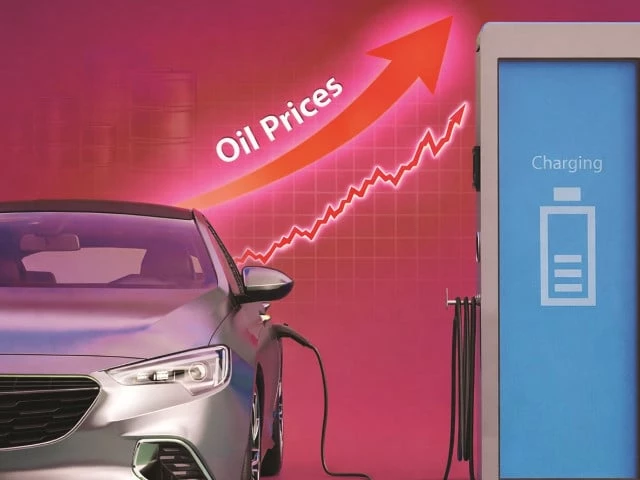
Electric vehicle. Design: Ibrahim Yahya
ISLAMABAD:
As fuel prices shoot up in Pakistan following intensifying war in the Middle East, the economics of driving sport utility vehicles (SUVs) is shifting as plug-in hybrids and extended-range electric vehicles are becoming the more cost-efficient choice.
Pakistan’s latest official petrol pricing data shows ex-depot motor spirit (petrol) is being sold for around Rs321 per litre, underscoring how vulnerable everyday mobility is in the backdrop of imported fuel volatility.
With petrol prices at unprecedented highs, the economics of driving an SUV is shifting rapidly in favour of plug-in hybrids and extended-range electric vehicles, remarked Syed Asif Ahmed, Director Sales and Marketing, Chery Master Pakistan, while talking to The Express Tribune.
Ahmed stressed that the discussion around new energy vehicles (NEVs) should no longer be limited to environmental positioning alone. “For Pakistani commuters, especially SUV users, this is now a straightforward economic decision,” he said. “When fuel prices rise to these levels, the cost of running a conventional petrol SUV becomes a serious burden on household budgets.”
Plug-in Hybrid Electric Vehicles (PHEVs) and Range-Extender Electric Vehicles (REEVs) now offer the most practical relief, Ahmed said, mentioning that a typical petrol-powered C-segment SUV having mileage of around 10 kilometres per litre now costs roughly Rs32 per km to run at current petrol rates.
Even a conventional hybrid, at an assumed fuel economy of around 18 km per litre, costs nearly Rs18 per kilometre. “A hybrid improves efficiency, but it still remains exposed to petrol price shocks,” Ahmed mentioned. “The vulnerability is reduced, but is not removed.”
He argued that plug-in hybrids and REEVs change that equation because they allow most daily urban driving to be completed on electricity instead of petrol. Citing the Chery Tiggo 9 PHEV as an example, he noted that the SUV carries a 34.46 kilowatt-hour (kWh) battery and offers a 170km electric range under the NEDC cycle.
“At a household electricity tariff of Rs50 per unit, a full charge costs about Rs1,723,” Ahmed said. “Spread over 170 km, it means a running cost of roughly Rs10 per km.”
This puts a plug-in SUV dramatically below a petrol SUV in day-to-day running cost, with savings of roughly Rs22 per km and also meaningfully below a conventional hybrid by about Rs8 per km. The advantage becomes even more compelling for urban families, who already have rooftop solar systems at home.
Pakistan’s rooftop solar market has expanded rapidly, with net-metering capacity rising sharply and cumulative rooftop solar installations reaching several gigawatts by 2025, which reflects a major consumer shift towards self-generation.
“This is where Pakistan’s energy transition and mobility transition start meeting each other,” Ahmed said. “A household that generates more of its own power is no longer just reducing its electricity bill; it can also reduce the cost of driving.”
This makes PHEVs and REEVs especially relevant for Pakistani SUV buyers, who typically need space, flexibility and long-distance usability, but are increasingly under pressure from fuel costs. Unlike a full-battery EV, a PHEV or REEV offers electric-led commuting without forcing the customer to depend entirely on a still-developing charging network.
Ahmed linked the argument to the wider national economy, saying Pakistan’s dependence on imported petroleum continues to create pressure on foreign exchange reserves and public finances whenever global oil markets turn volatile. Pakistan’s Fiscal Risk Statement has warned that a 20% global oil price shock could widen the fiscal deficit by Rs487 billion in fiscal year 2025-26 through lower petroleum levy collection and higher subsidies.
“The case for PHEVs and REEVs is not just about one brand or one vehicle,” he said. “It is about giving Pakistani consumers a realistic SUV solution that cuts running costs, reduces exposure to oil shocks and fits local driving conditions.” As petrol prices remain elevated, the market is moving towards a clear conclusion – for Pakistani commuters who want to keep driving SUVs without carrying the full burden of fuel inflation, plug-in hybrids and extended-range EVs are emerging as the most practical answer.






BENGALURU: Walmart-owned e-commerce firm Flipkart on Thursday said its group chief financial officer Sriram Venkataraman is quitting the firm as the company prepares for its next phase of growth and a potential public listing.Venkataraman will remain with the company for a period to ensure continuity and a smooth handover, Flipkart said. During this transition, Ravi Iyer will oversee the broader finance organisation.The move comes as Flipkart tightens its leadership structure ahead of a potential IPO, sharpening focus on profitability and scale. Flipkart group CEO Kalyan Krishnamurthy said Venkataraman played a key role in building and strengthening the finance function.
How could a company that charged as much as £65 for a day’s parking fail to turn a profit?
Source link
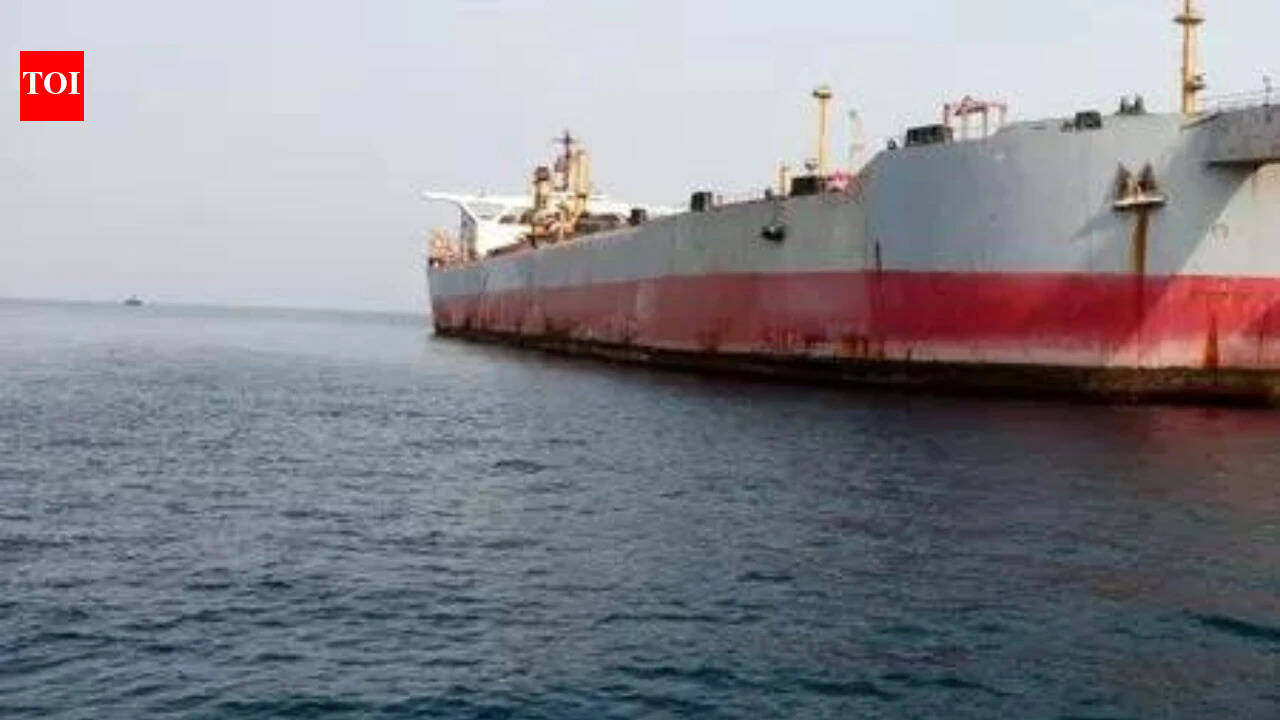
NEW DELHI: India’s weekly LPG imports fell to 265,000 tonnes in the week to March 19, from 322,000 tonnes on March 5. West Asia inflows declined to just 89,000 tonnes in the week to March 19, the lowest share since Jan 2026, according to S&P Commodities At Sea (CAS).The report, however, added that alternative regional supplies increased to 176,000 tonnes, largely from the US, in the week to March 19, up from zero the previous week when West Asia accounted for 100% of imports.The report said Indian oil marketing companies are likely to import 2.2 million tonnes of LPG from the US in 2026. CAS data added that US LPG loadings destined for India are increasing, with volumes now surpassing those from traditional Gulf suppliers. Petroleum ministry officials confirmed that some cargoes from the US had already arrived, but did not specify the number.With officials calling the availability of LPG “worrisome”, India is trying to secure the cooking gas from diversified sources, including Russia and Japan.Officials said some cargoes had already arrived from the US, while oil refineries were deliberating with suppliers across other geographies to bridge the gap created by disruptions in supplies through the Strait of Hormuz. While LPG supplies from West Asia take 7-8 days to reach India, officials said cargoes from the US take about 45 days, while those from Russia and Japan may take 35-40 days.India imports nearly 60% of its LPG requirement and about 90% of it comes from West Asia.


China’s textile & apparel exports surge 17% to $50 bn in Jan-Feb 2026

Why Barry Keoghan is stepping back from the spotlight?

Iran conflict heightens risks to developed markets’ growth: Fitch

-

 Fashion1 week ago
Chinese firm to invest $15.34 million in garment factory at BEPZA
-
 Business1 week ago
US issues 30-day waiver for Russian oil shipments stranded at sea | The Express Tribune
-
 Fashion1 week ago
US unemployment rate 4.4% in Feb 2026, LFPR 62%: BLS
-

 Sports1 week ago
Bilas’ All-America teams: My top 20 men’s college basketball players of 2025-26
-

 Tech7 days ago
Tips and Advice for Buying Used or Refurbished Electronics
-
 Business1 week ago
Oil holds above $100 as tensions escalates between Iran, US and Israel – SUCH TV
-

 Entertainment5 days ago
Strategic oil stocks to be released ‘immediately’ in Asia and Oceania: IEA
-
 Business6 days ago
UAE savings strategies 2026 explained: Best apps, tools, budget rules and smart money hacks to beat rising cost of living in emirates – The Times of India