

Tech
Cracks in flexible electronics run deeper than expected: Study points to potential fix


From health monitors and smartwatches to foldable phones and portable solar panels, demand for flexible electronics is growing rapidly. But the durability of those devices—their ability to stand up to thousands of folds, flexes and rolls—is a significant concern.
New research by engineers from Brown University has revealed surprising details about how cracks form in multilayer flexible electronic devices. The team shows that small cracks in a device’s fragile electrode layer can drive deeper, more destructive cracks into the tougher polymer substrate layer on which the electrodes sit. The work overturns a long-held assumption that polymer substrates usually resist cracking.
“The substrate in flexible electronic devices is a bit like the foundation in your house,” said Nitin Padture, a professor of engineering at Brown and corresponding author of the study published in npj Flexible Electronics. “If it’s cracked, it compromises the mechanical integrity of the entire device. This is the first clear evidence of cracking in a device substrate caused by a brittle film on top of it.”
The layers used in flexible electronics have specific jobs. The top layer conducts electricity across the surface to keep the device running. That layer is usually made of special ceramic oxide materials because they are transparent and also good conductors, which is essential for things like display screens, sensors and solar cells. But ceramics are brittle and prone to cracking, so the substrate’s job is to add some toughness. Substrates are generally made from polymer materials that are highly flexible and resist cracking.
While using these materials to make flexible solar cells, Anush Ranka, a postdoctoral researcher at Brown who performed the work as a Ph.D. student in materials science, became increasingly curious about the mechanism by which fatigue can degrade performance. He decided to take a closer look at the cracking processes.
For the study, Ranka made small experimental devices using various types of ceramic electrodes and polymer substrates. He then subjected them to bending tests and used a powerful electron microscope to examine the cracks. In places where he found cracks in the ceramic layer, he used a focused ion beam—a kind of nanoscale sandblaster—to etch away the ceramic and reveal the substrate directly beneath a ceramic crack.
The work showed that cracks in the ceramic layer often drive deeper cracks into the substrate. The effect occurred across ceramic and polymer combinations, suggesting this is a common—and surprising—failure mechanism in flexible electronics.
Once cracks form deep in the polymer, the researchers say, they become permanent structural defects. With repeated bending, these cracks widen, misalign or fill with debris, which then prevents the ceramic crack faces from reconnecting. That causes electrical resistance to increase and device performance to degrade.

Working with Haneesh Kesari, a Brown engineering professor who specializes in theoretical and applied mechanics, and solid mechanics Ph.D. student Sayaka Kochiyama, the researchers analyzed this cracking problem. They showed that a mismatch in the elastic properties of the two layers was driving the deep cracking phenomenon in the substrate. Understanding the cracking mechanism led the team toward a potential fix: Adding a third layer of material between the ceramic and the substrate that mitigates the elastic mismatch.
“We created a design map that identified hundreds of polymers that—with the correct thickness—could potentially mitigate this elastic mismatch and prevent cracking in a wide range of electrode-substrate combinations,” said Padture, who leads Brown’s Initiative for Sustainable Energy. “Using this design map, we were able to choose a specific polymer for the third layer and experimentally demonstrate the feasibility of our approach.”
The researchers are hopeful that the design diagram will make for more durable devices. Just as important, however, is the discovery that cracks do indeed affect polymer substrates—a fact that was not apparent before this research.
“We’re essentially solving a problem people didn’t know they had,” Padture said. “We think this could significantly improve the cyclic life of flexible devices.”
More information:
Anush Ranka et al, Cracking in polymer substrates for flexible electronic devices and its mitigation, npj Flexible Electronics (2025). DOI: 10.1038/s41528-025-00470-z
Citation:
Cracks in flexible electronics run deeper than expected: Study points to potential fix (2025, September 9)
retrieved 9 September 2025
from https://techxplore.com/news/2025-09-flexible-electronics-deeper-potential.html
This document is subject to copyright. Apart from any fair dealing for the purpose of private study or research, no
part may be reproduced without the written permission. The content is provided for information purposes only.













Soft plastics are notorious for jamming sorting machines, slipping through processing lines, and wreaking havoc on the environment. They’re also not accepted in most municipal curbside recycling programs.
Facilities for recycling these types of plastic exist, but getting waste to these locations clean and free of what some call “wishful recycling” items (compostable cups, plastic utensils) is such a challenge that the majority of soft plastics, even the bags recycled at the front of grocery stores, end up in the trash. The SPC is what Arbouzov calls a “pre-recycling device,” designed to simplify this stream and deliver plastic that’s contained, traceable, and more likely to make it through the system.
I tried to envision how the blocks would turn into patio furniture, as advertised, but didn’t learn exactly how until months later, when Arbouzov sent me a video of the blocks at their final destination—a facility in Frankfort, Indiana, that specializes in processing polyethylene and polypropylene films. The blocks get shredded into crumbles resembling, at least on video, handfuls of wet newspaper, which are then compressed into composite decking, chairs, garden edging, and more.
Courtesy of Clear Drop
Courtesy of Clear Drop
“The full cycle from mailing a block to it entering recycling processing typically takes a few weeks,” Arbouzov said, “depending on shipping time and batching schedules.” Right now, the Frankfort location is the only facility processing the blocks, but Arbouzov said he hopes this is only temporary.
“Our goal is to shift more of this processing closer to where the material is generated, so blocks can move in bulk through regional recycling infrastructure rather than through mail-based logistics,” he said. “The mail-back system is essentially a bridge that allows the material to be captured today while that larger infrastructure develops.”
Recycling, Rewired
I found that my household of three was able to produce a block every couple of weeks, which quickly outpaced the provided supply of mailers. As the blocks started piling up on the floor of my office, I found myself wishing the SPC made something useful for consumers. Spoons, straws, 3D-printing filament … anything that could be used at home.
However, a 2023 Greenpeace report found that recycling plastic can actually make it even more toxic than it already is—heating it can not only cause existing chemicals to escape into the air and water supply, but even create new ones, like benzene. Would I want this in my house? Does recycled plastic actually belong in a circular economy? I asked Arbouzov what he thought.
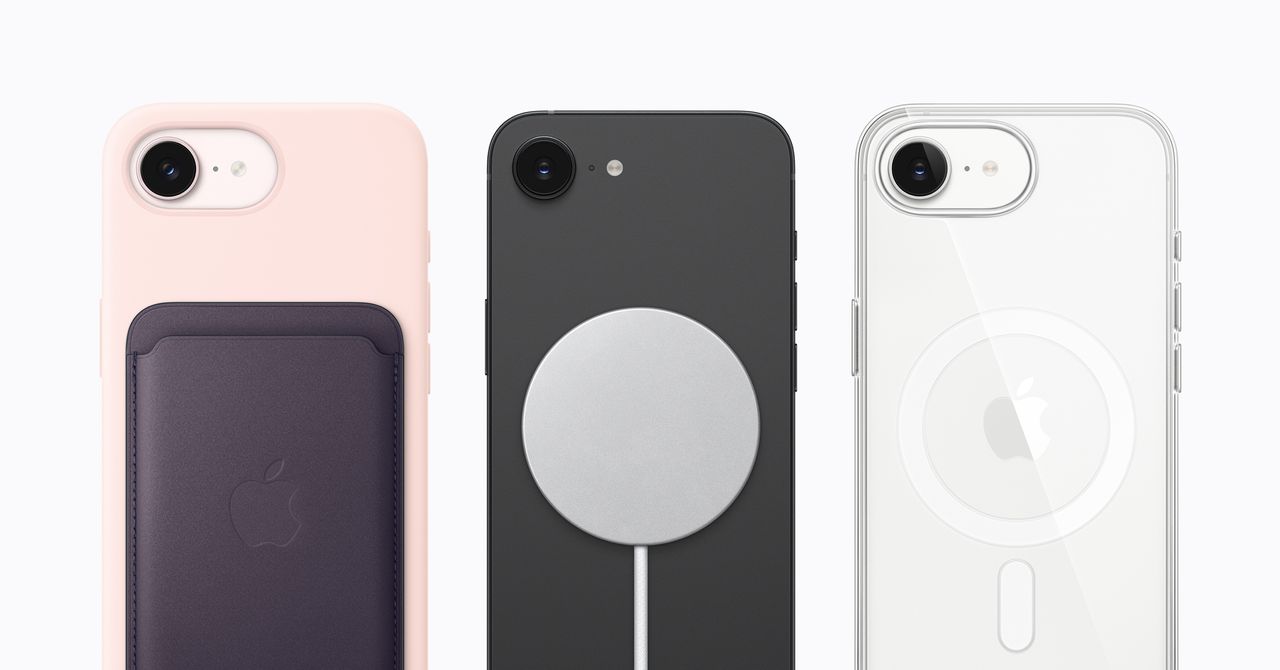
Predating the launch of Moto Mods in 2016, the first batch of Jolla The Other Half concepts included back covers with an extra E Ink display, an infrared camera, and an Angry Birds tie-in that activated themes and ringtones. But probably the most popular was a Blackberry/Nokia Communicator-style slider keyboard made and sold by two entrepreneurs from the original Jolla community. That trend is back in—at CES 2026, accessory company Clicks showed off a magnetic keyboard accessory you can slap on the back of any Qi2 or MagSafe smartphone, though it uses Bluetooth for connectivity.
Quite a bit has changed in what’s achievable, not least more bandwidth, more capability, and more accessible, high-quality 3D printing. “We have seven pogo pins [on the Jolla Phone] which give you the capability to get power out and power in,” says Jolla CEO Sami Pienimäki. “So you can do maybe wireless charging, and you can power external circuit boards.” Pienimäki imagines E Ink interfaces or low-bandwidth radios on the back of its upcoming phone—it has an I3C interface, which delivers bit rates up to 12 megabits per second, allowing data to flow between the phone and the mod, enabling new kinds of smarter modular accessories.
Jolla has promised to release the final phone specifications by the end of the month, with shipping due for the first preorder customers at the end of June. Pienimäki teases that it’s “tempting” for him to release one of Jolla’s own internal concepts for a TOH back cover even earlier as “a showcase of what you can actually do.” (The Jolla Phone doesn’t have FCC approval in the US, but the company is considering a US launch in the future.)
With more than 10,000 preorders since December 2025, Jolla is back in business but still far from mainstream. So why, despite plenty of internet hype over the years, did truly modular phones never quite take off?
“During the LTE days, there was thinking that these devices would morph into ‘cloud phones,’ where the rest of the phone could be cost-optimized,” Fieldhack says. “Swappable parts and lower costs, as most of the compute would be done in the cloud.”
But things changed as flagship phones went from costing $350 to around $1,000. Both the camera and media production and consumption became much more important: “Great displays, great cameras, multiple cameras, more memory, better sound and mics, as well as more elegant and thin devices—this is not easily done on a modular smartphone,” Fieldhack says. “There are huge compromises, and phones are thicker and heavier with less performance. Then, agentic AI, on-device for lower costs and better security, made modular design even less optimal.”
Repairable Modules
One strong and emerging argument for true hardware modularity is repairability. Another European smartphone maker, Fairphone, has been making that case for over a decade. “It’s about thinking about how do we group the actual phone itself into modules?” says Fairphone chief technology officer Chandler Hatton. The latest FairPhone Gen 6 smartphone is made up of 12 modules. A customer sitting at the kitchen table with a single T5 screwdriver (included) and a guitar pick can repair the phone quickly, easily, and cheaply.

BT has announced a 10-year deal worth up to £200m with Northern Ireland Electricity Networks (NIE Networks) to deliver enhanced connectivity, cyber security and IT to support critical services for homes and businesses across the country.
Established in 1993, when the business was privatised and employing over 1,500 people, NIE Networks is responsible for the safe, secure and reliable supply of electricity to 966,000 homes, farms and businesses across Northern Ireland, and is also the operator for its distribution network.
The business was acquired by Irish energy company ESB in December 2010, and operates as an independent organisation with its own board and management teams, and separate regulation via the Utility Regulator for Northern Ireland.
NIE also owns the electricity network across the province, consisting of approximately 2,300km of transmission network and 58,800km of distribution network with 340 major substations, investing around £100m in the network each year.
Electricity networks are part of the critical infrastructure that keeps Northern Ireland running, and they rely on technology that is secure, reliable and resilient by design. Fundamentally, the deal will support NIE Network’s digital transformation, which aims to modernise the key services and infrastructure that provide electricity across Northern Ireland.
Technologically, the partnership with BT is designed to provide the energy company with a suite of services including improved network infrastructure, strengthened connectivity and a team of dedicated professionals to guard against cyber security threats. BT will also be responsible for ensuring high-quality service and support across the business, day-to-day management of network infrastructure, and data hosting.
Initially, the contract will run for five years, with the option to extend by up to another 10 years. Another key component of the deal will be supporting local jobs, building digital skills and creating supply chain opportunities across Northern Ireland.
The deal is also intended to enable a move to more sustainable infrastructure and networks, supporting NIE Networks to reach their sustainability and net zero ambitions.
“This multi-year partnership is a win-win for Northern Ireland’s economy, supporting local jobs, skills development and supply-chain opportunities,” said Rohan Kapoor, chief information officer of NIE Networks.
“The collaboration will also help meet Northern Ireland’s energy needs, increasing our technological capabilities and enabling further electrification, renewables integration and emerging flexibility markets, all of which have a positive impact on the Northern Ireland economy and the NI Executive’s net zero targets.”
Chris Sims, chief commercial officer at BT Business, said: “Electricity networks are part of the critical infrastructure that keeps Northern Ireland running, and they rely on technology that is secure, reliable and resilient by design. That’s where BT comes in. With evolving cyber threats, protecting essential services is more important than ever, and organisations rely on digital connections they can trust.
“With our experience in supporting critical services and our long-standing presence in Northern Ireland, we are in a unique position to provide the secure, trusted connectivity and specialist expertise that will help strengthen the network for years to come.”
BT Group has a large presence in Northern Ireland, employing more than 3,400 people, and says that its work provides an economic boost of £630m in the country. In 2023, it officially unveiled a multimillion-pound refurbishment of its flagship Belfast Riverside office, boasting technology and collaboration spaces for colleagues from its EE, BT Business and Openreach units.


After Trump’s sanction waiver, Reliance Industries procures 5 million barrels of Iran crude oil: Report – The Times of India

Kate Hawley wins Best Costume Design for ‘Frankenstein’ at Oscars 2026

Zayn Malik sends fans into meltdown with new music video

-

 Entertainment1 week ago
Strategic oil stocks to be released ‘immediately’ in Asia and Oceania: IEA
-
 Business1 week ago
UK looking at all options to secure Strait of Hormuz, says Ed Miliband
-

 Tech7 days ago
Justice Department Says Anthropic Can’t Be Trusted With Warfighting Systems
-
 Business1 week ago
Stocks To Watch: Tata Motors, IndiGo, Jindal Stainless, GMR Airports, Hindalco, And Others
-

 Sports1 week ago
Men’s March Madness 2026 bracket: Get to know all 68 teams
-
 Business1 week ago
Gas supply crunch a worry for AC makers ahead of peak season – The Times of India
-

 Tech1 week ago
Early Deals From the Amazon Spring Sale That Passed Our BS Test
-

 Sports6 days ago
March Madness 2026 – How to watch in SA, start time, schedule, TV channel for NCAA championship basketball tournament