

Tech
Cyber experts take an optimistic view of AI-powered hacking | Computer Weekly


The annual showcase at the Centre for Emerging Technology and Security (CETaS) kicked off with a discussion on the implications of Claude Mythos.
Opening the conference, Alexander (Sacha) Babuta, director of CETaS at the Alan Turing Institute, said that Anthropic’s latest frontier model, Claude Mythos Preview, demonstrates major improvements in mathematics, cyber security, software engineering and automated vulnerability detection.
While the model can identify and autonomously exploit previously undiscovered vulnerabilities in real-world systems, he described an optimistic outlook of how Claude Mythos Preview could be used to secure enterprise IT. “Companies can use models like Anthropic Mythos to rapidly discover vulnerabilities in their own systems and patch them to strengthen digital security for everyone,” said Babuta.
A study of the cyber crime community between the release of ChatGPT in 2022 and the end of 2025 revealed that cyber crime forums played host to a number of “dark AI” products.
These are claimed by their owners to be homegrown or extensively retrained and jailbroken large language models (LLMs) customised and tailored for cyber crime. But despite generating some early enthusiasm on the forums, these have made little impact to date, Ben Collier, senior lecturer at the University of Edinburgh, said in a presentation discussing the findings.
When the researchers looked at enterprise-grade, legitimate products designed explicitly to turn a novice developer into a competent coder, they found many aspiring cyber criminals experimenting with tools like ChatGPT and Claude, which the researchers said “excitedly report back on their discoveries”. However, Collier noted that a deeper exploration of these discussions found that, in most cases, forum members lacked the basic technical skills needed to use AI tools effectively for committing cyber crime.
“They’re using vibe coding tools for hobby projects, but particularly for the basic logistics of cyber crime operations,” he said. “Most of the coding involved in cyber crime isn’t hacking. It’s the same administration and basic engineering works that you’d need for any small startup, which means a lot of them don’t actually need to jailbreak Claude to get real utility out of it.”
The pessimistic view is that as these tools evolve, they will be able to be used for sophisticated cyber attacks. Adam Beaumont, interim director at the AI Security Institute (ASI), discussed the pessimist view. Beaumont, the former chief AI officer at GCHQ, said the ASI recently demonstrated how a frontier AI model executed a 32-step cyber attack against a simulated corporate environment from initial reconnaissance through to full network takeover.
“We estimate it would take a skilled human professional 20 hours’ worth of work, and this was the first time any model had done it, and weeks later, we tested a second model,” he said.
Beaumont pointed out that the attack he described was not a model answering a question about hacking. “It was a system that hacked,” he said. “We still don’t fully know how to ensure these systems act as we intend, or how to guarantee they remain under meaningful human control as they grow more capable.”
Beaumont called the ASI demonstration an “honest starting point”. “The uncertainty is real and the discomfort is appropriate,” he said.
For Beaumont, it represents something that can be built up to enable government, industry and the research community to make decisions based on what these systems can actually do built on evidence.

Armed with some Python and a white-hot sense of injustice, one medical student spent six months trying to figure out whether an algorithm trashed his job application.
Source link

Upgrading your home office can feel like going down a rabbit hole. A simple search for a basic new desk can quickly turn into hours down the drain and endless tabs open on your computer, with every option starting to blur together. Uplift has a loyal following for its super customizable desks, smart (and creative—under-desk hammock, anyone?) accessories, and a solid build quality that makes long workdays more manageable.
We’ve explored the perks of a standing desk, and the takeaway is pretty clear: even if it won’t magically fix everything, the right standing desk setup can make all the difference in the way you work. If you’re ready to make the leap into the standing desk space, starting with an Uplift coupon code is a smart move.
Save up to $570 With This Uplift Desk Coupon Code
If you’ve been waiting for the right time to upgrade your workspace, this is your sign. Right now, you can save up to $570 on standing desks through a mix of tiered discounts and bundled accessories. With the Uplift promo code SPRING, you’ll get $100 off orders of $999 or more, $150 off $1,499, $200 on $1,999, and $300 on $2,999 or more.
Uplift also includes five free accessories (worth up to $270), which is where this deal really comes in clutch, especially if you’re building a full setup. Think practical upgrades like monitor arms to lift your screen to eye level, cable management kits to tame cords, or an anti-fatigue standing mat to make standing on your feet more comfortable. The right ergonomic add-ons can make a real difference in day-to-day comfort, and this Uplift desk promo code accessories offer helps you get there.
Get $20 Off When You Sign up for Uplift Emails
Like many other brands, Uplift rewards their loyal customers. When you sign up for Uplift emails, which include things like product drops and restock alerts, you can save $20 on your order over $199. Not only will you get exclusive discounts, you’ll get email-only deals, early sale access, and special promotions with this Uplift newsletter sign up. Plus, the $20 off your next purchase.
Score Free Shipping on all Orders This Month
Who can say no to free shipping, especially when it’s for a major furniture item like a standing desk? Right now, Uplift is offering free and fast shipping on all orders, no Uplift desk coupon code required. And timing can work in your favor: most orders placed before 3 pm CST ship the same business day, so you’re not stuck refreshing the tracking page for a week. Whether you’re in the middle of an office refresh (or just impatient when it comes to deliveries), this is a major perk.
Claim up to 5 Free Accessories With Your Standing Desk Purchase
A built-in bonus when you buy an Uplift standing desk is that you get up to five free accessories baked into the purchase. You can choose from a huge catalog of over 400 add-ons to go with the desk (honestly, I was overwhelmed at first). Options range from practical to fun, like cable management kits and desk organizer sets to a desk-mounted cup holder and an under-desk hammock. There are even some branded extras, like a stainless steel tumbler and a t-shirt, depending on your vibe.
Use Your FSA Dollars to Get the Most out of Your Desk
Uplift desks may be eligible for reimbursement through your HSA or FSA, which means you could effectively pay for part of your desk setup with pre-tax dollars. This can lead to major savings, especially when stacked with an Uplift promo code.
The process is pretty straightforward: Check out normally (no need to use your HSA/FSA card upfront), then complete a quick health survey through Uplift’s partner program, which will be on your confirmation screen or through your email receipt. If you qualify, a licensed provider will issue a Letter of Medical Necessity, which you can then submit for reimbursement. It’s a few extra steps, but the payoff is worth it, especially if you’ve been eyeing a bigger purchase.
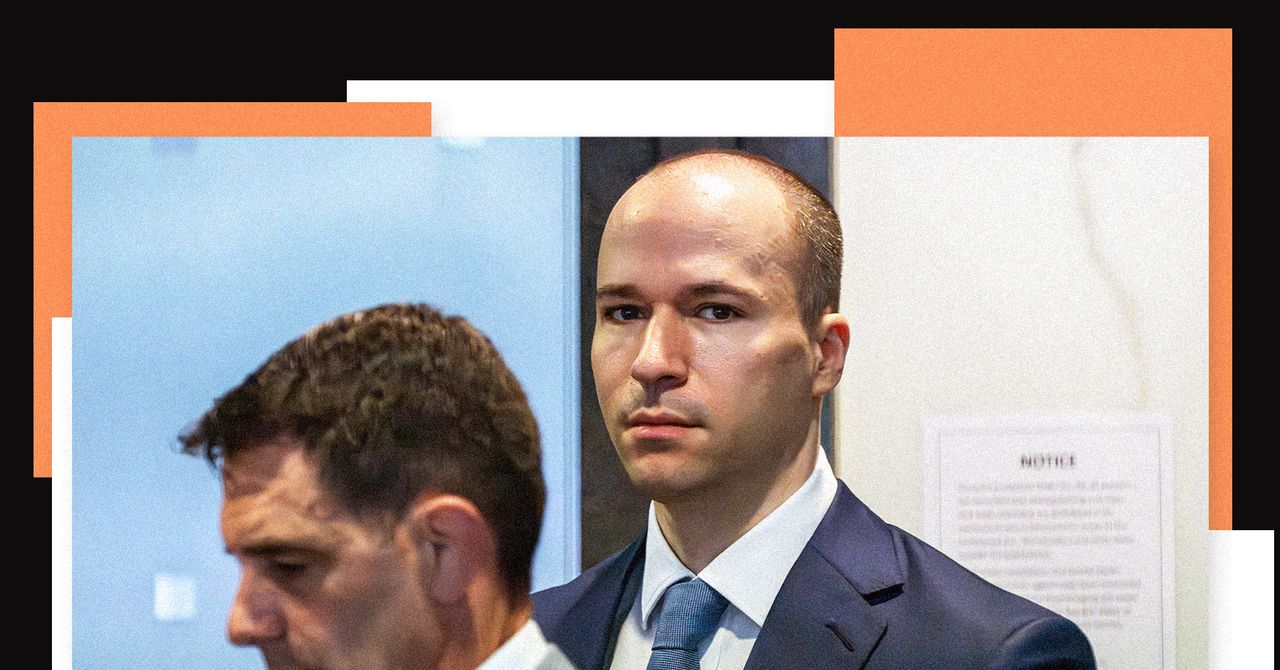
Two days before the Musk v. Altman trial began, Elon Musk asked OpenAI cofounder and president Greg Brockman about reaching a settlement. When Brockman suggested both sides drop their claims, Musk responded, “By the end of this week, you and Sam [Altman] will be the most hated men in America. If you insist, so be it.”
The message—which OpenAI’s lawyers made public on Sunday, and which Judge Yvonne Gonzalez Rogers subsequently refused to let the jury hear about—underscores what may be Musk’s larger goal in this trial. He appears to be trying to not only win over the jurors to potentially remove Brockman and CEO Sam Altman from power, but also stir up dirt on the two men and damage OpenAI’s public image.
As Brockman took the stand on Monday, Musk’s attorney Steven Molo quickly started questioning him about his compensation at OpenAI. Brockman revealed that his equity stake at OpenAI is currently worth more than $20 billion, and perhaps up to $30 billion. While Brockman initially promised to donate $100,000 to OpenAI when it was being set up, he said he ultimately never followed through.
Brockman has held a number of instrumental roles at OpenAI since he cofounded the company in 2015. In the startup’s early days, it operated out of his apartment in the Mission District of San Francisco. Today, he’s deeply involved with refocusing OpenAI on a few key products, such as Codex. In the past year, Brockman has also given millions to super PACs promoting AI and President Trump, and has previously said this increased political spending is related to OpenAI’s founding mission to create artificial general intelligence that benefits all of humanity.
In court on Monday, Molo tried to make the case that Brockman and Altman had essentially looted OpenAI’s original nonprofit, which Musk funded and helped create.
In its early days, OpenAI told investors and employees that its nonprofit mission took precedence over generating profit. Brockman testified that his financial interests are still, to this day, second to OpenAI’s nonprofit mission.
When OpenAI created its for-profit arm in 2019, which received assets from the nonprofit, Brockman testified that he was given a significant stake in the new entity. Early in OpenAI’s history, Brockman had referenced wanting to be a billionaire, writing in his personal journal, “Financially what will take me to $1B?”
On Monday, Molo pressed Brockman for several minutes about the vast wealth he had accumulated beyond his initial goal.
“Why not donate that $29 billion to the OpenAI nonprofit? Why didn’t you do that?” Molo asked. Brockman responded that he and others had poured “blood, sweat, and tears” into building OpenAI in the years since Musk left the company.
OpenAI’s foundation holds a stake of over $150 billion in the company, making it one of the richest nonprofits in history, Brockman said. That’s roughly five times Brockman’s ownership interest. Altogether, OpenAI employees hold about 25 percent of shares. The foundation has 27 percent. Brockman testified that OpenAI’s nonprofit had received less than $150 million from donors, implying Musk had been incidental to the company’s success and that the real drivers were those who stuck around to build out OpenAI.
Of course, Brockman’s stake in OpenAI could be worth much more than $30 billion if the company successfully goes public in the next two years. When asked whether OpenAI was exploring a potential IPO, Brockman said he believes so.


He Couldn’t Land a Job Interview. Was AI to Blame?

North India cotton yarn prices rise despite weak domestic demand

India among most resilient large EMs, better placed for future global shocks; policy reforms & strong buffers help: Moody’s – The Times of India

-

 Tech1 week ago
A Brain Implant for Depression Is About to Be Tested in Humans
-
 Business1 week ago
‘I had £20,000 stolen and had to fight a 13-month fraud reporting rule to get it back’
-

 Tech1 week ago
Almost 90% of women leave tech industry within 10 years | Computer Weekly
-
 Business1 week ago
Pakistan’s oil market is fuelling the crisis | The Express Tribune
-

 Sports7 days ago
Pro wrestling star Steph De Lander reveals how colleague’s advice helped lead her to title triumph at ACW
-

 Entertainment1 week ago
Norway joins Type 26 Frigate Programme to boost NATO naval power
-

 Entertainment1 week ago
Melania Trump says ABC should ‘take a stand’ on late-night host Kimmel
-

 Tech1 week ago
This Ambitious Laptop Doesn’t Leave Much Room for Your Hands