

Business
Data centres to be expanded across UK as concerns mount

 Getty Images
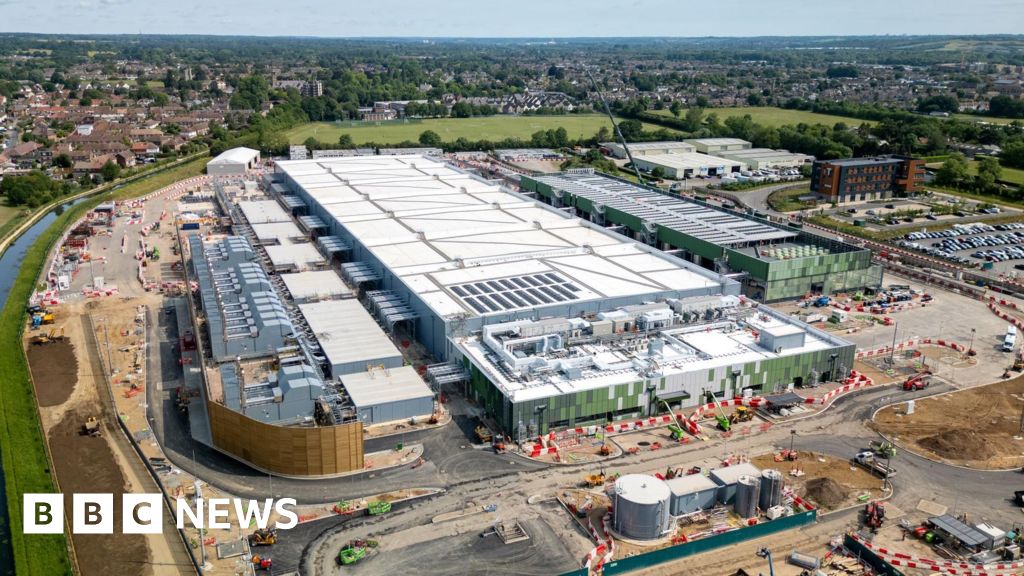
The number of data centres in the UK is set to increase by almost a fifth, according to figures shared with BBC News.
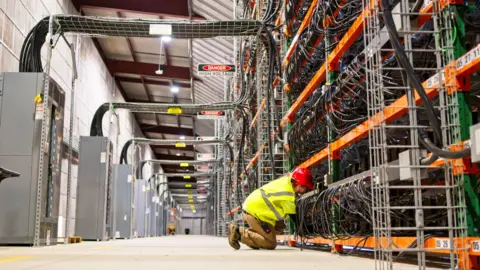
Data centres are giant warehouses full of powerful computers used to run digital services from movie streaming to online banking – there are currently an estimated 477 of them in the UK.
Construction researchers Barbour have analysed planning documents and say that number is set to jump by almost 100, as the growth in artificial intelligence (AI) increases the need for processing power.
The majority are due to be built in the next five years.
However, there are concerns about the huge amount of energy and water the new data centres will consume.
Some experts have warned it could drive up prices paid by consumers.
More than half of the new data centres would be in London and neighbouring counties.
Many are privately funded by US tech giants such as Google and Microsoft and major investment firms.
A further nine are planned in Wales, one in Scotland, five in Greater Manchester and a handful in other parts of the UK, the data shows.
While the new data centres are mostly due for completion by 2030, the biggest single one planned would come later – a £10-billion AI data centre in Blyth, near Newcastle, for the American private investment and wealth management company Blackstone Group.
It would involve building 10 giant buildings covering 540,000 square meters – the size of several large shopping centres – on the site of a former Blyth Power Station.
Works are set to begin in 2031 and last for more than three years.
Microsoft is planning four new data centres in the UK at a total cost of £330 million, with an estimated completion between 2027 and 2029 – two in the Leeds area, one near Newport in Wales, and a five-storey site in Acton, north west London.
And Google is building two data centres, totalling £450m, spread over 400,000 sq m in north east London in the Lee Valley water system.
By some analyses, the UK is already the third-largest nation for data centres behind the US and Germany.
The government has made clear it believes data centres are central to the UK’s economic future – designating them critical national infrastructure.
But there are concerns about their impact, including the potential knock-on effect on people’s energy bills.
It is not known what the energy consumption of the new centres will be as this data is not included in the planning applications, but US data suggests they are can be considerably more powerful than older ones.
Dr Sasha Luccioni, AI and climate lead at machine learning firm Hugging Face, explains that in the US “average citizens in places like Ohio are seeing their monthly bills go up by $20 (£15) because of data centres”.
She said the timeline for the new data centres in the UK was “aggressive” and called for “mechanisms for companies to pay the price for extra energy to power data centres – not consumers”.
According to the National System Operator, NESO, the projected growth of data centres in Great Britain could “add up to 71 TWh of electricity demand” in the next 25 years, which it says redoubles the need for clean power – such as offshore wind.
‘Fixated with sustainability’
There are also growing concerns about the environmental impact of these enormous buildings.
Many existing data centre plants require large quantities of water to prevent them from overheating – and most current owners do not share data about their water consumption.
Stephen Hone, chief executive of industry body the Data Centre Alliance, says “ensuring there is enough water and electricity powering data centres isn’t something the industry can solve on its own”.
But he insisted “data centres are fixated with becoming as sustainable as possible”, such as through dry-cooling methods.
Such promises of future solutions have failed to appease some.
In Potters Bar, Hertfordshire, residents are objecting to the construction of a £3.8bn cloud and AI centre on greenbelt land, describing the area as the “lungs” of their home.
And in Dublin there is currently a moratorium on the building of any new data centres because of the strain existing ones have placed on Ireland’s national electricity provider.
In 2023 they accounted for one fifth of the country’s energy demand.

 Getty Images
Last month, Anglian Water objected to plans for a 435 acre data centre site in North Lincolnshire. The developer says it aims to deploy “closed loop” cooling systems which would not place a strain on the water supply.
The planning documents suggest that 28 of the new data centres would be likely to be serviced by troubled Thames Water, including 14 more in Slough, which has already been described as having Europe’s largest cluster of the buildings.
The BBC understands Thames Water was talking to the government earlier this year about the challenge of water demand in relation to data centres and how it can be mitigated.
Water UK, the trade body for all water firms, said it “desperately” wants to supply the centres but “planning hurdles” need to be cleared more quickly.
Ten new reservoirs are being built in Lincolnshire, the West Midlands and south-east England.
A spokesperson for the UK Government said data centres were “essential” and an AI Energy Council had been established to make sure supply can meet demand, alongside £104bn in water infrastructure investment.
Additional reporting by Tommy Lumby


Intellia Therapeutics, building exterior and company sign, Cambridge, Massachusetts, USA.
Spencer Grant | Universal Images Group | Getty Images
Intellia Therapeutics said its Crispr-based treatment for a rare swelling condition met its goals in a late-stage trial, marking a milestone for the field of gene editing and putting the company on track to seek approval from the U.S. Food and Drug Administration.
The company’s treatment uses Nobel Prize-winning technology Crispr to edit DNA and turn off the gene that controls production of a peptide that’s overactive in people with hereditary angioedema, causing them to experience potentially life-threatening swelling attacks. Intellia’s treatment is administered once through an hourslong infusion, making the edits directly in the liver.
Intellia said the one-time treatment reduced attacks by 87% compared with a placebo, meeting the study’s main goal. Six months after treatment, 62% of patients were free from attacks and weren’t using other therapies, Intellia said.
The company described the safety and tolerability of the treatment as “favorable,” reporting the most common side effects were infusion-related reactions, headaches and fatigue. Analysts were closely watching safety in the trial since a patient in a separate trial of a different treatment from Intellia died. That patient developed a liver injury and ultimately died from septic shock following an ulcer, according to the company.
“When you think about where we started with Crispr, just 12 years ago with some of the fundamental insights, I think there was a lot of talk about what might be possible, and we’ve had reports along the way in terms of milestones, but this is the first Phase 3 data in any indication with in vivo Crispr where you’re actually changing a gene that causes disease,” said Intellia CEO John Leonard.
The only FDA-approved Crispr-based medicine comes from Vertex Pharmaceuticals. Called Casgevy, the gene editing is done outside the body, or ex vivo. The process requires collecting a person’s blood cells, making the edits outside the body, then reinfusing them back into a patient. Intellia’s treatment, meanwhile, makes the edits inside the body, or in vivo.
Intellia said it has started a rolling application with the FDA and plans to complete the filing in the second half of this year. The company expects to launch the treatment in the U.S. in the first half of next year, if it’s approved.
If approved, Intellia’s treatment, lonvoguran ziclumeran, will compete with about a dozen other chronic drugs for HAE. Despite the allure of a one-time treatment, genetic medicines haven’t always been a commercial successes. BioMarin withdrew its gene therapy for Hemophilia A because of weak sales, for example.
Leonard said there are important differences between the two, like the fact that BioMarin’s therapy faced questions about how long the effects would last. In contrast, he said Intellia hasn’t seen a single case in almost six years where the effects diminished over time.
Despite the results, he’s reluctant to call Intellia’s treatment a functional cure.
“I think this is a tipping point for the disease and tipping point for Crispr-based in vivo therapy where you can make a change [and] it’s permanent,” Leonard said. “And, as far as we can tell, we don’t have a single patient in this program or other program where there’s been any waning of the effect of what we did to the gene or the effect of what we’ve seen with the clinical aspects of the disease itself. So it’s pretty exciting.”
Clarification: This story has been updated to clarify that a patient in a separate trial of a different treatment from Intellia developed acute liver injury and ultimately died from septic shock following an ulcer.

While many airlines say they are raising prices due to high fuel costs, József Váradi says European airlines are trying to boost demand
Source link
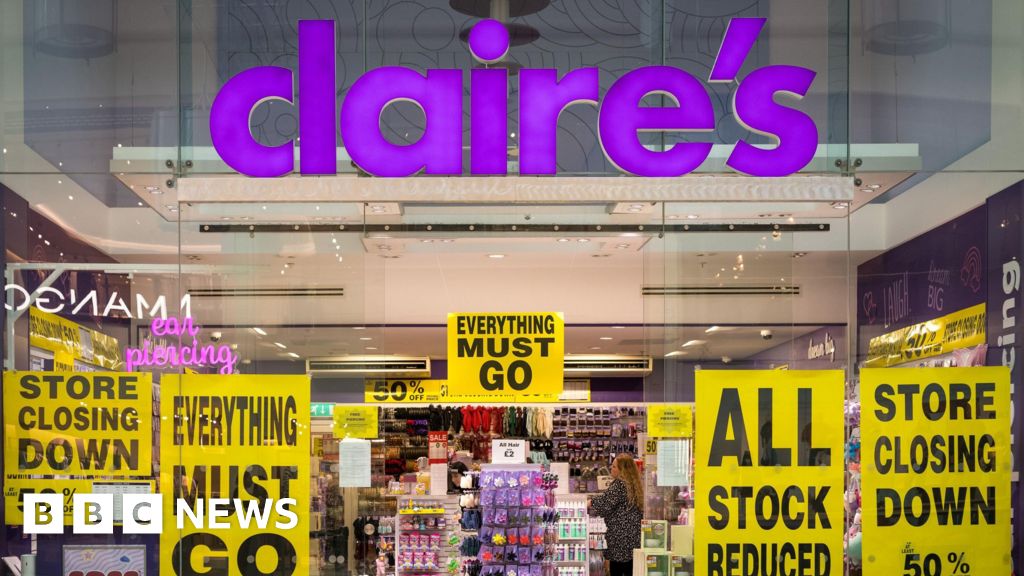
All of the chain’s standalone stores have stopped trading in the UK and Ireland.
Source link


King Charles and the Trumps unite at White House for a historic tea meeting

This M5 MacBook Air Discount Has Renewed My Faith in Cheap Laptops for 2026

Norway joins Type 26 Frigate Programme to boost NATO naval power

-

 Sports1 week ago
NCAA men’s gymnastics championship: All-time winners list
-

 Sports1 week ago
WWE WrestleMania 42 Night 2: Live match results and analysis
-

 Politics7 days ago
UK’s Starmer seeks to deflect blame over Mandelson appointment
-

 Fashion1 week ago
UK’s Sosandar returns to profitability amid robust FY26 performance
-

 Entertainment1 week ago
Lee Anderson, Zarah Sultana kicked out of UK Parliament for calling PM ‘liar’
-
 Business1 week ago
How Trump’s psychedelics executive order could unlock stalled cannabis reform
-
 Business1 week ago
No fuel shortage: Govt assures 100% domestic LPG, PNG, CNG supply amid Hormuz energy crunch – The Times of India
-

 Sports1 week ago
Quetta Gladiators opt to bowl after winning toss against Peshawar Zalmi in PSL 11 clash