

Business
Economic uncertainty blamed for ‘lacklustre’ retail performance last month


Analysists have blamed rising economic uncertainty for a “lacklustre” July that saw Scottish retail sales fall in real terms compared with the same month last year.
According to figures from the Scottish Retail Consortium (SRC) and KPMG, total sales in Scotland rose 0.1% last month compared with July 2024, when they had decreased by 0.9%.
However when adjusted for inflation this represents a year-on-year fall of 0.5%.
Food sales in Scotland were down 1.4% compared with July 2024, when they had decreased by just 0.3%.
This was despite a strong opening to the month when hot weather led to a “boost” in spending on barbecues and summer meals.
Non-food sales on the other hand rose by 1.4% compared with the same period last year, with analysists saying phones and some furniture and toy ranges performed well.
Adjusted for the effects of online sales, non-food sales increased 1.6% on July 2024, when they had decreased by 1.5%.
Ewan MacDonald-Russell, deputy head of the SRC, said: “July was a lacklustre month for Scottish retailers as sales again disappointed.
“When adjusted for inflation retail sales in Scotland fell by 0.5%. That’s a slight improvement on June’s figures, but demonstrates shoppers continue to cut back on shopping as economic uncertainty continues to rise.
“Within the general disappointment there were some bright spots. Food sales shone in the opening half of the month as Scots took advantage of the warm weather to cook barbeque and summer meals.
“Phone sales did well, as did some toys and furniture ranges. Against that televisions continue to disappoint, with few households investing in high-end entertainment despite the summer plethora of sporting events.
“Fashion ranges performed poorly, albeit the likelihood is shoppers did their summer wardrobe shopping earlier in the year when the sunshine emerged.
“The harsh truth is Scots are holding back spending as worries about the economy grow.
“That is leaving shops in the lurch – facing higher costs as a consequence of last year’s UK Government budget without the growth needed to pay those bills.
“With little sight the economic weather will brighten, many retailers, especially those on the high street, face increasingly unpalatable choices in the coming months.”
Linda Ellett, UK head of consumer, retail and leisure at KPMG, described the current trading environment as “challenging” for retailers.
“The UK’s fifth warmest July on Met Office record brought a boost to home appliance and food and drink sales,” she said.
“But rising inflation was also a driver of the latter and monthly non-food sales are only growing at around 1% on average at present.
“With employment costs having risen and inflation both a business and consumer side pressure, it remains a challenging trading environment for many retailers.
“While the majority of consumers that KPMG surveys are confident in their ability to balance their monthly household budgets, big ticket purchases are more considered in the context of rising essential costs and ongoing caution about the economy and labour market.
“Holidays are the priority for many this summer but those heading away have had to account for a higher cost of travel.
“Consequently, spending in some areas of the retail sector remains subdued and competition for consumer spend will remain fierce.”
The figures were published in the SRC-KPMG Retail Sales Monitor for July.

Intellia Therapeutics, building exterior and company sign, Cambridge, Massachusetts, USA.
Spencer Grant | Universal Images Group | Getty Images
Intellia Therapeutics said its Crispr-based treatment for a rare swelling condition met its goals in a late-stage trial, marking a milestone for the field of gene editing and putting the company on track to seek approval from the U.S. Food and Drug Administration.
The company’s treatment uses Nobel Prize-winning technology Crispr to edit DNA and turn off the gene that controls production of a peptide that’s overactive in people with hereditary angioedema, causing them to experience potentially life-threatening swelling attacks. Intellia’s treatment is administered once through an hourslong infusion, making the edits directly in the liver.
Intellia said the one-time treatment reduced attacks by 87% compared with a placebo, meeting the study’s main goal. Six months after treatment, 62% of patients were free from attacks and weren’t using other therapies, Intellia said.
The company described the safety and tolerability of the treatment as “favorable,” reporting the most common side effects were infusion-related reactions, headaches and fatigue. Analysts were closely watching safety in the trial since a patient in a separate trial of a different treatment from Intellia died. That patient developed a liver injury and ultimately died from septic shock following an ulcer, according to the company.
“When you think about where we started with Crispr, just 12 years ago with some of the fundamental insights, I think there was a lot of talk about what might be possible, and we’ve had reports along the way in terms of milestones, but this is the first Phase 3 data in any indication with in vivo Crispr where you’re actually changing a gene that causes disease,” said Intellia CEO John Leonard.
The only FDA-approved Crispr-based medicine comes from Vertex Pharmaceuticals. Called Casgevy, the gene editing is done outside the body, or ex vivo. The process requires collecting a person’s blood cells, making the edits outside the body, then reinfusing them back into a patient. Intellia’s treatment, meanwhile, makes the edits inside the body, or in vivo.
Intellia said it has started a rolling application with the FDA and plans to complete the filing in the second half of this year. The company expects to launch the treatment in the U.S. in the first half of next year, if it’s approved.
If approved, Intellia’s treatment, lonvoguran ziclumeran, will compete with about a dozen other chronic drugs for HAE. Despite the allure of a one-time treatment, genetic medicines haven’t always been a commercial successes. BioMarin withdrew its gene therapy for Hemophilia A because of weak sales, for example.
Leonard said there are important differences between the two, like the fact that BioMarin’s therapy faced questions about how long the effects would last. In contrast, he said Intellia hasn’t seen a single case in almost six years where the effects diminished over time.
Despite the results, he’s reluctant to call Intellia’s treatment a functional cure.
“I think this is a tipping point for the disease and tipping point for Crispr-based in vivo therapy where you can make a change [and] it’s permanent,” Leonard said. “And, as far as we can tell, we don’t have a single patient in this program or other program where there’s been any waning of the effect of what we did to the gene or the effect of what we’ve seen with the clinical aspects of the disease itself. So it’s pretty exciting.”
Clarification: This story has been updated to clarify that a patient in a separate trial of a different treatment from Intellia developed acute liver injury and ultimately died from septic shock following an ulcer.
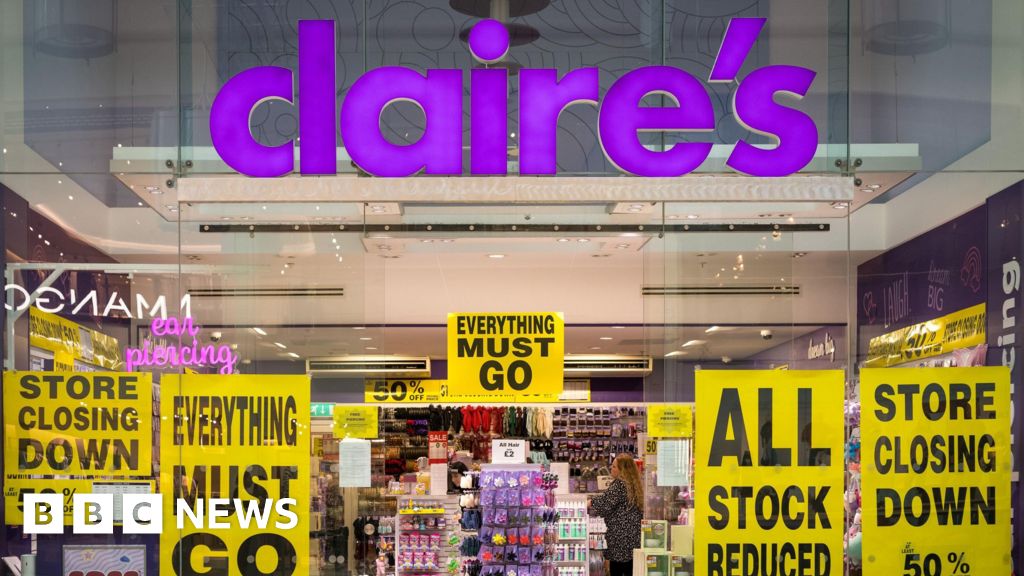
All of the chain’s standalone stores have stopped trading in the UK and Ireland.
Source link

A pedestrian walks by a Domino’s Pizza on Dec. 9, 2025 in San Francisco, California.
Justin Sullivan | Getty Images
Domino’s Pizza stock fell 10% in morning trading on Monday after it reported weaker-than-expected U.S. same-store sales growth.
The chain’s domestic same-store sales rose just 0.9%, lower than the 2.3% bump expected by Wall Street analysts, based on StreetAccount estimates.
“We’re not happy with it,” CEO Russell Weiner told CNBC.
The pizza chain also lowered its full-year U.S. same-store sales forecast to low-single digit growth, down from its prior projection that U.S. same-store sales will increase 3%.
Weiner said he expects more fast-food chains to report similar headwinds from winter weather and weak consumer sentiment, which took a dive in March due to spiking fuel prices caused by the U.S.-Israeli war with Iran.
“One of the bad things about reporting first is you don’t get to hear about anybody else,” Weiner said.
Domino’s kicked off the earnings season for restaurant chains. Starbucks is on deck after the bell on Tuesday, and Chipotle Mexican Grill and Pizza Hut owner Yum Brands are expected to share their results on Wednesday. Rival Papa John’s will report its earnings next Thursday.
During the quarter, Domino’s also faced stiffer competition from rival pizza chains. Papa John’s and Pizza Hut both matched Domino’s $9.99 “Best Deal Ever” with promotions at the same price point. And Little Caesars undercut Domino’s $6.99 Mix & Match deal with a $5.99 version.
“People are seeing what we’re doing, and they’re sick of losing share, and they’re coming at it,” Weiner said, adding that he still expects Papa John’s and Pizza Hut to report same-store sales declines for the quarter despite the new promotions.
Looking ahead, Weiner expressed confidence that Domino’s will prove itself in the long run.
“Domino’s has got a bigger advertising budget than our second two competitors combined,” he said. “And those competitors are both going up for sale, so we know things aren’t good there right now.”
Yum announced in November that it was exploring strategic options for Pizza Hut, which could include a sale. And Papa John’s is reportedly in talks with Qatari-backed Irth Capital to go private. Both chains have also announced plans to close hundreds of restaurants this year, which could further boost Domino’s dominant position in the pizza category.
And if either Pizza Hut or Papa John’s goes private, Weiner said he expects that a new owner would shutter even more locations — a win for Domino’s.
Shares of Domino’s have lost nearly a third of their value over the last year. The company’s market cap has fallen to roughly $11.2 billion.


Trump calls for Jimmy Kimmel to be fired over jokes made before White House Correspondents’ Dinner shooting
Intellia Therapeutics says its Crispr-based treatment succeeds in pivotal trial

PCB shares ticket pricing details for PSL 11 Qualifier in Karachi – SUCH TV

-

 Sports1 week ago
NCAA men’s gymnastics championship: All-time winners list
-

 Sports1 week ago
WWE WrestleMania 42 Night 2: Live match results and analysis
-

 Politics6 days ago
UK’s Starmer seeks to deflect blame over Mandelson appointment
-

 Fashion1 week ago
UK’s Sosandar returns to profitability amid robust FY26 performance
-
 Business1 week ago
No fuel shortage: Govt assures 100% domestic LPG, PNG, CNG supply amid Hormuz energy crunch – The Times of India
-

 Entertainment7 days ago
Lee Anderson, Zarah Sultana kicked out of UK Parliament for calling PM ‘liar’
-
 Business7 days ago
How Trump’s psychedelics executive order could unlock stalled cannabis reform
-

 Sports1 week ago
Quetta Gladiators opt to bowl after winning toss against Peshawar Zalmi in PSL 11 clash