

Business
Domestic Urea Production: Monthly domestic urea output back to last year’s levels – The Times of India


NEW DELHI: Monthly domestic urea production has rebounded to last year’s levels, fertiliser ministry said on Thursday, noting that output of the most widely used soil nutrient reached 21 lakh tonnes in April, which was the same as the level recorded a year earlier.In March, domestic urea output had tumbled to around 16 lakh tonnes due to the West Asia conflict disrupting LNG supplies. Up to 97% of natural gas supply has now been restored. In April last year, domestic urea production was close to 22 lakh tonne.Aparna Sharma, additional secretary in fertiliser ministry, said increased domestic production, robust opening stock and assured imports of soil nutrients will be enough to meet the requirement for kharif crops. She added that since the beginning of conflict, 78 lakh tonnes of fertilisers — urea, Diammonium Phosphate (DAP), Nitrogen (N), Phosphorus (P) and Potassium (K) or NPKs, and Single Super Phosphate (SSP) — have been added to the stock through domestic production and imports.She said, “Fertiliser availability remains robust, and supplies continue to exceed the requirement.” As of Thursday, the overall stock stood at 193.8 lakh tonnes, which is 50% of the estimated demand of 320 lakh tonnes for the entire kharif season.Government has maintained that despite the spike in global prices of key fertilisers, retail prices have been kept unchanged to ensure farmers don’t get impacted.
Business
Rivian renegotiates DOE loan down to $4.5 billion, adjusts capacity plans for Georgia plant

Rivian Automotive on Thursday said it has renegotiated a $6.57 billion loan from the U.S. Department of Energy down to $4.5 billion and is adjusting its production expectations at an under-construction plant in Georgia.
The DOE loan was previously set to support two phases of production for a total of 400,000 units annually. The amended loan covers one phase of production with a total capacity of 300,000 vehicles, the company said Thursday.
The changes enable Rivian to draw on the loan sooner and have greater initial production but lowers its total production capacity for the plant amid uncertain demand for all-electric vehicles.
The initial loan terms were negotiated under the Biden administration. It had been in limbo under the Trump administration, which has taken action to cut or reduce such loans and has pulled back government investments to promote EVs.
Rivian said it plans to tap into the loan in 2027, a year ahead of previously scheduled. The automaker also said production of the company’s upcoming R2 electric vehicle is on track to begin at the facility in late 2028, following its recent start to production at its current facility in Normal, Illinois.
Rivian CEO RJ Scaringe on Thursday told CNBC’s Phil LeBeau that any future expansion of the Georgia plant would be funded by the company, which has been raising capital through partnerships with companies such as Volkswagen and Uber.
The EV maker announced the new loan details in connection with its first-quarter results, which included a net loss of $416 million, or 33 cents per share, down from a loss of $541 million, or 48 cents per share, a year ago. Those per-share results were not comparable to Wall Street expectations.
Rivian’s revenue for the quarter was $1.38 billion, up from $1.24 billion a year earlier and slightly ahead of the $1.36 billion expected by analysts, according to LSEG.
The company’s gross profit, which is closely watched by investors, was $119 million — down $87 million during the first quarter compared with a year earlier. That included a $62 million loss for its automotive segment and a $181 million profit for its software and services division.
The decline in automotive profit was primarily due to a $100 million slump in sales of automotive regulatory credits and lower production volumes, Rivian said.
Business
Trump lifts whiskey tariffs: Scotland–Kentucky trade eased after King Charles & Queen Camilla US visit – The Times of India
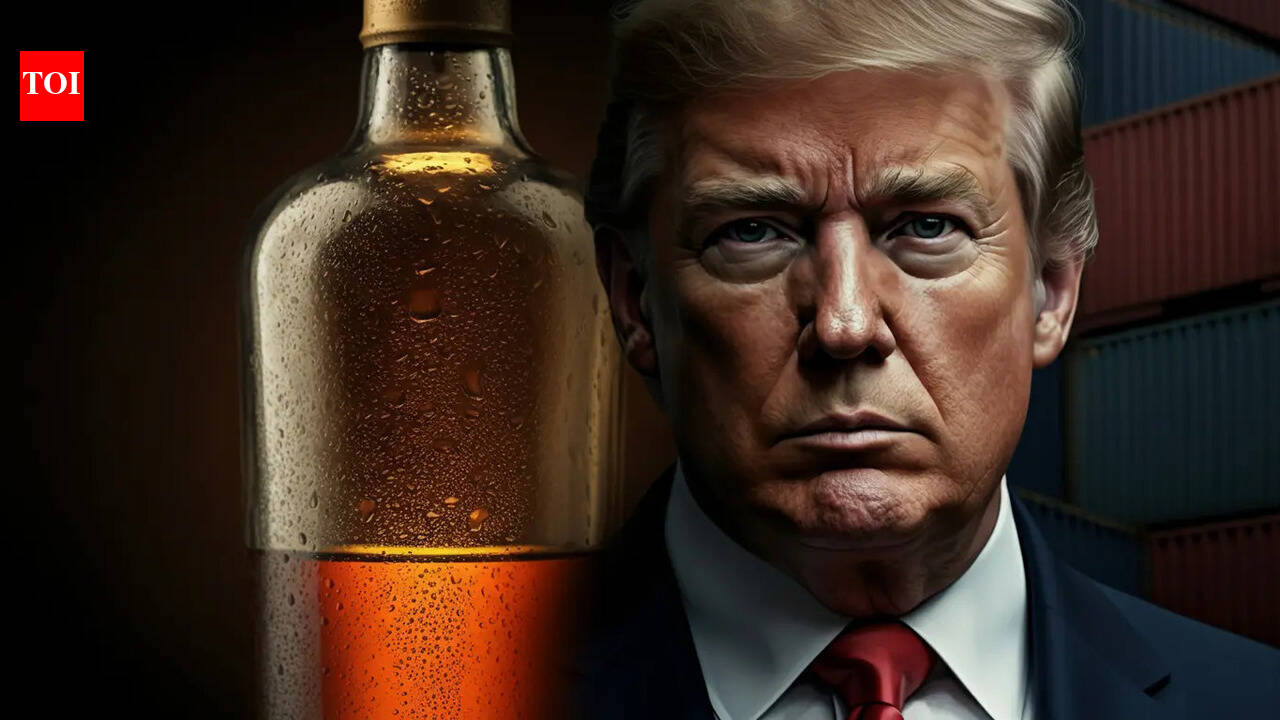
US President Donald Trump on Thursday announced that he would remove tariffs and restrictions on whiskey linked to trade between Scotland and the US state of Kentucky.In a post on Truth Social he wrote, “In Honor of the King and Queen of the United Kingdom, who have just left the White House, soon headed back to their wonderful Country, I will be removing the Tariffs and Restrictions on Whiskey having to do with Scotland’s ability to work with the Commonwealth of Kentucky on Whiskey and Bourbon, two very important Industries within Scotland and Kentucky. People have wanted to do this for a long time, in that there had been great Inter-Country Trade, especially having to do with the Wooden Barrels used. The King and Queen got me to do something that nobody else was able to do, without hardly even asking! A wonderful Honor to have them both in the USA.”This comes after King Charles and Queen Camilla visited the White House on a state visit, during which trade ties and cultural relations between the United Kingdom and the United States were discussed. The visit also included conversations around strengthening economic cooperation between key industries in both countries.According to Trump’s post, the decision was influenced by long-standing trade links between Scotland’s whisky industry and Kentucky’s bourbon sector, particularly the exchange of materials such as wooden barrels used in production. He also suggested that the royal visit played a role in encouraging the policy shift.The announcement comes against the backdrop of earlier tariff measures introduced by the Trump administration in 2025, which included a 10% baseline tariff on most British goods. Those measures had raised concerns in the Scotch whisky industry, which relies heavily on exports, particularly to the United States.Trade representatives had earlier warned that such tariffs could increase pressure on distillers and impact a sector that depends significantly on international markets.Following the latest announcement, the move is expected to be welcomed by the whisky industry. Industry representatives said distillers would be able to “breathe a little easier during a period of significant pressure on the sector,” Reuters reported.
Business
Markets are underpricing the risk of Middle East pullback in AI, says tech investor Jack Selby

A potential pullback by Middle East sovereign wealth funds could drain hundreds of billions of dollars from the artificial intelligence boom and threaten key data center projects, according to tech investor Jack Selby.
Middle East investors — including sovereign wealth funds and government entities — account for roughly a quarter of global investments committed to AI over the next five years, said Selby, managing director of Peter Thiel’s family office, Thiel Capital. If the war in Iran drags on, and the United Arab Emirates, Saudi Arabia and other countries divert their investments to rebuilding at home, the lost capital could ripple through data centers as well as public and private tech companies, he said.
“I think markets have underappreciated how important the Middle East region is for capex spending as it relates to AI and AI infrastructure,” Selby told CNBC in an interview. “If the Middle East starts taking some of these projects offline or canceling some of these projects, the impact on the market could be much, much, much larger than what they currently suggest.”
Selby’s warning has implications for high-net-worth investors, family offices and funds betting on the AI trade. A Wall Street Journal report this week about missed revenue targets at OpenAI rattled tech and chip stocks. Selby said the Middle East poses another funding risk, as AI companies grew more dependent on the region for capital.
Oracle, Nvidia and Cisco are part of OpenAI’s campus in the UAE to build out 5 gigawatts of capacity. Microsoft plans to invest $15 billion in the UAE by 2029. The sovereign wealth funds of the UAE and Saudi Arabia have become key investors in private AI companies, with OpenAI reportedly seeking $50 billion from the big funds in the region earlier this year.
Selby estimates that half of the Middle East’s AI funding is dedicated to data centers located in the region. The other half is allotted to projects and data centers worldwide. Middle East funds and companies have already started canceling various shipping and business contracts by invoking force majeure, he said. The big risk is that they start canceling data centers as well.
“Markets don’t seem to grasp that this is a very real situation,” he said. “It’s very volatile. I hope and I pray that it goes back to some semblance of normalcy soon. But it seems to me that markets are underpricing this volatility and the risk.”
Beyond the war, AI also faces a broader risk of overinvestment and speculation, Selby said. Like the dot-com bubble, he said investors and founders are bidding up values of AI and infrastructure companies indiscriminately. He said the AI boom is consuming far more capital, with the top hyperscalers expected to spend more than $700 billion this year. So the wealth destruction will overshadow the losses of the dot-com bust.
“AI is a revolutionary technology, don’t get me wrong,” he said. “But it can also be an exceptional bubble. There will be extreme winners and there also be some real losers. And those losers will be orders of magnitude larger than any of the losers that we’ve seen before. The AI bubble, when it busts, will be at least one more zero, probably two and three more zeros than the dot-com bubble. That will be tens, if not hundreds, of billions of dollars.”
He cited Google as an example from the dot-com era. While investors were bidding up the values of Ask Jeeves, Infoseek, AltaVista and other early search functions, Google came along and upended all their business models. He said similar disruptions could happen to today’s AI leaders.
Selby’s AI strategy is to avoid the crowds. With a second fund he’s launching at Copper Sky, his Arizona-based VC fund, Selby is targeting tech firms outside of California, New York and Massachusetts. He said tech firms in those three states — especially the Stanford and MIT clusters — are attracting all the capital and attention. So the best values lie elsewhere, he said.
“Probably 90%-plus of all venture capital investment went to California, New York, Massachusetts, an all-time high,” he said. “The good news is you get outside of those three states and go to the other 47 states, the deals, the investment opportunities are far, far, far less expensive, and that’s what we do.”
Selby declined to give many details on Thiel’s family office, saying only that Thiel invests in great founders rather than specific industries. Thiel Capital, which ranked on the Inside Wealth Family Office 15 list of most active family office investors, has invested in everything from German drone makers (Stark) and gene therapy startups (Kriya Therapeutics) to an AI hiring company (Mercor) and space research firm (Varda).
Yet as a family office director and head of a VC fund that raises money from family offices, Selby said the biggest mistake for many family offices today is making their own direct investments. A survey from Citibank last year found that seven out of 10 family offices have made direct investments in private companies, without going through a fund.
Selby said he understands why family offices are striking out on their own, given the dismal performance of private equity and venture capital funds and lack of distributions. He said two-thirds of venture capital firms are “zombie VCs,” that aren’t raising or returning money and should close.
“Family offices are so frustrated with people like ourselves, who have not been returning their capital, so why shouldn’t they try it themselves?” Selby said. “They couldn’t do any worse than a lot of what [VCs] have been doing in terms of making investments, not giving money back, having marks on paper.”
At the same time, however, he said typical family offices aren’t adequately trained in assessing, valuing and restructuring private companies. Many ultra-wealthy investors are more motivated by status and peer pressure than by disciplined returns.
“When these fancy people go to their cocktail parties in Manhattan, they have to have something interesting to talk about,” he said. “All of their friends are talking about some version of [direct investments]. So they have to have something to add to the conversation. So therefore, they do the same thing. The Greek shipping magnate that lives in Manhattan knows nothing about rocketry. So why is he investing in SpaceX? Because he just wants to have something fun to talk about at the fancy cocktail party.”

Rivian renegotiates DOE loan down to $4.5 billion, adjusts capacity plans for Georgia plant

‘Vampire Diaries’ Ian Somerhalder had to sell ‘everything’: Here’s why
Trump lifts whiskey tariffs: Scotland–Kentucky trade eased after King Charles & Queen Camilla US visit – The Times of India

PSL 11: Hyderabad Kingsmen opt to field after winning toss against Multan Sultans

Trump administration in advanced talks for a rescue package for Spirit Airlines, source says
UK inflation accelerates after Iran war drives sharp rise in fuel prices

-
 Sports1 week ago
PSL 11: Hyderabad Kingsmen opt to field after winning toss against Multan Sultans
-
Business1 week ago
Trump administration in advanced talks for a rescue package for Spirit Airlines, source says
-
Business1 week ago
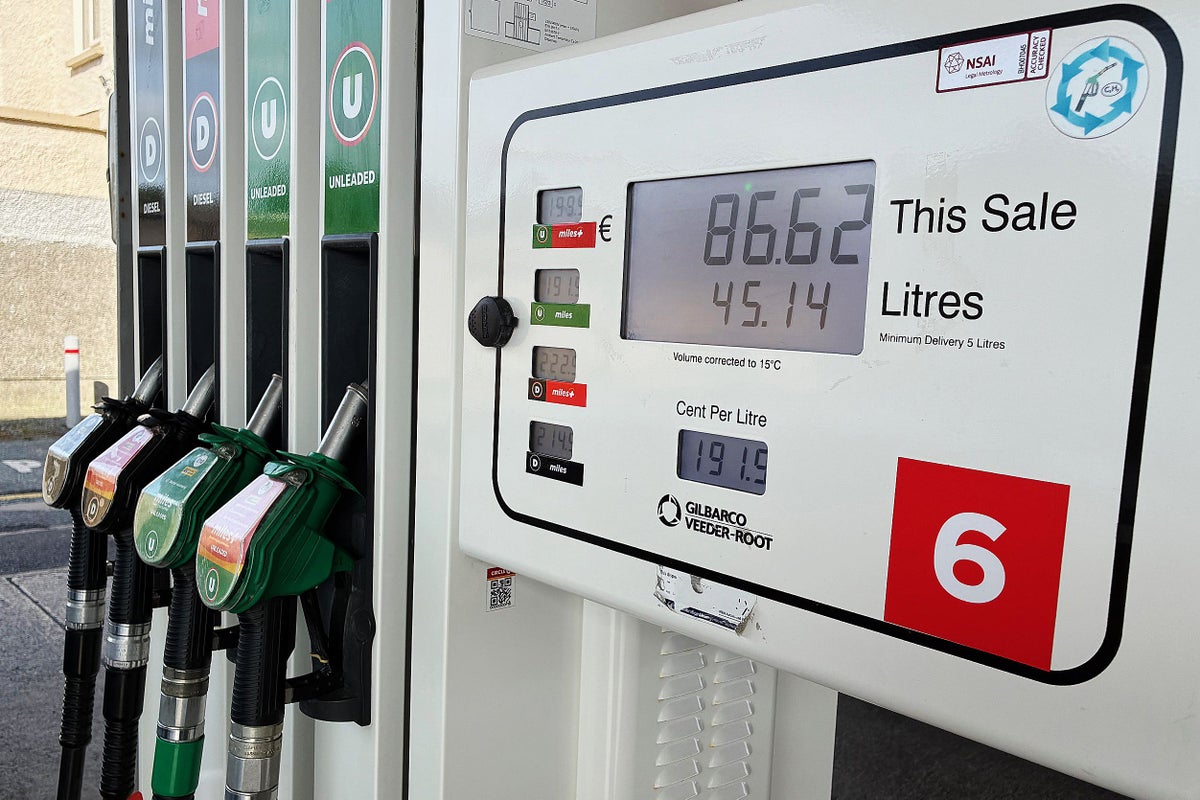
UK inflation accelerates after Iran war drives sharp rise in fuel prices
-

 Entertainment1 week ago
Anne Hathaway shares major news about ‘Princess Diaries 3’
-

 Tech1 week ago
Microsoft faces court battle in £2bn Windows Server class action | Computer Weekly
-
 Business1 week ago
Gold prices in Pakistan Today – April 23, 2026 | The Express Tribune
-

 Tech1 week ago
Blackbox replaces two racks of HPE storage with 8U of Everpure | Computer Weekly
-

 Fashion1 week ago
Bangladesh RMG units call for allowing local FOC raw material sourcing