

Business
Donald Trump tariffs: Why did Nifty50, BSE Sensex tank in trade? Top reasons stock for market fall – The Times of India


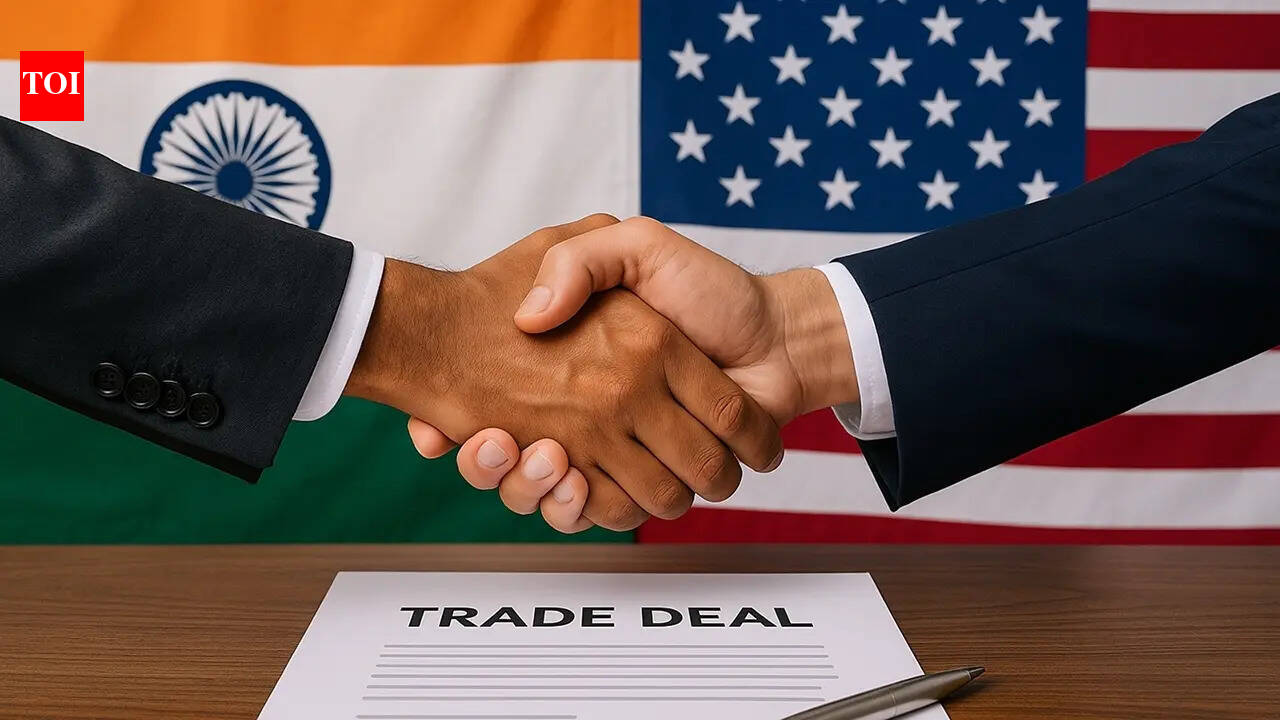
Stock market today: Nifty50 and BSE Sensex, the Indian equity benchmark indices, crashed in trade on Thursday, a day after Donald Trump’s 50% tariffs on India came into effect. While Nifty50 closed at 24,500.90, down 211 points, BSE Sensex ended at 80,080.57, down 706 points or 0.87%.The newly imposed tariffs emerged as the main factor affecting market performance, whilst investors simultaneously grappled with additional challenges, including unfavourable global market indicators and continuous withdrawal of foreign investments. These factors collectively intensified the market decline, causing the benchmark indices to fall further.The severe downturn resulted in BSE-listed companies losing Rs 4.14 lakh crore in market capitalisation, bringing the exchange’s total market value down to Rs 445.80 lakh crore.
Why did the stock market fall today? Top reasons
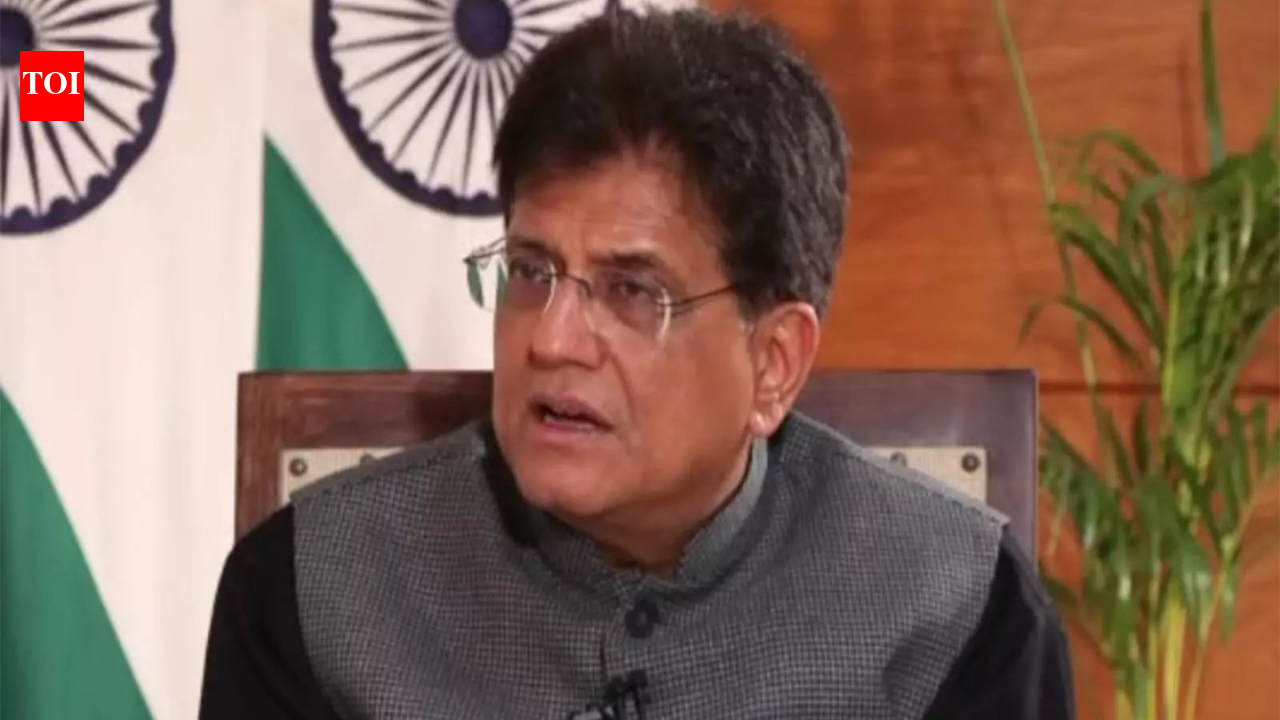
50% US tariffs on IndiaThe new 25% additional tariffs from Washington on Indian goods became effective on Wednesday, creating uncertainty for exporters and overall market sentiment.Dr. V.K. Vijayakumar, Chief Investment Strategist at Geojit Investments, believes these duties will affect equities temporarily but shouldn’t cause widespread concern.“The 50% tariff imposed on India, which has already come into effect, will weigh on market sentiments in the near-term. But the market is unlikely to panic since the market will view these high tariffs as a short-term aberration which will be resolved soon,” Vijayakumar said, noting US Treasury Secretary Scott Bessant’s statement that “at the end of the day India and US will come together.”Additionally, Vijayakumar identified high valuations and poor earnings performance as ongoing issues. He expects export-focused industries to experience short-term difficulties, whilst suggesting investors consider moving towards reasonably priced domestic consumption sectors. He recommends transitioning from volatile small-cap investments to more stable large-cap consumer stocks for better risk management.FII sell-off continuesForeign institutional investors extended their selling momentum for the third consecutive session. Exchange data showed that on August 26, FIIs sold shares valued at over Rs 6,500 crore. Conversely, domestic institutional investors emerged as net buyers, investing Rs 7,060 crore.The selling pattern has affected multiple sectors. In early August, FIIs withdrew approximately Rs 31,900 crore across eight sectors, with financial and technology sectors experiencing the highest outflows. Net equity sales reached Rs 20,976 crore in the first half of the month, following July’s withdrawals and pushing the total outflows for the year to Rs 1.2 trillion.Earlier this month, Jefferies reported that foreign portfolio investor presence in India had reached its lowest level in a decade. Despite consistent domestic inflows providing support, analysts suggest that any market recovery could remain unstable.Dr. V.K. Vijayakumar of Geojit Investments emphasised the importance of domestic institutional support. “The strong pillar of support to the market is the aggressive buying by DIIs flush with funds,” he noted, explaining that domestic investments are helping balance the foreign outflows.Global markets in redAsian markets displayed weakness on Thursday as investors weighed Nvidia’s exceptional earnings against growing worries regarding the company’s business interests in China.The MSCI Asia-Pacific index, excluding Japan, fluctuated throughout the session before declining 0.2%. Similarly, US stock futures declined during extended trading hours, with S&P 500 e-minis dropping 0.2% and Nasdaq futures declining 0.4%. Despite reporting outstanding results, Nvidia’s shares retreated as uncertainties persisted over its Chinese operations amidst ongoing US-China trade tensions.Japanese markets showed volatility following news that Tokyo’s chief trade representative cancelled a planned visit to Washington, postponing discussions about a recently concluded trade agreement. The Nikkei 225 registered a 0.4% increase. In contrast, Hong Kong’s market performance weakened, with the Hang Seng Index recording a 1% decline.Market sentiment further deteriorated following US political developments, as President Donald Trump announced the removal of Federal Reserve Governor Lisa Cook. This decision raised questions about the central bank’s autonomy, although Cook has indicated her intention to legally contest the dismissal.Technicals show market weaknessTechnical indicators suggest market weakness ahead, although some strategists anticipate a potential short-term recovery.At Geojit Investments, Chief Market Strategist Anand James observed bearish conditions, identifying 24,071-23,860 as target levels. He acknowledged that the sharp 2% drop over four sessions could spark a recovery, with 24,780 and 24,870 acting as resistance points. “Inability to float above 24,630 or clear 24,900 will signal that bears continue to have the upper hand,” he said.(Disclaimer: Recommendations and views on the stock market and other asset classes given by experts are their own. These opinions do not represent the views of The Times of India)




Business
‘It’s just scale’: Local mom-and-pop car dealerships are growing or dying amid industry consolidation, rise of mega-retailers

Derek Sylvester with members of his family, team and mascot Molly, who was featured on the dealership’s logo.
Courtesy Sylvester Chevrolet
Derek Sylvester’s father built the family’s original Chevrolet dealership with his bare hands on Main Street in rural Peckville, Pennsylvania, in 1972.
The store and family have been a pillar of the village, outside Scranton, ever since. That was until late last month, when Sylvester and his family closed a deal to sell Sylvester Chevrolet to a New York-based dealer group.
“As a family, we decided this might be the time,” said Sylvester, who at 67 has been contemplating retirement. “Unless you’re a larger store, a much larger store, it’s a little bit harder to make money. … It’s just scale.”
Many of Sylvester’s family members plan to continue working at the dealership, but he said they didn’t feel they were in a position to continue running the business amid the rapidly changing automotive retail landscape in the U.S. The industry is facing a tumultuous adoption of all-electric vehicles, technological shifts such as artificial intelligence, and growing demands from automakers.
Sales of dealerships such as Sylvester Chevrolet are occurring across the country at a rapid pace as the business of selling cars, once considered the purview of mom-and-pop shops, has evolved into a lucrative trillion-dollar industry rife with consolidation that has drawn more notice from Wall Street and investors in recent years.
While the National Automobile Dealers Association, or NADA, reports that the vast majority of its U.S. franchised dealers are small business owners such as Sylvester who have fewer than six stores, the top retailers in the country have significantly grown.
The top 150 dealers sold 27% of all retail and fleet new vehicles in 2025, up from 24.3% in 2021 and 21.2% in 2015, according to Automotive News’ annual ranking of top automotive retailers. They also owned roughly a quarter of dealerships last year, up from less than 20% a decade ago, according to the trade publication.
Meanwhile, top publicly traded dealers such as Lithia Motors and AutoNation have ballooned to market caps of more than $6 billion each. Even online used-car retailer Carvana — and its $74 billion market cap, which surpasses the value of most car companies it sells vehicles from — has quietly started purchasing new vehicle franchises without disclosing its future plans.
“There’s a lot of money that wants to come to the industry,” Brian Gordon, president of dealer advisor and broker Dave Cantin Group, told CNBC. “And, generally, the industry is sort of aligned on how to value these things. That makes for a good climate for [mergers and acquisitions].”
Industry consolidation
Multibillion-dollar dealerships have been on the rise amid a decadeslong consolidation that has led to a grow-or-die mentality for many U.S. automotive retailers.
NADA, a trade association representing franchised dealers, reports the average dealership owner has between two and three stores, but the largest growth area over the past decade has been in medium-sized dealerships that own between six and 25 stores.
NADA reports 90.5% of its nearly 17,000 dealers own between one and five stores, down from 94.4% in 2016. Meanwhile, 0.2% of dealers own 50 stores or more, up from 0.1% during that time frame.
“It’s clear that it’s a consolidating industry, and it’s an industry that is going to continue to consolidate,” Gordon said. But, he added, that is happening at every level, especially the expansion of mom-and-pop shops to larger players.
Dave Cantin Group — the advisor for Matthews Auto Group, the dealer group that acquired Sylvester Chevrolet — conducts dozens of such deals a year and said it expects the pace of consolidation and mergers and acquisitions to continue to increase this year.
Matthews Auto Group is one of many regional dealership companies that has decided to expand. The family-owned company started in Vestal — in central New York, south of Syracuse — in 1973 with a single Chrysler-Plymouth store that has grown into a roughly $800 million business with 18 locations and 800 employees.
Rob Matthews, a second-generation owner and CEO of Matthews Auto Group, said the company’s decision to grow is ongoing and that it aims to be more profitable and better compete in its current markets of New York and Pennsylvania.
Matthews Auto Group CFO John Totolis (from left to right), Dave Cantin Group managing director Talon Fee, Sylvester Chevrolet President Derek Sylvester, partner Sylvester Chevrolet Neil Sylvester, Matthews Auto Group CEO Rob Matthews and Matthews Auto Group President Mark Gaeta outside Sylvester Chevrolet in Peckville, Pennsylvania
Courtesy image
“I think that’s certainly a competitive advantage. I think staying still is probably not the best play. You’re seeing continued scale,” Matthews said. “The trend is you’re just going to continue to see consolidation to allow you to stay competitive.”
That’s also why Sylvester said he wanted to sell his business, with stipulations about retaining the store’s dozens of employees — something that’s part of Matthews’ strategy when acquiring a store.
“There’s a lot of things that, because of our scale, we see we can really unlock a store like his,” Matthews said. “I think, honestly, it’s exciting in the sense that we’re just looking to give them more tools and hopefully let everyone work going forward.”
Growth of mega-dealers
Wall Street has taken notice of how lucrative and protected franchised dealerships are in the U.S. The franchised dealer system, which exists to sell new vehicles to consumers rather than automakers selling their vehicles themselves, is unique and heavily regulated.
“I think there’s endless upside. The opportunity for growth in our company is just endless,” Sonic Automotive President Jeff Dyke told CNBC during a recent interview. “I think having mom-and-pop dealers is really good for the business. The thing is, the mom-and-pop dealer is going to have to advance their thinking.”
Sonic Automotive, a publicly traded company with a market cap of more than $2 billion, has grown from 96 franchised dealership stores in 2015 to 134 to end last year. It’s also gone through a massive expansion of its EchoPark used vehicle stores and Sonic Powersports. The company’s revenue during that time jumped 58% to $15.2 billion last year.
Dealership stocks
Others, such as Lithia Motors, have been even more aggressive in growth. The Medford, Oregon-based company surpassed longstanding dealership group AutoNation to become the top U.S. new vehicle franchised dealer in 2022.
Lithia, with a $6.3 billion market cap, has executed an audacious growth plan, from $8.7 billion in revenue in 2016 to $37.6 billion last year. The company nearly tripled its new and used stores from 154 locations to 455 stores during that time frame.
John Murphy, a longtime automotive analyst who is a managing director of strategic advisory at buy-sell advisory firm Haig Partners, said he believes that dealerships remain an extremely lucrative market for investors, despite things settling down somewhat after companies saw inflated profits during the Covid pandemic.
“Structurally, there’s some real potential upside, and there is an increasing level of attention by existing capital in the dealership community as it stands right now from outside players, private equity family offices, other pools of capital on this limited number of dealers and finite number of dealers,” he said. “The earnings upside is increasing and there’s increasing attention, or demand, on the buy side of the equation.”
Mom-and-pops remain
All of that combines to make many mom-and-pop dealerships ripe for acquisition or expansion.
“There’s just so many factors that make competition for a small mom-and-pop dealership more difficult,” said Talon Fee, a managing director at Dave Cantin Group who led the sale of Sylvester Chevrolet to Matthews Auto Group. “It’s not to say that small mom-and-pop dealerships can’t continue to exist and thrive and survive, but they do need to have a plan.”
Fee and others said the top reasons for owners to sell are a lack of succession planning, a growing competitive and changing industry, and a lack of commitment to reinvest in the businesses.
“There’s a lot of outside capital that’s figured out how to come in, given the fact that you have to be an operator in order to get approved by a manufacturer,” said Gordon, of Dave Cantin Group.
But the industry is changing in other ways, as new automakers such as Tesla, Rivian and Lucid try to bypass the franchised dealer model and sell vehicles directly to consumers.
Such companies have continuously fought state laws to allow such sales, with Rivian recently winning a battle with car dealers in Washington state by threatening to take its case to voters with a ballot measure to permit direct sales.
It adds to the evolving U.S. automotive retail landscape that owners such as Sylvester and his wife, who also worked at the dealership, haven’t had to deal with in the past. It’s also something Sylvester and many other smaller mom-and-pop stores won’t have to compete with once they sell their businesses.
“I lived a great life, don’t get me wrong. But, hey, good things come to an end,” said Sylvester, who plans to spend retirement caring for a 92-acre farm in Pennsylvania. “We made a good living. You know, we helped the community out.”
Business
Hormuz flashpoint: Why Indian-flagged ships are in focus as Middle East tensions hit global shipping – The Times of India
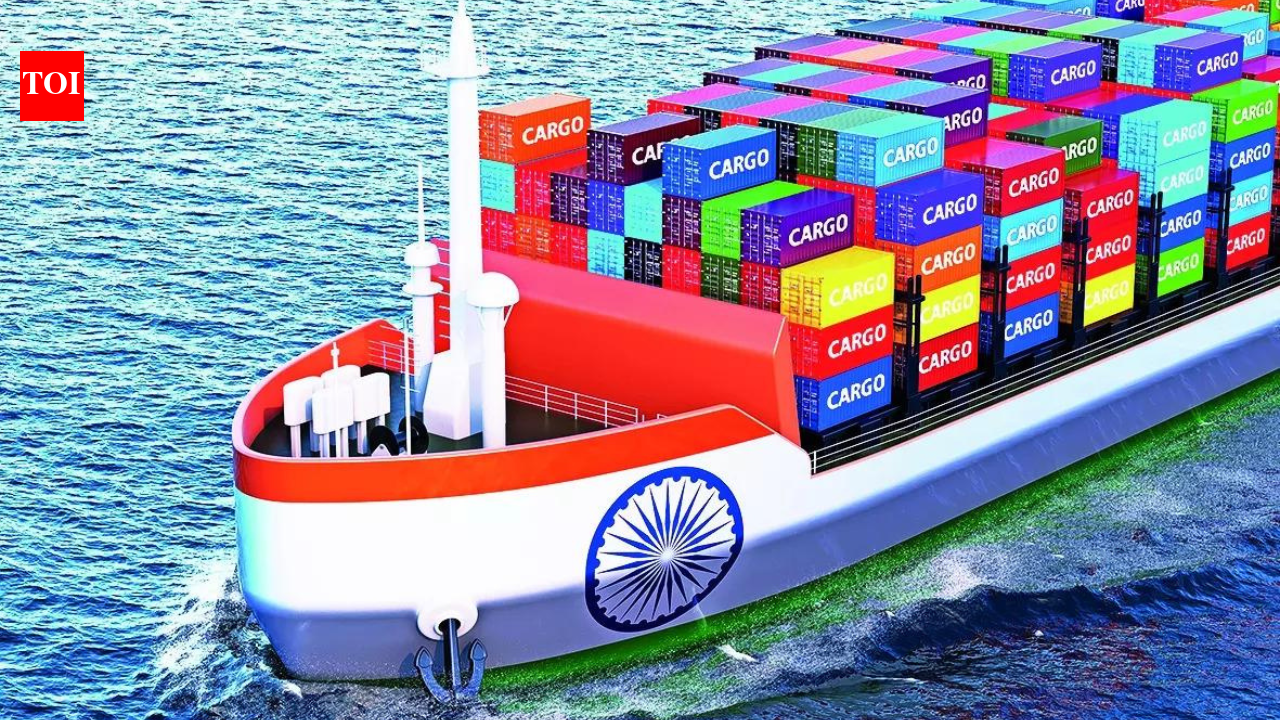
As tensions rise in Middle East and vessel safety in the Strait of Hormuz comes under renewed focus, the flag a ship flies has emerged as a key factor in maritime security, regulation and state protection.Flagging a vessel means it is registered with a country and must comply with that nation’s maritime laws and regulations. It also gives the flag state powers to investigate and penalise violations of domestic and international laws. Since regulations differ across countries, shipowners often choose jurisdictions that best suit operational and commercial needs, according to an ET report.An Indian-flagged vessel is a commercial ship registered with the Directorate General of Shipping and authorised to fly the national flag. Such vessels are governed by the Merchant Shipping Act and operate under Indian jurisdiction as a sovereign extension on the high seas.These ships are taxed by Indian authorities and must comply with Indian maritime safety, labour and environmental rules. To qualify for Indian flagging, vessels must come to domestic waters for registration and the owning company must be incorporated in India.Indian-flagged ships also receive strategic backing. India protects their interests through naval and diplomatic intervention when required. Experts say this creates a higher compliance burden than “Flag of Convenience” jurisdictions such as Panama and St Kitts.According to Rajeev Kumar Yadav, as quoted ET, director at Vertex Marine Services, Flag of Convenience systems allow vessels to be flagged from anywhere in the world within “3-4 days”.Indian-flagged ships calling at domestic ports can also benefit from lower port levies and tax liabilities, along with priority in government cargo movement and public sector charter contracts.During the Iran crisis, more than two dozen Indian ships were stranded west of the Strait of Hormuz after strict high-risk area classifications were imposed. The Indian Navy escorted several tankers to safety, though some vessels remain in the Persian Gulf.No direct attacks have been reported on Indian-flagged vessels so far, largely due to India’s balanced diplomatic approach in the crisis.However, being Indian-flagged does not give the government powers to decide freight rates or commercial destinations. The state’s role is limited to enforcing civil, criminal and regulatory laws onboard, along with international safety, environmental and labour compliance norms.India’s flagged fleet has been expanding. The Indian-flagged vessel fleet reached 14.2 million Gross Tonnage (GT) in March, with 92 vessels of 1.5 million GT joining during FY26.The long-term Maritime Amrit Kaal Vision 2047 aims to sharply raise India’s share of the global flagged fleet and increase utilisation of Indian-flagged ships from about 7 per cent currently to 30-40 per cent by 2047.
Brent crude sinks by a tenth after Iran says the key waterway is open for commercial ships for the rest of the ceasefire.
Source link


Some tankers cross Strait of Hormuz before shots fired, ship-tracking data shows

‘The Naked Gun’ actor Paul Walter Hauser bloodies opponent at Maple Leaf Pro’s first US show

Iran says no date set for next round of negotiations with US

-

 Politics1 week ago
Indian airlines hit hardest after Dubai limits foreign flights until May 31
-

 Entertainment5 days ago
Palace left in shock as Prince William cancels grand ceremony
-

 Sports5 days ago
The case for Man United’s Fernandes as Premier League’s best
-

 Politics1 week ago
Chinese, Taiwanese will unite, Xi tells Taiwan opposition leader
-

 Entertainment1 week ago
Dua Lipa hits major career high ahead of wedding with Callum Turner
-
 Business5 days ago
UK could adopt EU single market rules under new legislation
-

 Sports7 days ago
Lamar Jackson hits back at critics with faithful message on social media
-
 Business1 week ago
He paid $248 in illegal tariffs for this coat. Will he ever get it back?