

Business
Amtrak is launching its faster NextGen Acela with better amenities after years of delays. Here’s what you need to know


Amtrak’s NextGen Acela.
Courtesy: Amtrak
Amtrak rolled out its NextGen Acela trains on Thursday, marking the next phase for the U.S.’s attempt at high-speed rail.
Dubbing itself as “America’s only high-speed rail service,” the new trains will run between Washington, D.C., and Boston, with a top speed of 160 mph. It’s an extension of Amtrak’s existing Acela trains, which run through the busy Northeast corridor and operate at speeds up to 150 mph on certain sections of the route.
According to Amtrak, more than 69 million passengers have traveled on Acela trains since the service began at the end of 2000. In fiscal year 2024, Amtrak said customers rode more than 3 million Acela trips, generating nearly $530 million in ticket revenue.
The new trains, contracted with French manufacturer Alstom, will replace the current Acela equipment. Amtrak said the NextGen Acela trains will accommodate 27% more customers and have enhanced features like free, high-speed Wi-Fi, as well as wider seats, a tilt system that enables a smoother ride and more daily departures.
At its launch, Amtrak said it will begin with five new trains, aiming to deploy all 28 by 2027.
Inside Amtrak’s NextGen Acela train.
Courtesy: Amtrak
“I think America deserves high-speed rail,” Transportation Secretary Sean Duffy said at a Wednesday event with Amtrak in Washington, D.C. “This is, at 160 miles an hour, one great step in that process.”
Like its predecessor, the Acela fleets offer only first class and business class seating. The rail company will operate both the older trains and newer models over the next few months as more of the NextGen trains are added.
“These trains are beautiful, they are fast, they are state-of-the-art, and they are American-made,” Amtrak President Roger Harris said at the Wednesday event. “There has never been a better way to travel by train in America.”
The parts for the new trains were manufactured in 29 states, with 95% produced within the U.S., Amtrak said, adding that the manufacturing generated more than 1,200 new jobs.
As of 2024, Amtrak owned 16 Acela trainsets.
A rocky track record
Amtrak employees walk past the Amtrak NextGen Acela, an all-new high speed train running between Washington, DC, and Boston, prior to the train’s inaugural departure from Union Station in Washington, DC, August 27, 2025.
Saul Loeb | AFP | Getty Images
The new trains are not without struggles. Amtrak originally planned on debuting them in 2022, but faced numerous delays.
In May, Amtrak said it was eliminating 450 roles to save $100 million in annual costs. That came after the White House reportedly forced CEO Stephen Gardner to resign in March as President Donald Trump called for changes. Amtrak has yet to name a new CEO.
The rail company has also lost money for years. In fiscal year 2024, Amtrak reported $3.6 billion in revenue compared with $8.8 billion in capital and operating expenses. It recovered 84% of its operating costs with ticket sales and other revenue, Amtrak added.
The new trains are also significantly slower than their high-speed counterparts in Europe and Asia, with Japanese bullet trains operating at a top speed of 200 mph.
It’s not America’s first attempt at the high-speed rail, either.
California has aimed for more than a decade to build a bullet train that can travel between Los Angeles and San Francisco in under three hours. That vision has since been trimmed, aiming to now connect just a 170-mile stretch of land with questions surrounding its viability.
Last month, Duffy formally terminated all of the California High-Speed Rail Association’s federal funding after a Federal Railroad Administration report determined that the project was unable to complete its goals, and on Tuesday, he pulled an additional $175 million from the project. The state of California has filed to sue the government for what it calls an “illegal” action with the canceled federal funding.
Private rail company Brightline has also attempted the high-speed rail formula in Florida. The company aims to privatize the rail system and has welcomed millions of passengers on its trains, which travel at 125 mph.
But Brightline has had its fair share of financial struggles. The company is facing looming debt and reported a net loss of roughly $549 million in 2024, marking an uncertain road ahead.




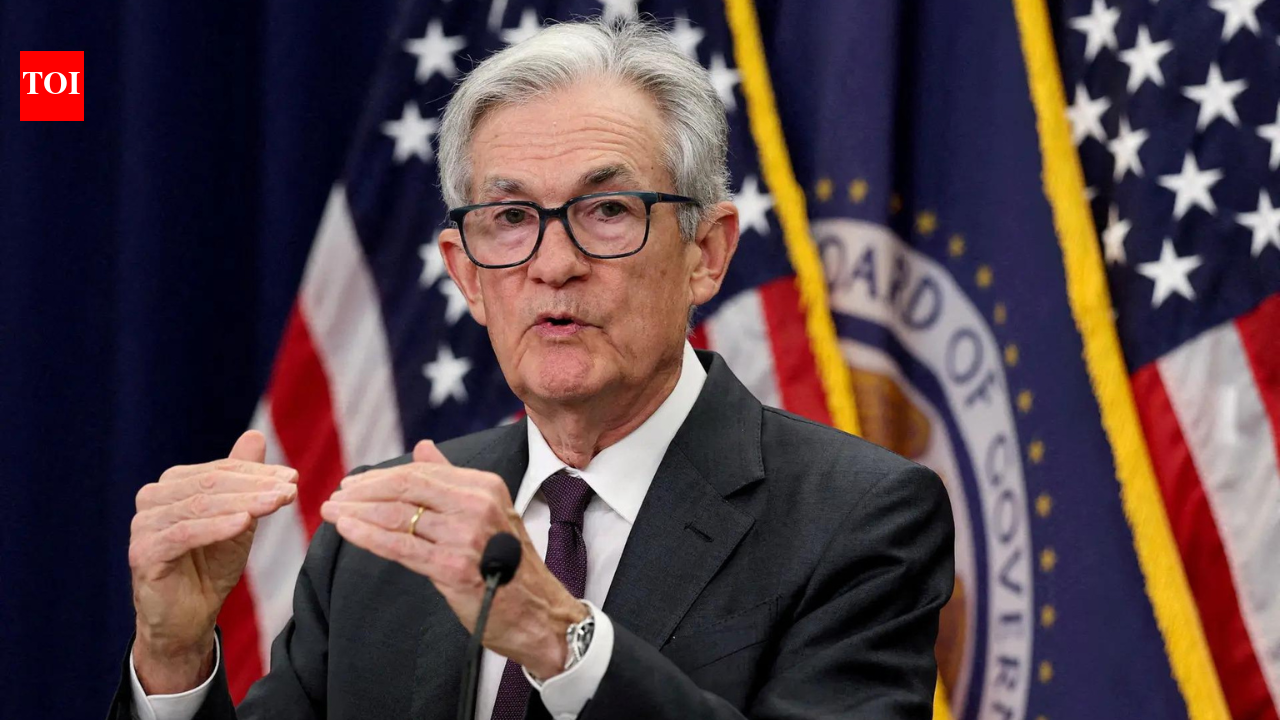


Rachel Reeves has expanded plans to cut electricity bills for thousands of UK manufacturing firms as she continues talks in Washington focused on the economic fallout from the Iran conflict.
The Chancellor, who is in Washington for the International Monetary Fund (IMF) spring meetings, said the plan will help UK businesses compete and create jobs despite the uncertain economic backdrop.
During her trip, she has stepped up criticism of US-Israeli military action in Iran, saying war was a “mistake” and has not made the world a safer place.
Her comments came as she was due to meet US treasury secretary Scott Bessent, who has referred to the impact of the war as “short-term volatility for long-term gain” which he said would prevent Tehran developing a nuclear weapon.
Ms Reeves also cautioned against knee-jerk responses to the cost-of-living crisis triggered by the war in a joint statement with international counterparts at the IMF.
In a bid to help businesses hit by rising costs, a plan announced last summer to cut electricity bills by up to 25% for more than 7,000 UK businesses will be expanded to cover 10,000 firms.
The British Industrial Competitiveness Scheme (BICS) will cut costs by up to £40 per megawatt-hour from 2027 by exempting businesses from certain extra charges that currently support green energy and back-up power supply systems.
An additional one-off payment in 2027 will be given to an extra 3,000 businesses, including companies in the automotive, aerospace, steel and pharmaceuticals sectors.
The Government said it will also cover the support firms would have received if the BICS had been in place from this month.
The scheme is expected to be worth up to £600 million per year from next April.
Ms Reeves said: “This Government has the right plan for the economy: backing British industry, cutting electricity costs and building a stronger, more resilient future.
“Today’s announcement will cut energy bills for over 10,000 manufacturers, helping businesses to compete, win and create good jobs across the country, and to deliver our modern industrial strategy.”
Business Secretary Peter Kyle said: “We are a Government of action, and when global instability puts businesses under pressure we’ll always do what’s needed to support them and ensure Britain’s resilience.
“By extending the reach of BICS by 40%, we’re acting decisively to tackle the number one issue that businesses face head-on.”
Household energy bills are forecast to increase this year because of the conflict pushing up global oil and gas prices, while motorists are already feeling the impact of higher costs at the pump.
Ms Reeves has signalled that any energy bill help this year will be targeted at the poorest households, rather than a universal bailout of the type offered by Liz Truss when she was prime minister after the Russian invasion of Ukraine.
The White House has said talks are ongoing about holding fresh face-to-face negotiations between the US and Iran and that Washington had not yet formally requested an extension of the ceasefire due to expire next Tuesday.
Business
Goldman Sachs bond traders stumbled as Wall Street rivals thrived: ‘A fire is being lit under’ them

David Solomon, CEO Goldman Sachs, speaking on CNBC’s Squawk Box at the World Economic Forum in Davos, Switzerland on Jan. 22nd, 2026.
Oscar Molina | CNBC
When Goldman Sachs executives were asked about disappointing results in the firm’s fixed income division this week, they made it sound as though the trading environment was simply not in their favor.
Fixed income revenue fell 10% in the first quarter, coming in $910 million below analysts’ expectations, according to StreetAccount data. It was an unusually large miss for one of Goldman’s flagship Wall Street businesses.
“It was basically just a function of the overall environment making markets,” CFO Denis Coleman told an analyst on Monday after the bank’s earning report. “We remain actively engaged with clients, but our performance in rates and mortgages was relatively lower.”
But as nearly all of Goldman’s rivals, including JPMorgan Chase, Morgan Stanley and Citigroup, posted blockbuster results for first-quarter fixed income in the days that followed, one thing became clear to Wall Street: Goldman Sachs’ vaunted fixed income traders had underperformed.
JPMorgan saw fixed income trading revenue jump 21% to $7.1 billion, the bank’s second-biggest haul ever. Morgan Stanley, where fixed income is less a priority than equities, posted a 29% jump in the bond business. Citigroup saw bond trading revenue jump 13% to $5.2 billion.
Since before the 2008 financial crisis, when Lloyd Blankfein led Goldman Sachs, the firm’s fixed income division had been the envy of Wall Street. Goldman was known for its trading prowess, a reputation forged in periods of dislocation when its desks generated outsized gains. The bank’s identity as a trader’s firm — one expected to outperform in turbulent times — has endured in the decade-plus since.
That makes the first-quarter stumble particularly notable.
“It seems that something went wrong at Goldman in fixed income,” said veteran Wells Fargo analyst Mike Mayo, who called the bank’s results “worst-in-class.”
“I’d imagine that at Goldman, a fire is being lit under the traders, managers and risk overseers in FICC after such an underperformance,” Mayo said in an interview with CNBC, using an acronym standing for fixed income, currencies and commodities, the formal name for that business.
The prevailing theory is that Goldman was caught offsides on trades tied to interest rates in the first quarter, according to several market participants who asked for anonymity to speak candidly.
That’s because of the positioning that many Wall Street firms had at the start of this year, when markets were expecting the Federal Reserve to cut interest rates at least twice in 2026, these people said.
But after the price of oil surged with the advent of the Iran war, roiling expectations for inflation, the markets began pricing those cuts out, with some investors even bracing for the possibility of rate hikes this year.
Fixed income was the sole blemish on a quarter in which Goldman Sachs exceeded expectations handily, thanks to the firm’s equities traders and investment bankers. Despite the earnings beat, the firm’s shares dropped as much as about 4% on Monday following the report.
Goldman Sachs declined to comment. But on Monday, CEO David Solomon sought to put the quarter’s performance into context:
“When I look at the scale and the diversity of the business, it’s performing very, very well,” Solomon said during the company’s conference call. “Some quarters, it’s going to be stronger here, stronger there.”
Business
Pakistan considering buying LNG on spot market to offset supply disruptions caused by Iran war: petroleum minister – SUCH TV
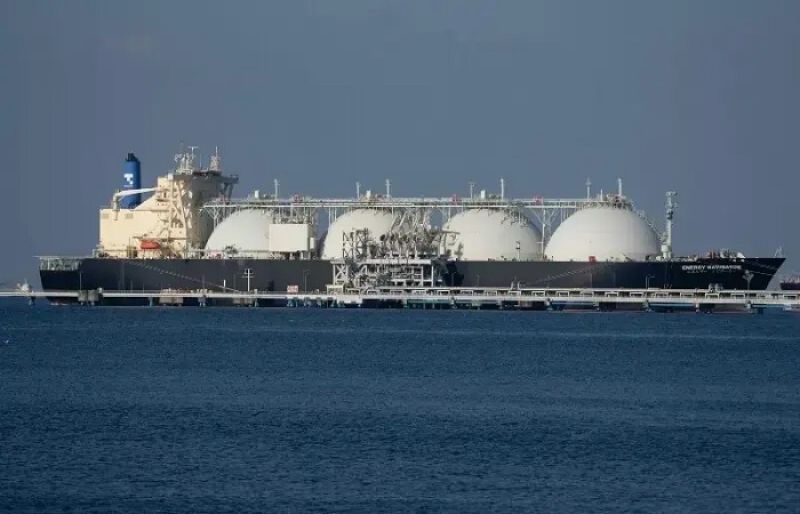
Pakistan is considering buying liquefied natural gas (LNG) on the spot market to offset supply disruptions caused by the Iran war, but would favour government-to-government deals to avoid having to pay steep premiums, Petroleum Minister Ali Pervaiz Malik has told Reuters.
Qatar’s force majeure forced Pakistan to make costly spot purchases or find alternative fuels ahead of summer demand.
Spot LNG cargoes have surged to $20 to $30 per mmBtu amid the Middle East conflict, Malik says, adding that purchases would depend on whether prices are acceptable to the power sector, including under existing government-to-government arrangements with Azerbaijan’s Socar.
Pakistan has also been routing some crude supplies via Saudi Arabia’s Red Sea port of Yanbu to bypass the Strait of Hormuz, with Malik saying insurance costs on that route were lower than routes crossing or near Hormuz.
Pakistan imports nearly all of its oil, much of it via the Strait of Hormuz, and remains exposed to supply shocks despite cutting its LNG reliance in recent years, as gas is still needed to meet the country’s peak summer power demand.
It has begun commercial output from its highest-ever producing oil and gas well, as it shores up domestic supply.
“We have arrangements in place to meet domestic and industrial requirements,” Malik said, adding that gas disruptions have not led to major curbs, with eight of 10 fertiliser plants operating.
Officials are also considering the use of costlier fuels such as furnace oil to limit load shedding, although at the expense of higher tariffs. Malik warned that prolonged shortages could threaten food security.
The Baragzai X-01 well in Khyber Pakhtunkhwa is producing about 15,000 barrels of oil per day and 45 million cubic feet of gas, with output expected to rise further, the state-run operator Oil and Gas Development Company Ltd (OGDC) said.
The well could reach up to 25,000 barrels per day and 60 million cubic feet per day of gas, making it Pakistan’s highest-producing well, and may contribute around 10 per cent of crude output while cutting the country’s import bill by about $329 million annually, OGDC said.


2026 NFL mock draft: Kiper’s pick predictions for Rounds 1-2
Chancellor cuts bills for thousands more firms as she continues Washington talks

‘The Last Airbender’ Leaked Online. Some Fans Say Paramount Deserves the Fallout

-

 Fashion1 week ago
India’s exports face reset as EU links trade to carbon metrics: EY
-

 Entertainment1 week ago
Queen Elizabeth II emotional message for Archie, Lilibet sparks speculation
-

 Entertainment1 week ago
Lamar Odom shocking response to Khloé Kardashian account of his overdose
-

 Tech1 week ago
Azure customers up in arms over ‘full’ UK South region | Computer Weekly
-

 Tech1 week ago
As the Strait of Hormuz Reopens, Global Shipping Will Take Months to Recover
-

 Fashion1 week ago
CII submits 20-pt agenda to Indian govt to back firms hit by Iran war
-

 Tech7 days ago
This AI Button Wearable From Ex-Apple Engineers Looks Like an iPod Shuffle
-

 Politics6 days ago
Indian airlines hit hardest after Dubai limits foreign flights until May 31