

Entertainment
Duke of Kent marks 90 years of service with biography launch in London

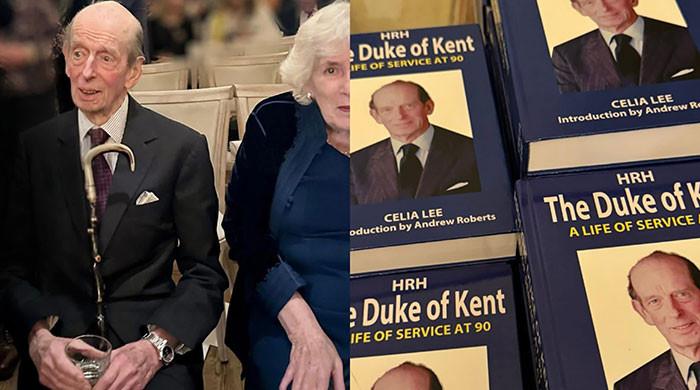
The Duke of Kent stepped out for the unveiling of a deeply personal milestone February 24, a new biography marking his nine decades of life and public duty.
Held at 55 Princes Gate in London, the headquarters of Ognisko Polskie, also known as the Polish Hearth Club, the evening celebrated the launch of HRH The Duke of Kent: A Life of Service at 90, authored by royal historian Celia Lee.
As Patron of the historic London institution, the Duke’s presence carried particular significance.
Founded during the Second World War, Ognisko Polskie has long served as a social and cultural anchor for the Polish community in Britain, making it a fitting venue for an event honouring steadfast commitment and international friendship.
Guests gathered for a literary debut and a tribute to a lifetime of quiet dedication.
The biography charts the Duke’s decades of service, from military duties to representing the Crown at home and abroad, offering insight into a working royal who has consistently favoured diligence over fanfare.

Neil Sedaka, the prominent singer-songwriter whose string of hits in the 1960s and ’70s included “Laughter in the Rain,” “Breaking Up is Hard to Do” and “Calendar Girl,” has died, a representative confirmed to CBS News on Friday. He was 86.
“Our family is devastated by the sudden passing of our beloved husband, father and grandfather, Neil Sedaka,” a statement from the family read. “A true rock and roll legend, an inspiration to millions, but most importantly, at least to those of us who were lucky enough to know him, an incredible human being who will be deeply missed.”
A cause of death was not immediately available.
Scott Dudelson / Getty Images
A key member of the Brill Building songwriting factory, Sedaka teamed with lyricist and boyhood neighbor Howard Greenfield on songs that reflected the teen innocence of the post-Elvis/pre-Beatles era of the late 1950s-early 1960s, including “Happy Birthday Sweet Sixteen,” “Calendar Girl” and “Oh! Carol,” a lament for his high school sweetheart, Carole King.
Sedaka was a Juilliard-trained, Brooklyn-born son of a Jewish taxi driver who began performing as a teen and kept at it for decades. His talent was recognized by a second-grade teacher who urged his homemaker mother, Eleanor, to buy him a piano. At 9 years old, Sedaka had already begun intensive classical piano training at the Juilliard School.
Sedaka loved songwriting and never quit, but he craved performing.
“Once a performer, always a performer. It’s that adrenaline rush. It’s like a natural high when you’re in front of an audience, and if you get that standing ovation, it’s infectious,” he once told The Associated Press.
At 16, Sedaka was chosen by legendary pianist Arthur Rubinstein in a contest as the city’s best high school piano student and performed on a classical radio station as a prize. It was the same year he discovered rock ‘n’ roll, when he performed a song, “Mr. Moon,” he had written with Greenfield, his classmate at Abraham Lincoln High School.
In 1958, at age 19, Sedaka signed with RCA Victor Records and his first single, “The Diary,” enjoyed modest success. He began touring and promoting his songs through regular TV appearances on Dick Clark’s “American Bandstand” and “Shindig!”
At the Brill Building, Sedaka and Greenfield were joined by other up-and-coming writers and lyricists including King, Neil Diamond and Paul Simon.
From 1959 to 1962, Sedaka had 10 records in the Top 10, including “Calendar Girl,” “Oh! Carol,” “Happy Birthday Sweet Sixteen” and “Next Door to an Angel.” But in the mid-1960s, the Brill Building sound, influenced by the doo-wop groups of the New York City streets, was pushed off the charts by the Beatles-led British Invasion and the psychedelic and protest music that followed. Sedaka would endure 13 years “in the wilderness,” as he described it to the AP.
After a long dry spell, he reemerged with such smashes as “Laughter in the Rain” and “Bad Blood.” The Captain & Tennille’s cover of his “Love Will Keep Us Together” was a chart-topper in 1975.
Sedaka told “CBS This Morning” in 2012 that Elton John rediscovered him in the 1970s when he was trying to start his record company. John signed him to his fledgling, U.S.-based Rocket Records label, providing him a chance at more hits with the album “Sedaka’s Back.”
Of the time between jobs, Sedaka said, “The creative mind is still working and it’s a drive. You have you to prove yourself each time. You have to raise the level of Neil Sedaka. You have to top yourself.”
Jason LaVeris/FilmMagic 
At Rocket Records, Sedaka and a new writing partner, Philip Cody, topped charts with “Bad Blood” and the joyous “Laughter in the Rain.” He also achieved a rare feat with “Breaking Up Is Hard to Do.” His original up-tempo version went No. 1 in 1962. He re-recorded it as a slow ballad in 1975, and that, too, went No. 1.
Sedaka was nominated for five Grammy awards throughout his career. He was inducted into the Songwriters Hall of Fame, but the Rock & Roll Hall of Fame eluded him despite a fan petition drive.
He still played dozens of concerts a year well into his 80s. Sedaka retained the enthusiasm and broad vocal range of his youth and never tired of the standards he had sung hundreds of times.
“Past 70, Pavarotti told me the vocal cords are not what they used to be. I’m very fortunate that my voice has held,” he told The Associated Press in 2012. “It’s nice to be a legend, but it’s better to be a working legend.”
Sedaka’s songs sold millions worldwide and have been covered by a range of performers, from Elvis Presley and Frank Sinatra to The 5th Dimension and Nickelback.
Sedaka helped propel the career of Connie Francis with “Stupid Cupid” and “Where the Boys Are,” the latter for the soundtrack of the movie with the same name. The Captain & Tennille received a best-album Grammy thanks largely to “Love Will Keep Us Together” and included a nod to Sedaka at the end of the song, when Toni Tennille exclaimed: “Sedaka’s back!”
Sedaka is survived by his wife, Leba Strassberg, whom he married in 1962, and his two children, Dara and Marc.

The Pokémon Company gave major surprises to fans on Friday, January 27, during the Pokémon Presents livestream, marking the franchise’s 30th anniversary.
The company unveiled mainline games, mobile apps, merchandise and much more.
Pokémon Winds and Waves headline 2027 lineup
Winds and Pokémon Waves, arriving in 2027 exclusively for Nintendo Switch 2.
Game Freak enabled fans to have a look at the tropical archipelago settings that feature roaming Tropius, volcanic landscapes with Slugma, and a massive Wailord breaching offshore.
The company announced three new starter Pokémon:
- Browt: Grass type “Bean Chick” Pokémon
- Pombon: Fire type “Puppy Pokémon” inspired by Pomeranians
- Gecqua: Water type “Water Gecko Pokémon”
The teaser also showed a mysterious pair of costumed Pikachu often called “Mr. Windychu and Mrs. Wavychu” by fans. This highlights that users can now enjoy customisation options.
Pokémon Champions release window announced
The company confirmed that the competitive battle of Pokémon Champions will launch in April on Nintendo Switch, while mobile versions will be ready to play “later this year.”
Game Boy Jukebox and Classic Titles
Game Boy Jukebox, a miniature Game Boy device, also made its comeback. The device is pre-loaded with 45 chiptune tracks from Pokémon Red and Blue.
Fans can buy collectables at Pokémon stores in the U.S., U.K., and Canada.
Moreover, in March 2005, “Pokémon XD: Gale of Darkness” arrived on GameCube Nintendo while “Fire Red” and “Leaf Green” joined Nintendo Switch Online.
Mobile and TCG updates
- Pokémon Go hosts “All Out” 30th anniversary event scheduled for March 7-9
- Pokémon TCG gets first-ever simultaneous global expansion launch
- Mew arrives in Pokémon Sleep
- Anniversary sync pairs debut in Pokémon Masters EX
- “Legends: Z-A” adds Maga Garchomp Z
With these updates, Pokémon’s 30th anniversary marks the most ambitious event of the franchise yet.
Regalo Press
We may receive an affiliate commission from anything you buy from this article.
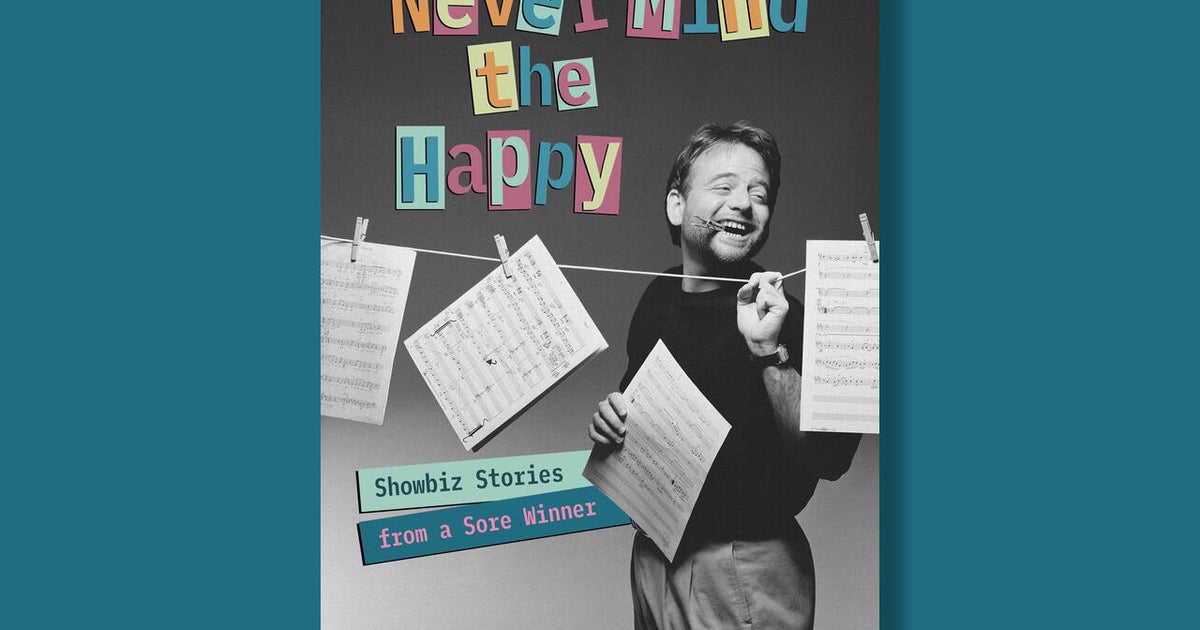
In his memoir, “Never Mind the Happy: Showbiz Stories from a Sore Winner” (published by Regalo Press), Tony- and Emmy-winning composer Marc Shaiman, known for Broadway hits like “Hairspray,” and music for “South Park: Bigger, Longer and Uncut,” writes of his half-century in show business.
Read the prologue below, in which he recounts preparing to perform on the Oscar stage with the idol of his youth, Bette Midler (an adoration that would grow into a collaboration), and don’t miss Tracy Smith’s interview with Marc Shaiman on “CBS Sunday Morning” March 1!
“Never Mind the Happy” by Marc Shaiman
Prefer to listen? Audible has a 30-day free trial available right now.
Prologue
It’s February 24, 2019, and I am on stage with Bette Midler at the Dolby Theatre in Los Angeles, moments away from performing at the 91st Annual Academy Awards. On the other side of the closed curtain are 3,400 of the most powerful and successful players in Hollywood—plus another thirty million people tuning into the television coverage worldwide. One such player in the auditorium is Scott Wittman, my lyrical collaborator of almost fifty years, with whom I co-wrote the Oscar-nominated song “The Place Where Lost Things Go”—the very song Bette and I are about to perform. It has only been two months since Disney released Mary Poppins Returns—which has garnered my sixth and seventh Oscar nominations— and even though I am calm as I sit at the keyboard of the polished black grand piano, I am also conscious of what a fight it has been to get here.
A few weeks earlier, on the morning the Oscar nominations were announced, my husband, Lou Mirabal, and I sat on the couch in our Manhattan loft, our golden retriever, Chops, no doubt wondering why we were glued to the television at 8:30 a.m. instead of making her breakfast. A similar scene was playing out with Scott and his partner, Brian, at their apartment just six blocks to the south. Mary Poppins Returns had been a hit film, if not the billion-dollar blowout the studio had hoped it would be. Scott and I were very proud of the songs we wrote for the sequel to Disney’s classic about a magical British nanny, but they had inevitably been compared to the unforgettable music from the original—so we didn’t know if we should get our hopes up on the morning of the nominations.
Luckily, Oscar smiled and we were nominated for our song “The Place Where Lost Things Go,” and I was also nominated for Best Score. We were all excited and relieved, perhaps nobody more than Lou, because he was the one who would have had to mop me off the floor if things had turned out differently.
I always say, though, that if showbiz puts you on a pedestal on Tuesday, it’s only to have a better shot at your balls on Thursday. And right on schedule, after two days of elation, the producers of that year’s Oscars telecast announced that of the five nominated songs, only two—one a duet by Lady Gaga and Bradley Cooper from A Star Is Born, the other by Kendrick Lamar and SZA from Black Panther—would be performed. Clearly, they wanted star power to boost the broadcast’s ratings and, by cutting three songs, perhaps also trim a few minutes from its running time. But to say the remaining songs were not worthy of inclusion sent a message both to the public—and worse, to the Oscar voters, who had yet to cast their ballots—that they were not considered equal. It really was a low blow.
What those Oscars producers didn’t anticipate, however, was just how much a dog with a bone I can be. First, I put together an appeal from the writers of the three orphaned songs (including my dear and foul-mouthed friend Diane Warren)—but that led to a dead end. Then, I went to Alan Horn, who was chairman of Walt Disney Studios at the time and who I knew from his years as Rob Reiner’s producing partner. Since Disney owns ABC, the television network that broadcasts the Oscars, I thought he would be able to pull some strings—but he gruffly said, “The ship has sailed, there’s nothing I can do.” Well, maybe there was nothing he could do, but I was not going to give up.
I had met Bradley Cooper a few times due to our shared friendship with the great actor Victor Garber. Bradley had been to the home I then shared with Scott, my romantic partner for nearly thirty years, when he and Victor were filming the TV show Alias, and he had always been very friendly whenever I ran into him at other showbiz functions. I had also just recently become pals with Kevin Feige, Supreme Intelligence of the Marvel Cinematic Universe. In fact, it was at an Academy event just a few weeks earlier (where we had all been schmoozing for nominations) when someone tapped me on my shoulder and said, “Kevin Feige would like to meet you.”
“Kevin Feige would like to meet me?” I queried. I was in shock and couldn’t believe, of all nights, that my Marvel-nerd husband wasn’t with me. It turned out Kevin, who you would think is busy enough, also has time to be a serious film-score fanatic. And after enjoying a few minutes of him praising my work, I asked if we could take a selfie together so I could send it to Lou.
Not only are Bradley and Kevin two of the nicest guys in Hollywood, at that moment, being friendly with them was uniquely useful. After all, Bradley produced A Star Is Born and Kevin produced Black Panther—the two films whose Oscar-nominated songs had been anointed by the Academy to be performed. So, I reached out to them both to explain the situation, which they agreed was unfair, and each offered to do what they could to help.
I’m not privy to what happened next, but those two gentlemen clearly have their own superpowers, because only a day or so later, it was announced that all five songs would be performed. Thank you, Bradley, and thank you, Kevin—if you ever need a favor from someone less powerful, let me know.
And so, I made it onto the Oscars stage that year after all. Moments before our performance, through the curtain, I could hear the orchestra play a snatch of our movie theme, and then the crowd respond as Keegan-Michael Key was lowered from the ceiling of the Dolby Theatre clutching a Mary Poppins–style black umbrella.
“This evening’s next nominee for best original song was written by Marc Shaiman and Scott Wittman for the film Mary Poppins Returns,” he said. “In addition to lifting the Banks children’s spirits through a series of magical adventures, Mary Poppins offers comfort and compassion with this tender lullaby, underscoring the notion that a loved one who is lost can still be very much present. Performing ‘The Place Where Lost Things Go’ with Marc Shaiman on piano, please welcome the Divine Miss M.”
(Both Bette and I thought—but of course did not have time to discuss in the moment—What, he couldn’t say her name?)
Then the curtain lifted, Bette stepped into the spotlight as twenty-eight red umbrella lanterns descended against a stage backdrop of London’s foggy skyline, and I started accompanying my favorite performer in the world—on a song I had co-written with my cherished collaborator—from a musical about my most beloved literary character—at the Academy Awards.
How did I get there? Well, as an old-school piano player might say, it went a little something like this…
From “Never Mind the Happy: Showbiz Stories from a Sore Winner” by Marc Shaiman. © 2026 by Marc Shaiman. Reprinted with permission from Regalo Press. All Rights Reserved.
Get the book here:
“Never Mind the Happy” by Marc Shaiman
Buy locally from Bookshop.org
For more info:


Georgetown guard KJ Lewis (ankle) out for rest of season

Neil Sedaka, singer whose hits included “Laughter in the Rain,” dies at 86

UAE makes history: Central Bank launches world’s first sovereign financial cloud with AI for secure digital finance – The Times of India

-

 Tech1 week ago
A $10K Bounty Awaits Anyone Who Can Hack Ring Cameras to Stop Sharing Data With Amazon
-
 Business1 week ago
US Top Court Blocks Trump’s Tariff Orders: Does It Mean Zero Duties For Indian Goods?
-

 Fashion1 week ago
ICE cotton ticks higher on crude oil rally
-

 Tech1 week ago
Donald Trump Jr.’s Private DC Club Has Mysterious Ties to an Ex-Cop With a Controversial Past
-
 Business7 days ago
Eye-popping rise in one year: Betting on just gold and silver for long-term wealth creation? Think again! – The Times of India
-

 Entertainment1 week ago
The White Lotus” creator Mike White reflects on his time on “Survivor
-

 Politics6 days ago
Pakistan carries out precision strikes on seven militant hideouts in Afghanistan
-

 Politics1 week ago
US Supreme Court strikes down Trump’s trade tariff measures