

Sports
Eagles star turns the ball over twice in one chaotic play vs Chargers

NEWYou can now listen to Fox News articles!
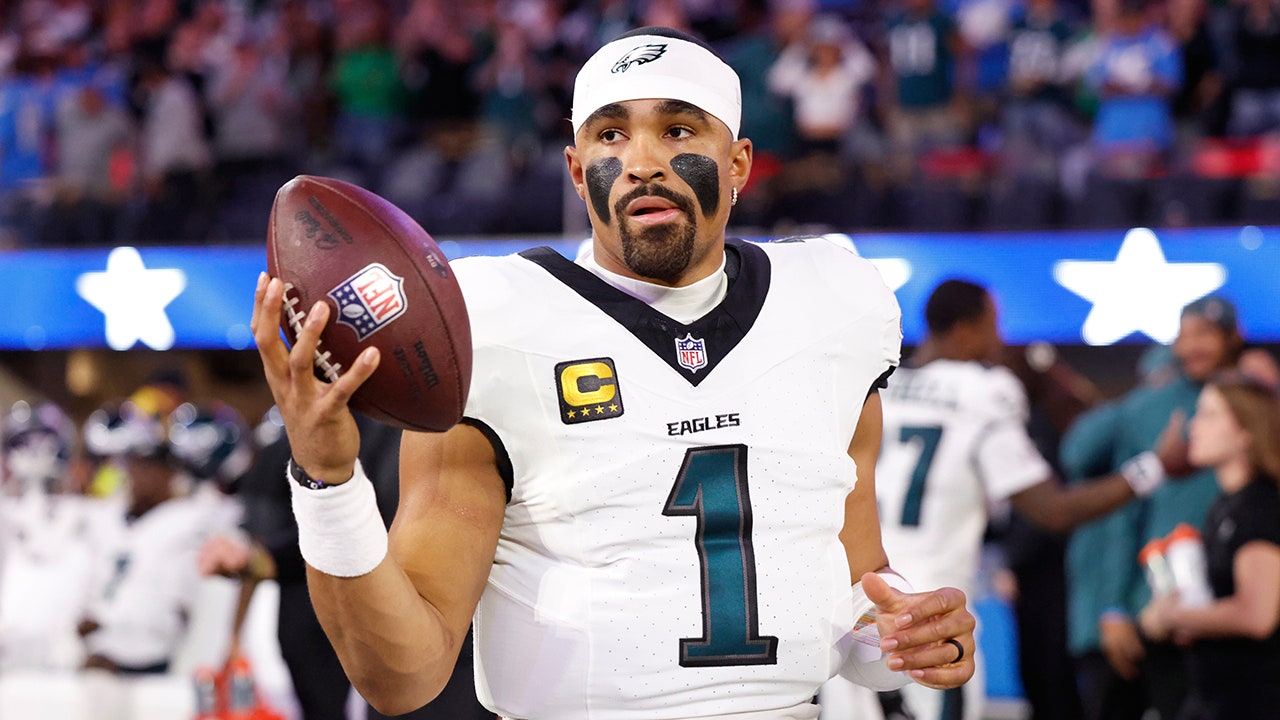
Philadelphia Eagles quarterback Jalen Hurts was involved in a wacky play on Monday night after throwing an interception to Los Angeles Chargers defensive lineman Da’Shawn Hand.
Hand dropped back into coverage on the snap and Hurts threw it to wide receiver A.J. Brown, who was triple-covered. Hand was there to intercept the pass and began to run it up the field. However, he fumbled while trying to take the ball back.
CLICK HERE FOR MORE SPORTS COVERAGE ON FOXNEWS.COM
Philadelphia Eagles quarterback Jalen Hurts (1) prepares to throw a pass during the first half of an NFL football game against the Los Angeles Chargers, Monday, Dec. 8, 2025, in Inglewood, California. (AP Photo/Caroline Brehman)
Hurts picked the ball up and thought he had saved the play for a minute. Instead, the ball was knocked out of his hands. Finally, Chargers linebacker Troy Dye recovered the ball. Hurts committed two turnovers in one play.
The Chargers kicked a field goal on their next drive to take a 10-3 lead.

Philadelphia Eagles quarterback Jalen Hurts (1) warms up before an NFL football game against the Los Angeles Chargers, Monday, Dec. 8, 2025, in Inglewood, California. (AP Photo/Caroline Brehman)
The play certainly perplexed NFL fans.
Los Angeles had a 10-6 lead going into halftime, but turnovers were running rampant. Both teams committed three turnovers each before the end of the second quarter.
The lone touchdown was scored when Justin Herbert found rookie running back Omarion Hampton for a 4-yard touchdown in the first quarter. Since then, Herbert has had one of his passes picked off and lost a fumble.
The Eagles haven’t had much success on offense.
Hurts is 10-of-19 for 95 yards and has thrown two interceptions.

Bundle FOX One and FOX Nation to stream the entire FOX Nation library, plus live FOX News, Sports, and Entertainment at our lowest price of the year. The offer ends on Jan. 4, 2026. (Fox One; Fox Nation)
CLICK HERE TO GET THE FOX NEWS APP
Both teams entered the game with an 8-4 record and were in need of a win to bolster their playoff hopes.
Follow Fox News Digital’s sports coverage on X and subscribe to the Fox News Sports Huddle newsletter.








The 2026 men’s basketball tournament round of 16 is here and for my money, it’s college basketball nirvana.
The trade-off for very few upsets early on is premium games for four straight days to decide who advances to the Final Four. This is the best, most competitive basketball you will see all year. Whether your brackets are busted or not, you’re still going to be treated to some high-level hoops.
Throughout the tourney, I will provide my best bets for each round as well as my picks for the new ESPN Men’s Tournament Challenge Eliminator game.
Here are my selections for the round of 16.
Note: Odds by DraftKings Sportsbook at time of Wednesday’s publication and subject to change.
Thursday’s games
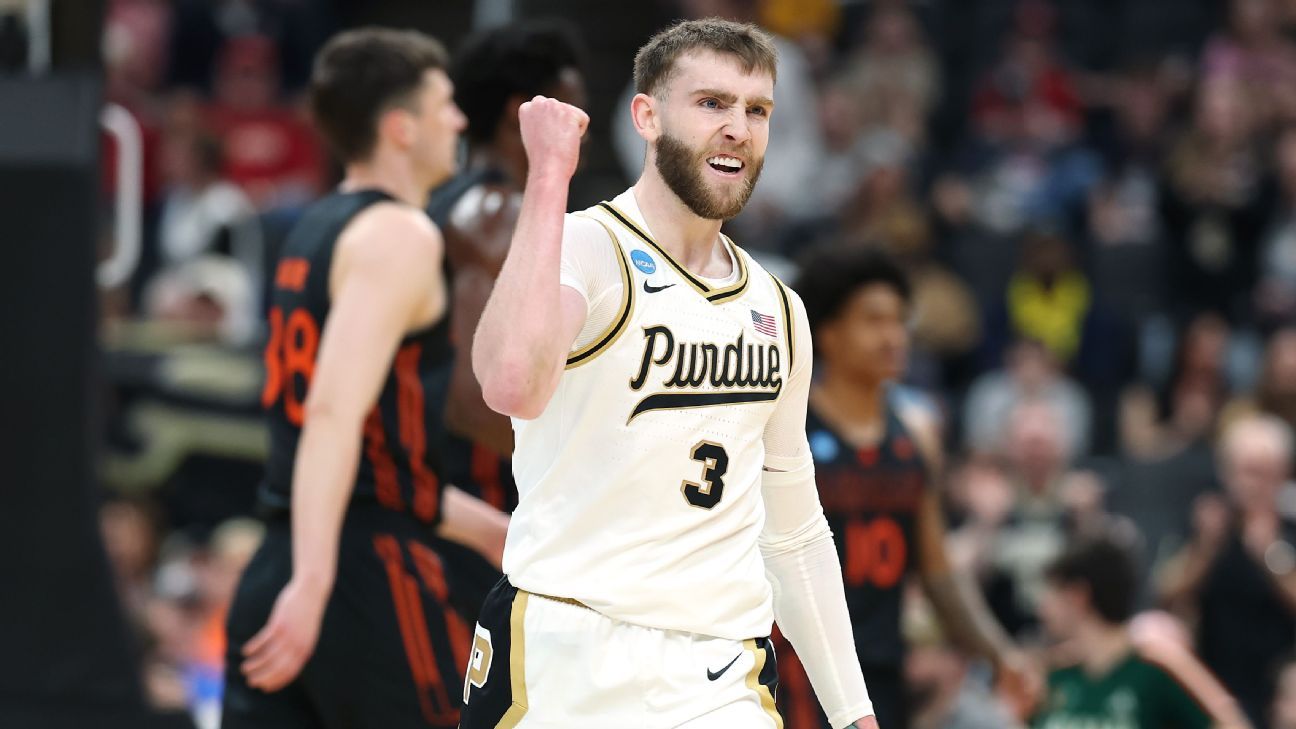
(2) Purdue team total OVER 77.5 (-127) vs. (11) Texas
Game time: 7:10 p.m. ET (CBS)
I had my sights set on the Boilermakers minus the points here, but early money coming on Texas has forced me off. I’ll look to an alternate market here with the team total. Purdue is the most efficient offense in the country, and the Longhorns don’t really have a defense that matches up well, especially at the 3-point line where Purdue is eighth in the nation in 3-point shooting and the Longhorns are 253rd in 3-point shooting defense.
Sharp bettors believe Texas can hang in this game, and if the Longhorns do, it’s because of their scoring and facing an average Purdue defense. Texas is unlikely to win a game that stays under the total. That favors Purdue mostly because of its pace, which is a diabolically slow 324th in the country. The Boilermakers make you work extra hard on defense and then take your soul by finishing off with a bucket or a 3. It’s that pace, which will slow even more if Texas isn’t scoring, and that’s how Purdue doesn’t get there. But I believe that the Longhorns’ offense has found a real rhythm in the tournament so far and will help push Purdue over this number.
(2) Houston -3.5 (-105) vs. (3) Illinois
Game time: 10:05 p.m. ET (TBS/truTV)
I missed the best of the number here at the open when it was -2.5, but it only confirms my feeling about Houston being the better team here, especially on defense. Illinois is the second-most efficient offense in the country, but this will be a game of limited possessions as both teams are in the bottom 100 in adjusted tempo, with Houston being in the bottom 15. Both teams force opponents into long possessions on offense and bad shots.
Where the Cougars will decide this game is at the 3-point line. Illinois gets more than 50% of its points from 3-pointers. Five of the eight Illini losses come against teams in the top 100 in 3-point shooting defense. Houston is 44th in the country in that category. The Cougars offense should do enough here and they will have the benefit of a very heavy home crowd with the game in Houston.
Eliminator pick: (2) Purdue
The Longhorns’ run has been impressive, but here’s where it comes to an end. Texas doesn’t have the shooting to keep up with Purdue … and its shooting has gone up in each of the tournament games. There’s likely some regression coming here.
How to play ESPN Eliminator Challenge.
Friday’s games
(1) Duke vs. (5) St. John’s +6.5 (-108)
Game time: 7:10 p.m. ET (CBS)
The Red Storm have advanced to the second week of tourney play for the first time since 1999 and in just the third season under Rick Pitino. Surprisingly enough, they are here because of their defense, which is ranked in the top 10 in adjusted efficiency for the first time since their last round of 16 appearance. The Johnnies can match Duke defensively and their athleticism can contain Duke’s Cameron Boozer. They held Kansas star Darryn Peterson to 5-of-15 shooting. I see a similar result here for Boozer.
The total for this game is 142.5. Duke has seen just 10 totals this low all season. It has gone over this number just twice, and one of them was because it scored 100 points against Notre Dame. The correlation here is that if Duke is limited in scoring, that favors the Johnnies as a three-possession underdog. Rick Pitino is also 6-2 against the spread in the NCAA tournament as an underdog of five points or more; that includes 3-0 as a No. 6 seed or better. This is a game I think St. John’s can win outright, so it’s worth it to sprinkle a little on the moneyline as well.
Eliminator pick: (6) Tennessee
Iowa State was able to get past Kentucky without its best player, but I’ll bet against it happening two times against high-level opponents. Even if Joshua Jefferson does play, Iowa State’s offense won’t do much against the Volunteers’ defense. All of the Cyclones’ losses except one have been to teams with an adjusted defensive efficiency ranking in the top 35. Tennessee is 14th.
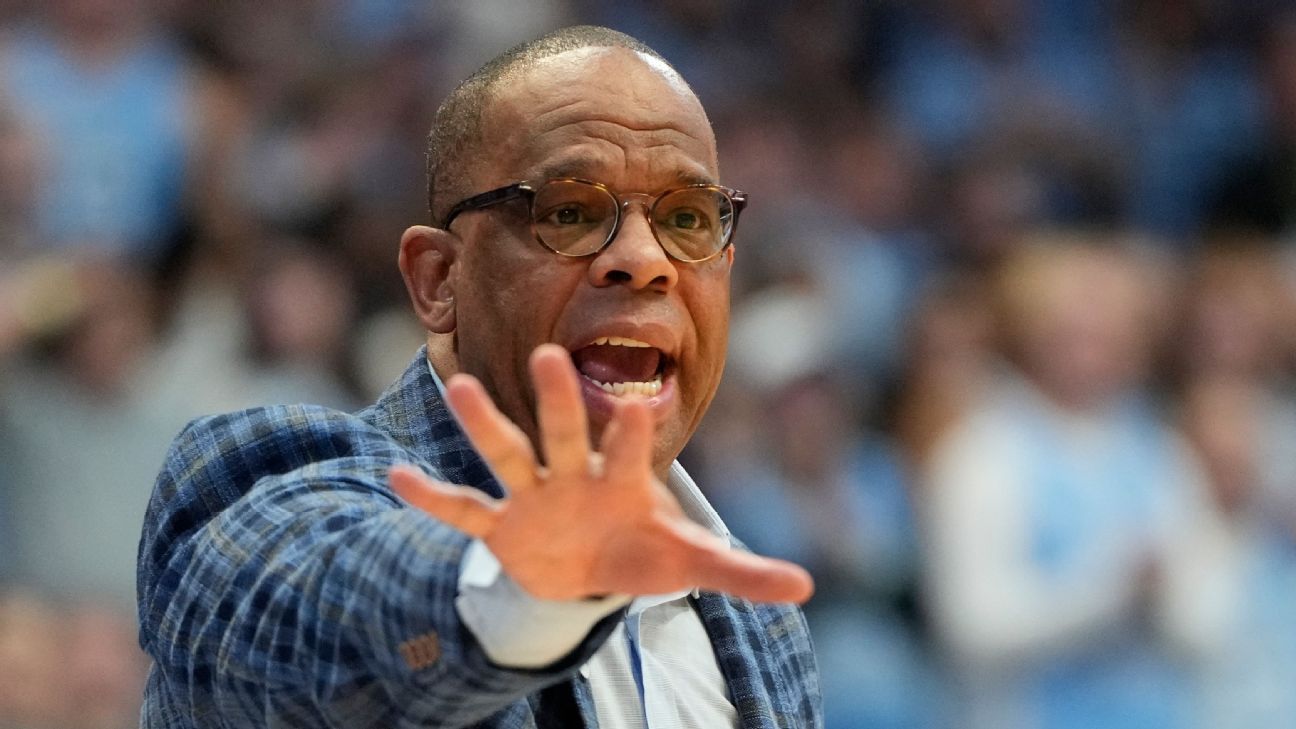
Hubert Davis is out at North Carolina, just five days after the Tar Heels’ catastrophic collapse against VCU. After entering the season on the hot seat, a signature win against Duke in February and a 24-8 record seemed to have kept Davis safe from dismissal after entering the NCAA tournament as a 6-seed.
Especially given the season-ending injury to star forward Caleb Wilson, all signs pointed to Davis returning to Chapel Hill regardless of what happened in March. Then the Tar Heels blew a 19-point lead to 11-seed VCU in the second half of their first-round game, with Davis mismanaging down the stretch of regulation.
Davis’ head coaching tenure at Carolina comes to an end after five seasons, a stretch that included a national championship game appearance in 2022 and an ACC regular-season championship in 2024.
So what’s next in Chapel Hill?
When Roy Williams retired in 2021, the job was perceived to be among the best in the entire sport. After an up-and-down half decade, the question is whether that’s still the case. Industry sources still consider Carolina to be the same elite, blue-blood destination it was when Davis took the helm in 2021.
“I think there’s plenty of money if they want,” one source told ESPN. “The history, the tradition, the facilities. No doubt it’s still [at the top]. It’s North Carolina.”
“It’s still Carolina, man,” another said. “It’s the brand.”
The position comes with challenges this time, though. Longtime athletic director Bubba Cunningham is leaving his post this summer and will be succeeded by former NASCAR executive Steve Newmark. The department also faces the question of whether to renovate the Dean Smith Center or move the basketball team elsewhere. And with Bill Belichick in town, the football program is getting its fair share of resources — and attention.
Let’s take a look at which candidates could be on the radar, plus what they would be inheriting.
Who is up next?
When Williams retired, North Carolina opted to keep it in the family, promoting Davis to the top job after nine seasons on Williams’ staff. Davis, of course, also played for the program under Dean Smith from 1988 to 1992. It’s unlikely the school will select another former Tar Heel this time.
Expect Carolina to take some massive swings.
Billy Donovan is expected to be at or near the top of the list. The Chicago Bulls head coach hasn’t coached at the college level since 2015, spending the past 11 years with the Oklahoma City Thunder (2015-20) and Bulls (since 2020). He has rejected opportunities to return to college before, but he could be more open to the idea now that the Bulls are going to miss the playoffs. He led Florida to two national championships (2006 and 2007) and took the Gators to two additional Final Fours (2000 and 2014). One complicating issue with Donovan would be timing; the Bulls’ last game is April 12.
Brad Stevens also wouldn’t be a surprising target. The Boston Celtics president of operations hasn’t coached at the college level since 2013, or in any capacity since 2021. But he led Butler to back-to-back national title game appearances in 2010 and 2011, then made seven trips to the NBA playoffs at the helm of the Celtics before transitioning into the front office in 2021.
Industry insiders also believe the best of the best in the college ranks are likely on the short list: Arizona’s Tommy Lloyd, Michigan’s Dusty May, Iowa State’s TJ. Otzelberger, Florida’s Todd Golden and Alabama’s Nate Oats. Texas Tech’s Grant McCasland could also be in the conversation. The Tar Heels could even gauge interest from UConn’s Dan Hurley, like Kentucky (and the Lakers) did a couple of years ago.
A few of those coaches come with massive buyouts: Lloyd’s would be between $9 million and $12 million, depending on timing; Golden’s would cost $16 million; and Oats’ would cost $18 million until April 1, when it drops to $10 million. McCasland’s buyout is just north of $10 million as well. May and Otzelberger have smaller buyouts, with May’s believed to be around $7 million and Otzelberger’s around $4 million.
What this means for incoming recruits
No. 9 Dylan Mingo
No. 21 Maximo Adams
NR Malloy Smith
North Carolina has a top-10 recruiting class, headlined by a pair of top-25 recruits: Mingo and Adams. Mingo gave Davis a top-15 recruit for the fourth straight recruiting class, and he is one of the class’s elite backcourt players when healthy. Mingo’s recruitment didn’t end until February, with the Tar Heels ultimately beating out Baylor for his commitment. Could he rethink his decision? It’s worth noting that his brother, Kayden Mingo, was one of the best freshman guards in the Big Ten at Penn State this season.
Adams surged as a breakout player last spring and summer, rising all the way into the top 25 of the rankings. He also considered Michigan State, Kentucky and Texas before picking Carolina. His brother, Marcus Adams Jr., recently announced he planned to enter the transfer portal following the firing of Arizona State coach Bobby Hurley.
Retention priorities
Henri Veesaar
Jarin Stevenson
Derek Dixon
Keeping Veesaar in Chapel Hill was at the top of Davis’ priority list entering the offseason, and the second-team All-ACC selection will undoubtedly be the focus of whichever coach replaces Davis. Veesaar was terrific after transferring from Arizona, averaging 17.0 points and 8.7 rebounds before ending the season with a 26-point, 10-rebound performance against VCU. He was a projected second-round pick in ESPN’s most recent NBA mock draft and would likely have lucrative offers from elsewhere if he opts to reenter the transfer portal when it opens April 7.
Stevenson became a real factor for Carolina down the stretch of the season, especially following Wilson’s injury, averaging 10.7 points and 6.4 boards per game over his final 10 games. He should also be a priority for the new coach, second to Veesaar.
On the perimeter, expect Dixon to be a focus, regardless of what Mingo opts to do with his commitment. Dixon showed plenty of promise as a freshman, especially late in the season: 17 points vs. Duke, 16 points vs. Clemson, 11 points and six assists vs. VCU.
Other potential returnees include Luka Bogavac, Jonathan Powell and Jaydon Young.
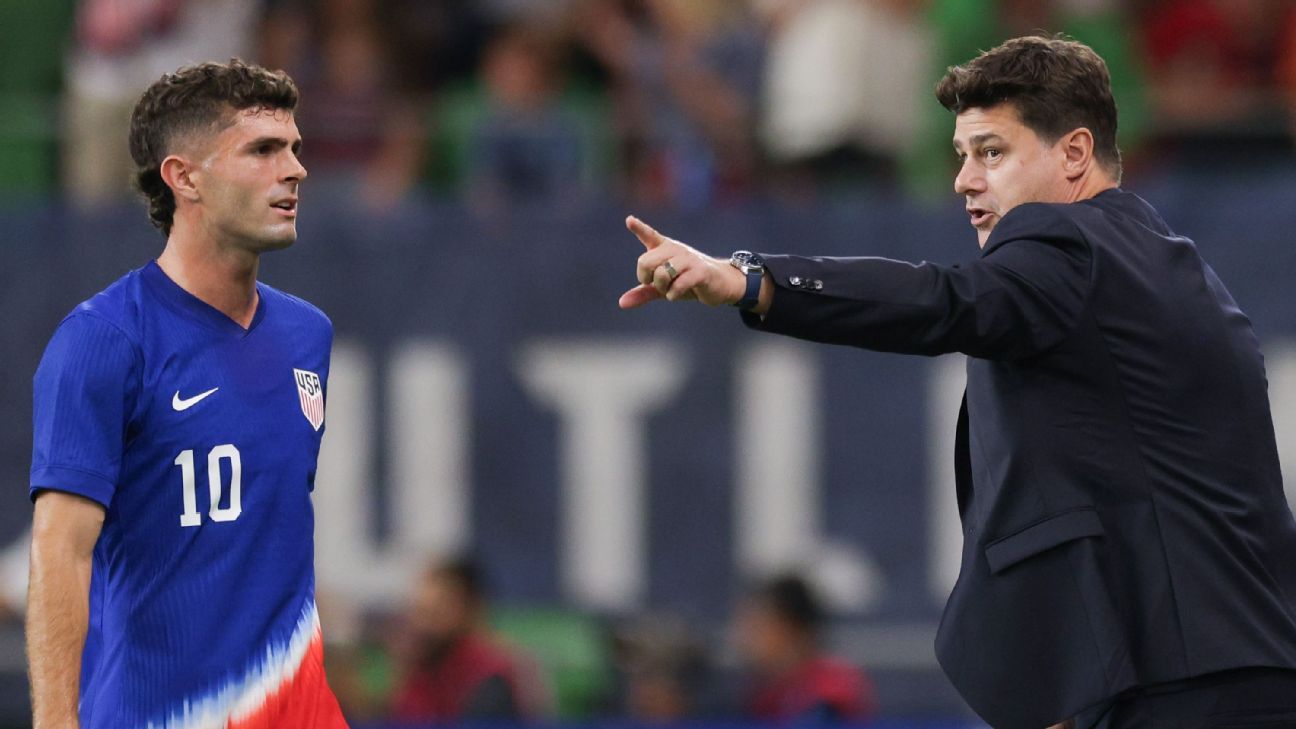
At first glance, descriptions of what it’s like to play for U.S. men’s national team manager Mauricio Pochettino are littered with contradictions. Among the words players use are “intense,” “passionate” and “demanding” — but those are almost immediately followed by words seemingly at the other end of the emotional spectrum. “Family” comes up, as does “likeable,” even “loving.”
In many respects, that is the nature of coaching. When trying to extract the best out of a group of players, the emotions and approaches cover a broad spectrum, and can vary widely across individuals, or even from minute to minute. There are times to drop the hammer, and other moments to put an arm around the shoulder. And despite a coach’s best efforts, they can’t reach every player. That doesn’t mean they stop trying.
Based on recent evidence, Pochettino’s approach appears to be working. The USMNT is unbeaten in its last five games heading into friendly matches against Belgium on March 28 and Portugal three days later.
Granted, this string of positive results consisted of all friendlies, but with the U.S. co-hosting this summer’s World Cup, and no World Cup qualifying slog to go through, the USMNT can only play the teams that are in front of them. To that end, the team’s trajectory is decidedly upward, and that is down in large part to Pochettino’s approach — and the players’ receptiveness to his methods.
“Above all, he just expects intensity, and he expects mentality — he expects energy,” midfielder Cristian Roldan told ESPN when asked about Pochettino. “I think those things are really contagious. So he’s very likable. He’ll hug you. He’ll have a conversation with you. He’ll yell at you. But in the end, it comes from a good place. And as long as you bring what he wants, you’re going to be in a good spot.”
– The latest USMNT Big Board: Who’s in and who’s out?
– Ranked: Every USMNT World Cup kit from 1990 to 2026
– USWNT transfer grades: Every American move assessed
A USMNT culture that’s “more strict”
It was clear when Pochettino was hired back in September 2024 that things needed to change within the USMNT. Like the dark side of the force, negative habits and emotions had slowly crept into the U.S. team.
Some of this was down to having two back-to-back interim managers over six months — Anthony Hudson and B.J. Callaghan — to start 2023, and then opting to rehire Gregg Berhalter to the post full-time later that year. The progress the USMNT achieved during the 2022 cycle wasn’t replicated in Berhalter’s second go-round. Complacency set in and the project stagnated.
So, when Pochettino came on board as an objective outsider, he made it clear that there would be no guaranteed starters. Players would have to earn their spots, regardless of their perceived status within the team or from the broader public. Everyone would be held accountable.
“No one’s special — when you come into camp, you’re a U.S. men’s national team player, you deserve to be here,” midfielder Tyler Adams told ESPN. “[He’ll] make sure that you get better each time you come into camp and feel worthy. But at the same time, it’s required from you to put what you’re going to get in and get out of it. So, every single camp guys have learned and adjusted to that.
“But I don’t want to say that he’s changed the culture — I’d say he’s brought the culture out of us. I think we’ve had that in us and it was just took someone to bring it out of us, and I think he’s done a great job of that.”
And how did Pochettino do that exactly? To hear Adams tell it, the approach — at least a high level — was simple.
“I think he’s a little bit more strict in certain things,” Adams said. “I think that the standards that were set were clear from day one. You don’t break my trust. You don’t break the rules. You don’t disrespect one another or you won’t be around.”
The adjustment did take some time. The performances at the 2025 Concacaf Nations League finals, when the USMNT fell in consecutive matches to Panama and Canada, were horrid. It led to multiple former USMNT players questioning the heart and desire of the current generation.
Pochettino responded by not calling up certain players — most notably Weston McKennie — for subsequent camps. Due in part to injuries to the likes of Antonee Robinson and Folarin Balogun, but also what Pochettino called “football decisions,” the coach took a decidedly youthful squad to the 2025 Gold Cup. Twelve players on the roster had five or fewer international appearances.
While the U.S. ultimately lost to Mexico in the Gold Cup final, the message was clear: Pochettino would call up the best team that worked together, not the best 26 players.
But the Argentine also showed patience. Every player encounters a coaching change at some point in their career. With Pochettino, there was an understanding that a different coach from a very different background would take some getting used to.
“You understand that there’s going to be nuances and there’s going to be growing pains that come along with [a coaching change], but you also understand you have to have grace with one another,” U.S. defender Mark McKenzie told ESPN. “So I think that was the biggest thing, is recognizing that it’s not going to be perfect in the first moments. They started to learn us the same way we need to learn them.”
2:58
Is Mauricio Pochettino is under pressure to deliver success for USMNT at the World Cup?
The ‘Futbol Americas’ crew to debate if Mauricio Pochettino is under serious pressure to deliver success for the USMNT as they prepare to host the 2026 FIFA World Cup.
Those growing pains now appear to have been overcome. But with less than 100 days until the World Cup, and just one more international window taking place, tensions are bound to rise as the May date for the World Cup roster announcement approaches. With Pochettino’s no-favorites approach, will fear be the predominant emotion during the run-up to the tournament?
“I’ll be very honest: I think some guys will probably feel scared,” veteran U.S. defender Tim Ream told ESPN. “I think that’s a realistic and a real feeling that some guys will have.
“The approach that you have to take is, well, your spot is never guaranteed no matter where you are. Someone’s always younger, faster, better, trying to take your spot. So how do you hold that off as long as possible? Well, you just keep working. That’s the way the sport is.”
The USMNT’s intense “die for the shirt” approach
Pochettino’s culture of accountability bleeds into the training sessions, sometimes literally. For the players, the moment the boots go on, there is nothing else in the world that matters. Perfection isn’t expected but maximum effort, intensity and laser-like focus are. Training sessions become a test of mental endurance as much they are about physical fortitude.
“What’s the most important thing? That pass is the most important thing. That touch is the most important thing,” said Ream. “That piece of communication — whether you’re telling somebody left, right, go this way, go that way — is the most important thing. And so when I [refer to] how demanding he is, he wants all of that.
“In every single training session, as soon as you cross the line, your focus is nowhere but there. And that can be draining. Yeah — it can be very draining.”
Pochettino expects that intensity to permeate every aspect of the training session. That includes reaching a level of physicality that replicates game-like situations. Yes, the tackles do fly in at times.
“Whether it’s 11-v-11, a small sided game, yeah, I’m going to get stuck in,” said McKenzie. “I’m not doing it to the point where it’s going to harm or hurt my teammate. But at the same time, I’m not just going to jump over his foot just because — I’m going to make sure I’m getting stuck in.
“I want to win this tackle. I want to win this duel. So there’s ways to go about it without harming each other, but you want to have that competitive nature, competitive edge in trainings because that’s the way we want to play the game.”
The thinking behind this approach is that it raises the level of the entire group.
“You have guys that don’t normally want to get into tackles, getting into tackles,” said Roldan. “Those are the things that are contagious.”
1:38
Is Pulisic right to hit back at USMNT criticism?
The Futbol Americans crew discuss if Christian Pulisic was correct to hit back criticism aimed at him from some USMNT legends including Landon Donovan.
In terms of the cadence of the sessions, they are intended to condition the players to what they will see in the game. Every drill, tactical session, gym workout or activation has a purpose behind it. The philosophy is that there is no wasted energy.
“[The drills] all form this tunnel to make sure that the final product on the field is the way we want it to look or the way that we are training for it to look,” said McKenzie.
It results in training sessions that end with the right level of utter exhaustion and the desire to want to do it again the next day. Pochettino’s cultural reset has had the desired effect.
“I think the overarching culture is that guys would die for the shirt right now,” goalkeeper Matt Turner told ESPN
No longer “inmates running the asylum”
In the previous cycle, Berhalter appointed a so-called leadership council of select players, which the coaching staff used to take the temperature on certain issues. Under Pochettino there’s no such structure in place. Multiple players said the current setup makes for better dialogue where anyone can speak up.
“It becomes almost like the inmates running the asylum,” said Ream about the past leadership council. “So, it almost becomes where there’s a group of players who have a lot of the say, and then there’s a group who are a little bit hesitant. So they’re like, ‘Well, he chose those guys. I can’t say anything.’
“Now it’s like, ‘Guys, we’re all in this together.’ Okay, yes, I’m the oldest. I’m not the loudest. So, Tyler [Adams], Chris [Richards], you want to be the loudest? Be the loudest, bro. It’s no problem. And it’s a give-and-take, but everybody feels empowered to speak and say whatever they feel — equal and in a positive way.”
While Pochettino prefers to leave players alone when they are with their clubs, Ream feels the level of communication now among players, even away from camp, is greater than it has ever been. The number of group chats has increased to the point that he says he “can’t keep up with them all.”
Make no mistake. Pochettino is still the boss, and hasn’t hesitated to publicly come down on players when he feels they’ve strayed out of their lane.
The USMNT’s biggest star and face of the team, Christian Pulisic, said he “didn’t understand” Pochettino’s decision to not include him in a pair of pre-Gold Cup friendlies, even as Pulisic said he was skipping the Gold Cup. Pochettino declared that as manager, he was “not a mannequin” and would make the decisions he felt were best for the team, regardless of what Pulisic thought.
Pochettino also later criticized midfielder Timothy Weah for a seemingly innocuous comment about how high World Cup ticket prices were, stating that it’s not a player’s “duty” to discuss such topics, insisting he focus purely on his game.
Whether that’s just Pochettino keeping his players in line and focused on the task ahead, or the hints of possible discontent, remain to be seen. The ultimate judge of Pochettino’s approach will be the results of this summer’s World Cup. But for now, there appears to be total buy-in from the players — at least from what they are saying publicly.
Pochettino getting “personal” with players
Communication is arguably the most important aspect of coaching. It enables a manager to impart knowledge, build trust, increase motivation and improve performance. Entire locker rooms can be lost by saying the wrong thing at the wrong time.
Pochettino’s communication style can be divided into two parts: the way he speaks on the field, and away from it.
On the field during training, timing is everything. Knowing when to keep quiet is just as important as knowing what to say. In moments of struggle, there is benefit to seeing if players can solve problems on their own. Stop things too often, and the rhythm of the training session gets mangled.
“I think [Pochettino] does a really good job of knowing when to step in in a training session and say, ‘Guys, we have to have more. You need more. I need more from you’ or ‘We need to do this as a group better,'” said Ream. “And I think when you interject immediately when you see something wrong, I think if you do it too much, it loses its value.
“Mauricio, he has this innate ability to know when is the right time to step in and when is the right time to just watch and see.”
That dovetails well with what happens in matches. It’s a players’ game, and once the whistle blows, the manager only has so much influence. Oftentimes, it’s up to the players to figure out things on the fly. McKenzie likens it to an assembly line.
“You’re going through the training sessions and you’re building that framework of the car, but the driver is going to be the one who ultimately is able to get the most out of that vehicle,” he said. “And that’s pretty much the picture I’d say of what Mauricio wants to do.”
Away from the training ground is when Pochettino does some of his most important work. It’s where he can sidle up to a player, get details about their background and what’s happening with their home life. It’s a moment to communicate with a gentler touch rather than the heightened, competitive emotions of a game or practice. It gives Pochettino more data on what buttons to push with which players and when.
“He’s wanting to have personal conversations. He’s wanting to know about your family,” Ream said. “He’s wanting to understand and know everybody on a much deeper connected level. Guys were a little bit uneasy about that kind of thing early on and now they understand how he operates and how he works.”
Turner added: “When you have a coach that is intense, demanding, and loving, you take the time to get to know him, and you see what works communication-wise and what doesn’t work. Then, you try to learn a lot about each other and just open up.”
The result is greater sense of connectedness throughout the team. During the previous cycle, there was lots of talk about the brotherhood that existed among the players. Now the word that gets used is “family” — one that includes not just players, but the entire staff as well.
“That family side of it is huge,” McKenzie said, “and it creates an environment where the door is open for guys to have conversations and feel like you’re part of the team, whether it’s your first camp or whether it’s your 51st camp.”
That closeness is preparing both the players and staff for the gauntlet of the World Cup, which starts for the USMNT on June 12 against Paraguay. If the USMNT performs as they hope, they could end up spending two months together in the intense pressure cooker of the sport’s biggest tournament, from the time their camp begins in May to the World Cup final on July 19.
“It has to be that way because you’re all trying to do something incredible,” said Ream. “You’re all going to a tournament that’s going to be the biggest one in the history of this sport. You have to have those feelings. You have to be that close. You have to be that tight-knit. You have to feel all of that, because without that it doesn’t matter.”


Three bets and two Eliminator picks for the men’s tournament round of 16

Delay in FSSAI finalising front of pack labelling rules unusual by its own norm – The Times of India

Who’s next at UNC? Potential candidates to replace Hubert Davis, their priorities

-

 Fashion1 week ago
Sales at US apparel, clothing accessories stores up 4% YoY in Jan 2026
-
 Business1 week ago
Peloton is launching bikes and treadmills for gyms, accelerating commercial strategy
-

 Tech1 week ago
Justice Department Says Anthropic Can’t Be Trusted With Warfighting Systems
-
 Business1 week ago
Stocks and pound rise as US rate call approaches
-

 Sports1 week ago
March Madness 2026 – How to watch in SA, start time, schedule, TV channel for NCAA championship basketball tournament
-

 Entertainment7 days ago
Val Kilmer revived 1 year after death through AI
-

 Sports1 week ago
PCB files complaint over allowing Bangladesh to take review on penultimate ball – SUCH TV
-

 Politics1 week ago
Iran strikes Tel Aviv with cluster-warhead missiles in retaliation of Larijani’s martyrdom