

Entertainment
Eighteen India-backed terrorists killed in two separate Balochistan IBOs: ISPR

- ISPR says IBO conducted in Quetta, Kech districts.
- Adds operation part of Azm-e-Istehkam campaign.
- President, PM pay tribute to security forces.
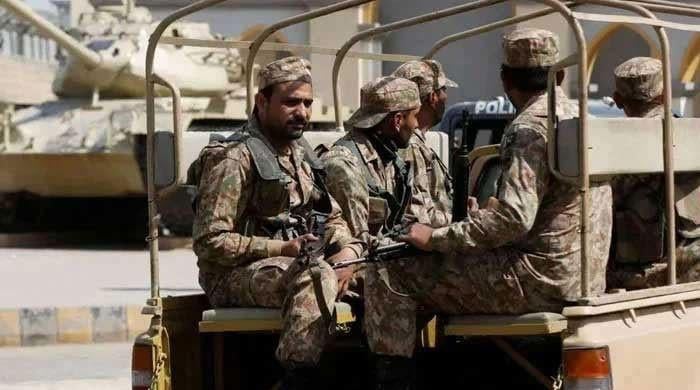
At least eighteen India-backed terrorists belonging to Fitna al-Hindustan were killed in two separate operations in Balochistan, the military’s media wing said on Thursday.
The Inter-Services Public Relations (ISPR) said in a statement that an intelligence-based operation (IBO) was conducted in the general area of Chiltan Mountains, Quetta district, on the reported presence of terrorists.
“During the conduct of the operation, own troops effectively engaged the terrorists’ location, and after an intense fire exchange, fourteen India-sponsored terrorists were sent to hell,” it added.
In another IBO conducted in the general area of Buleda, Kech district, a terrorist hideout was busted and four terrorists were successfully neutralised, the ISPR said.
It said weapons, ammunition and explosives were also recovered from slain terrorists, who remained actively involved in numerous terrorist activities.
The military said sanitisation operations are being conducted to eliminate any other Indian sponsored terrorists found in the area.
It further said that the relentless counter terrorism campaign under vision “Azm-e-Istehkam” by the security forces and law enforcement agencies of Pakistan will continue at full pace to wipe out the menace of foreign-sponsored and supported terrorism from the country.
President Asif Ali Zardari and Prime Minister Shehbaz Sharif paid rich tribute to security forces for eliminating 18 terrorists of Indian proxy Fitna al-Hindustan in Balochistan, reaffirming Pakistan’s firm resolve under Azm-e-Istehkam to eradicate all foreign-sponsored terrorism.
Pakistan has been grappling with rising terror incidents, particularly in KP and Balochistan, since the Afghan Taliban regime took power in 2021.
The government has repeatedly urged the Taliban regime to rein in terrorist groups responsible for countless attacks in Pakistan.
However, the Taliban regime largely remained indifferent to Pakistan’s demands and provided refuge to multiple terrorist groups targeting security forces and civilians.
Instead of addressing Pakistan’s concerns about cross-border terrorism, the Taliban regime resorted to unprovoked firing along the border on October 12.
Pakistan Armed Forces retaliated swiftly, killing over 200 Taliban fighters and affiliated militants; however, as many as 23 Pakistani soldiers were martyred during the border clashes.
Security forces also conducted strikes inside Afghanistan, including in Kabul, destroying terrorists’ hideouts in the country.
Hostilities between forces of the two nations ceased after Pakistan accepted the Taliban regime’s request for a temporary ceasefire on October 17.
Delegations from the two countries later met for talks mediated by Qatar in Doha, where they agreed on a ceasefire agreement.
Turkiye then hosted the second round of talks in Istanbul, which began on October 25.
However, the talks ended inconclusively after four days over what Pakistani authorities described as the Taliban delegation’s “illogical” arguments, which they said were “detached from ground realities”.
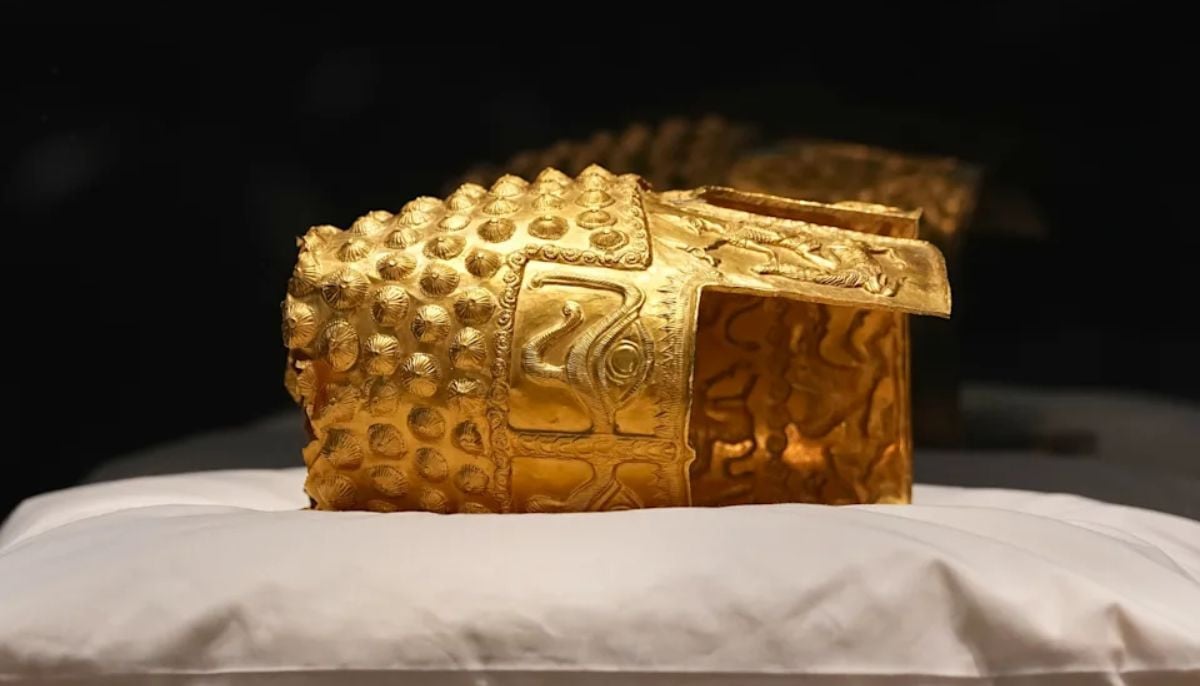
Thieves broke into the Drents Museum in the Netherlands in the early hours of the morning, pried open a door with a crowbar, triggered an explosion, and made off with some of Romania’s most precious ancient treasure in January 2025.
Now the authorities have recovered the artifacts. The centrepiece of the recovery is the Cotofenesti helmet, a 2,500-year-old golden artefact from the Dacia civilisation and one of Romania’s most revered national heirlooms.
Three golden bracelets were also taken in the raid. Most of the stolen items arrived at Bucharest Henri Coanda International Airport and were transported under armed guard to the National History Museum, where they were placed in a glass cabinet flanked by masked, armed officers.
The return came after 14 months of investigations, diplomatic negotiations between Romania and the Netherlands, and an ongoing criminal trial involving three suspects. The whereabouts of a third golden bracelet remain unknown, though the Drents Museum’s director Robert van Langh vowed the search would continue.
Van Langh, who attended Tuesday’s handover, acknowledged the weight of the moment for Romanian people in particular.
He said, “The grief, the anger and now the relief have naturally been even greater here than in the Netherlands,” adding, “Romanian national heritage has returned home.”
The theft had shocked the art world when it happened. Security footage captured three figures forcing their way into the museum in what appeared to be a swift and deliberate operation.
In the weeks that followed, fears grew that the helmet might have been melted down. Its fame and instantly recognisable appearance made it virtually impossible to sell on any legitimate market, but that same notoriety also made it a target.
When Dutch prosecutors unveiled the recovered items at a news conference earlier this month, it emerged that the helmet had been slightly dented during its disappearance. The recovered bracelets, however, were found to be in perfect condition.
For Romania, the return carried a significance that went well beyond the monetary value of the objects. Cornel Constantin Ilie, the National History Museum’s interim director, described the artefacts as “relics of our historical memory” and said the country had lived for months with the fear that part of its past could be lost forever.
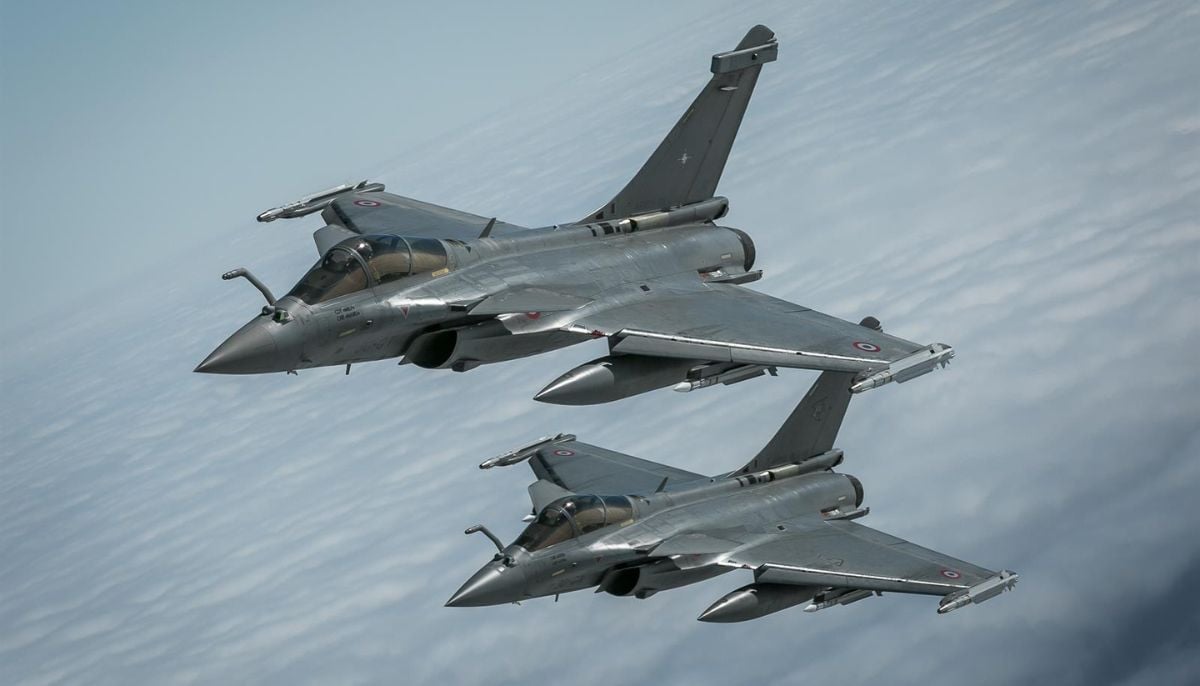
The North Atlantic Treaty Organisation (NATO) forces deployed a number of jets to intercept Russian bombers and fighter jets flying over the Baltic Sea in an impressive display of power on Monday.
French Rafales took off from a Lithuanian air base and joined fighter jets from Sweden, Finland, Poland, Denmark and Romania to intercept the hostile jets; however, no aerial engagement occurred as Russian jets remained in airspace over neutral waters.
The French detachment, stationed in Lithuania as part of the NATO’s air policing effort, said their jets kept watch over Russian aircraft, adding, “The Russian mission included 10 fighter jets taking turns in escorting two supersonic Tu-22M3s.”
In a statement on Telegram, the Russian Defence Ministry said that the flight of their bombers was over four hours long and it occurred in neutral airspace.
The ministry said: “All flights of Russian Aerospace Forces aircraft are carried out in strict compliance with international rules for the use of airspace.”
It added that their aircraft regularly conduct flights in international airspace over the Baltic and Black Seas and the Pacific, the Arctic and the North Atlantic Ocean.
NATO’s muscular display of airpower comes after the United States (U.S.) President Donald Trump described the alliance as a “paper tiger” due to its refusal to take part in the U.S.-Israeli military aggression against Iran.
The incident comes just a week after the British Royal Air Force jets were scrambled to intercept unidentified aircraft approaching the British airspace. However, no interception took place as the jet remained outside UK airspace.
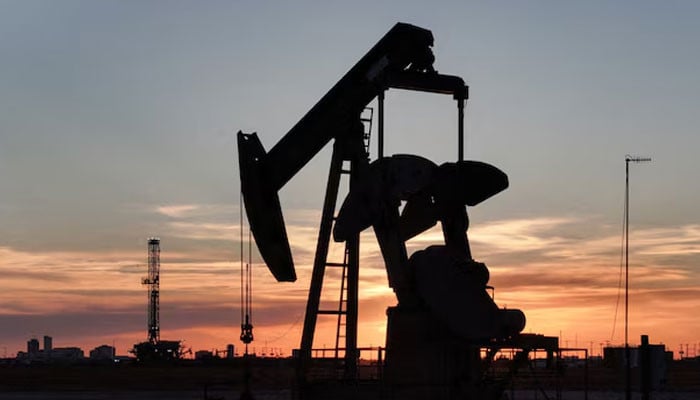
Oil prices climbed about 5% on Tuesday after US President Donald Trump said he did not want to extend a soon-to-expire ceasefire in the Iran war and that the US military was “raring to go” if negotiations do not succeed.
Brent futures rose $4.30, or 4.5%, to $99.78 a barrel at 1:13pm EDT (1713 GMT), while US West Texas Intermediate CLc1 crude rose $4.75, or 5.3%, to $94.36.
Pakistan said there was still no confirmation that Iran would attend last-ditch peace talks with the United States, after US forces boarded a huge Iranian oil tanker at sea with just a day left to the ceasefire.
Shipping traffic through the Strait of Hormuz, which normally handles about 20% of global oil and liquefied natural gas (LNG) supplies, remained broadly halted on Tuesday with only three ships passing the waterway in the past 24 hours, shipping data showed.
The European Union will provide guidance to airlines on how to handle issues such as airport slots, passenger rights and public service obligations in the event of jet fuel shortages because of the Iran war, the bloc’s transport chief said.
German Economy Minister Katherina Reiche said supplies of jet fuel are not in danger as refineries adapt to increased demand, but added the government is monitoring the situation.
Russian supplies
Ukrainian President Volodymyr Zelenskiy, however, said the Druzhba oil pipeline pumping Russian oil to Europe, is ready to resume operations, signalling that Ukraine now expects a 90 billion euro aid package to be unblocked. But three industry sources said Russia is set to stop oil exports from Kazakhstan to Germany via the Druzhba pipeline starting from May 1.
Elsewhere in Russia, Ukrainian drones struck an oil-pumping and dispatch facility in Russia’s Samara region overnight.
In Germany, the biggest economy in Europe, investor morale declined to its lowest level in more than three years in April as businesses started to feel the economic consequences of the Iran war far beyond price increases, the ZEW economic research institute said.
In the United States, retail sales increased more than expected in March as the war in Iran boosted gasoline prices and led to a record surge in receipts at service stations, while tax refunds underpinned spending elsewhere.
Trump’s Federal Reserve chief nominee Kevin Warsh called for “regime change” at the US central bank, including a new approach for controlling inflation and a communications overhaul that may discourage his colleagues from saying too much about the direction of monetary policy.
Trump told CNBC that he would be disappointed if Warsh did not cut interest rates right away once he took office after being approved by the Senate.
Analysts worry that involving more politics in interest rate decisions could reduce the Fed’s ability to control inflation. Trump wants the Fed to cut rates, which would reduce consumer costs and could boost economic growth and demand for oil.
US oil inventories
Those crude price increases came as the market waited for direction from weekly storage reports from the American Petroleum Institute (API) trade group later on Tuesday and the US Energy Information Administration (EIA) on Wednesday.
Analysts projected that energy firms pulled 1.8 million barrels of crude from storage during the week ended April 17.
If correct, that would be the first time energy firms pulled crude out of storage for two weeks in a row since February, and compares with an increase of 0.2 million barrels in the same week last year and a decline of 3.7 million barrels over the past five years (2021-2025).


Museum heist mystery ends as Romania’s 2,500-year-old Golden Helmet returns home

Ranking the Top 20 Players in the Men’s College Basketball Transfer Portal

NATO jets intercept Russian bombers over Baltic Sea

-

 Fashion6 days ago
France’s LVMH Q1 revenue falls 6%, shows resilience amid Iran war
-

 Sports1 week ago
The case for Man United’s Fernandes as Premier League’s best
-

 Entertainment1 week ago
Palace left in shock as Prince William cancels grand ceremony
-
 Business1 week ago
UK could adopt EU single market rules under new legislation
-

 Entertainment6 days ago
Is Claude down? Here’s why users are seeing errors
-

 Fashion1 week ago
Energy emerges as biggest cost driver in textile margins
-
 Business1 week ago
Delta Air Lines unveils first new Delta One suite in premium cabin arms race
-

 Fashion1 week ago
Asia claims largest share of markets on Kearney FDI Confidence Index