

Business
Elon Musk is telling his followers to cancel Netflix subscriptions. Here’s what’s happening


Elon Musk stands in the Oval Office to attend a press event with U.S. President Donald Trump, at the White House in Washington, D.C., U.S., May 30, 2025.
Nathan Howard | Reuters
Elon Musk this week urged his followers to cancel their Netflix subscriptions over a controversy surrounding an animated show and its creator.
Musk on Wednesday posted on his X platform saying, “Cancel Netflix for the health of your kids.” The post was in response to an image accusing Netflix of carrying out a “transgender woke agenda.”
The controversy seems to stem from conservative backlash over an animated Netflix show “Dead End: Paranormal Park,” which features a transgender character. The show was canceled in 2023 after two seasons.
In addition to repeated anti-trans posts, Musk also responded to a post criticizing alleged statements made by the show’s creator, Hamish Steele, that a prominent conservative X account said “mocked” the murder of conservative activist Charlie Kirk.
Steele responded to Musk’s callout on rival social media platform Bluesky saying, “It’s probably going to be a very odd day.” Steele also shared a post by TV writer Jack Bernhardt that called “Dead End” a “brilliant show about kind, wonderful characters.”
Netflix did not respond to CNBC’s request for comment.
Analysts say the backlash might not pose as big of a threat to Netflix as Musk may be hoping for.
Netflix reported 301.63 million subscribers as of the fourth quarter of 2024, the last time it reported the metric before shifting priority to revenue over user growth. The company has a roughly $490 billion market cap, and its stock is up more than 60% in the past year.
Shares are down 4% so far this week.
“Is that going to move the needle necessarily? … You’re going to see people sign up on the back of that to counter it,” CNBC contributor Guy Adami said Wednesday on “Fast Money.”
“I don’t think this is a reason to sell the stock,” he added.
Seymour Asset Management’s Tim Seymour said though a day of headlines may move the stock around, it’s ultimately too expensive to be significantly affected by internet backlash.
“We’ve had these moments in time where, whether it was an ad campaign that went wrong or whether it was some sense that a company was aligned in a particular political channel… I don’t think that that’s going to be the reason to sell Netflix here,” Seymour said Wednesday.
The calls for a boycott mirror those against Anheuser-Busch InBev in 2023 after it released an ad campaign with transgender influencer Dylan Mulvaney. But the boycott of Bud Light, CNBC contributor Karen Finerman noted on Wednesday, yielded “far greater” destruction than any other recent examples.
“I feel like this will be very fleeting,” Finerman said.






Business
Explained: On way to 4th largest, how India slipped to 6th rank & what it means for 3rd largest economy dream – The Times of India
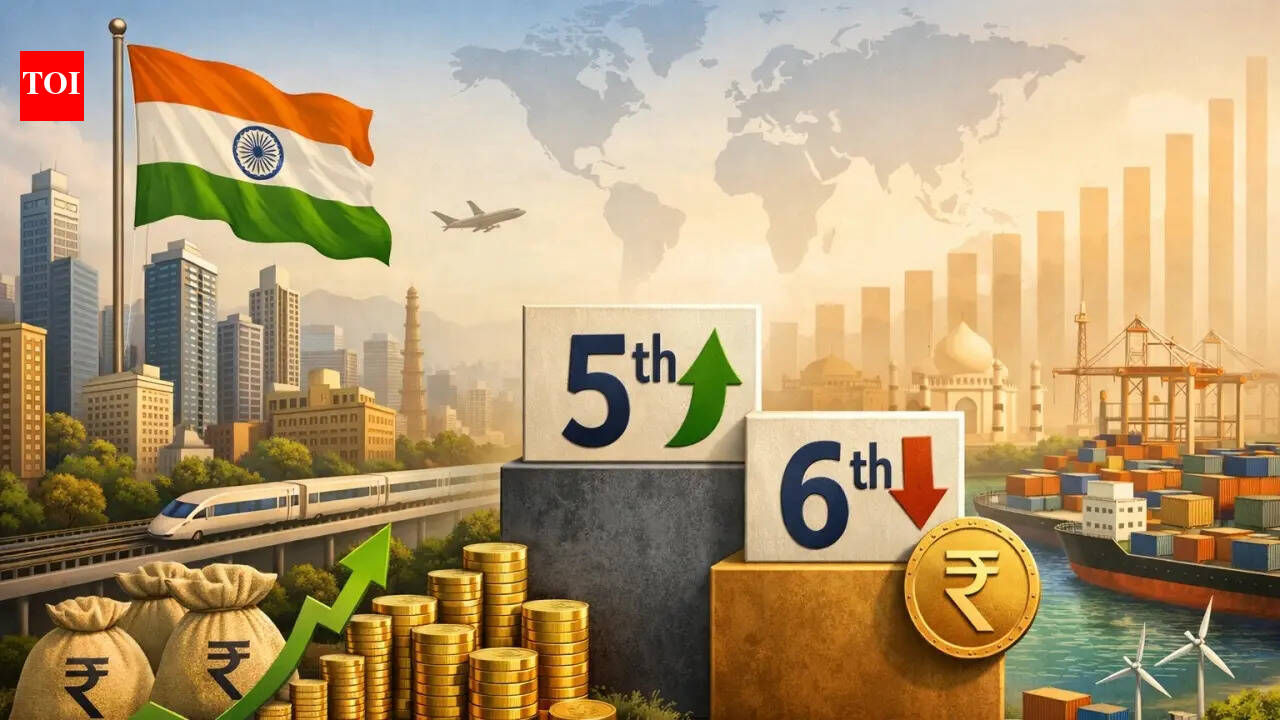
In April 2025 when the International Monetary Fund (IMF) released its World Economic Outlook, India was seen overtaking Japan to become the world’s fourth largest economy by the end of 2025-26. One year later, India has slipped to the sixth position on the largest economies rankings, with the United Kingdom reclaiming its spot as the fifth largest economy.In fact, IMF’s latest World Economic Outlook (April 2026) sees India sitting at the sixth spot this financial year too. This projection comes even as India has grown better than expected in FY26 and is seen retaining its tag of being the world’s fastest growing major economy.What has led to the sudden fall? Why has India dropped to the sixth position, falling behind the UK, instead of overtaking Japan to become the fourth largest economy? And what does this setback mean for its dream of becoming the third largest economy by the end of this decade? We decode:
Data drive: India projected as 4th largest, but fell to 6th spot
First let’s look at some IMF data to see which way the Indian economy was headed in April 2025, and what the April 2026 outlook data suggestsAs per April 2025 estimates of IMF, India’s economy would have been at $4601.225 billion at the end of FY 2025-26, overtaking Japan which was estimated at $4373.091 billion. The UK at the 6th spot was projected to have a nominal GDP of $4040.844 billion.However, as per the April 2026 estimates, India’s economy had a nominal GDP of $4,153 billion at the end of FY 2025-26, with the UK overtaking it with $4,265 billion GDP. Japan’s GDP is seen at $4,379 billion.As the above estimates show, India’s GDP estimates have seen a drop over one year, while UK’s nominal GDP has grown better than expected. Japan has been steady.So, what went wrong? Blame the rupee and GDP data itself!
Rupee Depreciation Blow & New GDP Series
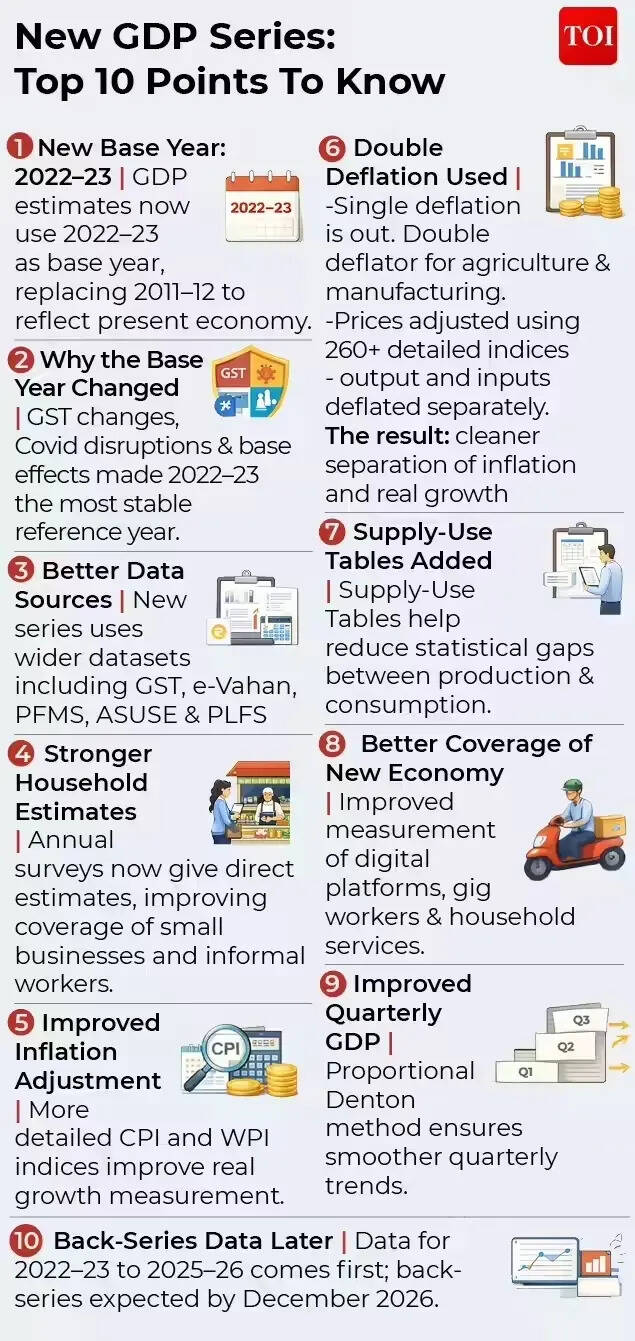
The first thing to understand is that IMF’s data on the size of a country’s nominal GDP is in dollar terms. Hence, with global rankings based on dollar‑denominated GDP, they are highly sensitive to exchange rate movements. The biggest party pooper for India’s dream of becoming the fourth largest has been the rupee’s slide. The Indian currency has depreciated more than expected over the last year, dropping from 84.57 versus the US dollar in 2024 to 88.48 in 2025, as per IMF data. The IMF estimates see it at 92.59 this year.Several factors have contributed to the rupee’s decline, including capital outflows, uncertainty related to India-US trade deal up until February, and the recent Middle East conflict which has raised crude oil prices and India’s import bill. Also, the RBI while actively managing volatility in the forex market, is not targeting any particular level of the rupee.Arun Singh, Chief Economist, Dun & Bradstreet India says that India’s recent slip to sixth place in global GDP rankings does not reflect a weakening of the economy, but is largely the result of currency conversion effects and a one‑time statistical revision.The rupee’s depreciation from 2024 to 2026, has mechanically compressed India’s GDP in dollar terms, effectively halving apparent growth despite strong domestic expansion, says Arun Singh.According to Ranen Banerjee, Partner and Leader, Economic Advisory Services, PwC India, GDP in US dollar terms would shave off with rupee depreciation. “We have had almost 7-8% depreciation over the last few months owing to the conflict and portfolio outflows. Thus, in effect in US dollar terms, it is close to shaving out almost a year’s nominal GDP,” he tells TOI.And it’s not just about the Indian economy. The United Kingdom which has overtaken India to bag the 5th spot again also has economic factors working in its favour. UK’s GDP growth at 0.5% has recently beaten forecasts of 0.1% by a wide margin. Not only that, its currency – pound – has actually appreciated against the US dollar.The second factor that has impacted the rankings is India’s adoption of a new base year for its latest GDP series. As per the new data, which also makes use of a more refined methodology, the size of India’s nominal GDP in rupee terms has gone down. Sample this: As per the older base year of 2011-12, India’s GDP at the end of 2025-26 would have been Rs 35,713,886 crore. But under the new series, it is estimated to be Rs 34,547,157 crore. The new calculation methodology and base year revision presents a more accurate picture of the size of the Indian economy.Hence the currency effect has been compounded by a one‑time downward revision following India’s shift to a new GDP base year, which has lowered reported nominal levels without affecting real activity.
Does India’s drop to 6th indicate fundamental weakness?
Experts are confident that India’s growth story is intact and fundamentally strong, a fact that is reflected in projections of it continuing to be the world’s fastest growing major economy. They see technical factors behind the current slip, rather than any deterioration in economic fundamentals.It’s also interesting to note that while India will be the sixth largest economy in FY27, in the upcoming financial year, it is likely to overtake both the UK, and Japan to bag the fourth spot.Arun Singh of Dun & Bradstreet India explains this resilience with numbers:IMF World Economic Outlook (April 2026) data show that India’s GDP at current prices in domestic currency rose strongly from ₹318 trillion in 2024 to ₹346.5 trillion in 2025 and further to ₹384.5 trillion in 2026, translating into robust nominal growth of about 8.9% in 2024–25 and nearly 11% in 2025–26, among the fastest globally. In contrast, other large economies recorded more moderate domestic nominal growth – around 5% in the US, roughly 4% in China, 3–5% in the UK, 3–3.5% in Germany, and lower or volatile growth in Japan – underscoring India’s strong underlying momentum. In times of global economic turmoil, while GDP growth is expected to take some hit, most agencies and experts have pegged India’s growth to be strong. Incidentally, the IMF has even marginally raised its GDP growth forecast for FY27 to 6.5% despite the ongoing Middle East conflict.
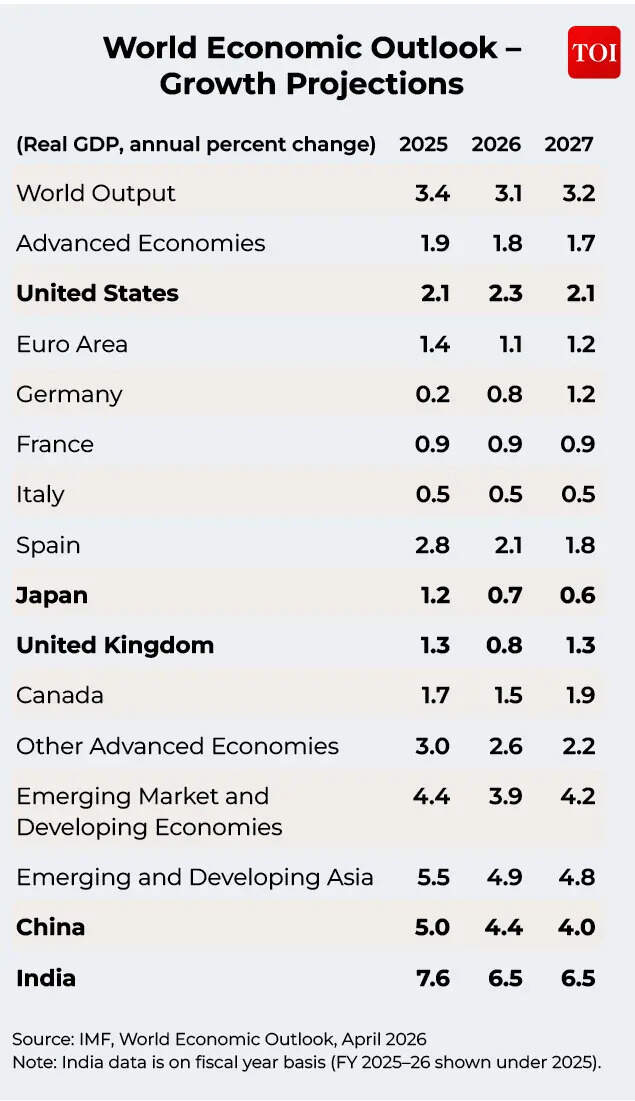
“In India, growth for 2025 is revised upward by 1.0 percentage point relative to October, to 7.6 percent, reflecting the better-than-expected outturn in the second and third quarters of the fiscal year and sustained strong momentum in the fourth quarter,” IMF said in its latest outlook. “For 2026, growth is revised upward moderately by 0.3 percentage point (0.1 percentage point relative to January) to 6.5 percent, led by positive contributions from the carryover of the strong 2025 outturn and the decline in additional US tariffs on Indian goods from 50 to 10 percent, which outweigh the adverse impact of the Middle East conflict. Growth is projected to stay at 6.5 percent in 2027,” it added.
Will India become 3rd largest anytime soon?
The rupee depreciation and the nominal GDP revision has also pushed back India’s dream of becoming the third largest economy by the end of this decade. In the October 2025 estimates, IMF had said that India will overtake Germany to become third largest by FY30. However, the April 2026 projections see it reaching the third rank only by FY 2030-31.Experts point to the rupee’s depreciation versus the dollar to note that the road ahead is likely to be uncertain. Madan Sabnavis, Chief economist, Bank of Baroda is confident that India will continue to do well in the coming years.“We will definitely improve in terms of GDP growth which will be higher than that of other countries especially UK and Japan which are just above us. However, the rupee value will finally determine how India gets placed on the global scale,” he told TOI.Ranen Banerjee of PwC India sees rupee beginning to get support with the conflict containment, relatively lower oil prices and portfolio flow reversals with valuations getting attractive in recent times. “Thus, we should not be experiencing any further sharp depreciation of the rupee in the immediate term provided the conflict does not escalate and oil prices relatively softening from their highs and come down to a range of $85-90 a barrel,” he says.For Arun Singh of Dun & Bradstreet, looking ahead, India’s relative position in US dollar‑based GDP rankings will remain highly sensitive to currency movements rather than domestic growth dynamics. “Continued global dollar strength or capital‑flow volatility may cause periodic slippage in rankings despite robust fundamentals. Sustaining external macro stability and limiting undue rupee volatility will be crucial for India’s strong growth performance to translate more fully into higher global economic rankings,” Arun Singh told TOI.The Indian economy, largely driven by domestic fundamentals, is not immune to external shocks. High US tariffs of 50% from August 2025 to early February, and the ongoing US-Iran war have spelt back-to-back shocks for the economy. Even as experts stress on the resilience of the growth story, the vulnerability to higher crude oil prices, and other global supply chain disruptions is a reality. In such a scenario, India may well have to contend with fluctuating world rankings, while banking on its strong GDP growth to tide over disruptions.
Business
‘It’s just scale’: Local mom-and-pop car dealerships are growing or dying amid industry consolidation, rise of mega-retailers

Derek Sylvester with members of his family, team and mascot Molly, who was featured on the dealership’s logo.
Courtesy Sylvester Chevrolet
Derek Sylvester’s father built the family’s original Chevrolet dealership with his bare hands on Main Street in rural Peckville, Pennsylvania, in 1972.
The store and family have been a pillar of the village, outside Scranton, ever since. That was until late last month, when Sylvester and his family closed a deal to sell Sylvester Chevrolet to a New York-based dealer group.
“As a family, we decided this might be the time,” said Sylvester, who at 67 has been contemplating retirement. “Unless you’re a larger store, a much larger store, it’s a little bit harder to make money. … It’s just scale.”
Many of Sylvester’s family members plan to continue working at the dealership, but he said they didn’t feel they were in a position to continue running the business amid the rapidly changing automotive retail landscape in the U.S. The industry is facing a tumultuous adoption of all-electric vehicles, technological shifts such as artificial intelligence, and growing demands from automakers.
Sales of dealerships such as Sylvester Chevrolet are occurring across the country at a rapid pace as the business of selling cars, once considered the purview of mom-and-pop shops, has evolved into a lucrative trillion-dollar industry rife with consolidation that has drawn more notice from Wall Street and investors in recent years.
While the National Automobile Dealers Association, or NADA, reports that the vast majority of its U.S. franchised dealers are small business owners such as Sylvester who have fewer than six stores, the top retailers in the country have significantly grown.
The top 150 dealers sold 27% of all retail and fleet new vehicles in 2025, up from 24.3% in 2021 and 21.2% in 2015, according to Automotive News’ annual ranking of top automotive retailers. They also owned roughly a quarter of dealerships last year, up from less than 20% a decade ago, according to the trade publication.
Meanwhile, top publicly traded dealers such as Lithia Motors and AutoNation have ballooned to market caps of more than $6 billion each. Even online used-car retailer Carvana — and its $74 billion market cap, which surpasses the value of most car companies it sells vehicles from — has quietly started purchasing new vehicle franchises without disclosing its future plans.
“There’s a lot of money that wants to come to the industry,” Brian Gordon, president of dealer advisor and broker Dave Cantin Group, told CNBC. “And, generally, the industry is sort of aligned on how to value these things. That makes for a good climate for [mergers and acquisitions].”
Industry consolidation
Multibillion-dollar dealerships have been on the rise amid a decadeslong consolidation that has led to a grow-or-die mentality for many U.S. automotive retailers.
NADA, a trade association representing franchised dealers, reports the average dealership owner has between two and three stores, but the largest growth area over the past decade has been in medium-sized dealerships that own between six and 25 stores.
NADA reports 90.5% of its nearly 17,000 dealers own between one and five stores, down from 94.4% in 2016. Meanwhile, 0.2% of dealers own 50 stores or more, up from 0.1% during that time frame.
“It’s clear that it’s a consolidating industry, and it’s an industry that is going to continue to consolidate,” Gordon said. But, he added, that is happening at every level, especially the expansion of mom-and-pop shops to larger players.
Dave Cantin Group — the advisor for Matthews Auto Group, the dealer group that acquired Sylvester Chevrolet — conducts dozens of such deals a year and said it expects the pace of consolidation and mergers and acquisitions to continue to increase this year.
Matthews Auto Group is one of many regional dealership companies that has decided to expand. The family-owned company started in Vestal — in central New York, south of Syracuse — in 1973 with a single Chrysler-Plymouth store that has grown into a roughly $800 million business with 18 locations and 800 employees.
Rob Matthews, a second-generation owner and CEO of Matthews Auto Group, said the company’s decision to grow is ongoing and that it aims to be more profitable and better compete in its current markets of New York and Pennsylvania.
Matthews Auto Group CFO John Totolis (from left to right), Dave Cantin Group managing director Talon Fee, Sylvester Chevrolet President Derek Sylvester, partner Sylvester Chevrolet Neil Sylvester, Matthews Auto Group CEO Rob Matthews and Matthews Auto Group President Mark Gaeta outside Sylvester Chevrolet in Peckville, Pennsylvania
Courtesy image
“I think that’s certainly a competitive advantage. I think staying still is probably not the best play. You’re seeing continued scale,” Matthews said. “The trend is you’re just going to continue to see consolidation to allow you to stay competitive.”
That’s also why Sylvester said he wanted to sell his business, with stipulations about retaining the store’s dozens of employees — something that’s part of Matthews’ strategy when acquiring a store.
“There’s a lot of things that, because of our scale, we see we can really unlock a store like his,” Matthews said. “I think, honestly, it’s exciting in the sense that we’re just looking to give them more tools and hopefully let everyone work going forward.”
Growth of mega-dealers
Wall Street has taken notice of how lucrative and protected franchised dealerships are in the U.S. The franchised dealer system, which exists to sell new vehicles to consumers rather than automakers selling their vehicles themselves, is unique and heavily regulated.
“I think there’s endless upside. The opportunity for growth in our company is just endless,” Sonic Automotive President Jeff Dyke told CNBC during a recent interview. “I think having mom-and-pop dealers is really good for the business. The thing is, the mom-and-pop dealer is going to have to advance their thinking.”
Sonic Automotive, a publicly traded company with a market cap of more than $2 billion, has grown from 96 franchised dealership stores in 2015 to 134 to end last year. It’s also gone through a massive expansion of its EchoPark used vehicle stores and Sonic Powersports. The company’s revenue during that time jumped 58% to $15.2 billion last year.
Dealership stocks
Others, such as Lithia Motors, have been even more aggressive in growth. The Medford, Oregon-based company surpassed longstanding dealership group AutoNation to become the top U.S. new vehicle franchised dealer in 2022.
Lithia, with a $6.3 billion market cap, has executed an audacious growth plan, from $8.7 billion in revenue in 2016 to $37.6 billion last year. The company nearly tripled its new and used stores from 154 locations to 455 stores during that time frame.
John Murphy, a longtime automotive analyst who is a managing director of strategic advisory at buy-sell advisory firm Haig Partners, said he believes that dealerships remain an extremely lucrative market for investors, despite things settling down somewhat after companies saw inflated profits during the Covid pandemic.
“Structurally, there’s some real potential upside, and there is an increasing level of attention by existing capital in the dealership community as it stands right now from outside players, private equity family offices, other pools of capital on this limited number of dealers and finite number of dealers,” he said. “The earnings upside is increasing and there’s increasing attention, or demand, on the buy side of the equation.”
Mom-and-pops remain
All of that combines to make many mom-and-pop dealerships ripe for acquisition or expansion.
“There’s just so many factors that make competition for a small mom-and-pop dealership more difficult,” said Talon Fee, a managing director at Dave Cantin Group who led the sale of Sylvester Chevrolet to Matthews Auto Group. “It’s not to say that small mom-and-pop dealerships can’t continue to exist and thrive and survive, but they do need to have a plan.”
Fee and others said the top reasons for owners to sell are a lack of succession planning, a growing competitive and changing industry, and a lack of commitment to reinvest in the businesses.
“There’s a lot of outside capital that’s figured out how to come in, given the fact that you have to be an operator in order to get approved by a manufacturer,” said Gordon, of Dave Cantin Group.
But the industry is changing in other ways, as new automakers such as Tesla, Rivian and Lucid try to bypass the franchised dealer model and sell vehicles directly to consumers.
Such companies have continuously fought state laws to allow such sales, with Rivian recently winning a battle with car dealers in Washington state by threatening to take its case to voters with a ballot measure to permit direct sales.
It adds to the evolving U.S. automotive retail landscape that owners such as Sylvester and his wife, who also worked at the dealership, haven’t had to deal with in the past. It’s also something Sylvester and many other smaller mom-and-pop stores won’t have to compete with once they sell their businesses.
“I lived a great life, don’t get me wrong. But, hey, good things come to an end,” said Sylvester, who plans to spend retirement caring for a 92-acre farm in Pennsylvania. “We made a good living. You know, we helped the community out.”
Business
Hormuz flashpoint: Why Indian-flagged ships are in focus as Middle East tensions hit global shipping – The Times of India
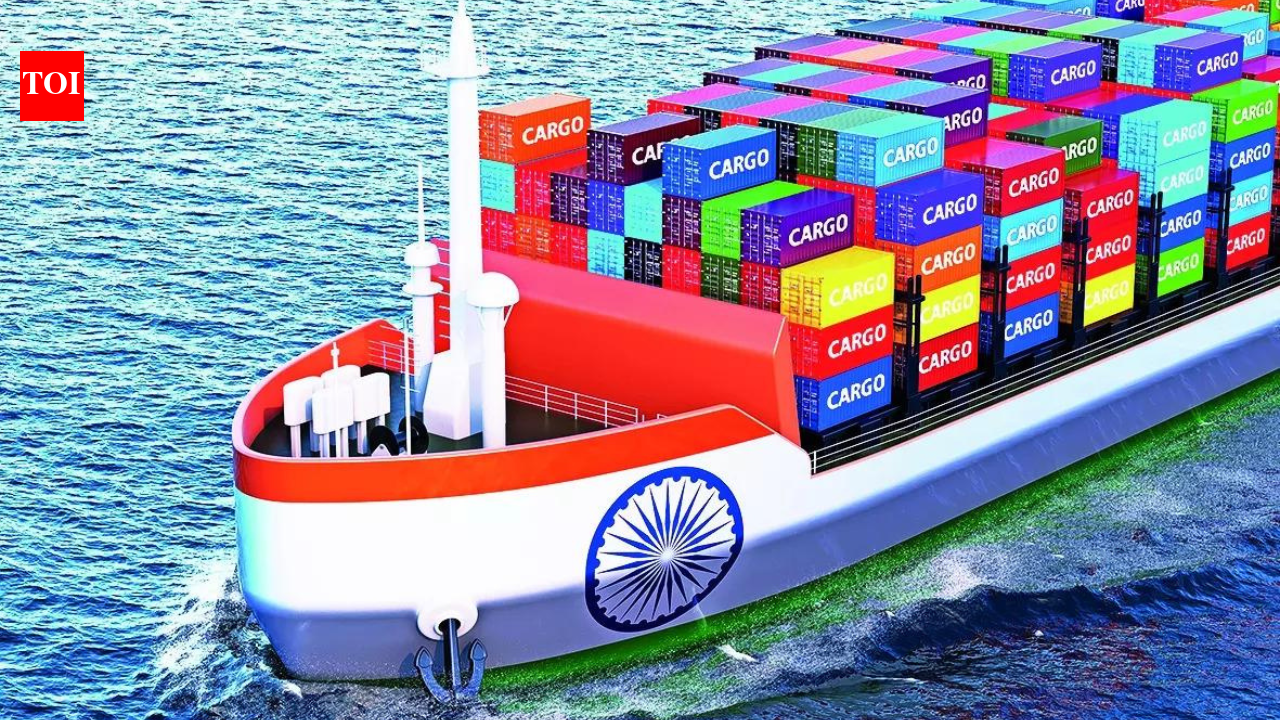
As tensions rise in Middle East and vessel safety in the Strait of Hormuz comes under renewed focus, the flag a ship flies has emerged as a key factor in maritime security, regulation and state protection.Flagging a vessel means it is registered with a country and must comply with that nation’s maritime laws and regulations. It also gives the flag state powers to investigate and penalise violations of domestic and international laws. Since regulations differ across countries, shipowners often choose jurisdictions that best suit operational and commercial needs, according to an ET report.An Indian-flagged vessel is a commercial ship registered with the Directorate General of Shipping and authorised to fly the national flag. Such vessels are governed by the Merchant Shipping Act and operate under Indian jurisdiction as a sovereign extension on the high seas.These ships are taxed by Indian authorities and must comply with Indian maritime safety, labour and environmental rules. To qualify for Indian flagging, vessels must come to domestic waters for registration and the owning company must be incorporated in India.Indian-flagged ships also receive strategic backing. India protects their interests through naval and diplomatic intervention when required. Experts say this creates a higher compliance burden than “Flag of Convenience” jurisdictions such as Panama and St Kitts.According to Rajeev Kumar Yadav, as quoted ET, director at Vertex Marine Services, Flag of Convenience systems allow vessels to be flagged from anywhere in the world within “3-4 days”.Indian-flagged ships calling at domestic ports can also benefit from lower port levies and tax liabilities, along with priority in government cargo movement and public sector charter contracts.During the Iran crisis, more than two dozen Indian ships were stranded west of the Strait of Hormuz after strict high-risk area classifications were imposed. The Indian Navy escorted several tankers to safety, though some vessels remain in the Persian Gulf.No direct attacks have been reported on Indian-flagged vessels so far, largely due to India’s balanced diplomatic approach in the crisis.However, being Indian-flagged does not give the government powers to decide freight rates or commercial destinations. The state’s role is limited to enforcing civil, criminal and regulatory laws onboard, along with international safety, environmental and labour compliance norms.India’s flagged fleet has been expanding. The Indian-flagged vessel fleet reached 14.2 million Gross Tonnage (GT) in March, with 92 vessels of 1.5 million GT joining during FY26.The long-term Maritime Amrit Kaal Vision 2047 aims to sharply raise India’s share of the global flagged fleet and increase utilisation of Indian-flagged ships from about 7 per cent currently to 30-40 per cent by 2047.

Explained: On way to 4th largest, how India slipped to 6th rank & what it means for 3rd largest economy dream – The Times of India

NJ Transit CEO explains World Cup fare hike as NJ Gov again implores FIFA to pay for $150 train tickets

Alison Hammond blasted for comments about Meghan Markle

-

 Politics1 week ago
Indian airlines hit hardest after Dubai limits foreign flights until May 31
-

 Entertainment5 days ago
Palace left in shock as Prince William cancels grand ceremony
-

 Sports5 days ago
The case for Man United’s Fernandes as Premier League’s best
-

 Politics1 week ago
Chinese, Taiwanese will unite, Xi tells Taiwan opposition leader
-
 Business5 days ago
UK could adopt EU single market rules under new legislation
-

 Entertainment1 week ago
Dua Lipa hits major career high ahead of wedding with Callum Turner
-
 Business1 week ago
He paid $248 in illegal tariffs for this coat. Will he ever get it back?
-

 Sports1 week ago
Lamar Jackson hits back at critics with faithful message on social media