

Business
Elon Musk’s X to block Grok from undressing images of real people

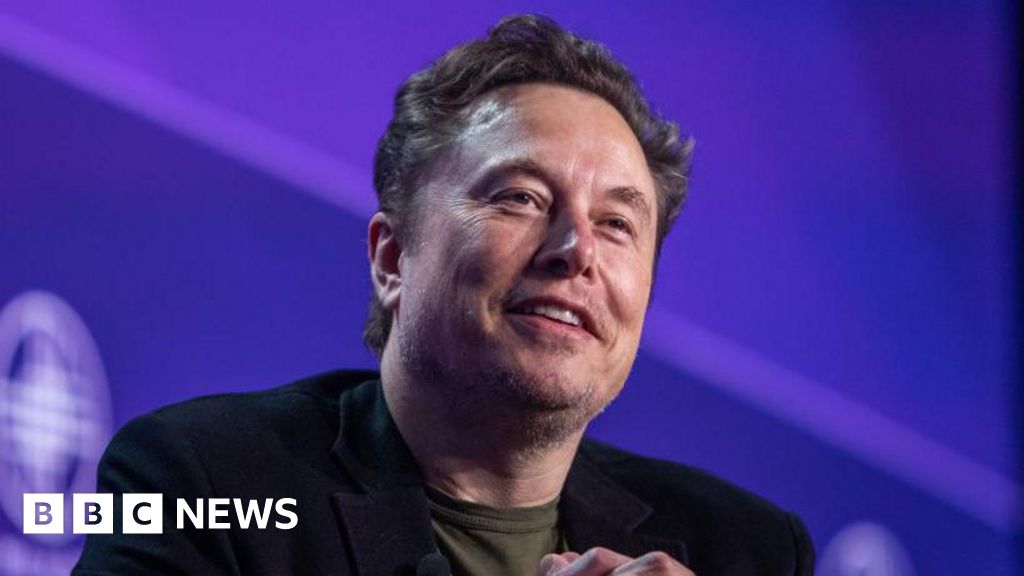
Elon Musk’s AI model Grok will no longer be able to edit photos of real people to show them in revealing clothing, after widespread concern over sexualised AI deepfakes in countries including the UK and US.
“We have implemented technological measures to prevent the Grok account from allowing the editing of images of real people in revealing clothing such as bikinis.
“This restriction applies to all users, including paid subscribers,” reads an announcement on X, which operates the Grok AI tool.
The change was announced hours after California’s top prosecutor said the state was probing the spread of sexualised AI deepfakes, including of children, generated by the AI model.
The update expands measures that stop all users, including paid subscribers, editing images of real people in revealing outfits.
X, formerly known as Twitter, also reiterated in a statement on Wednesday that only paid users will be able to edit images using Grok on its platform.
This will add an extra layer of protection by helping to ensure that those who try and abuse Grok to violate the law or X’s policies are held accountable, it said.
Users who try to generate images of real people in bikinis, underwear and similar clothing using Grok will be stopped from doing so according to the laws of their jurisdiction, X’s statement said.
In a statement on Wednesday, California Attorney General Rob Bonta said: “This material, which depicts women and children in nude and sexually explicit situations, has been used to harass people across the internet.”
Malaysia and Indonesia have blocked access to the chatbot over the images and UK Prime Minister Sir Keir Starmer warned X could lose the “right to self regulate” amid outrage over the AI images.
Britain’s media regulator, Ofcom, said on Monday that it would investigate whether X had failed to comply with UK law over the sexual images.
California’s top prosecutor has launched an investigation into the spread of sexualised AI deepfakes generated by Elon Musk’s AI model Grok.
Attorney General Rob Bonta said in a statement announcing the probe: “The avalanche of reports detailing the non-consensual, sexually explicit material that xAI has produced and posted online in recent weeks is shocking.”
xAI, which develops Grok, has previously said “anyone using or prompting Grok to make illegal content will suffer the same consequences as if they upload illegal content”.
California’s inquiry comes as British Prime Minister Sir Keir Starmer warns of possible action against X.
In Wednesday’s statement, Bonta said: “This material, which depicts women and children in nude and sexually explicit situations, has been used to harass people across the internet.”
The Democratic prosecutor urged xAI to take immediate action.
California Governor Gavin Newsom, a Democrat, posted to X on Wednesday that xAI’s decision to “create and host a breeding ground for predators… is vile”.
The BBC has contacted xAI for comment.
On Wednesday, Musk posted to X that he is “not aware of any naked underage images generated by Grok. Literally zero.”
“Obviously, Grok does not spontaneously generate images,” Musk wrote. “It does so only according to user requests.”
The tech billionaire, a Republican mega-donor, has also said that critics of X were politically motivated and using the Grok controversy as an “excuse for censorship”.
In November, Wired magazine reported that tools from other AI companies like OpenAI and Google have also been used to digitally undress people.
Last week, three US Democratic senators asked Apple and Google to remove X and Grok from their app stores.
Within hours of the request, X restricted its image generation tool so that it would only be available to paying subscribers.
X and Grok remain available on Apple’s App Store and Google Play.
It comes amid a debate over whether US tech companies are shielded from responsibility for what users post on AI platforms.
Section 230 of the Communications Decency Act of 1996 provides legal immunity to online platforms for user-generated content.
But Prof James Grimmelmann of Cornell University argues this law “only protects sites from liability for third-party content from users, not content the sites themselves produce”.
Grimmelmann said xAI was trying to deflect blame for the imagery on to users, but expressed doubt this argument would hold up in court.
“This isn’t a case where users are making the images themselves and then sharing them on X,” he said.
In this case “xAI itself is making the images. That’s outside of what Section 230 applies to”, he added.
Senator Ron Wyden of Oregon has argued that Section 230, which he co-authored, does not apply to AI-generated images. He said companies should be held fully responsible for such content.
“I’m glad to see states like California step up to investigate Elon Musk’s horrific child sexual abuse material generator,” Wyden told the BBC on Wednesday.
Wyden is one of the three Democratic senators who asked Apple and Google to remove X and Grok from their app stores.
The announcement of the probe in California comes as the UK is preparing legislation that would make it illegal to create non-consensual intimate images.
The UK watchdog Ofcom has also launched an investigation into Grok.
If it determines the platform has broken the law, it can issue fines of up to 10% of its worldwide revenue or £18m, whichever is greater.
On Monday, Sir Keir Starmer told Labour MPs that Musk’s social media platform X could lose the “right to self regulate” adding that “if X cannot control Grok, we will.”
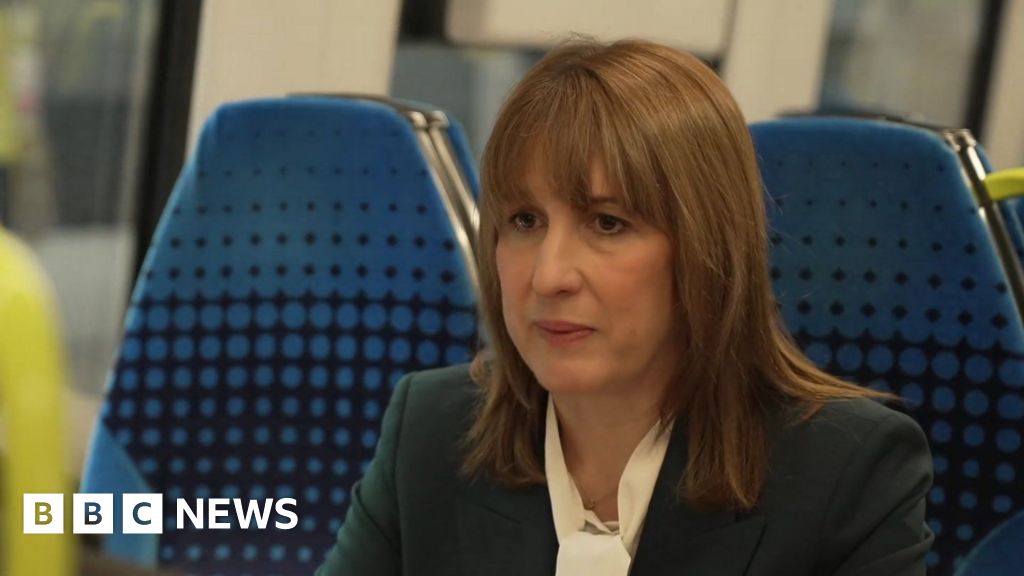
The Chancellor has declined to rule out extending support for hospitality businesses hit by rising business rates, beyond the help she has promised pub owners.
Last week, the BBC reported that the Treasury was poised to announce further assistance for pubs which – like all hospitality businesses – are facing the end of Covid-era business rates relief in April.
That scheme will end at the same time as sharp increases in the rateable value of their premises take effect.
Earlier in the day Reeves had hinted she was resisting calls for more support for the rest of the hospitality sector and link.
However, speaking at a press conference later the chancellor said she was “working with the hospitality sector”.
Treasury officials told the BBC that a package to specifically help pubs would be announced “in the coming days” but also declined to rule out additional relief for the wider sector.
Opposition MPs and industry bodies have been pressing for any additional help to be extended to other businesses in the sector including hotels and restaurants.
Speaking to the BBC, Rachel Reeves said: “As that transitional relief comes to an end, although we’ve put in £4.3bn over the next three years, we need to make sure that we do that in a balanced way that particularly supports our pubs and the hospitality sector.”
The £4.3bn figure refers to the value of caps placed on rate rises in the next three years to smooth out increases that will eventually see rates bills for pubs rise 76% in three years, while hotels face rises of 115% over the same period.
Kate Nicholls from the trade body Hospitality UK said she was encouraged that the door appeared to be open for non-pub businesses also facing steep rises in business rates.
“It’s good to see recognition of wider hospitality and that she is talking about support beyond pubs,” she said.
Reeves told BBC Breakfast on Wednesday that she is “particularly concerned” about the impact of business rates on pubs, but hinted she was resisting calls for more support for the rest of the hospitality sector.
Asked what support other smaller hospitality businesses would get, Reeves said: “I think that people can see that the biggest impact and the biggest concern right now is around pubs.
“Some of the smallest businesses, particularly some cafes, don’t pay any business rates at all because they’re not big enough to do so.”
Businesses have warned they will struggle to pay higher rates, after Covid-era relief ends in April and sites are revalued.
Business
Budget 2026 Expectations: Real Estate Players Want Govt-Backed Subvention, Norms For Net-Zero Emissions

India has set a target to reduce the emissions intensity of GDP by 45% by 2030 (from 2005 levels), and in 2021, India announced a long-term goal to achieve Net Zero emissions by 2070. As far as the real estate ad building sector in India, it contributes over 35% of India’s total GHG emissions, driven by building operations and construction materials like cement and steel. Amid increasing demand for green buildings in India, ahead of the Budget 2026, real estate stakeholders have outlined the steps required for developers to reach the net-zero stage.
Dhaval Ajmera, Director, Corporate Affairs, Ajmera Group, said that the real estate sector has emerged as one of the major contributors to economic growth. “In order to keep the momentum rolling and further pick up the pace, we expect the ministry to announce policy reforms and remedial measures in the upcoming budget that will benefit the buyers and developers alike. The need of the hour is to truly accelerate India’s transition to Net Zero. In relation to this, we urge the Ministry to introduce an Interest Subvention Scheme – specifically for Green-Rated Real Estate Debt. While developers are keen to build sustainable, IGBC/LEED-certified projects, the sky-high cost of capital remains a major barrier. As a remedial measure, a government-backed subvention of 200-300 basis points on Green Bonds would directly reduce the borrowing costs, making green projects financially viable rather than just aspirational,” he said.
Pankaj Jain, Founder and CMD, SPJ Group, said that the current share of buildings at 37 percent of global GHG emissions and more than one-third of global energy consumption makes real estate a game-changer. “Real estate developers must transition from marginal upgrading to an overall lifecycle approach. They should prefer using low-carbon materials, renewable materials, conserve water and adopt a performance monitoring approach. It will enable structures to create measurable gains in operating performance. At the same time, it is vital that the government establishes norms and provides economic momentum. It must also enforce net-zero building regulations, provide time-bound targets and provide tax & FAR concessions to net-zero real estate projects. In short, a net-zero transition in India will be accelerated only if regulations, investments and momentum converge.”
Rajat Bokolia, CEO, Newstone, said that to accelerate India’s transition to Net Zero, especially in a high-growth market like Delhi-NCR, developers and the government must work in tandem. “Developers should prioritise green building certifications, adopt energy-efficient construction, renewable energy integration, and sustainable materials at scale. At the same time, the government must incentivise green developments through faster approvals, tax benefits, and viability support for clean technologies,” said Bokolia.
Experts noted that strengthening green financing, mandating ESG compliance, and promoting transit-oriented development will be critical for the goal.

Son of a franchise legend will be the Commanders’ quarterbacks coach

Iran rejects reports of protesters’ executions

Ambitious Shoppe Object Paris prepares to make WSN debut

-

 Politics1 week ago
UK says provided assistance in US-led tanker seizure
-

 Entertainment1 week ago
Does new US food pyramid put too much steak on your plate?
-

 Entertainment1 week ago
Why did Nick Reiner’s lawyer Alan Jackson withdraw from case?
-
 Business1 week ago
Trump moves to ban home purchases by institutional investors
-
 Sports1 week ago
PGA of America CEO steps down after one year to take care of mother and mother-in-law
-

 Sports4 days ago
Clock is ticking for Frank at Spurs, with dwindling evidence he deserves extra time
-
 Business1 week ago
Bulls dominate as KSE-100 breaks past 186,000 mark – SUCH TV
-
 Business1 week ago
Gold prices declined in the local market – SUCH TV