

Fashion
Energy shock, uncertainty slow growth in East Asia Pacific: World Bank

Regional growth is projected to slow to 4.2 per cent this year from 5 per cent in 2025 as the energy shock triggered by the Middle East conflict compounds the adverse impact of elevated trade barriers, global policy uncertainty and domestic economic difficulties, the World Bank said in a press release.
The East Asia and Pacific region’s growth is slowing in 2026 due to external shocks, a World Bank Group report said.
Regional growth is projected to slow to 4.2 per cent in 2026 from 5 per cent in 2025.
Growth in China is projected to decelerate from 5 per cent in 2025 to 4.2 per cent in 2026 and 4.3 per cent in 2027.
Prolonged conflict may further raise economic distress and reduce regional growth.
Growth in China is projected to decelerate from 5 per cent in 2025 to 4.2 per cent in 2026 and 4.3 per cent in 2027 as weak domestic demand and property sector challenges persist, and the global slowdown dampens export growth.
Growth in the rest of the region will slow to 4.1 per cent in 2026 and is projected to rebound to 5 per cent in 2027 as geopolitical tensions ease and uncertainty diminishes, a World Bank release said citing the document.
“Growth in East Asia and Pacific continues to outperform much of the world, even in uncertain times,” said Carlos Felipe Jaramillo, World Bank’s vice president for the region.
“Yet, sustaining growth levels requires countries to confront structural challenges and seize the opportunity of the digital age to increase productivity and create more jobs,” he added.
The impact of the Middle East conflict depends on each country’s reliance on energy imports, existing vulnerabilities, and economic policy flexibility.
Prolonged and intensified conflict may further increase economic distress and reduce regional growth. A sustained 50-per cent increase in fuel prices could lead to a 3-4-per cent loss in income for households in the region.
Targeted support—for both the poor and the vulnerable and the small and medium enterprises—can help those most in need without fiscal strain, the release added.
The bank identifies surging artificial intelligence (AI)-related exports and investment as a bright spot in 2025, especially in Malaysia, Thailand and Viet Nam.
AI could also lead to higher productivity growth, but adoption in EAP remains limited because of gaps in connectivity and skills. Only 13-17 per cent of multinational subsidiaries in China and Thailand currently use AI, which is one third of the proportion in industrial countries.
Fibre2Fashion News Desk (DS)













Geopolitical shocks have replaced cyclical disruptions, eroding long-standing buyer–supplier stability and forcing risk-averse sourcing decisions.
Exporters face demand compression as buyers cut volumes and stagger orders amid price and currency uncertainty.
Supply chain disruptions and logistics constraints are weakening capacity utilisation and seasonal order flows.
Source link

Gas price growth expectations surged sharply to 9.4 per cent, the highest since March 2022, signalling renewed pressure on household budgets, the Federal Reserve Bank of New York said in a press release.
US households expect higher near-term inflation, with one-year expectations rising to 3.4 per cent, driven by a sharp spike in gas price outlook to 9.4 per cent.
While job-finding prospects improved, unemployment concerns increased.
Household sentiment weakened amid rising spending expectations and stable income growth, with greater uncertainty and pessimism about future financial conditions.
The labour market sentiment showed mixed signals. Job-finding expectations improved, but concerns about unemployment rose, with the probability of higher joblessness climbing to 43.5 per cent, the highest since April 2025. The likelihood of job loss also increased marginally.
Household financial sentiment weakened, as more respondents reported deteriorating current and future financial conditions. While income growth expectations remained steady at 2.9 per cent, spending expectations rose slightly to 5.1 per cent, indicating persistent cost pressures.
Credit access perceptions improved compared to a year ago, though expectations for future availability worsened. Meanwhile, inflation uncertainty increased across all horizons, reflecting growing economic unease among US households.
Fibre2Fashion News Desk (SG)
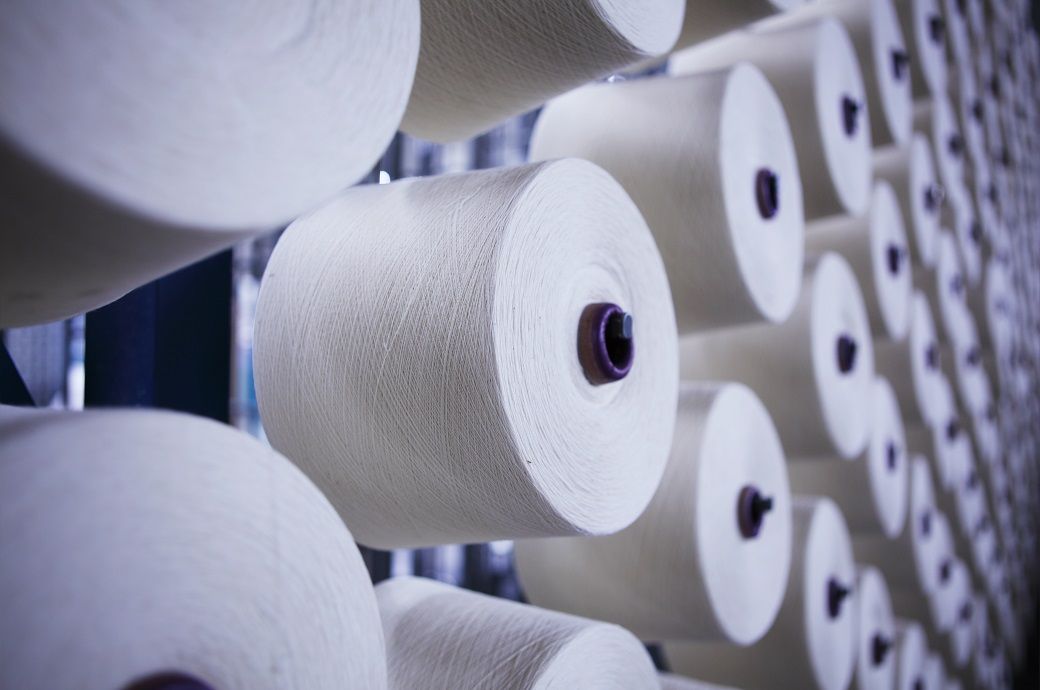
The Ludhiana market witnessed stability in cotton yarn prices following last week’s increase, amid cautious buying sentiment. A trader told Fibre*Fashion, “Buyers were buying cotton yarn with cautious approach as global trade uncertainty is looming after failed talks between the US and Iran. Local garment demand remained supportive for the trade.”
In Ludhiana, ** count cotton combed yarn was sold at ****;***–*** (~$*.**–*.**) per kg (inclusive of GST); ** and ** count combed yarn were traded at ****;***–*** (~$*.**–*.**) per kg and ****;***–*** (~$*.**–*.**) per kg, respectively; and carded yarn of ** count was noted at ****;***–*** (~$*.**–*.**) per kg today, according to trade sources.


War disruption hits exports: 20-year clients turn elsewhere

Pacers’ Tyrese Haliburton talks shingles battle as he recovers from torn Achilles

BP sees ‘exceptional’ oil trading result as Iran war sends crude costs soaring

-

 Fashion1 week ago
India’s exports face reset as EU links trade to carbon metrics: EY
-

 Tech6 days ago
As the Strait of Hormuz Reopens, Global Shipping Will Take Months to Recover
-

 Entertainment6 days ago
Queen Elizabeth II emotional message for Archie, Lilibet sparks speculation
-

 Tech6 days ago
Azure customers up in arms over ‘full’ UK South region | Computer Weekly
-

 Entertainment1 week ago
Lamar Odom shocking response to Khloé Kardashian account of his overdose
-

 Sports1 week ago
With Messi goal, Inter Miami open new stadium with dream moment
-

 Tech5 days ago
This AI Button Wearable From Ex-Apple Engineers Looks Like an iPod Shuffle
-

 Fashion6 days ago
CII submits 20-pt agenda to Indian govt to back firms hit by Iran war