

Tech
Engineers send a wireless curveball to deliver massive amounts of data

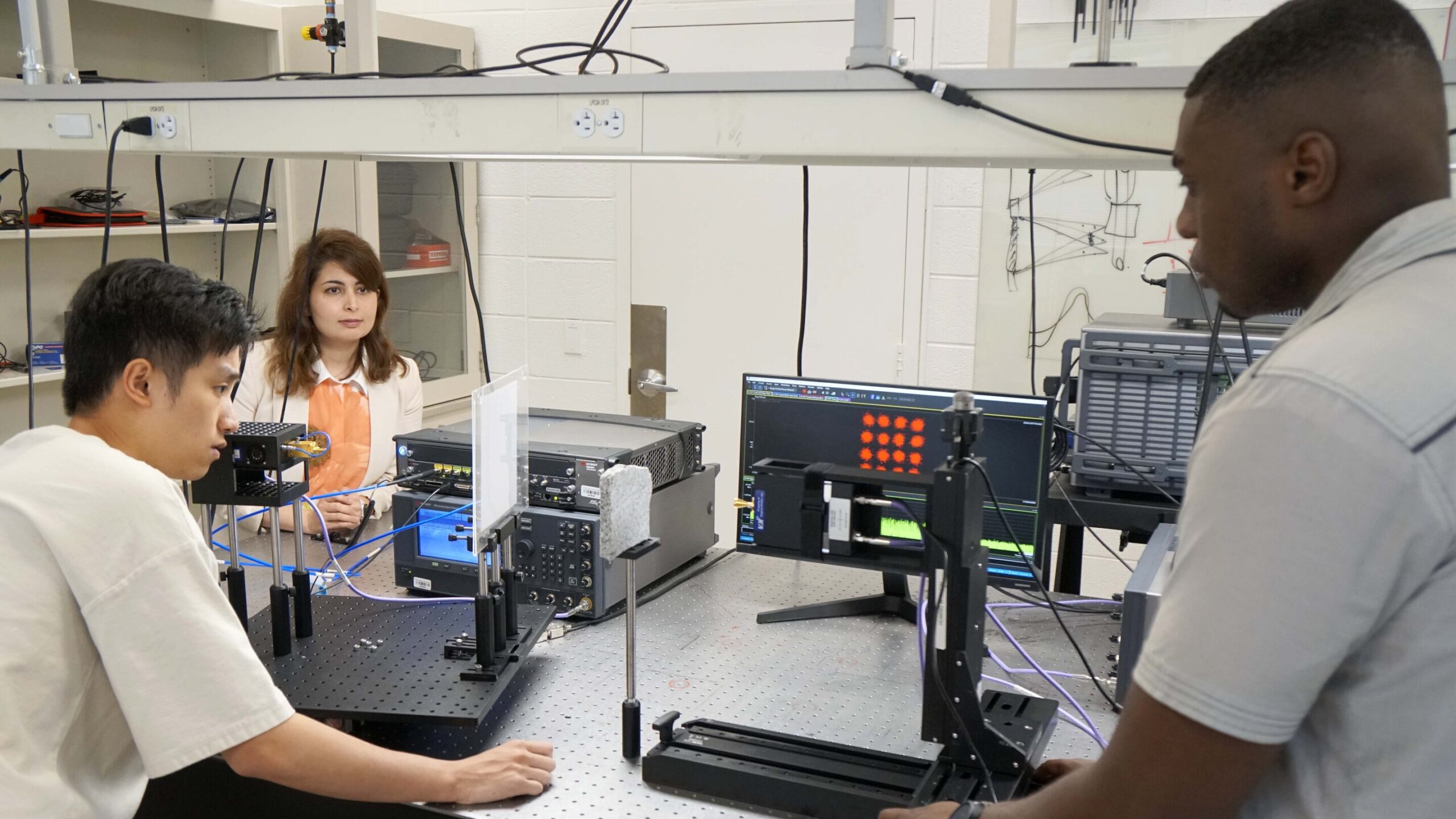
High frequency radio waves can wirelessly carry the vast amount of data demanded by emerging technology like virtual reality, but as engineers push into the upper reaches of the radio spectrum, they are hitting walls. Literally.
Ultrahigh frequency bandwidths are easily blocked by objects, so users can lose transmissions walking between rooms or even passing a bookcase.
Now, researchers at Princeton Engineering have developed a machine-learning system that could allow ultrahigh frequency transmissions to dodge those obstacles. In an article in Nature Communications, the researchers unveiled a system that shapes transmissions to avoid obstacles coupled with a neural network that can rapidly adjust to a complex and dynamic environment.
Lead researcher Yasaman Ghasempour, an assistant professor of electrical and computer engineering at Princeton, said the work is an important step toward deploying data transmission in the sub-terahertz band, which is at the upper end of the microwave spectrum.
Transmissions in the sub-terahertz band have the potential to handle 10 times the data of current wireless systems. This kind of fast transmission would be important for uses such as virtual reality systems or fully autonomous vehicles.
“As our world becomes more connected and data-hungry, the demand for wireless bandwidth is soaring. Sub-terahertz frequencies open the door to far greater speeds and capacity,” Ghasempour said.
Sub-terahertz beams are easily blocked, but can bend with special transmitters
Ultra-high frequency signals like those in the sub-terahertz band are transmitted in defined beams, unlike lower frequency radio waves, which can span over wider areas. This makes the signals easy to block, particularly indoors and in areas with lots of moving people and objects.
Engineers have successfully tested systems using reflectors to bounce signals around obstacles. But these systems rely on reflectors that may not be available or practical in many situations.
Ghasempour’s team proposed using a special transmission technique to dodge obstacles. The researchers were able to bend transmission beams by transmitting a signal that curves around the obstruction. In doing this, they used an idea first proposed in 1979 for a kind of radio wave called Airy beams that allow engineers to shape transmissions like a curveball. When correctly controlled, the beams can maneuver through a complex and moving field of objects.
“This is for complex indoor scenarios where you don’t have a line of sight,” said Haoze Chen, a graduate student at Princeton and the paper’s lead author. “You want the link to adapt to that.”
Unlike static systems, the new system allows the transmitters to adapt to changes in real time. By adjusting the exact curvature properties on the fly, the transmitter can steer signals around new obstacles as they appear, maintaining a strong connection even in crowded, constantly changing environments.

Chen said that most work with Airy beams has focused on creating the beams and exploring their underlying physics.
“What we are doing is not only generating the beams but finding which beams work best in the situation,” he said. “People have shown that these beams can be created, but they have not shown how the beams can be optimized.”
The system learns to dodge obstacles by training like an NBA All-Star
Finding the best curved beam is a difficult problem, particularly in a cluttered and shifting environment. The standard method of aiming beams—scanning a room for the best transmission path—does not work for bendable transmissions.
“For Airy beams, this is impractical,” Chen said. “There are infinite ways of curving depending on the degree of the curve and where the curve happens. There is no way a transmitter can scan through.”
To solve the problem, the researchers took a cue from human athletes. Basketball players don’t pull out a calculator every time they take a shot. They rely on past experience to learn what force and direction works for different situations. To generate that type of response, the researchers designed a neural net, a computer system that mimics the brain.
Like basketball players, neural nets require a lot of training before they can perform. But Chen said training the system by transmitting actual beams was very time-consuming. Instead, co-author Atsutse Kludze designed a simulator that allowed the net to train virtually for different obstacles and different environments.
The math behind Airy beams is difficult, and Kludze, a doctoral student in Ghasempour’s lab, had to create a system that applied the underlying physics to almost any scenario.
Neural net calibrates curves with perfect precision
Throwing a lot of data at the neural net is not effective. Instead, the researchers use principles from physics to create and train the neural net. Once the system was trained, the neural net was able to adapt incredibly quickly.
The researchers said they tested their scheme with experiments, which were focused on understanding the technology and developing ways to control the transmissions.
“This work tackles a long-standing problem that has prevented the adoption of such high frequencies in dynamic wireless communications to date,” Ghasempour said.
“With further advances, we envision transmitters that can intelligently navigate even the most complex environments, bringing ultra-fast, reliable wireless connectivity to applications that today seem out of reach—from immersive virtual reality to fully autonomous transportation.”
More information:
A Physics-Informed Airy Beam Learning Framework for Blockage Avoidance in sub-Terahertz Wireless Network, Nature Communications (2025). DOI: 10.1038/s41467-025-62443-0
Citation:
Engineers send a wireless curveball to deliver massive amounts of data (2025, August 18)
retrieved 18 August 2025
from https://techxplore.com/news/2025-08-wireless-curveball-massive-amounts.html
This document is subject to copyright. Apart from any fair dealing for the purpose of private study or research, no
part may be reproduced without the written permission. The content is provided for information purposes only.











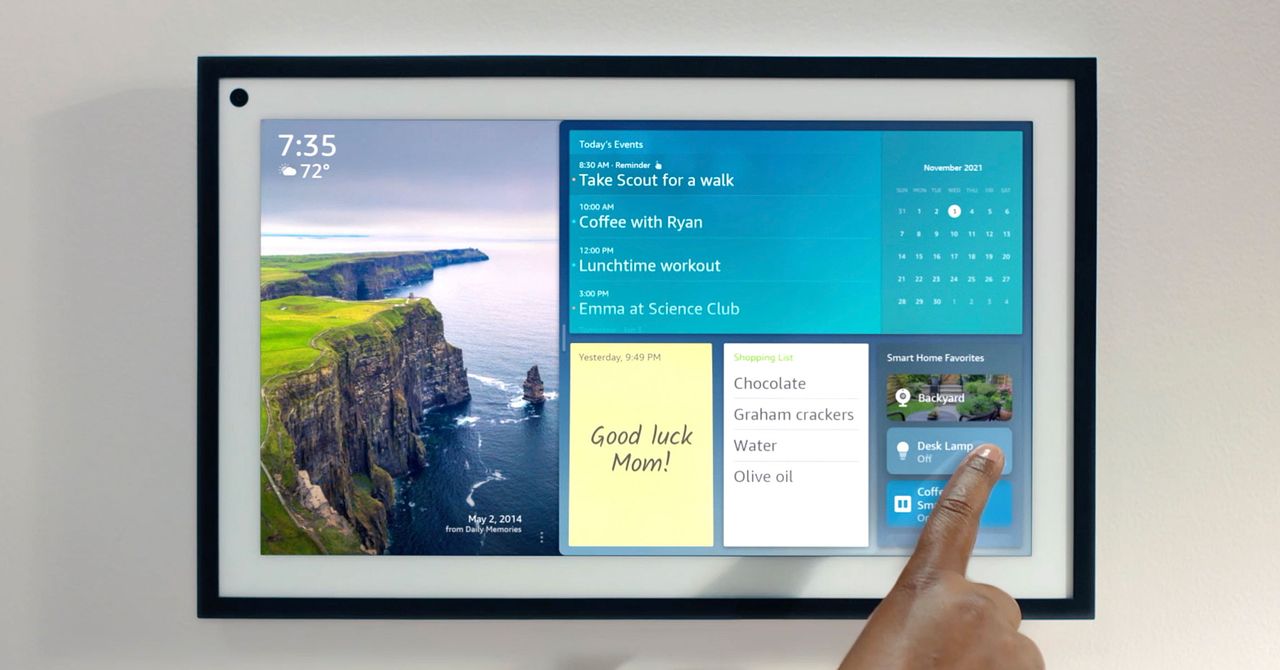
I stuck Amazon’s Echo Show 15 and its Alexa+ AI assistant in my kitchen for a month. Things have not gone well.
Source link

South Korean officials have warned that the US-Israel war with Iran could hit the global semiconductor supply chain if it disrupts the flow of critical industrial materials from the Middle East.
South Korea’s semiconductor sector, led by giants like Samsung Electronics and SK Hynix, produces about two-thirds of the world’s memory chips. If the Middle East’s supply of chipmaking materials is disrupted, semiconductor production could slow unless alternative sources are found quickly.
The Helium Problem
One material at risk is helium, which is essential in chip manufacturing for managing heat, detecting leaks, and maintaining stable temperatures in fabrication equipment. For many of these uses, there is no real substitute.
About 38 percent of the world’s helium is produced by Qatar, where large extraction facilities are tied to the natural gas industry. This concentration means that disruptions can quickly ripple through the global supply chain.
National oil company QatarEnergy declared force majeure on March 4, after stopping its gas production and downstream operations due to ongoing attacks. Downstream facilities turn gas into other products, including urea, polymers, methanol, and aluminum.
South Korea’s Industry Ministry said the country also depends on the Middle East for 14 other materials in chipmaking, such as bromine and some chip-inspection equipment. While some of these materials can be sourced domestically or from other markets, shifting suppliers in the semiconductor sector is difficult because chipmakers need to test and validate new sources to meet strict purity standards.
Companies say the situation is manageable for now. As reported by Reuters, SK Hynix said it has secured diverse supply chains and maintains sufficient helium inventories, adding that there is “almost no chance” its operations would be affected in the near term.
Contract chipmaker TSMC similarly said it does not currently anticipate a significant impact, while GlobalFoundries stated it is in direct contact with suppliers and has mitigation plans in place.
Stuck in Transit
Even if Qatar’s gas production restarts, the semiconductor industry is vulnerable to disruptions in regional shipping routes. Much of the world’s energy and petrochemical exports from the Persian Gulf pass through the Strait of Hormuz, a key maritime choke point.
If shipping through this corridor is interrupted for an extended period, it could slow the movement of industrial gases and petrochemicals that chipmakers rely on. Disruptions to oil and gas exports from the region have also already pushed global energy prices higher: Brent crude, the European benchmark, is priced at $80 per barrel at the time of publication.
Energy costs are a major factor in semiconductor production. Fabrication plants run large clean rooms that need constant electricity and cooling, so chipmakers are sensitive to changes in global energy prices. Industry representatives in South Korea warned that a prolonged conflict could push energy prices higher, likely leading to higher semiconductor production costs and potentially higher chip prices.
These risks come as semiconductor supply chains are already stretched by growing demand from AI computing. Chip demand from AI data center operators has tightened supply across several electronics sectors, including smartphones, laptops, and automobiles.
A Long-Term Problem
For now, the immediate impact on chip production is unclear. Major chipmakers usually maintain a mix of suppliers and stockpile specialty gases and chemicals to help weather short-term disruptions.
But if instability in the region continues, pressure on supply chains will likely grow. A drawn-out conflict that hits energy infrastructure, export facilities, or shipping routes could slowly squeeze the global supply of materials needed for chipmaking.
This could delay plans by major technology companies to expand artificial intelligence infrastructure in the Middle East. Firms such as Amazon, Microsoft, and Nvidia have been positioning the UAE as a hub for AI computing capacity.
This story originally appeared on WIRED Middle East.

Chances are that when you google “mattress store near me,” one of the first results you will see is Mattress Firm. This brick and mortar titan carries both established mattress brands like Serta and Sealy, as well as many online brands, like Purple, letting you go see for yourself if it’ll be the mattress for you. And if you were looking for an excuse to hop in the car and head over, we have a Mattress Firm coupon available right now, as well as tons of Mattress Firm promo codes to save big on those big (and small) purchases. Fingers crossed that you could start sleeping better, potentially as soon as tonight.
Upgrade Your Sleep Sale: Save Up to $600 (Plus Get a Free Adjustable Base)
This year, Mattress Firm wants to make it even easier (and more affordable) to upgrade your sleep with the Upgrade Your Sleep Sale. During this sale, you can save up to $600 and get a free adjustable base included on select mattresses, through April 28. You’ll receive a free Sleepy’s Basic adjustable base (a $300 value) with select mattress purchases—this means a free queen adjustable base with a minimum $499 purchase, or free king adjustable base with minimum $599 purchase.
Get 15% Off When You Sign Up for Emails
To make sure you never miss out on Mattress Firm discount codes, you can sign up for email notifications. By doing so, you automatically get one! You can get an extra 15% off on your first order. Heads up that it can’t be combined with other coupons, nor can it be applied to specific brands and models, including Nectar, Purple, Sealy Hybrid, Tempur-Pedic, Stearns & Foster, and Serta iComfort.
Free Adjustable Base (Up to $499 Value) With Select Mattresses
First and foremost, make sure you have or are getting a mattress that’s compatible with an adjustable base. If you’re all set bed-wise, but have been looking for the right time to buy an adjustable base, consider this your sign: select mattresses come with a free adjustable base (up to $499 value). At last, you can sit up in bed or kick up your feet to your heart’s content.
Score Up to $300 in Instant Credits and Gifts
Mattress Firm’s got a gift for you, just ‘cuz. For those eyeballing Tempur-Pedic, Sealy, and Sterns & Foster in particular, it’s your lucky day, as there are Mattress Firm coupon codes for all three of these brands.
Starting with Tempur-Pedic, when you buy a qualifying Tempur-Pedic mattress, you can receive a $300 Instant Credit on these adjustable bases: Tempur-Ergo, Tempur-Ergo Smart Base, Tempur-Ergo ProSmart Base, Tempur-Ergo ProSmart Air Base, or the Sealy Ease Base. Use code TEMPURGIFT. You can also get a $300 credit toward these same adjustable bases when you purchase a qualifying Stearns & Foster mattress: use code STEARNSGIFT at checkout.
Lastly, if you wanted to pair a Sealy mattress with the Sealy Ease adjustable base (or any of the aforementioned adjustable bases), there’s a Mattress Firm coupon for that, too. Use code SEALYGIFT at checkout, and get a $200 Instant Credit on select Sealy and Tempur-Pedic adjustable bases.
Take 20% Off With Military, Medical, Student, or Teacher Discounts
Sleep is a necessity for everyone. But for those who work all day on their feet, and have to be dialed in at all times, sleep is critical. This is especially true for first responders, nurses, doctors, and medical professionals. As a way to say “thank you” for all that you do, there’s a special mattress firm discount just for you. Use the Mattress Firm first responder discount for 20% off select purchases. It’s for one-time use, but renews every 90 days when you re-verify your status.
For military members, as a way to thank you for your service, you can use the Mattress Firm military discount for 20% off select purchases as well. It’s a one-time use code, but re-verify your status every 90 days, and you can get a new one!
If you’re a teacher or student, there’s also a Mattress Firm discount for you, too. To help you bounce back after long days teaching, or late nights studying, use this Mattress Firm student discount code for 20% off select purchases. Like the first responder and military coupons, it’s a one-time usage code that can be renewed every 90 days when you re-verify your status.


Stock market today: Which are the top losers and gainers on March 6- check list – The Times of India

Bangladesh road map aims at raising tax-to-GDP ratio to 15% by 2035

Watch: How war in Iran may affect food and fuel prices

-
 Business1 week ago
Attock Cement’s acquisition approved | The Express Tribune
-

 Fashion1 week ago
Policy easing drives Argentina’s garment import surge in 2025
-

 Politics1 week ago
What are Iran’s ballistic missile capabilities?
-
 Business1 week ago
India Us Trade Deal: Fresh look at India-US trade deal? May be ‘rebalanced’ if circumstances change, says Piyush Goyal – The Times of India
-

 Politics1 week ago
US arrests ex-Air Force pilot for ‘training’ Chinese military
-
 Business7 days ago
Greggs to reveal trading amid pressure from cost of living and weight loss drugs
-

 Sports7 days ago
LPGA legend shares her feelings about US women’s Olympic wins: ‘Gets me really emotional’
-

 Fashion1 week ago
Texwin Spinning showcasing premium cotton yarn range at VIATT 2026