

Politics
Pilgrims kick off Hajj as war’s trajectory hangs in the balance

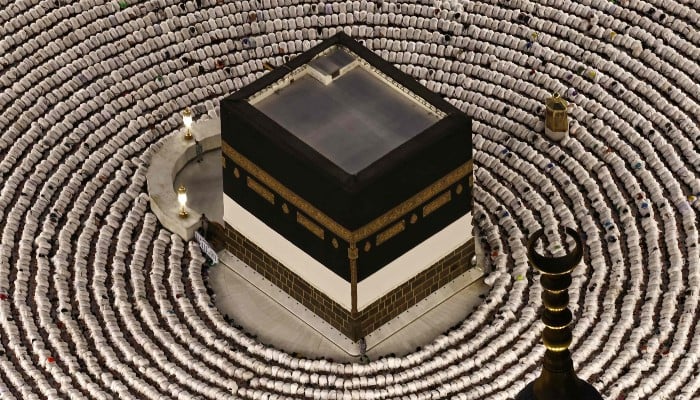
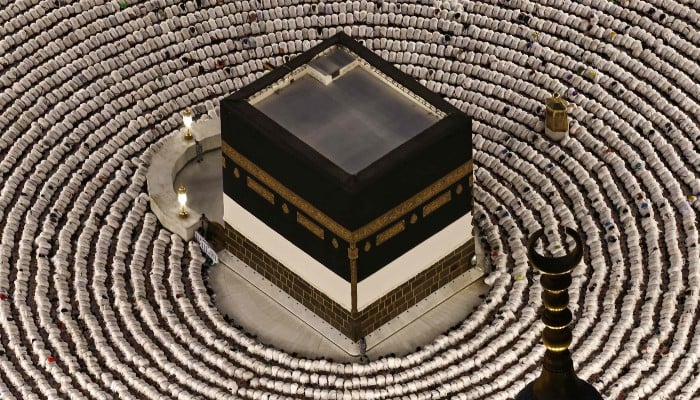
MAKKAH: Over 1.5 million Muslims began filling a vast tent city in the holy city of Makkah on Monday for an annual Hajj pilgrimage carried out against the backdrop of hopes for an end to the war in the Middle East.
The white-robed pilgrims on buses or on foot arrived at the sprawling encampment in Mina after performing the “tawaf” — walking seven times around the Kaaba at Makkah’s Grand Mosque.
The start of the Hajj came as US President Donald Trump continued to send mixed signals over a possible agreement to extend an uneasy ceasefire with Iran and a deal to reopen the Strait of Hormuz.
Despite the uncertainty triggered by the conflict, Saudi officials noted over the weekend that more pilgrims had travelled from abroad to participate in this year’s Hajj than in 2025.
But, amid the spiritual euphoria experienced by the pilgrims in the days ahead of the Hajj, authorities in the kingdom signalled their readiness.
A video posted on social media by the Saudi defence ministry showed advanced air defence batteries positioned on the outskirts of Makkah.
“The air defence forces are responsible for protecting the skies over the holy sites and dealing with all aerial threats, ensuring the safety and peace of mind of the guests,” read the post.
Many pilgrims who spoke to AFP expressed their hope that peace would prevail soon.
“The war in Iran has affected the entire world. Nobody wants wars or harm to countries and peoples,” said Mohammed Chahada, an Egyptian in his 50s, as he walked through a crowd exiting the Grand Mosque.
Rituals
The Hajj, one of the five pillars of Islam, must be performed at least once by all Muslims with the means.
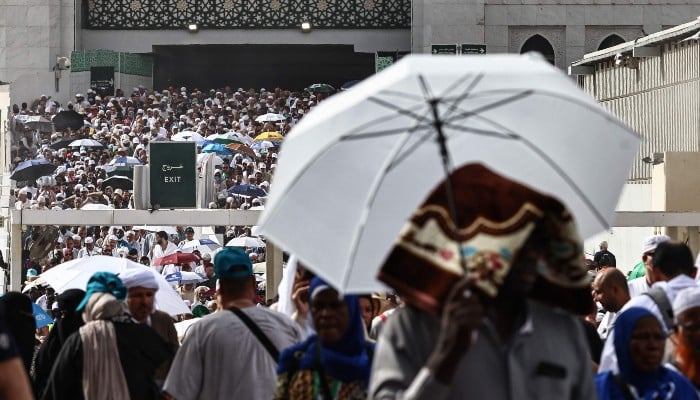
During the Hajj, men wear a seamless shroud-like white garment that emphasises unity among believers regardless of their social status or nationality.
Women must wear loose dresses, exposing only their faces and hands.
The first ritual of the Hajj requires walking seven times around the Kaaba. Pilgrims next walk seven times between the two hills of Safa and Marwa.
They then move on to Mina, around five kilometres (three miles) away, ahead of the main rite of the pilgrimage at Mount Arafat.
On Tuesday, the climax of the Hajj is the gathering on Mount Arafat, about 10 kilometres from Mina, where Prophet Mohammed (PBUH) delivered his final sermon.
The arduous, outdoor pilgrimage will be held against the backdrop of geopolitical tensions but also under punishing heat, with temperatures forecast to top 40°C for much of the week.
Despite the heat and the uncertainty over the war, pilgrims in Makkah were ecstatic.
“I have wanted to perform the pilgrimage my entire life, for 40 or 50 years,” said Jreish Mohammed, a 68-year-old decked out in the traditional attire from his native Morocco.
“And this year, my dream came true.”
Politics
Trump says framework of Iran deal ‘largely negotiated,’ with provision to reopen Strait of Hormuz
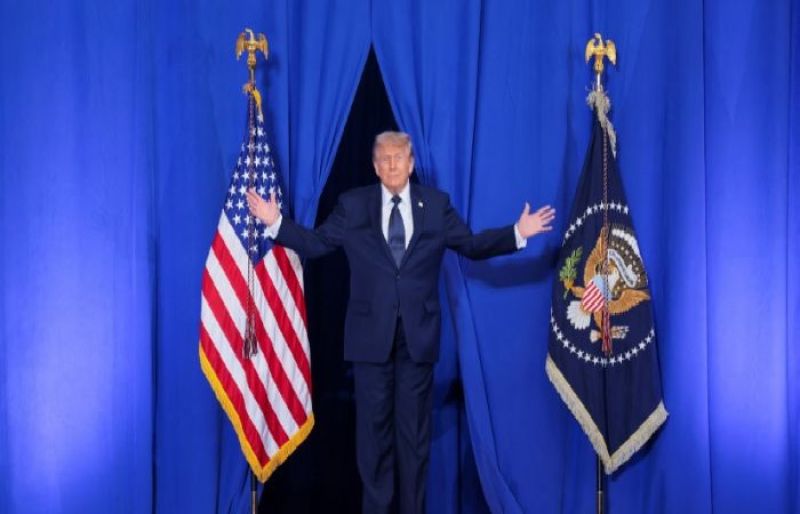
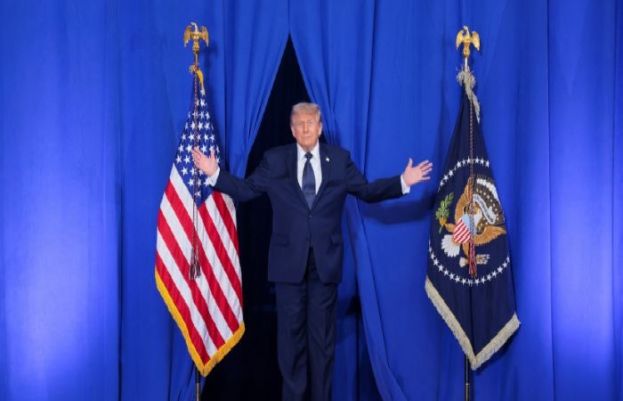
US President Donald Trump wrote on Saturday that a memorandum of understanding on a peace deal with Iran is “largely negotiated,” as both countries and mediators in Pakistan reported progress.
Trump posted on social media that the emerging agreement would reopen the Strait of Hormuz, the vital shipping passage whose closure upended global energy markets after the conflict started in February when the US and Israel launched strikes on Iran.
Trump did not say what else would be included in an agreement. “Final aspects and details of the Deal are currently being discussed, and will be announced shortly,” Trump said.
Iran’s Fars news agency reported early on Sunday that the agreement would allow Iran to manage the Strait of Hormuz. It said Trump’s assertion that an agreement was nearly final was “inconsistent with reality.”
Iran had said earlier on Saturday that it was working toward a memorandum of understanding laying out an approach to ending the war after its top officials met with Pakistan’s Chief of Defence Forces (CDF) and Chief of Army Staff (COAS) Field Marshal Asim Munir.
The Inter-Services Public Relations (ISPR) said that the negotiations had resulted in “encouraging” progress towards a final understanding. Two Pakistani sources involved in negotiations said the deal being negotiated is “fairly comprehensive to terminate the war.”
Sources have told Reuters the proposed framework would unfold in three stages: formally ending the war, resolving the crisis in the Strait of Hormuz and launching a 30-day window for negotiations on a broader agreement, which can be extended.
Earlier on Saturday, Trump told Axios that he expected to decide on Sunday whether to resume attacks on Iran. “Either we reach a good deal or I’ll blow them to a thousand hells,” Axios quoted him as saying.
One of the Pakistani sources said there was no guarantee the US would accept the memorandum; if it does, it would lead to further talks after the Eid holiday ends on Friday.
Trump to speak with Middle East leaders
Trump, whose approval ratings have been hit by the war’s impact on energy prices for US consumers, said on Friday he would not attend his son’s wedding this weekend, citing Iran among the reasons he planned to stay in Washington.
Trump wrote on his Truth Social platform that he had a phone call on Saturday with leaders from Saudi Arabia, Qatar, the United Arab Emirates, Jordan, Egypt, Turkey and Pakistan. Axios reported that the leaders encouraged Trump to agree to the emerging framework.
Pakistan has aimed to narrow differences between Iran and the US after weeks of war have left the vital Hormuz waterway closed to most shipping despite a nervous ceasefire.
US Secretary of State Marco Rubio earlier on Saturday reiterated Trump’s terms for ending the fighting. “Iran can never have a nuclear weapon. The straits need to be open without tolls. They need to turn over their enriched uranium.”
Rubio, who is visiting India, said some progress had been made and work was continuing.
“Even as I speak to you now, there’s some work being done. There is a chance that, whether it’s later today, tomorrow, in a couple days, we may have something to say,” Rubio told reporters in New Delhi.
US Vice President JD Vance returned to the White House on Saturday afternoon, cutting short a trip to Ohio.
Iran denies it is pursuing nuclear weapons and says it has a right to enrich uranium for civilian purposes. It has demanded supervision of the strait, an end to the US blockade on its ports and the lifting of sanctions on Iranian oil sales.
“The trend this week has been towards a reduction in disputes, but there are still issues that need to be discussed through mediators. We will have to wait and see where the situation ends in the next three or four days,” said Iranian Foreign Ministry spokesperson Esmail Baghaei.
Baghaei said the issue of the US blockade on Iran’s shipping was important, but that its priority was ending the threat of new US attacks and the ongoing conflict in Lebanon, where Iran-allied Hezbollah is fighting Israeli troops who have moved into the south.
CDF Munir left Tehran on Saturday after talks with Iran’s top negotiator Mohammad Baqer Qalibaf and Foreign Minister Abbas Araqchi.
Qalibaf said Iran would pursue its “legitimate rights,” both on the battlefield and through diplomacy, but added that it could not trust “a party that has no honesty at all,” an allegation Iran has made several times before.
He said Iran’s armed forces had rebuilt their capabilities during the ceasefire and that, if the US “foolishly restarts the war,” the consequences would be “more forceful and bitter” than at the start of the conflict.
Despite weeks of conflict, Iran has preserved its stockpile of near-weapons-grade enriched uranium as well as missile, drone and proxy capabilities.
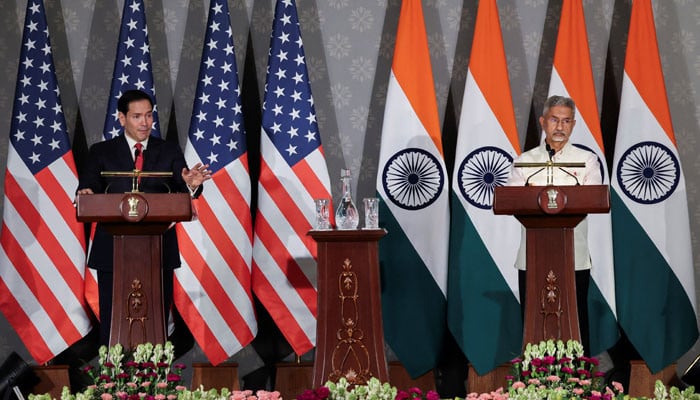
- Rubio says US immigration reforms are not aimed at India.
- Every country in the world has stupid people, says Rubio.
- Jaishankar says legal mobility should not suffer under US rules.
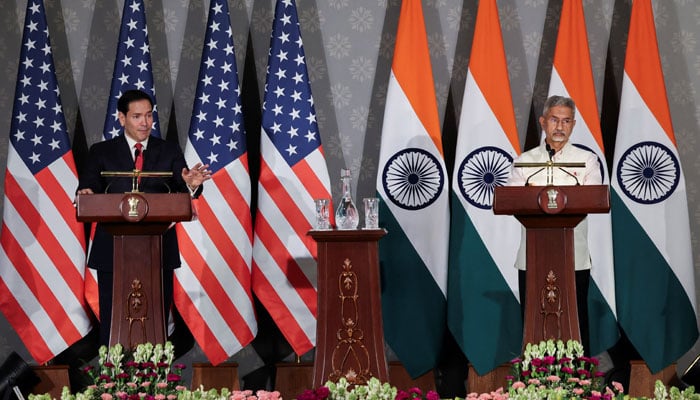
NEW DELHI: India voiced concern on Sunday over a US visa crackdown, striking a rare critical note even as it expressed broad alignment with Secretary of State Marco Rubio on other fractious issues.
Paying his first visit to India, Rubio said the two democracies were on the same page on all major issues, brushing aside recent unease in New Delhi over trade, China and the Iran war.
India’s foreign minister Subrahmanyam Jaishankar agreed that the two countries had a “convergence of national interests in many areas” but publicly took Rubio to task over President Donald Trump’s assault on visas.
Jaishankar said he “apprised Secretary Rubio of challenges that legitimate travellers face in respect of visa issuance”.
“While we cooperate to deal with illegal and irregular mobility, our expectation is that legal mobility should not be adversely impacted as a consequence,” he said, noting that visas were key for US-India tech cooperation.
Trump, who has made curbing non-Western immigration a key political priority, has ramped up restrictions and fees for H-1B visas used largely by Indian tech workers, sending applications tumbling.
The Trump administration followed up Friday by saying that applicants for permanent residency, even when in the United States legally, must leave for processing, likely splitting up many families for extended periods.
Trump has been influenced by nativist critics who say Indian workers take away skilled jobs from Americans who would have earned more.
Last month, Trump reposted a far-right commentator who described India as a “hellhole” and inaccurately alleged that Indian immigrants lack English proficiency.
Asked about racist remarks in the United States about Indians, Rubio said, “every country in the world has stupid people”.
“Our nation has been enriched by people who come to our country,” said Rubio, the son of Cuban immigrants.
He said the immigration reforms were “not India-specific” but in response to a “migratory crisis” in the United States.
Aligned on ‘all’ issues
Rubio, who is paying an unusually long four-day, four-city trip to India, called the country “one of our most important strategic partners in the world”.
“It begins with the fact of our shared values. We are the two largest democracies,” Rubio said.
“Our nations are strategically aligned on all of the key issues that will define the new century — all the great challenges that are before us now in the modern era,” he said.
Such grand statements of US-India partnership would have raised a few eyebrows over the past two decades as Washington put a top priority on building ties with the billion-plus nation.
But Trump abruptly shook up core assumptions of US foreign policy. He temporarily imposed punishing tariffs on India, held a friendly visit last week to China and has hailed India’s historic adversary Pakistan, which has positioned itself as the key mediator on the Iran war.
Pakistan has also heaped praise on Trump over his diplomacy in a short war last year with India, which launched unprovoked strikes following the Pahalgam attack in Indian Illegally Occupied Jammu and Kashmir (IIOJK).
Indian Prime Minister Narendra Modi annoyed Trump by refusing to credit him with ending the war.
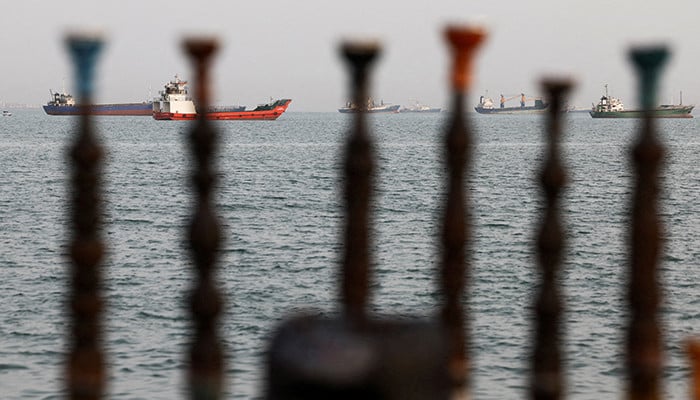
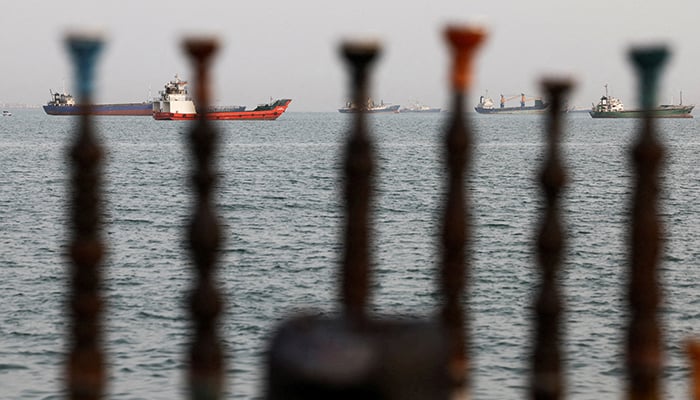
More than three months after the United States and Israel launched a war against Iran, renewed hopes have emerged that the conflict may soon come to an end.
The war has affected not only the countries directly involved but also the global economy, as the closure of the Strait of Hormuz has pushed oil prices to historic highs, fuelled inflation, and hampered economic growth worldwide.
Pakistan, the key mediator, has intensified its diplomatic efforts in recent days, with Interior Minister Mohsin Naqvi and Chief of Army Staff (COAS) and Chief of Defence Forces (CDF) Field Marshal Asim Munir visiting Iran.
Following these developments, Donald Trump said Washington and Tehran had “largely negotiated” a memorandum of understanding on a peace deal that would lead to the reopening of the Strait of Hormuz.
While global leaders issued statements after these developments, details are emerging of the proposed deal that would see an end to the hostilities.
The following are the details that have been reported so far:
- Axios says US and Iran are close to signing a deal involving a 60-day ceasefire extension.
- Axios says during this period, Strait of Hormuz will be reopened.
- Axios says Iran would be able to freely sell oil and negotiations would be held on curbing Iran’s nuclear programme.
- Axios says during period, the Strait would be open with no tolls and Iran would agree to clear the mines it deployed in the strait to let ships pass freely.
- Axios says in exchange US would lift its blockade on Iranian ports and issue some sanctions waivers to allow Iran to sell oil freely.
- Iran’s Tasnim news agency says in potential MoU between Iran and US, Washington will waive sanctions on Iran oil.
- Tasnim says MoU emphasises end of war on all fronts including Lebanon.
- Tasnim says a 30-day period will be allocated for procedures related to Strait of Hormuz and end of blockade.
- Tasnim says a 60-day period will be set for nuclear talks.
- Tasnim says Iran has not yet accepted any actions on its nuclear file.
- Tasnim says according to potential MoU with US, part of Iran’s frozen funds must be released in first phase.
- Tasnim says Iran has emphasised that any initial MoU is conditional on the release of at least part of these assets in a way that our country can access them.
- Tasnim says the mechanism for releasing the other part of frozen assets must be specified during the negotiations process.
- Tasnim says if deal is reached with the US, the state of the Strait of Hormuz will not return to pre-war conditions.
- Tasnim says the number of ships able to transit the Strait of Hormuz will return to the pre-war level in a 30-day period.
- Tasnim says Iran emphasises the exercise of its sovereignty over the Strait of Hormuz in various ways, the details of which will be announced.
- Tasnim says the naval blockade must be completely lifted within 30 days, according to the understanding.
- Tasnim says if the naval blockade is not lifted, no change will occur in the Strait of Hormuz.
- Tasnim says any changes in the passage and navigation through the Strait are conditional upon the implementation of other commitments by the US in the MoU.
- Tasnim says the US commitment to withdraw its forces from Iran’s surroundings is another point emphasised by Tehran in the potential MoU.
- Tasnim says conflict over two or three clauses of the MoU between Iran and US still persists.
- Tasnim citing a source with knowledge: if US continues creating obstacles, there will be no possibility of reaching a final understanding.
— Additional input from Reuters


Tiruppur’s synthetic bet meets the oil wall

EU Commission sees growth slowdown as energy shock drives up inflation

Pilgrims kick off Hajj as war’s trajectory hangs in the balance

-

 Entertainment1 week ago
Where Pete Davidson, Elsie Hewitt stand after breakup: Details revealed
-

 Politics1 week ago
Rising diesel costs from Iran war strain US school budgets
-

 Tech1 week ago
Why Is Your Grill So Dumb? The Best Grills Set Temp Like an Oven
-

 Tech1 week ago
This Solar-Powered Smart Sprinkler Keeps My Lawn Watered Without Any Power Cables
-

 Fashion6 days ago
Nigeria Kwara Garment Factory, KWS Garment Production Village ink pact
-
 Fashion7 days ago
Turkiye’s current account deficit expected to widen in 2026: Minister
-

 Entertainment1 week ago
Princess of Wales praised as ‘step ahead’ of royal family
-

 Fashion1 week ago
India’s Pearl Global’s FY26 revenue crosses $521 mn milestone