

Fashion
Eurozone manufacturing weakens in November as demand softens

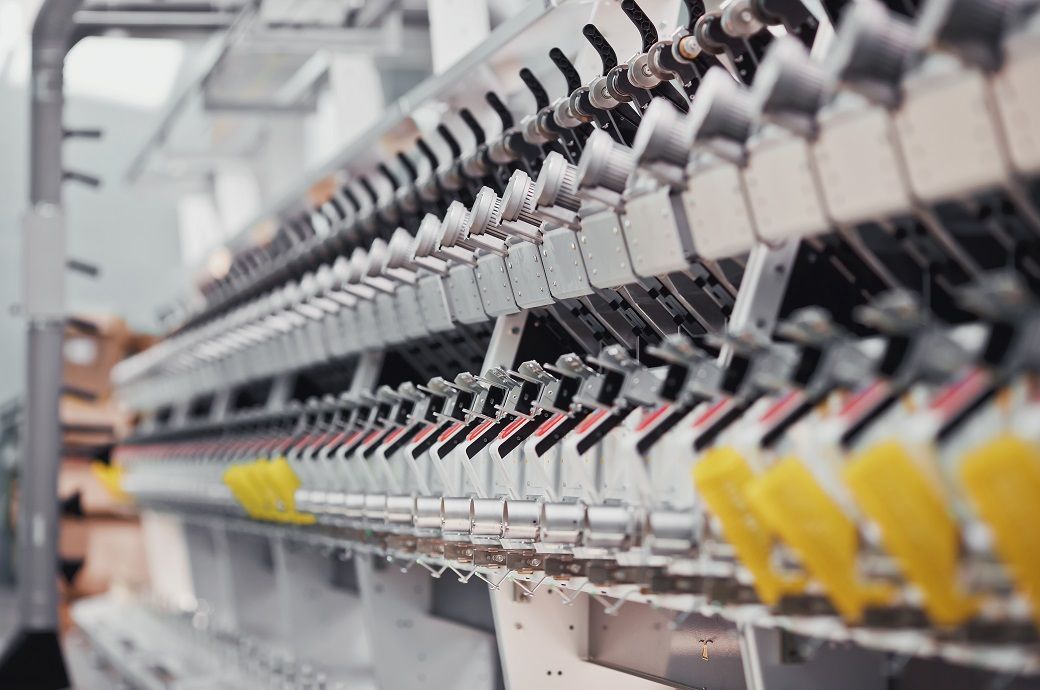
Eurozone manufacturing activity slipped back into contraction in November as renewed demand-side weakness weighed on factory performance. The index fell to 49.6 from October’s neutral 50, according to the HCOB Eurozone Manufacturing purchasing managers’ index (PMI).
The data, compiled by S&P Global, signalled a fresh, though marginal, deterioration in operating conditions across the single-currency bloc. The decline was the sharpest since June but remained modest.
Demand faltered again, with new orders, the PMI’s heaviest-weighted component, declining after stabilising in October. New export orders contracted for a fifth consecutive month, underscoring persistent challenges in overseas markets. Although the fall in total new work was marginal, factories increasingly relied on completing backlogs to support production.
Output rose for the ninth month running but at its slowest pace in the current growth sequence and only marginally overall. Weaker demand prompted firms to intensify retrenchment measures: employment fell at the fastest rate since April, purchasing activity dropped, and inventory depletion accelerated. Stocks of finished goods were reduced at the steepest pace in almost four-and-a-half years.
The survey highlighted growing supply-chain frictions despite softer demand pressures. Suppliers’ delivery times lengthened to the greatest degree since October 2022, with manufacturers citing material shortages and difficulties sourcing items from international vendors, S&P Global said in a release.
Cost pressures also re-emerged. Input prices saw their strongest monthly rise since March following an extended period of near-stability through 2025. Even so, the rate of increase was well below the long-term survey trend dating back to 1997. Output charges fell fractionally, marking the sixth decline in seven months and signalling limited pricing power among eurozone producers.
Performance diverged sharply by country. Ireland led growth with its fastest expansion in four months, and Austria and Italy returned to improvement. Spain, Greece and the Netherlands maintained growth, though at slower or steady rates. In contrast, Germany and France saw conditions worsen further, with both PMIs falling to nine-month lows and deeper into contraction.
Despite the setbacks, business confidence improved. Sentiment for the year ahead rose above its long-run average and hit its strongest level since June.
“The current picture of the eurozone is sobering, as the manufacturing sector is unable to break out of stagnation and is even tending towards contraction. In search of rays of hope, there are some notable developments. Spain’s industry is escaping the downward pull of the major eurozone economies and has remained in growth territory for the seventh month in a row. Although Italian factories are not showing any particular momentum, they are at least growing after a contraction in September and a stagnation in October,” Dr Cyrus de la Rubia, chief economist at Hamburg Commercial Bank, said commenting on the PMI data.
“Most companies in the eurozone are confident that they will be able to expand their production in the next twelve months. In this regard, the mood in Germany has improved somewhat, and in France there has even been a shift from pessimism to optimism. If one believes the saying that ‘half of economics is psychology,’ then this increased confidence is an indication that things will improve in the coming year,” Rubia concluded.
Eurozone manufacturing weakened in November as the PMI slipped to 49.6, signalling a renewed but modest contraction driven by softer demand and falling new orders.
Output growth slowed, employment and inventories fell sharply, and supply-chain delays intensified.
Input costs rose at their fastest pace since March, while output prices edged lower.
Fibre2Fashion News Desk (HU)









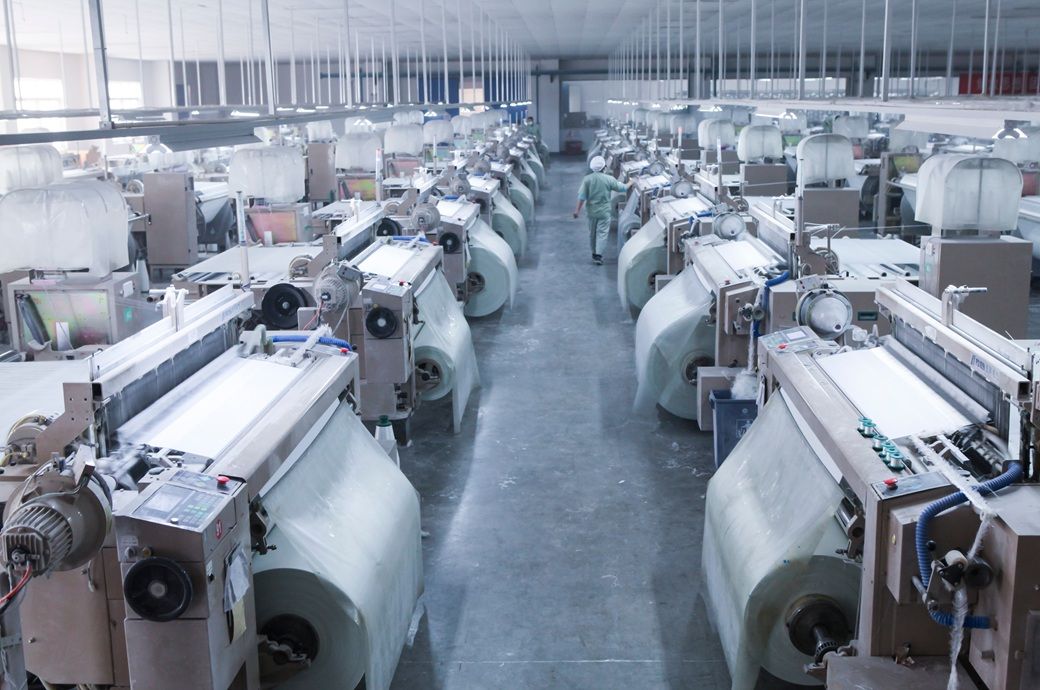
Firms also increased stock purchases to support rising output, with some resorting to precautionary inventory building amid concerns over disruptions linked to the ongoing Middle East conflict, the Central Bank of Sri Lanka said in a press release.
Sri Lanka’s manufacturing PMI surged to 66.7 in March from 56.8 in February, driven by strong gains in new orders and production, particularly in apparel.
Firms raised inventories amid Middle East-related risks.
However, supply constraints, rising costs, and logistics issues persisted, with delivery times worsening.
Employment growth slowed.
Outlook remains positive.
Despite robust demand, manufacturers reported a constrained operating environment due to raw material and fuel shortages, rising input costs, and logistical challenges. Supplier delivery times lengthened significantly to 75.5, reflecting shipping disruptions and demand pressures. Employment rose at a slower pace, indicating cautious hiring despite increased workloads.
Looking ahead, business expectations for the next quarter remain positive across sectors, supported by seasonal trends and emerging opportunities. However, concerns persist over the impact of the Middle East conflict, supply disruptions, and broader global economic uncertainty, which may weigh on future momentum.
Fibre2Fashion News Desk (SG)

The agreement covers the construction and operation of a 360-kilometre railway linking the main mining areas of Al-Shidiya and Ghor Al-Safi to the Port of Aqaba.
The United Aran Emirates and Jordan recently an agreement to develop a railway network in Jordan and establish the UAE-Jordan Railway Company.
The agreement covers the construction and operation of a 360-kilometre railway linking the main mining areas of Al-Shidiya and Ghor Al-Safi to the Port of Aqaba.
The project aims at transporting 16 million tonnes of phosphate and potash annually.
The project aims at transporting 16 million tonnes of phosphate and potash annually, with a total investment value of $2.3 billion. Both phosphate and potash are chemicals used in the textile industry.
The agreement was signed by UAE Minister of Energy and Infrastructure Suhail bin Mohamed Al Mazrouei and Jordan’s Minister of Transport Nidal Al-Qatamin.
The UAE-Jordan Railway Company was formally established as a joint venture between Abu Dhabi’s L’IMAD Holding Company (L’IMAD) and several Jordanian stakeholders, according to an official release in the UAE.
The joint venture will be responsible for the implementation, operation and maintenance of Jordan’s railway network through its executing arm, Etihad Rail, the developer and operator of the UAE’s national railway network.
The project will enhance Jordan’s export capabilities and logistics efficiency by directly linking phosphate and potash production sites to the Port of Aqaba, significantly reducing transport time and costs.
It will also support comprehensive economic development and open wide prospects for job creation across multiple sectors, leveraging the extensive expertise of Etihad Rail.
Fibre2Fashion News Desk (DS)

With more than two decades of experience in the sports industry, James brings a unique combination of skills, which will help PUMA use creative direction as an important strategic lever to establish itself as a top-3 global sports brand.
Puma has appointed James Carnes as senior vice president creative direction.
Reporting to Maria Valdes, he will oversee creative direction, innovation, and product excellence.
With over two decades of experience, including leadership roles at Adidas, he will align design strategy with business goals to strengthen Puma’s global brand appeal and market position.
“James is a very highly regarded leader in our industry and he has been instrumental in shaping some of the most influential performance and lifestyle products, labels, and platforms,“ said Maria Valdes. “With a strong background in industrial design and a deep understanding of both athletes and consumers, he will play an important role in getting our customers and consumers excited about PUMA once again.”
Until 2021, James held several leadership positions in design, creative direction and strategy at adidas, both in Herzogenaurach and Portland, Oregon. Most recently he worked as an independent consultant and investor in the wider industry.
At PUMA, James will align creative direction with the company’s overall strategic ambitions, set the seasonal direction for the Business Units and create a long-term look and feel for the brand across consumer touch points.
“Creative Direction is about more than seasonal trends and colours. It is about defining how PUMA holistically presents itself in the market, harnessing the company’s portfolio of world class innovation, and deeply connecting with consumers,” said James Carnes. “We have the amazing opportunity to modernize the image and style of one of the most iconic sports brands in the world and I look forward to leading our teams and collaborating with my colleagues to make this happen.”
Note: The headline, insights, and image of this press release may have been refined by the Fibre2Fashion staff; the rest of the content remains unchanged.
Fibre2Fashion News Desk (RM)


Sri Lanka’s manufacturing PMI surges: Textiles drive March gains

Daniel Radcliffe compares ‘Harry Potter’ movies: ‘Which one was better’?

Van Dijk hands Liverpool a UCL boost and reason to believe after more late drama

-

 Fashion4 days ago
France’s LVMH Q1 revenue falls 6%, shows resilience amid Iran war
-

 Sports7 days ago
The case for Man United’s Fernandes as Premier League’s best
-

 Entertainment7 days ago
Palace left in shock as Prince William cancels grand ceremony
-
 Business1 week ago
100% road tax waiver for electric cars, new rules for 2, 3 and 4 wheelers – what Delhi govt’s draft EV policy says – The Times of India
-
 Business7 days ago
UK could adopt EU single market rules under new legislation
-

 Entertainment1 week ago
Dua Lipa hits major career high ahead of wedding with Callum Turner
-

 Sports1 week ago
Lamar Jackson hits back at critics with faithful message on social media
-

 Fashion7 days ago
Energy emerges as biggest cost driver in textile margins