

Business
EV maker Lucid reveals plans for robotaxi, positive free cash flow late this decade


The Lucid display is seen at the New York International Auto Show on April 16, 2025.
Danielle DeVries | CNBC
NEW YORK — Lucid Group expects to be cash flow positive late this decade as it plans to grow its vehicle lineup and significantly increase its software and technology offerings, the all-electric vehicle maker announced Thursday during its first investor day in nearly five years as a public company.
The EV company aims to accomplish positive cash flow generation through market expansion into midsize vehicles and robotaxis, as well as international expansion in markets such as Europe and Saudi Arabia. It also expects to achieve efficiency gains and software revenue growth with the introduction of improved advanced driver assistance systems and a new Lucid artificial intelligence assistant, executives told dozens of investors and Wall Street analysts on Thursday.
Lucid stock closed Thursday at $9.84, down 7.9%. Shares were off roughly 6% to 8% during much of the event despite the company giving its most detailed product and expansion plans to date, highlighting the tough market conditions for EV companies.
“We view the midterm and late decade targets as an important benchmark against which investors can measure LCID’s progress which will improve transparency,” Baird analyst Ben Kallo said in a Thursday investor note. “The near-term backdrop for EVs remains challenging with headwinds such as tariffs and policy muting investor sentiment.”
Lucid’s cash flow target is challenging given the automaker’s current performance and waning demand for EVs in the U.S. While Lucid has been able to increase sales and narrow losses, the company lost $2.7 billion on revenue of $1.35 billion in 2025. It had negative free cash flow of $3.8 billion in 2025, a loss that was roughly 31% larger than a year earlier.
Lucid interim CEO Marc Winterhoff — who unexpectedly took over for company founder Peter Rawlinson last year — said the company’s “north star” is “accelerating to profitability,” reiterating the investor event’s theme. He and other executives declined to disclose an exact year the company aims to be cash flow positive.
The automaker has been trying to increase investor interest in the company as it prepares to launch a new midsize vehicle at the end of this year. Its largest shareholder, Saudi Arabia’s Public Investment Fund, has also changed its investment strategy in the company from capital investment to revolving credit.
Robotaxi, autonomy plans
Lucid on March 12, 2026, previewed plans for a new two-seat robotaxi that the company is developing off its upcoming midsize electric vehicle platform.
Michael Wayland / CNBC
Lucid on Thursday said it expects to achieve roughly $1 billion in annual incremental, non-vehicle revenue through services such as recurring software subscriptions by later this decade. It also previewed plans for a two-seat robotaxi, including a design concept car, but it did not specify a timeframe for the vehicle.
Winterhoff told CNBC after the event that the dedicated robotaxi is a “mid-term” target for the company in the coming years.
Company executives spent a significant amount of the event discussing Lucid’s upcoming driving technologies, including robotaxis, and plans to launch a subscription service by early 2027 that will range from $69 to $199 a month, based on capabilities.
“Autonomy plays an outsized role in the future of Lucid,” said Kay Stepper, Lucid vice president of advanced driving systems, adding that the company plans to offer vehicles capable of driving themselves under certain circumstances by 2029.
Winterhoff and Uber President and Chief Operating Officer Andrew Macdonald on Thursday announced they are planning to expand a previously announced tie-up for robotaxis to include upcoming midsize vehicles.
Expansion into midsize and autonomy is expected to significantly increase Lucid’s total addressable market, or TAM, from $40 billion for its current Air sedan and Gravity SUV to $700 billion, executives said Thursday.
Winterhoff said he sees the company’s autonomy technologies essentially growing to match Tesla’s current FSD by next year.
Midsize vehicles
Lucid on Thursday said it plans to produce three midsize vehicles, starting with a vehicle called Cosmos this year, followed by a model called Earth roughly a year later and an unnamed vehicle during an unspecified time frame after that.
“We think these three unique products will give us maximum opportunity to hit the widest audience possible. And that audience is where we are today, but it’s a different audience than our current market,” said Derek Jenkins, Lucid senior vice president of design and brand.
A Lucid-supplied teaser image of its upcoming midsize vehicle behind its current Gravity SUV.
Lucid
A preview of the Cosmos shown to event attendees Thursday featured a more muscular look with thinner headlights and a silhouette reminiscent of the automaker’s current Gravity SUV but in smaller packaging. The interior of the vehicle continues Lucid’s focus on a spacious cabin with significant storage and a large one-piece screen traversing most of the car’s front dash.
The three midsize vehicles are targeted at upscale buyers, younger “trendsetting achievers” and outdoor enthusiasts, Jenkins said. The last would be a direct competitor to fellow EV competitor Rivian Automotive, which is expected to release a new R2 midsize vehicle this spring, beginning with a roughly $58,000 version of the vehicle.
Lucid has said its midsize vehicle is expected to begin at roughly $50,000. That would position it in line with the average transaction prices of new vehicles in the U.S. as well as entry-level models of Rivian’s R2.
Both Rivian and Lucid are attempting to reassure investors that they can not only compete in a troubled EV market but thrive through the expansion of new vehicles and technologies to better compete against U.S. EV leader Tesla. Lucid said its new midsize EV platform will be class-leading in efficiency, something the company has strived to do with all its vehicles.
Both have touted having enough capital to get them through near-term initiatives but their long-term viability is still a major question for investors.
Lucid has said its total liquidity of $5.5 billion, including a roughly $2 billion delayed draw term loan credit facility from Saudi’s PIF, is enough to get through the first half of 2027.
Rivian ended the fourth quarter with $6.59 billion in total liquidity, including nearly $6.1 billion in cash, cash equivalents and short-term investments, as the company attempts to ramp up production this year of its midsize vehicle and new autonomy technologies.
— CNBC’s Michael Bloom contributed to this report.




Business
After Anthropic hit, Infosys, TCS & other Indian IT stocks tank on Nvidia’s new AI system news; what’s happening – The Times of India

Indian IT shares tank! Shares of Indian IT companies dropped by as much as 6% on Tuesday after fresh artificial intelligence announcements from global chipmaker Nvidia, which reignited concerns about AI-driven disruption in the technology services sector. Investor caution also remained high ahead of the US Federal Reserve’s FOMC meeting scheduled for later this week.Indian IT stocks had already experienced a notable drop earlier this year after Anthropic introduced plug-ins for its Claude Cowork agent, capable of automating tasks across departments such as legal, sales, marketing and data analysis. Some analysts had then warned that IT services firms may eventually need to reduce their workforce as more affordable and efficient AI tools begin to replace certain functions.
What Nvidia has announced
At its annual GTC developer conference in San Jose, California, Nvidia said the potential revenue opportunity for its artificial intelligence chips could reach at least $1 trillion by 2027. During the event, CEO Jensen Huang introduced a new central processor along with an AI system built using technology from Groq, a chip startup whose technology Nvidia licensed for $17 billion in December.“The inference inflection has arrived,” Huang said. “And demand just keeps on going up,” he added.Wall Street closed higher after Nvidia’s announcements. The S&P 500 rose 1% to finish at 6,699, marking its strongest single-day gain in more than a month. The tech-heavy Nasdaq advanced 1.22%, while the Dow Jones Industrial Average climbed 0.83%.Investors are also closely watching the outcome of the US Federal Reserve’s FOMC meeting scheduled later this week. The decision is expected to influence sentiment toward IT stocks, as Indian technology companies generate a large share of their revenue from the US market.
Indian IT shares take a hit
Shares of Coforge fell about 6%, while major companies such as Wipro, Infosys, Mphasis, LTI Mindtree and Persistent Systems each declined by more than 2%. Several of these stocks touched fresh 52-week lows during the session, according to an ET report.Earlier, brokerage Nuvama said in a note that the sharp correction in IT stocks since the start of the year, triggered by fears of AI-driven disruption following successive AI tool launches by Anthropic, has made valuations in the sector more appealing.“Reports of my death are greatly exaggerated,” Nuvama said, quoting Mark Twain to describe what it believes reflects the current situation in the IT industry.“Given the advent and adoption of Gen AI, obituaries of the Indian IT services industry are being written all around. The concerns have been amplified by the sharp stock reactions, first with global SaaS and now with IT services companies,” the note said according to ET.Nuvama added that it does not view generative AI as an existential threat to the sector. The brokerage said companies will continue to require system integrators capable of customising plug-and-play enterprise software inputs and outputs to meet specific organisational needs.(Disclaimer: Recommendations and views on the stock market, other asset classes or personal finance management tips given by experts are their own. These opinions do not represent the views of The Times of India)(Disclaimer: Recommendations and views on the stock market, other asset classes or personal finance management tips given by experts are their own. These opinions do not represent the views of The Times of India)

Joe Morris believes heating oil should have had a price cap introduced like energy and electricity.
Source link
Business
Stock Market LIVE Updates: Sensex Down Over 100 Points, Nifty Below 23,400; HCL Tech, Infosys Drag
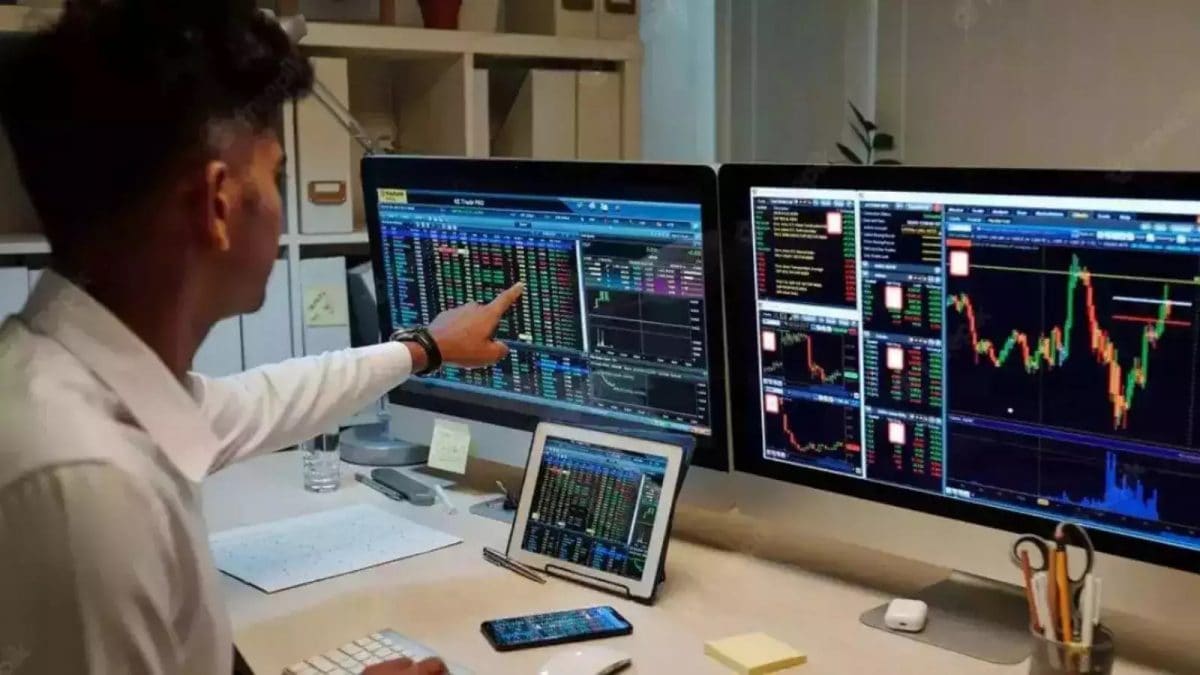
Sensex Today: Indian benchmark indices erased gains shortly after opening as realty and bank stocks weighed. As of 9:17 AM, the Nifty50 was trading 0.14 per cent or 27.90 points down at 23,380.90, and the Sensex was trading 0.11 per cent or 4.68 points down at 75,498.17.
Global cues
Markets across the Asia-Pacific region advanced, mirroring overnight gains on Wall Street, even as crude oil prices showed volatility after easing from earlier highs. Japan’s Nikkei 225 and South Korea’s Kospi were up 0.30% and 2.53%, respectively.
On Wall Street, US equities closed higher, with the S&P 500 rising 1.01%, the Dow Jones gaining 0.83%, and the Nasdaq Composite advancing 1.22%.
In the commodities market, Brent crude settled 2.84% lower at $100.21 per barrel in the previous session after US President Donald Trump urged allies to ensure stable energy supplies from the Strait of Hormuz. Sentiment was also supported by expectations that more countries may release oil from strategic reserves, according to Bloomberg.
However, in the Asian session, Brent crude rebounded nearly 2.9% to $103.06 per barrel, as renewed concerns over potential supply disruptions in the Strait of Hormuz resurfaced.
Meanwhile, gold and silver futures edged higher, gaining 0.41% and 0.53%, respectively.


India’s DPIIT eases FDI norms for countries sharing land border

Prince Harry returns to UK life as Meghan Markle gives him freedom
After Anthropic hit, Infosys, TCS & other Indian IT stocks tank on Nvidia’s new AI system news; what’s happening – The Times of India

Stock market crash today (March 12, 2026): Nifty50 opens below 23,600; BSE Sensex down over 900 points on continuing US-Iran war – The Times of India

Intertextile Shanghai 2026: Fringe events spotlight market trends

2026 NCAA Tournament Berth Tracker: Automatic Bids, Championship Game Times, and Defending Champs

-
Business5 days ago
Stock market crash today (March 12, 2026): Nifty50 opens below 23,600; BSE Sensex down over 900 points on continuing US-Iran war – The Times of India
-
 Fashion1 week ago
Intertextile Shanghai 2026: Fringe events spotlight market trends
-
 Sports1 week ago
2026 NCAA Tournament Berth Tracker: Automatic Bids, Championship Game Times, and Defending Champs
-

 Entertainment7 days ago
What time will NASA’s 600 kg satellite crash to Earth today— 14 years after launch?
-

 Fashion1 week ago
German brand Adidas posts 13% revenue growth in 2025
-
 Business1 week ago
Gulf war risks global economic shock | The Express Tribune
-

 Fashion6 days ago
UK’s Topshop unveils Tolu Coker capsule collection
-
 Business6 days ago
8th Pay Commission: How Much Will Central Govt Employees’ Salaries Rise? What We Know So Far