Business
Fare relief move: Air India waives change, cancellation fees on domestic bookings after IndiGo disruption – The Times of India
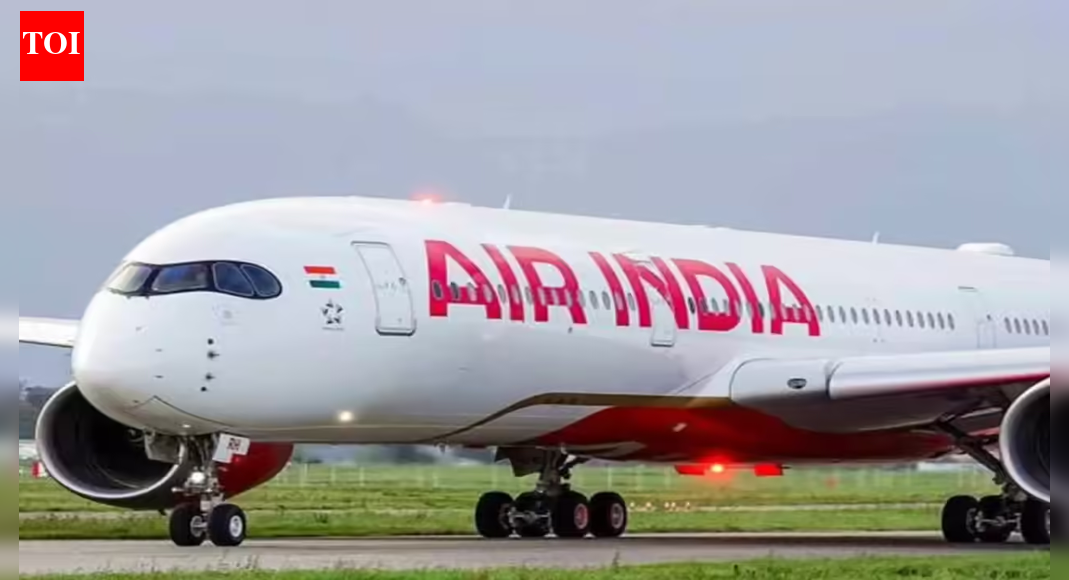
Five days after widespread flight disruptions triggered by IndiGo cancellations, Tata Group-owned Air India on Saturday announced a special waiver on change and cancellation charges for eligible domestic bookings, aiming to offer relief to affected travellers, PTI reported.The airline said customers who booked tickets on Air India or its subsidiary Air India Express on or before December 4 for travel up to December 15 can make a one-time change or cancellation without paying the usual fee, provided the request is made by December 8, 2025. In case of rescheduling, any fare difference will still be applicable.
Under the waiver, passengers can either reschedule their journeys to a later date within the validity of the purchased ticket without paying rescheduling charges or cancel their bookings and receive a full refund, with no cancellation fee applied, the airline said.Air India also said it, along with Air India Express, has “proactively” capped economy-class airfares on non-stop domestic routes from December 4 to prevent price spikes driven by automated demand-supply algorithms. The carriers are also in the process of ensuring compliance with the latest directive issued by the Civil Aviation Ministry on airfare caps.
Business
IndiGo cancellations: How to track flight & refund status online; step-by-step guide – The Times of India
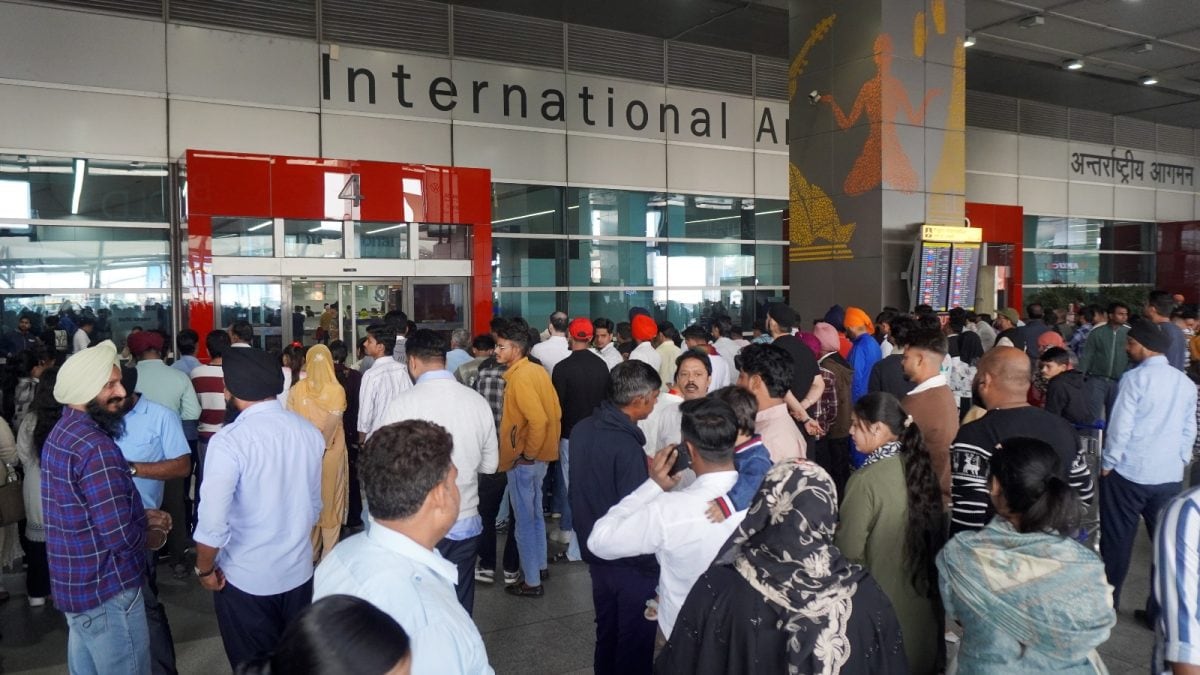
IndiGo flight cancellations latest news: IndiGo has said that it expects to operate more than 1500 flights by day’s end on Saturday, having restored over 95% of network connectivity by serving 135 out of 138 operational destinations. IndiGo typically operates 2300 flights daily. IndiGo has said that its personnel are working to normalise operations, minimise flight delays and assist passengers during this challenging period.IndiGo operated merely 700 flights on Friday, indicating 1,600 flight cancellations. IndiGo’s CEO Pieter Elbers acknowledged the extensive cancellations, confirming “over 1,000 flights” were cancelled on Friday.
The airline recorded the largest number of flight cancellations by an Indian carrier in the nation’s aviation history. Additionally, IndiGo’s on-time-performance plummeted to 3.7 per cent on Friday due to operational disruptions caused by the implementation of new pilot duty and rest period regulations, according to the Civil Aviation Ministry website.Starting November 1, the second phase of these regulations redefined night hours from 12am-6am, altered from the previous 12am-5am, and reduced permitted night landings from six to two. These changes affect all domestic airlines in India.The Gurugram-based carrier IndiGo, partly owned by Rahul Bhatia, has obtained temporary relief from DGCA, allowing them to revert to the previous night duty definition of 12am to 5am and permitting pilots to perform six night landings.“Addressing the recent disruptions in our network, we had cancelled a significant number of flights and operated little above 700 flights yesterday connecting 113 destinations. The main objective was to reboot the network, systems, and rosters so that we could start afresh today with a higher number of flights, improved stability, and there are some early signs of improvement. While we understand that we have a long way to go, we are committed to build back the trust of our customers….We apologise once again,” the airline said in a statement today.
How To Track IndiGo Flight Status ?
If you are planning to fly on an IndiGo flight over the next few days, it is important to check the flight status before heading to the airport. Here is a step-by-step guide to check IndiGo flight status:1. Go to goindigo.in/check-flight-status.html 2. Enter your PNR details and travel date, click on search flight to get the latest flight status
How To Track IndiGo Refund Status ?
The airline issued a statement confirming that it is handling all passenger refund requests with urgency.Here is a step-by-step guide how you can track your refund status on the IndiGo website:1. Go to goindigo.in/refund.html2. Enter PNR details — enter your PNR / booking reference number and your Email ID or last name.3. Click to view the “Refund Summary.” This will show you the current status of your refund — whether it’s still processing, completed, etc.According to the civil aviation ministry’s directive, all refunds for cancelled or disrupted flights must be processed by 8 pm on Sunday. The ministry has said, “Airlines have also been instructed not to levy any rescheduling charges for passengers whose travel plans were affected by cancellations.”The ministry has directed IndiGo to establish dedicated units for passenger assistance and refund processing.The statement noted, “These cells have been tasked to proactively contact affected passengers and ensure that refunds and alternative travel arrangements are processed without the need for multiple follow-ups. The system of automatic refunds will remain active until operations stabilise completely.”Additionally, the ministry has mandated that the airline must locate and return any misplaced luggage resulting from flight cancellations or delays to passengers within 48 hours.
Airfares capped
The aviation ministry has issued a two-page directive implementing fare restrictions due to capacity limitations and unjustified price increases across various routes. The civil aviation ministry’s order clarifies that business class and UDAN flights are exempt from these fare restrictions.The directive lacks specificity regarding the application of these limits to economy class tickets exclusively or their extension to premium economy seats as well.The prescribed fare structure sets maximum limits of Rs 7,500 for flights covering distances up to 500 kilometres, Rs 12,000 for 500-1,000 kilometres, Rs 15,000 for 1,000-1,500 kilometres, and Rs 18,000 for flights exceeding 1,500 kilometres.For illustration, on the Delhi-Mumbai route spanning over 1,300 kilometres, economy class fares cannot exceed Rs 18,000.The ministry’s statement indicates these restrictions will remain effective until conditions normalise.These caps exclude additional costs such as User Development Fee (UDF), Passenger Service Fee (PSF), and air ticket taxes.
Business
Volkswagen capex recalibration: Automaker pares 2030 investment to $186 bn; China, US headwinds grow – The Times of India
Volkswagen Group plans to invest €160 billion ($186 billion) through 2030, a scaled-down outlay that reflects tightening capital allocation as Europe’s largest automaker grapples with mounting pressure in its two biggest markets — China and the United States, Reuters reported.The investment figure, announced by Volkswagen CEO Oliver Blume, is part of the company’s rolling five-year capital expenditure plan, which is updated annually. The latest commitment compares with €165 billion earmarked for 2025–2029 and €180 billion for 2024–2028, with 2024 marking the peak year for spending.Since that peak, the group — which houses brands such as Porsche and Audi — has been squeezed by higher costs and weaker margins, hit by US tariffs on imported vehicles and intensifying competition in China. The strain has been felt most acutely at Porsche, which derives nearly half of its sales from the US and China combined.Porsche recently unveiled a significant rollback of its electric vehicle strategy as profits came under pressure. Speaking to Frankfurter Allgemeine Sonntagszeitung, Blume said the focus of the latest investment plan was firmly “on Germany and Europe,” particularly in products, technology and infrastructure.Blume added that discussions on an extended savings programme at Porsche are expected to continue into 2026. He also said he does not expect Porsche to grow in China, though localising production across the wider Volkswagen group remains an option. A China-specific Porsche model could make sense at some point, he said.On Audi, Blume noted that any decision on building a manufacturing plant in the United States would depend on whether Washington offers substantial financial support.Blume, who will step down as Porsche CEO in January to concentrate fully on running Volkswagen Group, said his recent contract extension as Volkswagen chief executive until 2030 signalled continued backing from the Porsche and Piëch families as well as the German state of Lower Saxony, the company’s largest shareholders.“But it is true, of course, that shareholders have suffered losses since Porsche went public three years ago. I, too, must face up to this criticism,” he said.
Business
How IndiGo Managed To Hold A Country Of 1.4 Billion People Hostage, Forced Govt To Bend Rules | Analysis
At a time when most Indian airlines are posting losses, IndiGo stands out as the only profitable carrier. Yet, while loss-making airlines managed to comply with DGCA directives within the allotted 18-month period, the one airline turning a profit failed to do so. The DGCA had provided ample time for compliance and workforce planning. But while others focused on meeting regulatory requirements, IndiGo appeared to pursue a different strategy—creating disruption to pressure the government. Incredibly, this approach worked: instead of imposing penalties, the government chose to relax the norms.
Aviation expert Harsh Vardhan squarely called this entire crisis a failure of IndiGo’s management. He said this is an extremely unprecedented situation. Passengers have been suffering for three days, and this is the peak tourist, wedding, and business season. IndiGo’s claim that the new FDTL policy suddenly created problems is nothing but a management failure. The policy wasn’t introduced overnight—it was formulated over years of deliberation and was finalised a year ago.
Harsh Vardhan reminded that the soft launch of the FDTL took place on July 1, 2025, and it was fully implemented from November 1, 2025. Other operators like Air India and SpiceJet made timely adjustments, which is why no major crisis emerged there. What surprises him most is the timing—if the policy was effective from November 1, why did this sudden “rampage” begin only a month later, at the start of December?
“The Government of India has decided to institute a high-level inquiry into this disruption. The inquiry will examine what went wrong at Indigo, determine accountability wherever required for appropriate actions, and recommend measures to prevent similar disruptions in the future, ensuring that passengers do not face such hardships again,” said the Ministry of Civil Aviation in a statement.
No one knows what will come out of the inquiry but, interestingly, IndiGo got rewarded for its blackmailing, instead of getting punished as the government relaxed norms.
Due to the IndiGo induced turbulence, the airfare on key routes touched Rs 80,000 to Rs 90,000. IndiGo didn’t merely cancel flights—it brought the system to a standstill, grounding aircraft, showcasing its clout, and effectively challenging the government to respond. Instead of asserting its authority, the NDA government backed down and rolled back its own directive. Through deliberate mismanagement, the airline pushed the system toward chaos. The suspension of over a thousand IndiGo flights severely disrupted the economy, sending hotel prices and ticket fares on other airlines soaring.
“The central government has ordered a probe and refunds—but the question is: when the monopoly of private companies and the government’s silence come together, who will protect the common people? Who are you working for? The public or the interests of big corporate houses?” Former Delhi Dy CM Manish Sisodia rightly questioned the government.
Shockingly, a country of 1.4 billion people relies primarily on just two major domestic carriers—IndiGo and Air India. IndiGo’s dominance is so significant that even Leader of the Opposition Rahul Gandhi publicly criticised the government for its oversight failures. “IndiGo fiasco is the cost of this Govt’s monopoly model. Once again, it’s ordinary Indians who pay the price – in delays, cancellations and helplessness. India deserves fair competition in every sector, not match-fixing monopolies,” said Gandhi.
For two decades, successive governments have allowed major airlines to collapse instead of restructuring them under new ownership. Jet Airways and Kingfisher Airlines are prime examples: both could have been revived by removing problematic promoters, yet no institutional mechanism was activated. The pattern repeated itself with Go First. When three airlines vanish in a decade, it signals not merely corporate failures but a systemic unwillingness to safeguard competition and consumer interest, wrote Prashant Tewari, public policy expert, mentioned in a recent report in The Pioneer.
Today, IndiGo controls over half of India’s domestic aviation market, with the Air India group holding most of the remainder. Smaller airlines operate on the margins, too weak to influence pricing or service standards.
Tewari wrote that disappearance of three airlines within years show government’s failure of protecting competition and consumer interest.
This duopoly-like environment has suffocated passengers: airfares on busy domestic routes routinely exceed those for comparable distances in Europe, Southeast Asia, or even the United States. A two-hour flight within India can cost more than a four-hour international journey elsewhere.
“IndiGo airline fiasco shows that Modi govt is either incompetent or in collusion. In either case, India deserves better. People have never suffered so much,” said Former Delhi CM and AAP convener Arvind Kejriwal.
For years, India’s aviation sector has needed at least eight to ten robust operators to foster true competition, stabilise fares, and minimise disruptions. Instead, new entrants face steep barriers, licensing moves painfully slowly, and foreign carriers seeking expansion are hindered by outdated protectionist policies disguised as national security concerns. This refusal to liberalise the skies has turned India into one of the world’s most expensive domestic aviation markets.
According to Tewari, the duoploy ecosystem suits certain entrenched interests. With opaque decision-making, India’s aviation sector functions with minimal accountability, he opined.
Though the government’s UDAN scheme was launched to make air travel accessible to the common citizen, soaring fares have made flying increasingly unaffordable.
Besides opening new airports, the government must urgently liberalise the sector, encourage new domestic players, revive grounded airlines under competent management, and allow credible foreign carriers to compete under regulated conditions. Until then, Indian travellers will continue to pay excessively, learning the same harsh lessons again and again.
-
Tech6 days agoGet Your Steps In From Your Home Office With This Walking Pad—On Sale This Week
-
Sports6 days agoIndia Triumphs Over South Africa in First ODI Thanks to Kohli’s Heroics – SUCH TV
-
Fashion6 days agoResults are in: US Black Friday store visits down, e-visits up, apparel shines
-
Entertainment6 days agoSadie Sink talks about the future of Max in ‘Stranger Things’
-
Politics6 days agoElon Musk reveals partner’s half-Indian roots, son’s middle name ‘Sekhar’
-
Tech6 days agoPrague’s City Center Sparkles, Buzzes, and Burns at the Signal Festival
-
Sports6 days agoBroncos secure thrilling OT victory over Commanders behind clutch performances
-
Sports6 days agoF1 set for final-race showdown as Verstappen exploits McLaren blunder | The Express Tribune