

Tech
FCC Enforcement Chief Offered to Help Brendan Carr Target Disney, Records Show

A senior Federal Communications Commission official overseeing ABC-owned California stations privately offered to assist FCC Chairman Brendan Carr’s campaign last year against the Walt Disney Co. and Jimmy Kimmel Live!, according to internal emails obtained by WIRED.
On September 17, Carr threatened Disney with regulatory action regarding the Jimmy Kimmel monologue about the assassination of Charlie Kirk, prompting major station affiliates to drop the broadcast and forcing ABC to temporarily suspend the show.
Later that day, Lark Hadley, the FCC West Coast enforcement director, emailed Carr and FCC chief of staff Scott Delacourt. The email, obtained via the Freedom of Information Act, was titled “personal note of support re Charlie Kirk ABC/Disney issue” and quoted Carr’s remarks from an interview with conservative podcaster Benny Johnson: “This is a very, very serious issue right now for Disney. We can do this the easy way or the hard way,” Carr said during the interview.
Noting that he had been a broadcaster himself, Hadley wrote that the “absolute lack of accountability has always confused (and sickened) me,” telling Carr and Delacourt: “Please, do not let up, and let me know if I can help in any way.”
It is highly irregular for a career civil servant and enforcement chief to express support for a politically motivated pressure campaign, or pledge services to a targeted retaliation effort against a broadcaster in their own jurisdiction.
Federal ethics rules prohibit government employees from participating in matters where their impartiality could reasonably be questioned.
Carr’s office did not respond to a request for comment.
While FCC headquarters typically handles television content complaints, Hadley’s office holds direct enforcement authority over physical ABC-owned stations in its jurisdiction, including KABC-TV in Glendale, the broadcast origin for Jimmy Kimmel Live!
The brief suspension of Jimmy Kimmel Live! became a defining test of Carr’s ability to leverage the FCC’s regulatory apparatus against political critics. Following Carr’s public threats, major affiliate networks Nexstar and Sinclair—both of which had multibillion-dollar mergers pending before the commission—refused to air the program, forcing Disney to temporarily pull the show.
An ABC spokesperson did not immediately respond to a request for comment.
Will Creeley, legal director at the Foundation for Individual Rights and Expression, tells WIRED that regional directors like Hadley have no business cheering on the FCC chairman’s regulatory threats against broadcasters that air views the president doesn’t like.
“Just like Brendan Carr, they swore an oath to uphold the Constitution—and that includes the First Amendment, which bars the government from coercing private broadcasters into censoring dissent,” Creeley says. “This is a public servant paid by our taxpayer dollars. Is it too much to ask for him not to sound so excited about the chairman abusing the power of his office?”

More than half of the nine developers who worked on the game have either obtained a US visa or tried and failed to do so. Most of them are from China, but the team also intentionally recruited talent from other countries in the hopes of incorporating more diverse immigrant perspectives.
“Everybody knows somebody that’s on a visa, but not all of them are vocal about that part of their identity,” says Andrea Saravia Pérez, an immigrant from Colombia who joined the team in February as a narrative designer. “How can we develop a project that’s interactive and shows people this immigration system that a lot of Americans are not familiar with?”
There’s growing interest across the gaming industry in making political games, says Yang. When her team brought H1B.Life to the annual Game Developers Conference in San Francisco last week, she says they received a tremendous amount of interest and support because they are tackling an important societal issue without expecting to make much profit. (The game was supported by a philanthropic organization and the developers also plan to raise additional funding from a future Kickstarter campaign.)
Yang says she has also heard from people in Germany and Australia interested in licensing or adapting the game for different countries. “The whole world is turning right, and life is getting more difficult for all immigrants,” she says.
“If we can just put people in our shoes, I think it can create a very positive impact,” says Saravia Pérez. “As long as players come to have fun and are able to sympathize and understand it a little bit more, I think that we’ve done our job as a team.”
Courtesy of Reality Reload
Technicalities Versus Emotions
The H-1B visa program, created in 1990, is one of the most reliable US immigration pathways for white collar workers with college degrees. In recent years, the program issued about 85,000 visas annually, but since there are often more applicants than slots, a lottery system determines who ultimately is chosen. And if you don’t get it, you have to wait an entire year before you try again. Every person who has gone through the process has their own success or failure story to tell, me included.
The team behind H1B.Life started developing the game by interviewing immigrants. So far, Yang says they have talked to over two dozen people about their H-1B journeys and used those interviews to make the game more realistic and accurate. The biggest challenge now is to figure out how to balance explaining complicated immigration rules accurately and ensuring the game is still entertaining.

A family has told an inquest that they were not responsible for memorialising the Instagram account of teenager Noah Donohoe after their family email account was linked by Meta to a request to freeze the account following his death.
The court heard today that Noah Donohoe’s Instagram account had been memorialised a day after the teenager’s death was reported on by the BBC, without the knowledge of Donohoe’s mother, effectively making its content inaccessible.
Computer Weekly has previously reported calls by former detective chief inspector Clive Driscoll for Meta to conduct stronger checks before agreeing to memorialise Instagram accounts.
The court heard that the incident caused significant distress to Noah Donohoe’s mother, Fiona Donohoe, and had potentially hampered investigations by the coroner into the circumstances of the teenager’s death.
“The immediate impact of it was that even Noah’s mother was not able to access material from his Instagram. We had to go through a process with the court to get the material,” said barrister Peter Coll KC, representing the coroner.
Pet tortoise
A report from Meta provided to the coroner’s court showed that the family’s shared email, named after a pet tortoise, had been used to fill in a form requesting that Meta memorialise Donohoe’s account on 28 June 2020, the day after he died.
The form gave a child’s name and the family email, and enclosed a link to a BBC report of Noah Donohoe’s death to support the request. Memorialising effectively froze the account, making its contents, including Noah Donohoe’s messages, inaccessible to his mother and to the coroner’s inquiry.
Three members of the family, identified as M1, M2 and M3 to protect their identities, gave evidence in court from behind a screen. They were seen only by the jury and Noah’s mother Fiona Donohoe.
M1 confirmed that he was a first-year student at St Malachy’s College at the time Noah Donohoe, a third-year pupil in the same school, went missing.
He told the court that he had no contact with Noah Donohoe and had never spoken to him. “I only realised when I saw his name on a poster that I had seen him at school,” he said.
Peter Coll KC, representing the coroner, asked M1 if he knew how his name and the family email had been used on a form to Meta to memorialise Donohoe’s Instagram account.
M1 said: “I had no idea how that happened. I was only 12 years old when that happened.”
M2, the sister of M1, told the court she would have used the family email address for playing games. She said that she did not know Noah Donohoe, but became aware of him after the case appeared on the news.
She told the court that she did not know anything about memorialisation until an investigator from the coroner’s court turned up at her door and spoke to her mother. “I can’t even describe how shocking it was,” she said.
M2 confirmed that she had requested to follow Noah’s Instagram account after hearing about the case. The court also heard that hundreds of other people had also requested to follow his Instagram account.
She agreed that her brother, who was only 11 at the time of Noah’s disappearance, was not “social media savvy” and that she did not recall him talking about Instagram and memorialisation.
Asked about the form submitted to Meta quoting a BBC article about Noah Donohoe, M2 said she did not use the BBC as a source of information, but got her information from Sky television news and social media.
Mother locked out of Noah’s account
Brenda Campbell KC, representing Fiona Donohoe, said that as a consequence of Noah’s account being memorialised, his mother had been “locked out” of the account.
“From the day after she learned that her child had died, she had no access to his private social media on Instagram. When Noah’s mum wanted to look at any messages he was sending to understand who he was in contact with, the only thing she could do was look at the public side of the account. So she was locked out,” she said.
Campbell said that memorialising the account had the potential to deprive the inquest of a huge amount of information on Noah before he died. “But for the coroner, we may never have had that information,” she said.
Campbell said that one of Noah’s mother’s concerns was that someone might have memorialised the account deliberately to deprive her of evidence.
Instagram accounts hacked
M2 said that in 2020 her and her brother’s Instagram accounts had been hacked.
“Back in 2020, there was an epidemic of Instagram accounts being hacked. It was always scam sites,” she said. “I know my brother’s account was hacked and my account was hacked.”
She said she had reported the hacking to Instagram, which sorted it out, allowing her to change the password, but she did not know what happened to her brother’s Instagram account.
M3, the mother of the two children, said the family email was still live but that no one uses it. It had previously been used for games, and M3 had used it for shopping. She said that she only became aware of Noah Donohoe after he went missing and “it was all over the news”.
M3 said Noah’s mother came to her place of work and gave out stickers to raise awareness of the case after he disappeared. She said she had been praying for Donohoe.
The witness said that her children, M1 and M2, had not tried to memorialise Noah’s social media accounts, to her knowledge, and that she was unable to explain how their shared family email address came to be on that form sent to Meta.
Questioned by Kate Hanley, counsel for Fiona Donohoe, M3 said she was surprised when she was told about the memorialisation of Noah’s account. “I did not have any idea. It was mind-blowing,” she said.
She agreed that Instagram required very little information, accepting only a name, email and a BBC article as sufficient proof of death.
Hanley said the email address quoted by Meta was incorrect as it ended in .con – an apparent misspelling – rather than .com, and that it therefore seemed unlikely that Meta had requested any verification before memorialising the account.
Detective calls for Meta to change policies
Computer Weekly previously reported that former detective chief inspector Clive Driscoll, the detective who secured convictions for the murder of British teenager Stephen Lawrence, had called for Meta to conduct more thorough checks before memorialising Instagram accounts.
Driscoll told Computer Weekly: “There should be far stronger checks on anyone’s ability to memorialise an account to ensure it’s in line with the family’s wishes. If it’s against the family wishes, and if it could interfere with a police or coroner’s investigation, stronger checks should be made.”
Instagram’s memorialisation service aims to protect the privacy of people after their death by securing their social media accounts to prevent references to the person’s profile appearing on Instagram in ways that would be upsetting.
Computer Weekly has learned that the social media company allows people to memorialise the Instagram accounts of children who have died, making their accounts inactive, without the knowledge or permission of relatives.
The inquest continues.
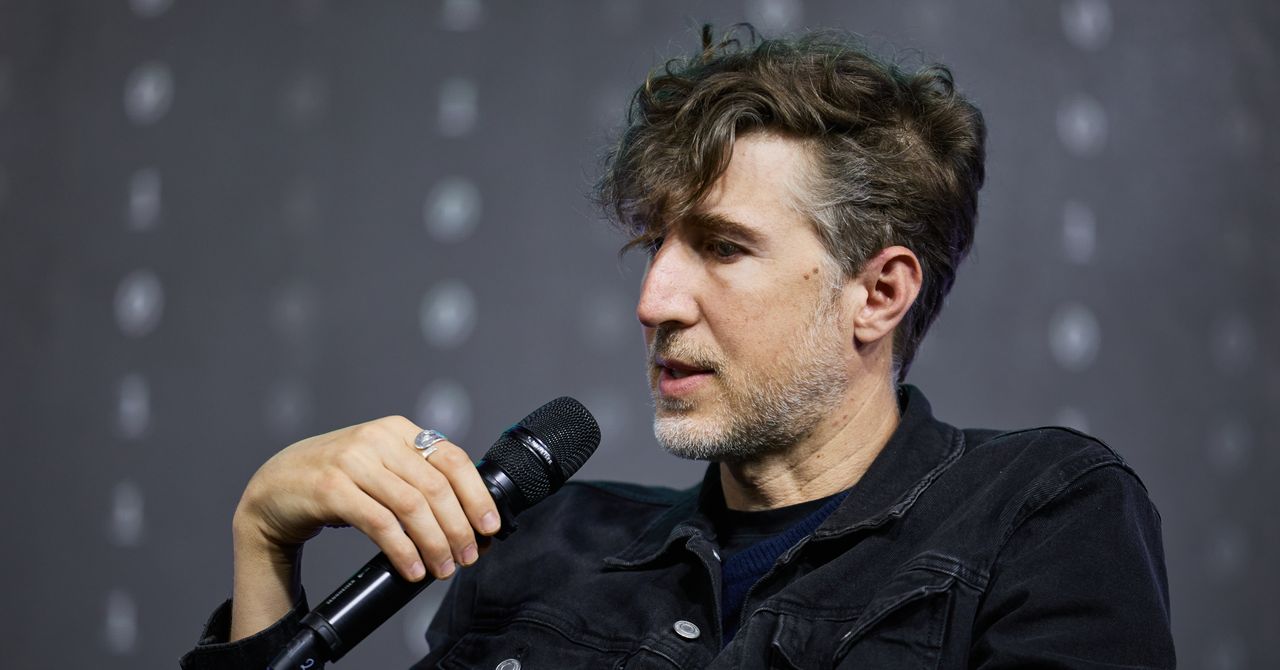
Moxie Marlinspike, the privacy advocate who created the secure communication app Signal and its widely used open source encryption protocol, said this week that his privacy-focused AI platform, Confer, will start incorporating its technology into Meta’s AI systems.
Every day, billions of chat messages sent through Signal, Meta’s WhatsApp, and Apple’s Messages are protected by end-to-end encryption. The feature, which makes it impossible for tech companies and anyone other than the sender and recipient to snoop on your messages, has become mainstream over the past decade. As generative AI platforms explode in popularity, though, people are now also exchanging billions of messages a day with AI chatbots that don’t offer the protection of end-to-end encryption—making it easy for AI firms to access what you talk about.
This is by design, given that platforms often want to train their AI models on as much user data as possible and have made it hard to opt out of having your information used as training data. But as chatbots and AI agents have become more capable, some technologists and companies are pushing to create more constrained and privacy-focused systems.
“As LLMs continue to be able to do more, we should expect even more data to flow into them,” Marlinspike wrote in a short blog post about his collaboration with Meta published on Tuesday. “Right now, none of that data is private. It is shared with AI companies, their employees, hackers, subpoenas, and governments. As is always the case with unencrypted data, it will inevitably end up in the wrong hands.”
Marlinspike wrote that he will “work to integrate Confer’s privacy technology so that it underpins Meta AI.” He also emphasized that Confer, which debuted at the beginning of this year, will continue to operate independent of Meta. The project’s goal, Marlinspike added, is to offer a technology that “allows everyone to get the full power of AI along with the full privacy of an encrypted conversation.”
In 2016, Marlinspike worked with WhatsApp, which is owned by Meta, to roll out end-to-end encryption to more than a billion accounts simultaneously. Over the last year, WhatsApp has introduced a Meta AI chatbot into its app, which isn’t shielded from the company in the same way individual chats are.
“People use AI in ways that are deeply personal and require access to confidential information,” WhatsApp head Will Cathcart wrote on Wednesday on the social media platform X about the collaboration with Confer. “It’s important that we build that technology in a way that gives people the power to do that privately.”
The adoption of encrypted AI is still emerging. The cryptographic schemes used in end-to-end encryption for traditional digital communication aren’t easily or directly translatable into data protections for generative AI. For its part, Confer is still a new project, and Marlinspike’s blog post did not provide specific details about how exactly the collaboration with Meta will work or what the specific goals are for integration.
Neither Marlinspike nor Meta provided WIRED with additional comment ahead of publication.
Mallory Knodel, a cryptography researcher at New York University, says it would be “great for people using chatbots that use Meta AI to have confidentiality and privacy within that exchange.” Crucially, that means Meta would not be able to access AI chat data for training, says Knodel, who along with colleagues recently published a study on end-to-end encryption and AI. “I really hope more AI chatbots adopt this approach.”
Knodel’s preliminary, initial assessments of Confer indicate that the platform isn’t perfect, but is an important example of how to build a private AI chatbot.


Men’s March Madness live tracker: Updates from Thursday’s first round

Demi Moore pays tribute to Bruce Willis on 71st birthday

Enzo Fernández ‘completely committed’ to Chelsea – Liam Rosenior

Stock market crash today (March 12, 2026): Nifty50 opens below 23,600; BSE Sensex down over 900 points on continuing US-Iran war – The Times of India

UK’s Topshop unveils Tolu Coker capsule collection

US ignites Iran war, but Gulf Arab states pay the price | The Express Tribune

-
Business1 week ago
Stock market crash today (March 12, 2026): Nifty50 opens below 23,600; BSE Sensex down over 900 points on continuing US-Iran war – The Times of India
-
 Fashion1 week ago
UK’s Topshop unveils Tolu Coker capsule collection
-
Business1 week ago
US ignites Iran war, but Gulf Arab states pay the price | The Express Tribune
-

 Fashion1 week ago
India’s textile recycling market may reach $3.5 bn by 2030: Report
-

 Tech1 week ago
Meta Developed 4 New Chips to Power Its AI and Recommendation Systems
-
 Business1 week ago
8th Pay Commission: How Much Will Central Govt Employees’ Salaries Rise? What We Know So Far
-

 Sports1 week ago
Bangladesh crush Pakistan in ODI series opener | The Express Tribune
-

 Entertainment1 week ago
Gas, food, household prices explained