

Fashion
FESPA launches 2026 Print Census, unveils 2025 findings


FESPA has announced the launch of its next Print Census, which will spotlight the voices of printers on key topics shaping the industry today. The Print Census is a global research initiative designed to gather and share essential market intelligence for the print and sign communities. It takes place twice each year and is run in collaboration with FESPA’s Thought Leadership Partner, Keypoint Intelligence.
FESPA’s 2025 Print Census shows speciality print firms recognise the need for automation, AI and sustainability, but adoption remains uneven due to limited resources and smaller business sizes.
Nearly half of PSPs still lack automation, around 40 per cent do not use AI, and only 40 per cent treat sustainability as a strategic priority despite growing regulatory and customer pressures.
First launched in 2015, the Print Census supports FESPA’s commitment to providing its members and the wider speciality print community with actionable, data-driven insights that facilitate innovation, productivity, growth and resilience.
The new 2026 Print Census will focus on: E-Commerce and Web-to-Print; Workforce and Skills Gaps; and Growth Applications, Pricing Pressures and Profitability.
In addition, FESPA has announced the results of its previous Print Census, which took place in the latter half of 2025. The topics explored in the 2025 Print Census, which was the first in the new format and the first survey since 2018, were: Automation, AI and Sustainability Survey.
All members of FESPA Direct or an Association can access the full 2025 FESPA Print Census report, on Automation, AI and Sustainability, on the FESPA website.
2025 Print Census key findings
- Business size: 75% of print businesses have fewer than 50 employees, limiting investment capacity and slowing adoption of new technologies
- Automation: Essential, but underused. Nearly half of PSPs report no automation in place, despite growing pressure from labour shortages and demand for faster, digital workflows
- AI: Around 40% of PSPs are not using AI at all, with most current use limited to basic applications like design and colour management
- Sustainability: While 92% of businesses say sustainability is important, only 40% have made it a core strategic priority
- Cost and weak demand: Higher material costs and limited customer demand continue to slow sustainable adoption, particularly for smaller firms
- Clear disconnect between innovation and adoption: While suppliers are advancing automation, AI and sustainable solutions, many PSPs lack the resources, knowledge or infrastructure to implement them
2025 Print Census Executive Summary
Drawing on insights from 774 businesses across 89 countries, the 2025 Print Census study explored how companies are approaching three key areas: automation, artificial intelligence (AI) and sustainability. The findings reveal that those in the industry understand its need to advance, but businesses are progressing at different speeds due to variations in size and resources.
A defining feature of the sector is its structure. Small and micro businesses dominate, with 75% of respondents saying they employ fewer than 50 people and nearly half having 10 or fewer employees. For many businesses, their size impacts the pace at which they can change. Many of these businesses operate with limited capacity, so immediate operational pressures are prioritised over long-term transformation.
This reality is reflected across businesses’ automation, AI and sustainability practices, where, according to the Print Census responses, awareness is high, but implementation is uneven.
Automation take-up
Automation is being used by print businesses to improve efficiency, consistency and scalability. It offers a clear route to addressing labour shortages, rising costs and increasing demand for faster turnarounds. However, adoption of automation processes remains limited, particularly for smaller print service providers (PSPs) – with nearly half reporting no use of automation tools at all. For many PSPs, automation is still viewed as a longer-term investment rather than an immediate priority.
Automation, when it is used by PSPs, typically covers workflow tools, web-to-print platforms and prepress processes. When used in these areas, automation delivers tangible benefits without major disruption to production. However, when it comes to implementing more advanced and costly automation solutions, a gap is created between those able to scale digitally and those still reliant on manual processes.
AI in action
While interest in artificial intelligence is growing, practical adoption is not yet widespread. Around 40% of PSPs report that they are not yet using AI in any capacity. In cases where it is being used, it’s limited to specific functions such as design support, colour management or basic scheduling. Although these applications provide quick wins, they are rarely integrated into wider production workflows.
The barriers that print businesses face when trying to adopt AI are largely practical because many businesses lack in-house expertise, clear starting points, or the time to explore new tools. For smaller teams in particular, uncertainty around how to apply AI and measure its value continues to slow progress.
Spotlight on sustainability
Sustainability presents a more complex picture. Most PSPs (92%) say that it matters to their business, however, only 40% describe it as a core strategic priority. This shows there is a gap between intent and action.
Cost is the most significant barrier. Smaller firms face higher material costs and limited purchasing power, so it may be more difficult to justify green options. At the same time, demand for sustainability, from customers, is still relatively low, which reduces the commercial incentive to invest. As a result, for many, sustainability is an aspiration, rather than a fully embedded operational focus.
Despite this, external pressures – such as regulatory requirements, supply chain expectations and procurement standards are advancing – are increasing, which means that sustainability is likely to become less optional over time. Businesses will need to move from awareness about sustainability, to measurable action.
Gaps in the market
The FESPA Print Census report shows that across all three areas – Automation, AI and Sustainability – there is a pattern: gaps between what is available and what is being implemented. Suppliers and manufacturers continue to develop more advanced solutions, but many PSPs lack the resources, knowledge or infrastructure to adopt them effectively.
Yet, these gaps represent opportunities, as there is evidently growing demand for solutions that are accessible, modular and tailored to smaller businesses. Lower-cost entry points, better education and clearer demonstration of value could help to accelerate adoption across the sector.
Printers also report that consumer behaviour is shifting. Digital-first ordering and increased demand for transparency are factors that are changing how print businesses operate. Businesses that can respond to their customers with more connected, data-driven workflows will be better positioned to compete.
Join our global speciality print network to get exclusive access to the Understanding and Avoiding Greenwash guide.?Become a member today and join our network of over 14,000 members worldwide giving you access to the FESPA members platform.?We have 37 national Associations, if your country is not listed, you will become a FESPA Direct member.
Note: The headline, insights, and image of this press release may have been refined by the Fibre2Fashion staff; the rest of the content remains unchanged.
Fibre2Fashion News Desk (MS)










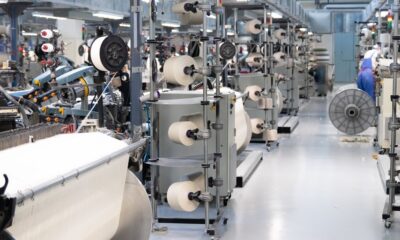


Developed at an investment of ₹16.95 billion (~$178 million), it is the country’s first functional PM MITRA Park and operationalises the government’s 5F vision—farm to fibre to factory to fashion to foreign.
Indian PM Narendra Modi inaugurated the PM MITRA Park at Warangal in Telangana yesterday.
Developed at an investment of $178 million, it is the first functional PM MITRA Park and operationalises the government’s 5F vision—farm to fibre to factory to fashion to foreign.
Strategically located near the proposed Nagpur-Vijayawada Greenfield Expressway and close to NH-163, it offers multimodal connectivity.
Inaugurating the project, Modi said the park will accelerate the textile revolution in the country, creating large-scale employment opportunities, especially for women.
Strategically located near the proposed Nagpur-Vijayawada Greenfield Expressway (NH-163G) and in proximity to NH-163, the park offers excellent multimodal connectivity to major railway networks and seaports, ensuring seamless logistics for global trade, a release from the Ministry of Textiles said.
The park is equipped with state-of-the-art infrastructure, including an extensive internal road network, dedicated power substation and assured water supply. It also emphasises sustainable development through a common effluent treatment plant with zero liquid discharge technology.
The Ministry of Textiles approved the establishment of seven PM MITRA parks in the states of Telangana, Tamil Nadu, Karnataka, Maharashtra, Uttar Pradesh, Gujarat and Madhya Pradesh in March 2023.
Industries being set up in the park will not only have access to world class infrastructure facilities for the textile sector, but will also receive competitive incentive support (CIS) under the PM MITRA scheme.
Manufacturing units become eligible for incentive support for which total fund of ₹300 crore for each park, thereby making these parks more attractive to investors.
Units in the PM MITRA parks are also eligible for benefits in convergence with other government schemes.
Fibre2Fashion News Desk (DS)
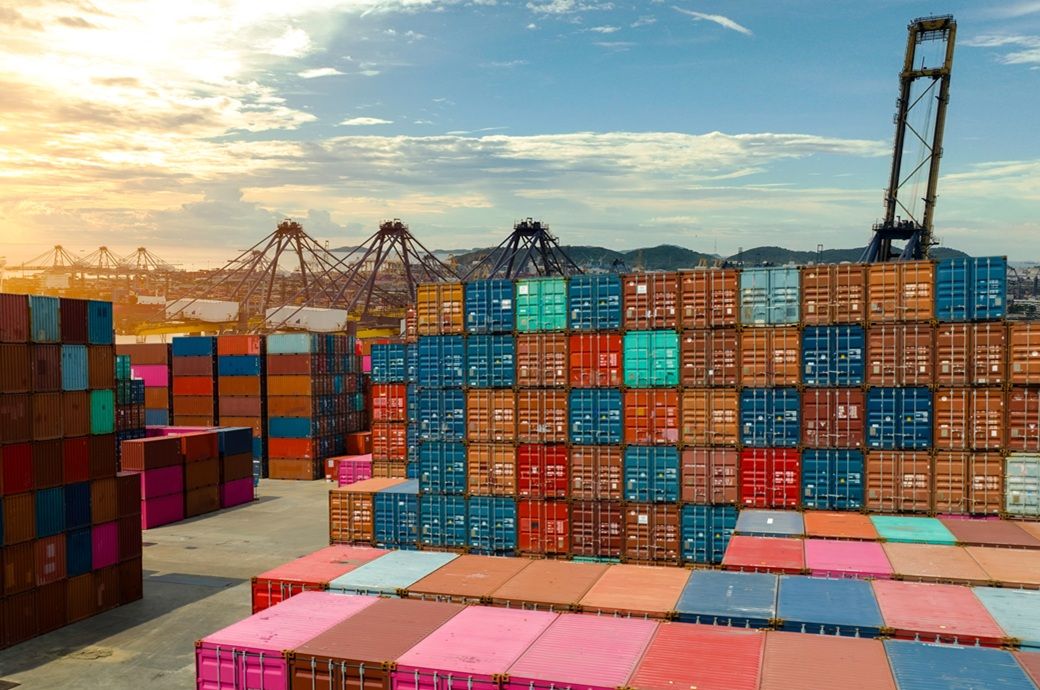
Reaz made the observations while presenting a keynote paper titled ‘Integrated Port and Logistics Development for a Trade-Driven Bangladesh’ at a roundtable organised by the Dhaka Chamber of Commerce and Industry (DCCI).
Policy Exchange Bangladesh has called for urgent modernisation of the country’s port infrastructure, overhaul of trade facilitation systems, and activation of its dormant National Logistics Policy to stay globally competitive.
A 25-per cent cut in logistics costs could boost exports by 20 per cent, while cutting container dwell time by just a day at Chattogram would raise exports by 7.4 per cent, it said.
Bangladesh’s overdependence on the readymade garments (RMG) sector, which accounted for 81.49 per cent of total exports in fiscal 2024-25, combined with a deteriorating logistics ecosystem, poses serious risks to the country’s long-term economic resilience, particularly as it approaches graduation from the least developed country (LDC) status, he cautioned.
Bangladesh ranks 88th on the World Bank’s Logistics Performance Index, far behind India at 38th and Vietnam at 43rd, while Chattogram Port sits at 356th on the Container Port Performance Index, compared to Haiphong at 30th.
Container dwell times at Chattogram remain critically high, with vessel turnaround averaging 3.23 days against just 0.86 days at Colombo.
Chattogram Port handles 92 per cent of the country’s seaborne trade and 98 per cent of container trade, yet operates under an outdated ‘tool port’ model, relies heavily on manual processes and has a draft depth of only 9.5 metres, insufficient for large vessels and forcing costly transshipment via third countries, he was cited as saying by domestic media outlets.
Port tariffs have not been revised since 2008.
A 25-per cent reduction in logistics costs could boost exports by 20 per cent, while cutting container dwell time by just one day at Chattogram would increase exports by 7.4 per cent, Reaz said citing World Bank research.
He called for a comprehensive reform agenda built around eight priorities: activating and implementing the National Logistics Policy; transitioning to a landlord port model to attract private operators; fully operationalising the National Single Window for customs; accelerating the Matarbari Deep Sea Port and Bay Container Terminal projects; integrating road-rail-waterway multimodal networks; deploying artificial intelligence and digital cargo tracking systems; revising the port tariff structure on a performance-linked basis; and strengthening regulatory safeguards for foreign investment in strategic infrastructure.
Private sector participation, backed by strong legal and regulatory frameworks, is indispensable for Bangladesh’s port transformation he added.
Fibre2Fashion News Desk (DS)
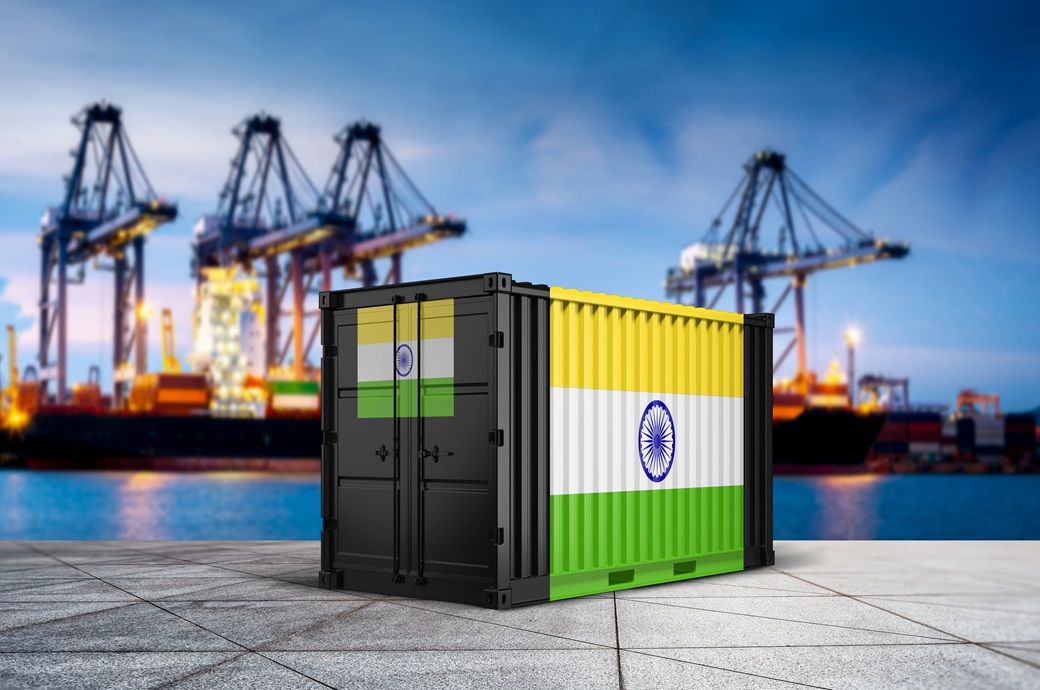
The revised scheme has been introduced at a time when the textile sector is facing rising operational and financial pressure due to disruptions linked to the West Asia crisis. Reflecting the resilience shown by the industry through improved PMI trends and export performance, the government has expanded the scheme with enhanced eligibility norms and a credit cap of up to ₹5000 million ($52.55 million) for stressed sectors.
The Southern India Mills’ Association (SIMA) welcomed the Government of India’s ECLGS 5.0 scheme, calling it a timely liquidity support measure for the textile industry amid the ongoing West Asia crisis.
The scheme offers collateral-free loans, extended repayment tenure, and enhanced credit support to help textile firms manage rising raw material costs, logistics disruptions, and financial stress.
According to industry sources, the textile sector has been significantly impacted by the prevailing geopolitical tensions, particularly because the man-made fibre segment remains dependent on the Middle East region for critical raw materials. At the same time, exports of value-added textile products have come under pressure due to abnormally high logistics costs and changing global consumption patterns, with buyers increasingly shifting towards lower-cost products.
The government had earlier launched ECLGS in 2020 during the COVID-19 crisis to provide immediate liquidity support to MSMEs and business enterprises facing operational stress. The scheme played a key role in helping companies meet operational liabilities and sustain manufacturing activities during the pandemic period. SIMA noted that ECLGS 5.0 extends similar support at a time when global geopolitical disruptions are again straining industrial operations.
In a press release, SIMA Chairman Durai Palanisamy expressed gratitude to Prime Minister Narendra Modi and the government for introducing the enhanced scheme. He said ECLGS 5.0 would provide critical liquidity support to businesses affected by the ongoing West Asia crisis and help the industry manage financial stress more effectively.
According to SIMA, the scheme covers both MSME and non-MSME sectors and offers loans with a repayment tenure of up to five years. Loan sanctions under the scheme will remain available until March 31, 2027, while borrowers will also benefit from a one-year moratorium on principal repayment.
The association highlighted that the scheme enables additional credit support of up to 20 per cent of the peak working capital as of the last quarter of the recently concluded fiscal 2025-26, subject to a maximum limit of ₹100 crore per borrower. The facility is fully collateral-free and does not carry any guarantee fee, making it highly accessible and beneficial for the textile industry.
Palanisamy pointed out that inadequate working capital has emerged as one of the biggest challenges for textile manufacturers, affecting their ability to maintain production capacity, retain workers, procure essential raw materials, and service existing bank loans. He further stated that ECLGS 5.0 would play a crucial role in stabilising production, safeguarding employment, and sustaining the textile industry’s contribution to exports and economic growth, especially at a time when raw cotton prices are witnessing abnormal and frequent fluctuations.
SIMA also emphasised that ECLGS 5.0, along with the TEEM scheme and the Mission for Cotton Productivity approved in the recent Union Budget with an outlay of ₹5,659.22 crore, would provide a strong boost to the long-term growth and competitiveness of the Indian textile industry in both domestic and international markets.
The association added that government initiatives related to export risk mitigation, logistics and trade facilitation, and the creation of new strategic markets through free trade agreements (FTAs) would help the textile sector maintain stability and competitiveness despite continuing geopolitical disruptions.
Fibre2Fashion News Desk (KUL)


From buying less gold to cashing in old reserves: How bullion industry plans to cut India’s import bill – The Times of India

King Charles speaks out about ‘awful’ chemotherapy side effects

UK’s Starmer defies calls to quit, says he is getting on with governing

-

 Politics1 week ago
Iran weighs US reply delivered via Pakistan as Trump signals opposition to deal terms
-

 Tech1 week ago
DHS Demanded Google Surrender Data on Canadian’s Activity, Location Over Anti-ICE Posts
-
 Business1 week ago
Heineken to invest £44.5m in hundreds of pubs creating 850 jobs
-

 Entertainment1 week ago
Jelly Roll reacts to daughter Bailee Ann’s major life milestone
-

 Tech1 week ago
I Lugged the Best Travel Totes on Work Trips, Weekends, and More
-

 Politics1 week ago
Two women die on migrant boat seeking to reach UK
-
 Business1 week ago
Heineken plans huge investment in hundreds of UK pubs ahead of World Cup
-

 Tech4 days ago
A new frontier: Identity stack evolves for agentic systems | Computer Weekly