

Fashion
Finland’s Marimekko’s Q2 sales up 2% on retail gains, profit improves

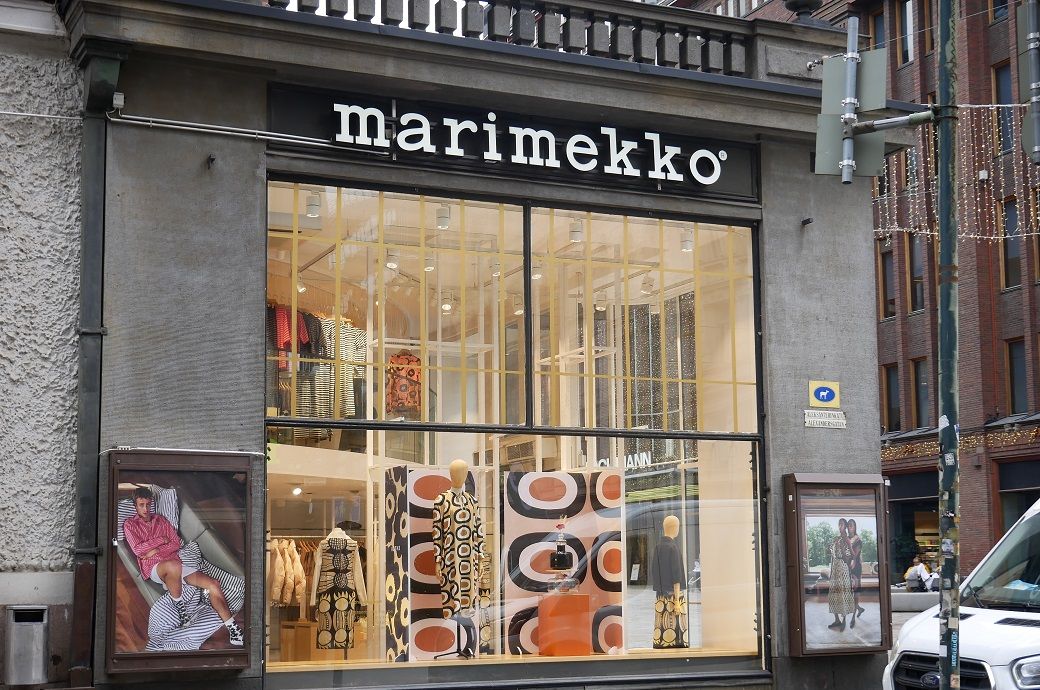
Operating profit improved to €6.3 million, with comparable operating profit at €6.5 million, representing 14.6 per cent of net sales. The gain was driven by higher sales and improved margins, partly offset by higher fixed costs.
Marimekko’s Q2 2025 sales rose 2 per cent to €44.5 million (~$51.88 million), with Finnish retail up 3 per cent and international sales up 1 per cent despite lower licensing income.
Operating profit increased to €6.3 million.
H1 sales grew 3 per cent to €84.1 million, driven by 7 per cent international growth.
The company expects higher 2025 sales and margins but warns of global and tariff risks.
For January–June 2025, net sales rose 3 per cent to €84.1 million. International sales increased 7 per cent, while Finnish sales were flat as retail gains offset wholesale weakness. Comparable operating profit declined to €10.9 million, or 13 per cent of net sales, due to lower margins and higher fixed costs, the company said in a media release.
CEO Tiina Alahuhta-Kasko highlighted sustained omnichannel retail growth, up 6 per cent in Q2, as evidence of brand resilience in challenging markets. Strategic collaborations—such as a global footwear line with Crocs, café partnerships with Blue Bottle Coffee in the US and Asia, a design tie-up with Artek, and a capsule collection with artist Laila Gohar—boosted brand visibility. Events included Milan Design Week, Copenhagen’s 3 Days of Design, Marimekko Day fashion shows in Helsinki, and the Field of Flowers exhibition in Asia.
Network expansion in Q2 included new stores in Osaka and Kuala Lumpur, an outlet in Espoo, eight Asian and Finnish pop-ups, and the launch of online stores in New Zealand and in German language. Post-period, Marimekko announced its first flagship store in Paris, opening autumn 2025, alongside pop-ups at Le Bon Marché and Galeries Lafayette.
For 2025, the company forecasts net sales to exceed 2024’s €182.6 million, with a comparable operating profit margin of 16–19 per cent. Risks include global economic uncertainty, geopolitical tensions, supply chain disruptions, and higher US tariffs—the latter affecting a small share of sales but increasing procurement costs. Plans call for 10–15 new stores or shop-in-shops, primarily in Asia, while licensing income is expected to fall significantly from last year’s record level.
Fibre2Fashion News Desk (KD)








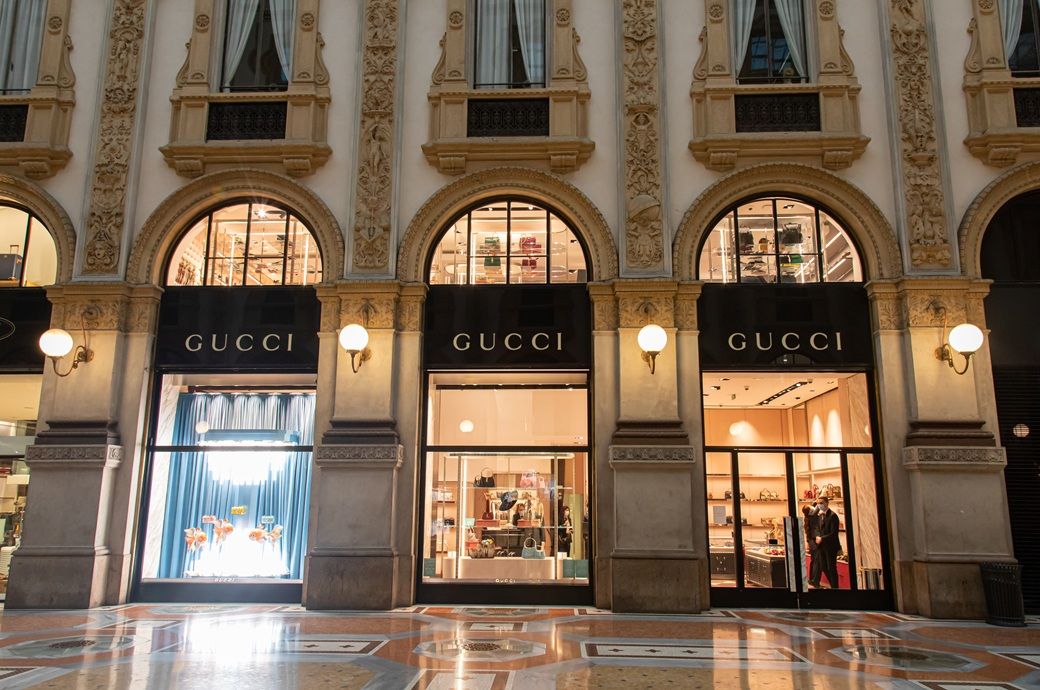
The group reported first-quarter (Q1) 2026 revenue of €3,568 million (~$4,210.24 million), down 6 per cent year-over-year (YoY) on a reported basis but stable on a comparable basis, signalling early signs of recovery despite geopolitical pressures.
Kering’s Q1 2026 revenue reached €3,568 million (~$4,210.24 million), down 6 per cent YoY but stable comparably, signalling early recovery.
Retail fell 2 per cent, while wholesale rose 6 per cent.
Fashion & Leather Goods sales went down 9 per cent.
Gucci declined 14 per cent to €1,347 million (~$1,589.46 million).
Middle East retail dropped 11 per cent, contributing 5 per cent of sales.
“In the first quarter of 2026, group revenue stabilised, marking an important first step in our recovery and a further sequential improvement. This performance reflects the first tangible effects of our actions, despite a challenging geopolitical environment,” said Luca de Meo, CEO of Kering.
Retail sales, including e-commerce, declined 2 per cent on a comparable basis, reflecting uneven regional demand. Wholesale revenue rose 6 per cent, Kering said in a press release.
Kering’s Fashion & Leather Goods posted a revenue of €2,852 million, down 9 per cent reported and 3 per cent comparable. Direct retail sales fell 4 per cent. Growth was driven by Saint Laurent, Bottega Veneta, Balenciaga and Brioni, particularly in North America.
Saint Laurent saw strong traction in shoes and ready-to-wear, while Bottega Veneta performed well in Asia-Pacific. Balenciaga continued to benefit from leather goods demand, and Brioni maintained positive momentum. Wholesale revenue for the segment increased 2 per cent.
Gucci posted €1,347 million (~$1,589.46 million) in revenue, down 14 per cent reported and 8 per cent comparable. Retail sales declined 9 per cent. North America grew 8 per cent, but this was offset by declines in Asia-Pacific and Western Europe.
“Gucci remains our top priority. A comprehensive turnaround is underway, with decisive actions across client, distribution and, above all, the offer,” added de Meo. “We have reset the product architecture and strengthened category focus, with new collections rolling out progressively in stores throughout the year.”
Regionally, the Middle East remains a key area of focus, contributing around 5 per cent of retail revenue. The Group operates 79 stores and employs approximately 1,100 people in the region. Retail revenue there declined 11 per cent in Q1 following earlier growth, amid geopolitical tensions. However, all stores are currently operational.
Kering continued to strengthen its operational structure and growth platforms during the quarter.
“The first quarter of 2026 marked continued progress, as we executed with pace and focus. We have launched a Group platform designed to support the growth of our Houses and enhance efficiency,” said de Meo.
Kering remains focused on restoring growth and improving margins in 2026 through disciplined execution and strategic repositioning.
Fibre2Fashion News Desk (SG)
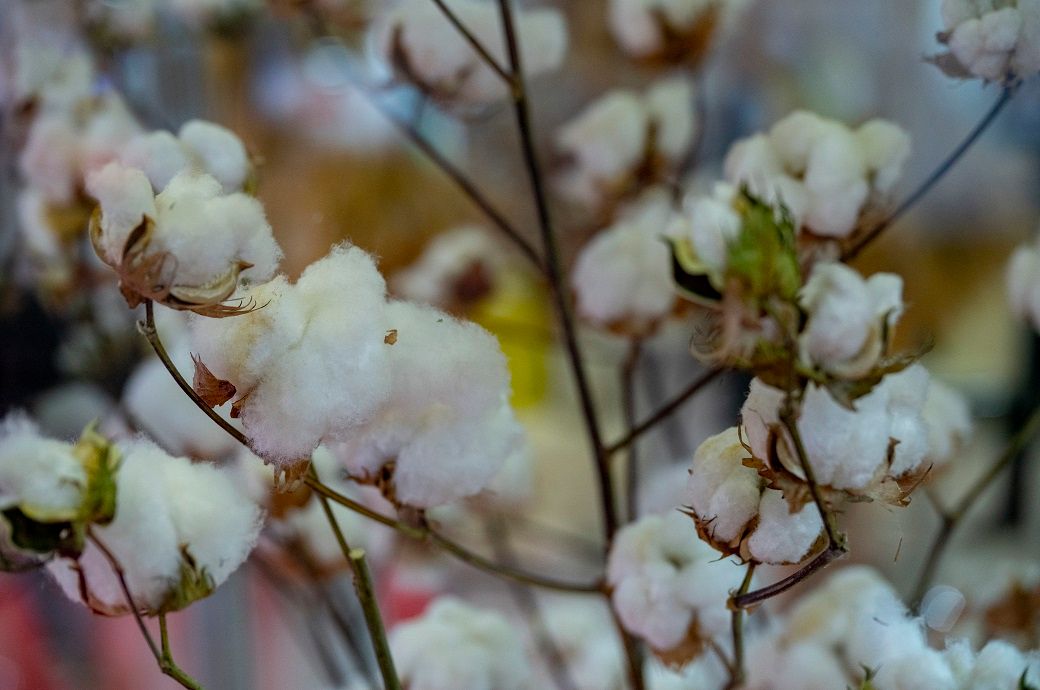
The May 2026 contract settled at 75.11 cents per pound, up 0.77 cent or 1 per cent. The most traded contract of July 2026 rallied 0.90 cent or 1.20 per cent to settle at 77.42 cents per pound. It had touched an intraday high of 77.75 cents, marking its highest level since July 2024. Other contracts also rose to reach a high level.
ICE cotton surged to a 22-month high, led by a weaker US dollar, firm crude oil and drought concerns in key US regions.
The July 2026 contract hit its highest since July 2024.
Strong trading volumes and rising synthetic fibre costs supported demand, while weather risks and macro factors kept market sentiment firmly bullish.
Deliverable stocks remained unchanged, signalling tight supply conditions.
Total trading volume was recorded at 98,489 contracts, reflecting strong participation and sustained buying interest.
Crude oil prices remained firm as supply disruption concerns persisted due to ongoing geopolitical tensions involving Iran. Markets reacted to mixed signals after statements indicating a possible end to the US-Iran conflict, but uncertainty kept oil prices supported. The conflict has effectively disrupted flows through the Strait of Hormuz, which handles nearly 20 per cent of global oil and gas shipments along with key commodities like fertilisers. Elevated crude oil prices are increasing polyester fibre production costs, thereby supporting cotton demand as a substitute fibre.
The US dollar index edged lower and traded in a narrow range as investors assessed the likelihood of renewed US-Iran negotiations. A weaker dollar made US cotton more competitive in global markets, providing additional support to export demand.
According to market analysts, high crude oil prices and rising synthetic fibre costs are key drivers supporting the cotton market, along with the impact of a weaker dollar.
The ongoing drought conditions in the United States also continued to pose risks to crop development unless weather conditions improve. Weather conditions in major US cotton-producing regions remain dry, reinforcing concerns over crop health, yield potential, and overall supply outlook.
ICE data showed that deliverable No. 2 cotton futures stocks remained unchanged at 159,512 bales as of April 14.
Broader financial markets showed strength, with the S&P 500 and Nasdaq closing at record highs driven by strong corporate earnings and optimism around geopolitical developments. CBOT wheat futures rose for the third consecutive session and have gained nearly 4 per cent so far this week due to drought conditions in the US Plains impacting crop prospects.
Cotton futures remain in a strong bullish phase with prices at multi-month highs, supported by macroeconomic factors such as a weaker dollar and firm crude oil, along with fundamental support from adverse US weather conditions. Market sentiment continues to favour further upside in the near term.
This morning (Indian Standard Time), ICE cotton for May 2026 was trading at 75.98 cents per pound (up 0.87 cent), cash cotton at 73.11 cents (up 0.77 cent), the July 2026 contract at 78.32 cents (up 0.90 cent), the October 2026 contract at 78.94 cents (up 1.37 cent), the December 2026 contract at 79.10 cents (up 0.75 cent) and the March 2027 contract at 79.85 cents (up 0.66 cent). A few contracts remained at their previous closing levels, with no trading recorded so far today.
Fibre2Fashion News Desk (KUL)
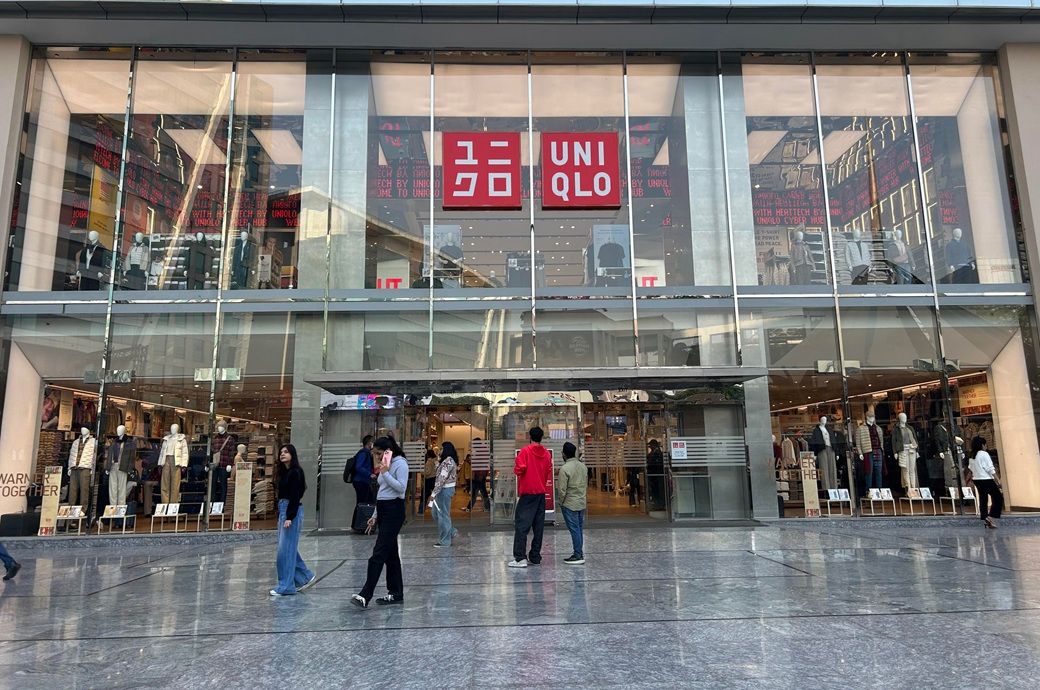
Driven by growing customer appreciation it is for high quality, functional clothing, the new stores are part of UNIQLO’s ongoing expansion in India, bringing its LifeWear philosophy, clothing designed make everyday living better to more customers across the country.
Uniqlo will open two new stores at Phoenix Market City Pune (May 15) and Phoenix Marketcity Bengaluru (June 5), each spanning around 21,000 sq. ft.
The expansion reflects rising demand for high-quality everyday wear.
Both stores will offer the full LifeWear range and a modern shopping experience, strengthening the brand’s presence in key urban markets.
“The response from our customers in India has been incredibly encouraging, especially in cities like Pune and Bengaluru where there is a growing demand for simple, high-quality everyday clothing,” said Kenji Inoue, Chief Financial Officer and Chief Operating Officer, UNIQLO India. “With these new stores, we look forward to reaching even more customers and continuing to bring LifeWear to people across India.”
The Pune store at Phoenix Market City and the Bengaluru store at Phoenix Marketcity Bangalore will each span approximately 21,000 sq. ft., offering UNIQLO’s full range of LifeWear for men, women, and children. Designed to deliver a seamless and engaging shopping experience, both locations will feature modern store layouts alongside the brand’s signature visual identity.
Further details about the store opening, including opening date, special offers, and opening celebrations, will follow in the coming weeks.
Note: The headline, insights, and image of this press release may have been refined by the Fibre2Fashion staff; the rest of the content remains unchanged.
Fibre2Fashion News Desk (JP)


Princess Anne keeps up her relentless royal pace in Dartmouth

France’s Kering begins 2026 on stable footing, eyes Gucci revival

ICE cotton rallies to 22 month-high on weaker dollar, drought worries

-

 Entertainment1 week ago
Queen Elizabeth II emotional message for Archie, Lilibet sparks speculation
-

 Tech1 week ago
Azure customers up in arms over ‘full’ UK South region | Computer Weekly
-

 Tech1 week ago
As the Strait of Hormuz Reopens, Global Shipping Will Take Months to Recover
-

 Fashion1 week ago
CII submits 20-pt agenda to Indian govt to back firms hit by Iran war
-

 Tech1 week ago
This AI Button Wearable From Ex-Apple Engineers Looks Like an iPod Shuffle
-

 Politics6 days ago
Indian airlines hit hardest after Dubai limits foreign flights until May 31
-

 Politics6 days ago
Chinese, Taiwanese will unite, Xi tells Taiwan opposition leader
-

 Entertainment1 week ago
Why Lionel Richie saved Rae?