

Business
Ford EV chief leaving automaker amid new restructuring efforts


Doug Field, the chief EV, digital and design officer at Ford Motor, speaks at Louisville Assembly Plant as Ford shares its plans to design and assemble its “Universal Electric Vehicle” platform on Aug. 11, 2025.
Courtesy: Ford
DETROIT — Ford Motor‘s head of electric vehicles and software is leaving the automaker as it restructures its executives and operations.
Ford on Wednesday said Doug Field — chief EV, digital and design officer — has “elected to leave the company after a transition over the next month.” A release announcing the move mentioned a “next chapter” for Field, but the executive declined to disclose specific plans on a call with media Wednesday.
Field’s departure was announced in conjunction with Ford detailing a new executive structure that includes the establishment of a “Product Creation and Industrialization” organization at the company that will be led by Ford veteran and Chief Operating Officer Kumar Galhotra.
Ford said the new structure will integrate Field’s responsibilities with the company’s global Industrial System group to help the automaker hit certain goals under its “Ford+” business plan, such as its target of an 8% adjusted EBIT margin by 2029.
“Today is a very important moment for us at Ford, really for our next chapter. It’s also an important moment for all of us as leaders,” Ford CEO Jim Farley said Wednesday on the call with Field and Galhotra. “We believe this organization change will really help us deliver all the key Ford plus objectives.”
Field’s departure comes as Ford is preparing to launch a next generation of electric vehicles that Farley has said are as important as the company’s famed Model T.
Farley and Field on the call with media said the upcoming vehicle — a midsize pickup built on Ford’s “Universal Electric Vehicle,” or UEV, platform that’s due out next year — was in a solid position to continue in the new unit without Field.
“Ford will be changed by taking these products all the way over the finish line. My team is ready, and they’re ready to execute,” Field said Wednesday.
‘Heart and soul’ of Ford transformation
Ford on Wednesday described the new Product Creation and Industrialization unit as an “end-to-end organization” that aims to “deliver one of the most intensive product, software, and services rollouts in Ford’s history.”
The automaker plans to refresh 80% of its North American portfolio by volume and 70% of its global portfolio by volume by 2029, the company said. That includes the UEV pickup truck, next-generation F-150 and larger F-Series Super Duty lineup.
That turnaround of products also will include new powertrain offerings and software, Ford said Wednesday.
“This is really the heart and soul over the next couple years of our transformation,” Farley said. “This new structure positions us to move a lot faster, reduce complexity inside the company and deliver those great digital experiences and vehicles with greater quality and efficiency.”
By 2030, the company is planning for 90% of its global nameplates to offer electrified powertrains, including hybrids, extended-range electric vehicles and full EVs. It is also aiming to have 90% of its vehicles by volume feature updated “electrical architectures, in-house developed user experiences and hardware, and next-generation over-the-air capabilities for continuous improvement in experiences and services.”
Ford said the new technologies will enable “the rapid rollout” of advancements to its digital experience for customers and BlueCruise advanced driver assistance system, with a “scalable path” toward a 2028 Ford goal to achieve eyes-off driving.
“We’re on the eve of the biggest change the company has seen, which is delivering all this new software and hardware and products and services in ’27 through ’29 that will get us not only to that 8% margin, but transform the company,” Farley said. “This is the team that’s going to deliver this.”
Leadership shakeup
There will not be a direct replacement for Field, whom Ford executives praised when the automaker brought him to the company in 2021 after previous leadership positions with U.S. EV leader Tesla and Apple.
Farley, who called Field’s hiring a “watershed moment” at the time, also spoke fondly of the executive on Wednesday. He said Field was an “invaluable partner” who “has built a world-class team at Ford.”

Auto stocks
However, many of Ford’s initiatives involving software and EVs did not perform as expected. Most notably, the automaker reported significant shortfalls in generation of software revenue and in December announced it would write down $19.5 billion related to a pullback in EVs and realignment of business priorities.
While several automakers have announced such impacts due to EVs, Ford’s write-down was much larger than its closest rival, General Motors, which has announced roughly $7.6 billion in such charges.
In addition to Field leaving the company, Ford on Wednesday announced a series of other changes to its advanced vehicle development products and European manufacturing.
“With this unified organization, I believe we’re better positioned than ever to deliver high-quality vehicles, advanced digital experiences and profitable services at scale,” Galhotra said. “That’s what this is all about.”





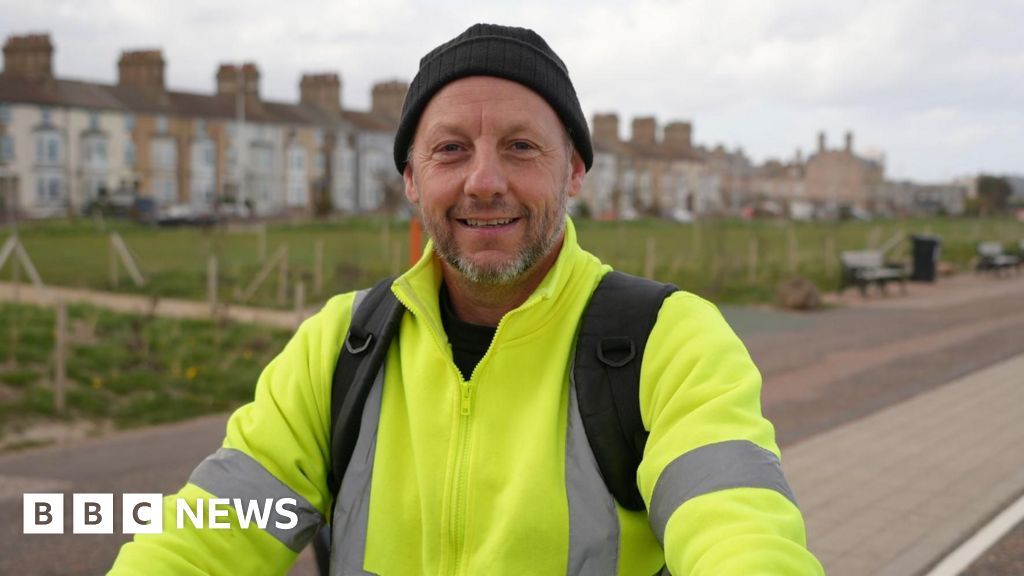
One man says he cancelled his holiday to Spain due to the rising costs and uncertainty.
Source link
MUMBAI: Vijay Singh, a former Indian defence secretary whose eligibility as a trustee has come under legal challenge, absented himself from the board meeting of the Bai Hirabai Jamsetji Tata Navsari Charitable Institution on Friday, the latest sign of an intensifying governance dispute within India’s most powerful philanthropic network.The challenge was brought by Mehli Mistry, a former trustee, before the Maharashtra charity commissioner, questioning the appointments of Singh and Venu Srinivasan as trustees of Bai Hirabai. Mistry cited clauses in the 1923 trust deed requiring all trustees to be Zoroastrians and permanent residents of Mumbai, and argued that neither of them met those conditions.Srinivasan, chairman emeritus of TVS Motors, stepped down citing other commitments, but later acknowledged he had done so at the request of Tata Trusts management. Singh declined a similar request. Those present at the Friday meeting included chairman Noel Tata, trustees Darius Khambata and Jehangir HC Jehangir, the last of whom joined by video conference from Europe. Jimmy Tata, Noel’s older half-brother and a fellow trustee, was again absent. Singh confirmed he did not attend the meeting. A person familiar with the proceedings said the board discussed, among other matters, Mistry’s objections and next steps.The dispute has exposed a deeper legal tension. Both Srinivasan and Singh alleged that Tata Trusts had withheld from them a legal opinion by former chief justice of India MH Kania, who held that the restrictive eligibility clauses in Bai Hirabai’s trust deed were “bad in law.” That interpretation had previously allowed former Tata Group director RK Krishnakumar to be inducted onto the board. Tata Trusts said irrespective of that opinion and past precedent, appointments of non-Zoroastrians remained open to challenge under the deed’s provisions, adding that a legal opinion did not substitute for a judicial pronouncement. The commissioner has yet to order a formal inquiry. Bai Hirabai was endowed by Sir Ratan Tata, younger son of Tata Group founder Jamsetji Tata, who bequeathed properties in Mumbai and Navsari to the institution, the provenance that gives its century-old deed its continuing legal force.

The UK’s biggest mobile providers have been outperformed by smaller rivals in an annual customer service survey by watchdog Which?
Three, O2 and Lycamobile were the lowest performing networks in the survey of more than 5,000 mobile users, receiving customer scores of 65%, 67% and 68% respectively.
Three received a two-star rating in every category including network reliability and technical support, the consumer group found.
O2 received just two stars for value for money and customer service, shortly after it increased its annual price rises from £1.80 to £2.50 a month for all customers.
Lycamobile received four stars for value for money but two stars in every other category.
EE and Vodafone achieved scores of 74% and 72% respectively, although Which? described them as “stuck in the middle to lower reaches of the table”.
Talkmobile topped the rankings with a customer score of 83% followed by Tesco Mobile on 81%, with both impressing customers with their network reliability, customer service and value for money.
Other top-rated networks included Giffgaff and Smarty, which both received a score of 79%, driven by their flexibility and affordable Sim-only deals.
Lebara and 1pMobile both achieved a score of 78%, with customers praising 1pMobile’s network reliability and value for money and Lebara earning five stars for value for money.
According to the survey, respondents using one of the ‘big four’ – EE, O2, Three and Vodafone – paid an average of £16 for a Sim-only contract, compared with just £9 on smaller networks.
For contracts including a phone, users paid an average £40 with the ‘big four’ compared with £28 with smaller providers.
Many smaller firms use the infrastructure of the ‘big four’, meaning customers often receive the same signal and coverage.
Which? head of home products and services, Natalie Hitchins, said: “Our latest research shows that smaller providers are consistently outshining the industry’s largest mobile firms by offering better customer service and far cheaper deals.
“Many top-rated challengers avoid mid-contract price hikes, offering households struggling with the cost of living much-needed certainty.
“Any customers nearing the end of their contract who are unhappy with their service, or simply looking to save money, should not hesitate to vote with their feet and move to a provider that actually delivers on value.”


US renews Russian oil waiver amid Iran war-driven price shocks
Iran war causing staycation spike – Suffolk holiday firms

Top Vietnamese, Chinese leaders hold talks on advancing cooperation

-

 Politics1 week ago
Indian airlines hit hardest after Dubai limits foreign flights until May 31
-

 Tech1 week ago
This AI Button Wearable From Ex-Apple Engineers Looks Like an iPod Shuffle
-

 Politics1 week ago
Chinese, Taiwanese will unite, Xi tells Taiwan opposition leader
-

 Sports5 days ago
The case for Man United’s Fernandes as Premier League’s best
-

 Entertainment5 days ago
Palace left in shock as Prince William cancels grand ceremony
-

 Entertainment7 days ago
Dua Lipa hits major career high ahead of wedding with Callum Turner
-
 Business1 week ago
He paid $248 in illegal tariffs for this coat. Will he ever get it back?
-
 Business5 days ago
UK could adopt EU single market rules under new legislation