

Politics
France Will Never Participate in Operations to Unblock Hormuz: Macron

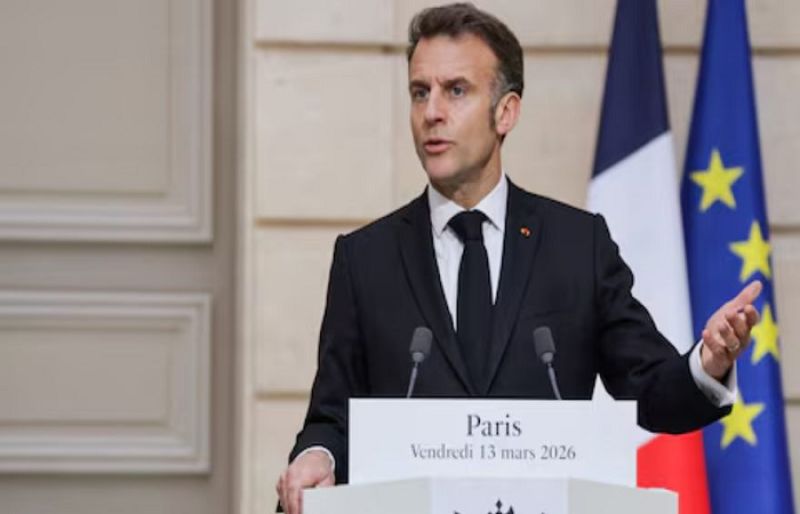

President Emmanuel Macron said on Tuesday France would never take part in operations to unblock the Strait of Hormuz, pushing back on comments by U.S. President Donald Trump that Paris was willing to help.
Trump, speaking at a White House event on Monday, said he had spoken to Macron, giving him an “8 out of 10” score on his stance towards getting allies to unblock the Strait of Hormuz, and suggested Macron would join U.S.-backed efforts.
“We are not party to the conflict, and therefore, France will never take part in operations to open or liberate the Strait of Hormuz in the current context,” Macron said at the start of a cabinet meeting to discuss the conflicts in the Middle East.
France has been pushing on with its own efforts to put together a coalition to secure the Strait of Hormuz once the security situation stabilises, and without a U.S. role, French officials have said.
FRANCE WORKING ON POST-WAR COALITION
“We are convinced that once the situation has calmed down — and I deliberately use this term broadly — once the situation has calmed down, that is to say, once the main bombing has ceased, we are ready, along with other nations, to assume responsibility for the escort system,” Macron said.
European states have been largely sidelined as the U.S.-Israeli war on Iran has escalated, with Iran carrying out strikes against Israel, U.S. bases and Gulf states.
But with shipping lanes affected and the conflict pushing up oil prices, European powers are trying to work out how to defend their interests.
France has already been consulting with European, Asian, including India, and Gulf Arab states over the past week with a view to putting together a plan for warships eventually to escort tankers and commercial ships through the strait, officials have said.
“But this is a complex undertaking, involving political and technical aspects, obviously with all stakeholders in maritime transport, including insurers and operational personnel, that we must build,” he said.
“This work will require discussions and de-escalation with Iran,” he said.
TRUMP CALLS REJECTED
Trump called on nations to help police the strait after Iran responded to U.S.-Israeli attacks by using drones, missiles and mines to effectively close the channel for tankers that normally transport a fifth of global oil and liquefied natural gas.
Several U.S. allies had already rebuffed Trump on the proposal.
“We are dissociating our actions from the United States and Israeli operations. The US is conducting an operation in which we’re not involved in any way. We are acting independently of the Americans,” a French military official said.
“We’re excluding any involvement of our assets in an attempt to reopen the Strait of Hormuz by force. Any potential mission to protect the Strait of Hormuz would require a ceasefire or a reduction in hostilities, as well as prior negotiations with Iran. It would necessarily be international and joint,” the official said.
The European Union’s main naval activities in the region centre on Aspides, a Red Sea mission launched in 2024 to guard vessels from attack by Iran-aligned Houthis. EU foreign ministers agreed on Monday not to extend that mission beyond its current mandate.
- Trump says China fine with trip rescheduling.
- Trip postponed as Iran war upends US foreign policy.
- Postponed visit heightens uncertainty for markets.
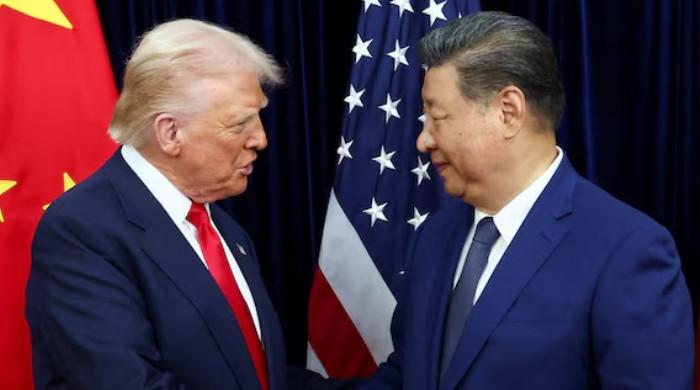
President Donald Trump on Tuesday said he is postponing a highly anticipated trip to Beijing to meet Chinese President Xi Jinping as the war with Iran upends US foreign policy and delays an effort to ease tensions between the world’s two biggest economies.
“We are resetting the meeting … We’re working with China. They were fine with it,” Trump told reporters in the Oval Office.
Trump had been set to travel to Beijing from March 31-April 2 for the first trip there of his 14-month-old second term. The trip will now take place in about five or six weeks, Trump said.
The postponed visit heightens uncertainty for markets and diplomacy alike, as the war with Iran has driven oil prices higher, threatened shipping through the Strait of Hormuz and sharpened investor focus on energy security.
Trump’s campaign in Iran has unleashed a wave of military and economic consequences and commanded attention from across his administration.
Visit at odds with US economic struggles
The image of Trump on a lavish state visit was increasingly seen at odds with a struggling US economy and the return of American service members killed in the Middle East, said a person briefed on planning for the Beijing meetings.
Iran has responded to joint US-Israeli attacks by threatening to fire on vessels moving through the Strait of Hormuz. Trump has called on numerous nations, including China, to help ships safely transit the strait, where one-fifth of the world’s oil transits on a daily basis.
Trump’s request for assistance so far has largely been rebuffed. China, which imported around 12 million barrels of oil daily in the first two months of 2026, the most in the world, has not directly responded to his request.
Beijing never officially announced dates for Trump’s visit and normally does not detail Xi’s schedule far in advance.
Early preparations for the meeting included talks this week in Paris between US Treasury Secretary Scott Bessent and Chinese Vice Premier He Lifeng.
Those talks focused on potential additional purchases of US agricultural goods, including poultry, beef and non-soybean row crops. They also discussed increasing the flow of rare earth minerals largely controlled by China and new approaches to manage trade and investment between the countries, according to people familiar with the talks.
“Head of state diplomacy plays an irreplaceable role in providing strategic guidance to China-US relations,” said Lin Jian, a Chinese Foreign Ministry spokesperson, earlier this week.
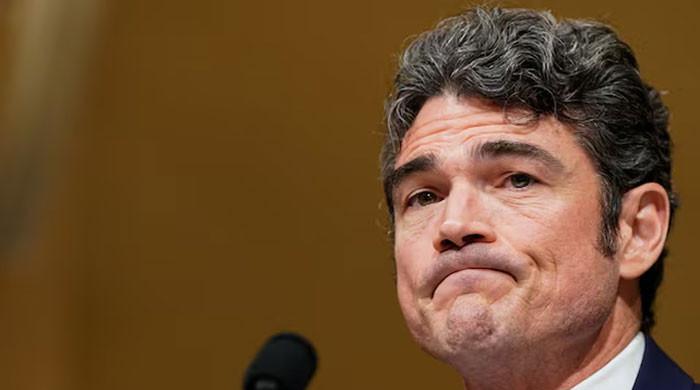
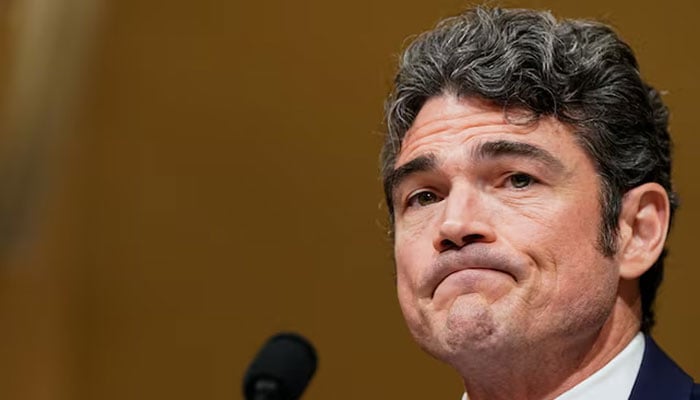
A senior US counterterrorism official resigned on Tuesday to protest the US-Israeli war against Iran and said the Islamic Republic posed no imminent threat to the United States.
“I cannot in good conscience support the ongoing war in Iran,” Joseph Kent, the director of the National Counterterrorism Centre, said in his resignation letter to President Donald Trump.
Kent — a former member of the Green Beret special forces who served multiple combat tours — said: “Iran posed no imminent threat to our nation, and it is clear that we started this war due to pressure from Israel and its powerful American lobby.”
Kent is the first senior US official to resign from the Trump administration to protest the war against Iran.
“Until June of 2025, you understood that the wars in the Middle East were a trap that robbed America of the precious lives of our patriots and depleted the wealth and prosperity of our nation,” Kent said in his letter to Trump.
“Early in this administration, high-ranking Israeli officials and influential members of the American media deployed a misinformation campaign that wholly undermined your America First platform and sowed pro-war sentiments to encourage a war with Iran,” he said.
“This echo chamber was used to deceive you into believing that Iran posed an imminent threat to the United States, and that should you strike now, there was a clear path to a swift victory,” he said.
“This was a lie and is the same tactic the Israelis used to draw us into the disastrous Iraq war that cost our nation the lives of thousands of our best men and women,” Kent said.
“I cannot support sending the next generation off to fight and die in a war that serves no benefit to the American people nor justifies the cost of American lives,” he added.
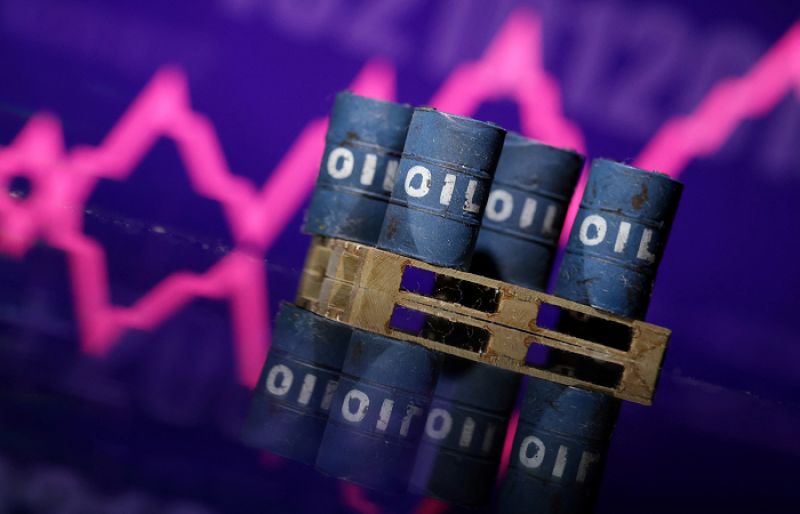

Chinese state oil majors looking to head off supply shortages caused by the war in the Middle East have resumed seeking Russian crude cargoes after a four-month hiatus, taking advantage of a US sanctions waiver, five trade sources said.
Trading arms under state-run Sinopec and PetroChina have this week made inquiries with suppliers for possible purchases of Russian oil, which would be their first since November, said five sources close to or involved in Russian oil trade.
While no deals were known to have been struck as of Tuesday, two of the sources said transactions were likely to be imminent as Russian oil remains cheap versus rival supplies from Brazil and West Africa despite surging prices and premiums triggered by the US-Israel war on Iran that began on February 28.
Chinese oil majors were “assessing” the situation, said a state oil trader, including whether payment and delivery could be completed within the 30-day waiver window that began on March 12 and applies to cargoes that had already been loaded.
Sinopec and PetroChina did not immediately respond to requests for comment.
One of the sources, involved in Russian oil trading and familiar with PetroChina’s trading operations, said majors could also seek to secure cargoes while the situation is “messy” by buying from Chinese independent refiners or traders with Russian-origin oil already in storage.
“Some teapots are ready to resell, as that makes more money for them than processing at their plants,” said the source, referring to the independent refiners.
End-April arriving ESPO blend, Russia’s flagship Far East export grade, was last heard offered by a Russian producer at $8 a barrel above July ICE Brent on a delivered basis.
That compared with April-loading Brazil’s Tupi grade last pegged at a premium of $12-15 over dated Brent.
FROM DISCOUNT TO PREMIUM
Differentials for ESPO, mostly consumed by China’s independent refiners, flipped into a $2-$3 premium last week for April/May shipments, compared with discounts of $7-$10 for March-loading barrels.
China’s seaborne Russian oil imports surged to an all-time high of 1.92 million barrels per day in February, Kpler data showed, as independent buyers snapped up deeply discounted cargoes after top buyer India’s demand fell.
State oil companies had since late October suspended buying Russian oil after Washington imposed sanctions on Moscow’s two biggest oil companies, Rosneft and Lukoil.
The spikes in spot premiums and outright Brent prices to more than $100 a barrel would, however, sideline independent refiners, said three of the sources, as they are cushioned for the near term with cheaper inventories of Russian and Iranian oil bought before the war.


Fantasy guide to offseason signings: Broncos add to WR room, trade for Waddle

Sebastian Stan expecting 1st child with girlfriend Annabelle Wallis: Report

Trump postpones trip to Beijing as Iran war delays China reset

Stock market crash today (March 12, 2026): Nifty50 opens below 23,600; BSE Sensex down over 900 points on continuing US-Iran war – The Times of India

Intertextile Shanghai 2026: Fringe events spotlight market trends

2026 NCAA Tournament Berth Tracker: Automatic Bids, Championship Game Times, and Defending Champs

-
Business6 days ago
Stock market crash today (March 12, 2026): Nifty50 opens below 23,600; BSE Sensex down over 900 points on continuing US-Iran war – The Times of India
-
 Fashion1 week ago
Intertextile Shanghai 2026: Fringe events spotlight market trends
-

 Entertainment1 week ago
What time will NASA’s 600 kg satellite crash to Earth today— 14 years after launch?
-
 Sports1 week ago
2026 NCAA Tournament Berth Tracker: Automatic Bids, Championship Game Times, and Defending Champs
-
 Business1 week ago
Crude oil surpasses $100: WTI up 30%, brent crude reaches $118; what it means? – The Times of India
-

 Fashion1 week ago
German brand Adidas posts 13% revenue growth in 2025
-
 Business1 week ago
Gulf war risks global economic shock | The Express Tribune
-

 Sports1 week ago
FA Cup ‘pain in the bum’ for relegation candidates Port Vale