

Politics
From bus driver to iron-fisted leader

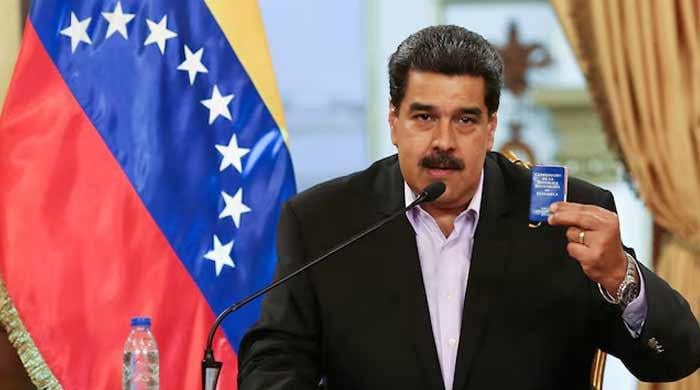
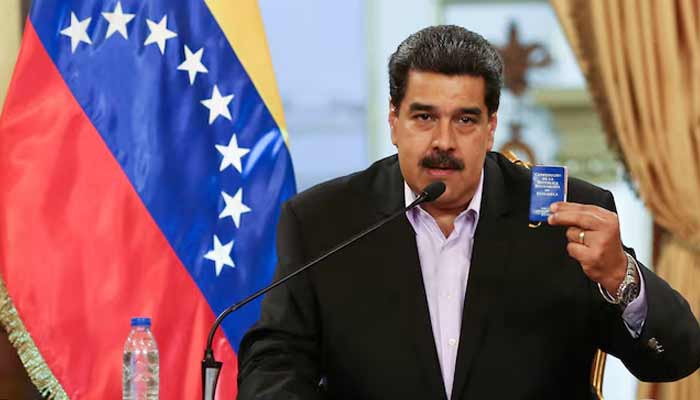
Venezuela’s Nicolas Maduro, who has been seized by US special forces after more than a decade in power, ruled with an iron fist while seeking to portray himself as a humble man of the people.
During months in the crosshairs of US President Donald Trump, who accused him of being a drug trafficker, the 63-year-old former bus driver deflected pressure by dancing to techno music at near-daily rallies, always broadcast live, as he chanted the mantra “No war, yes peace!”— in English.
But for many Venezuelans, Maduro was no kindly pacifist.
Seven million compatriots emigrated on his watch amid allegations of arbitrary detentions, rigged trials, torture and censorship.
The South American country’s economy collapsed, marked by four consecutive years of hyper-inflation and an 80% drop in GDP in a decade.
As he tightened his grip on power, Maduro relied increasingly on backing from a handful of international allies— notably China, Cuba and Russia— as well as the military, security and paramilitary forces.
More than 2,400 people were arrested, 28 killed and about 200 injured in a crackdown on the protests that followed his disputed election victory claim in July 2024.
The violence echoed previous deadly crackdowns on the opposition that he oversaw in 2014, 2017 and 2019.
‘First combatant’
Tall with a full mustache and slicked-back graying hair, Maduro first came to power in 2013 and claimed reelection twice: in 2018 and 2024 in elections widely denounced as fraudulent.
In January 2025, he was sworn in for a third term that would have taken him to 18 years in power — longer than his revolutionary hero Hugo Chavez, who spent 14 years in the presidential palace.
Maduro served as a lawmaker, foreign minister and vice president before being chosen by Chavez as his successor three months before the socialist firebrand died of cancer in 2013.
The choice of Maduro, who lacks Chavez’s rhetorical skills and charisma, raised eyebrows in the ruling United Socialist Party of Venezuela (PSUV).
He barely scraped through on his first election in 2013.
But he fended off crisis after crisis, including US sanctions and a steep drop in oil prices that robbed Venezuela of its economic mainstay.
In 2018, much of the international community recognised congress speaker Juan Guaido as interim president, but his parallel government soon imploded.
And then after elections in July 2024, the United States, European nations and several Latin American neighbours declared opposition figure Edmundo Gonzalez Urrutia the country’s rightful leader.
Throughout, Maduro also counted on his wife Cilia Flores, a former prosecutor seven years his senior who he refers to as “First Combatant” and “Cilita”.
Flores was also a lawmaker who after years in Congress rose to the presidency of the National Assembly (2006-2010) later to hold much power behind the scenes in Maduro’s Venezuela.
Trump said Flores was seized by US special forces with her husband, and that they were being taken to New York to face federal charges after an early-morning assault on Caracas.
‘Marxist and Christian’
In the Venezuelan capital Caracas, Maduro’s image is plastered across buildings everywhere.
He has worked hard at building an image of himself as an earthy man of the people — an avowed baseball fan and a lover of salsa, showing off his dance moves on state TV, always with his wife by his side.
Born in Caracas, Maduro is both a professed Marxist and Christian, and as a teenager played guitar in a rock band.
It has been claimed he deliberately misspeaks in English so as not to be seen as high-brow.
As president, Maduro weathered many threats imagined and real — including a failed explosive-laden drone attack in 2018 that wounded several soldiers.
To deflect blame for Venezuela’s political and economic woes, he kept up Chavez’s anti-American conspiracy theories, repeatedly accusing the United States of plotting to unseat him.
While casting himself as the victim of an international plot, Maduro shuttered channels for political dissent, locking up dissidents and challengers with little regard for due process.
His government is under investigation for rights violations by the International Criminal Court.
Maduro has also shown himself to be adept at realpolitik, winning an easing of US sanctions and other concessions by agreeing with the opposition to hold democratic elections in 2024.
But he reneged on the conditions, and some of the sanctions were quickly snapped back.
Maduro has been a near omni-present feature in the lives of long-suffering Venezuelans, pumping his fist in regular television appearances while shouting anti-imperialist rhetoric.
He also appeared regularly on screen and in print as a cartoon character drawn in his image: a caped superhero named Super-Bigote (Super-Mustache) who is “at war with imperialism.”
- Rubio says “premature” to talk of new polls for Venezuela.
- Streets quiet amid anxiety over next developments.
- Vice president takes over country as interim leader.
A top Venezuelan official declared on Sunday that the country’s government would stay unified behind President Nicolas Maduro, whose capture by the US has sparked deep uncertainty about what is next for the oil-rich South American nation.
Maduro is in a New York detention centre awaiting a Monday court appearance on drug charges, after US President Donald Trump ordered his removal and said the US would take control of Venezuela. But in Caracas, top officials in Maduro’s government, who have called the detentions of Maduro and his wife Cilia Flores a kidnapping, were still in charge.
“Here, the unity of the revolutionary force is more than guaranteed, and here there is only one president, whose name is Nicolas Maduro Moros. Let no one fall for the enemy’s provocations,” Interior Minister Diosdado Cabello said in an audio shared by the ruling PSUV socialist party on Sunday as he urged calm.
Images of the 63-year-old Maduro blindfolded and handcuffed on Saturday stunned Venezuelans. The action is Washington’s most controversial intervention in Latin America since the invasion of Panama 37 years ago.
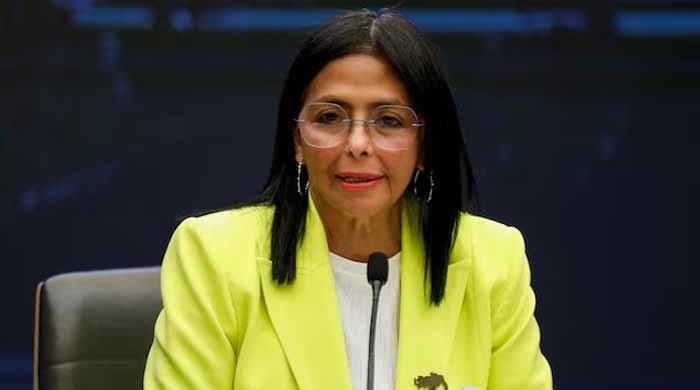
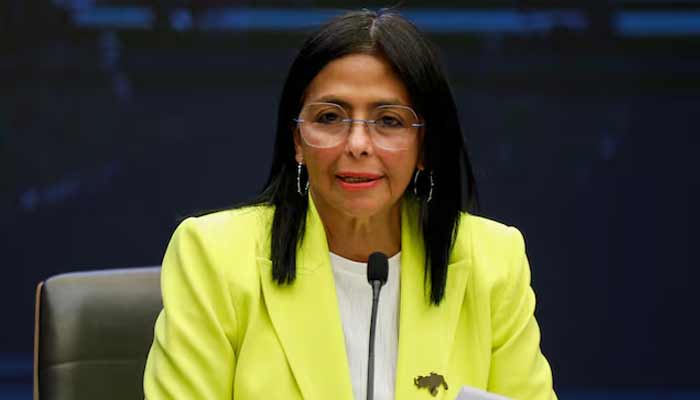
Vice President Delcy Rodriguez — who also serves as oil minister — has taken over as interim leader with the blessing of Venezuela’s top court, though she has said Maduro remains president.
Because of her connections with the private sector and her deep knowledge of oil, the country’s top source of revenue, Rodriguez has long been considered the most pragmatic member of Maduro’s inner circle, but she has publicly contradicted Trump on his claims she is willing to work with the US.
The Venezuelan government has said for months that Trump’s pressure campaign is an effort to take possession of the country’s vast natural resources, especially its oil, and officials have made much of Trump’s Saturday comments on the subject, when he said major US oil companies would move in.
“We are outraged because in the end everything was revealed — it was revealed that they only want our oil,” added Cabello, who has close ties to the military.
Venezuela’s state-run oil company PDVSA is asking some of its joint ventures to cut back crude output by shutting down oilfields or groups of wells amid an export paralysis, three sources close to the decision told Reuters.
Oil exports from the OPEC country remain at a standstill since the US last month announced a blockade on sanctioned tankers moving in and out of Venezuelan waters and the seizure of two oil cargoes.
Once one of the most prosperous nations in Latin America, Venezuela’s economy nosedived further under Maduro, sending about one in five Venezuelans abroad in one of the world’s biggest exoduses.
‘US ready to work with new authorities’
Secretary of State Marco Rubio said the Trump administration will work with the existing Venezuelan leadership.
His comments indicated that Washington is not seeking complete regime change and sought to clarify Trump’s earlier statement that the US will “run” the Latin American country of about 30 million people.
Rubio told NBC’s “Meet the Press” that the US was fighting drug traffickers, “not a war against Venezuela.”
Despite the success of the initial US operation, questions mounted over Trump’s strategy.
The US president on Saturday indicated deep, long-lasting US involvement centred on securing access to the world’s largest proven oil reserves.
“We’re going to run the country” until a transition can be made, he said, also insisting that military “boots on the ground” remained a possibility.
Rubio did multiple television interviews Sunday morning to make clear that Washington is not looking for upheaval.
He said Washington is ready to work with Rodriguez and the rest of Maduro’s cabinet — as long as they adhere to US demands.
“We’re going to make an assessment on the basis of what they do, not what they say publicly in the interim,” he told CBS News.
Underlining the lack of focus on democracy or desire to help long-backed opposition candidates to get power, Rubio told NBC it was “premature” to talk of new elections for Venezuela.
Muted streets
Maduro opponents in Venezuela have been wary of celebrating his seizure and extraction, and the presence of security forces seemed, if anything, lighter than usual on Sunday.
Despite the nervous mood, some bakeries and coffee shops were open and joggers and cyclists were out like a normal Sunday morning. Some citizens were stocking up on essentials.
“Yesterday I was very afraid to go out, but today I had to. This situation caught me without food and I need to figure things out. After all, Venezuelans are used to enduring fear,” said a single mother in oil city Maracaibo, who said she bought rice, vegetables and tuna. “If this is necessary for my son to grow up in a free country, I’ll keep enduring the fear.”
The owner of a small supermarket in the same city said the business did not open on Saturday after US Special Forces swooped in on helicopters to seize Maduro after strikes on military installations in Caracas and elsewhere.
“Today we’ll work until noon since we’re close to many neighbourhoods — people have nowhere to buy food and we need to help them,” the shop owner said.
To the disappointment of Venezuela’s opposition, Trump has given short shrift to the idea of 58-year-old opposition leader and Nobel Peace Prize winner Maria Corina Machado taking over, saying she lacked support.
Machado was banned from standing in the 2024 election but has said her ally Edmundo Gonzalez, 76, who the opposition and some international observers say overwhelmingly won that vote, has a democratic mandate to take the presidency.
It is unclear just how Trump plans to oversee Venezuela and his focus on foreign affairs runs the risk of alienating some supporters who oppose foreign interventions.
While many Western nations oppose Maduro, there were many calls for the US to respect international law and resolve the crisis diplomatically. There were also questions over the legality of seizing a foreign head of state. Democrats said they were misled at recent Congress briefings and have demanded a plan for what is to follow.
The UN Security Council planned to meet on Monday to discuss the US attack, which Secretary-General Antonio Guterres described as a dangerous precedent. Russia and China, both major backers of Venezuela, have criticised the US.
Maduro was indicted in 2020 on US charges including narco-terrorism conspiracy. He has always denied any criminal involvement.
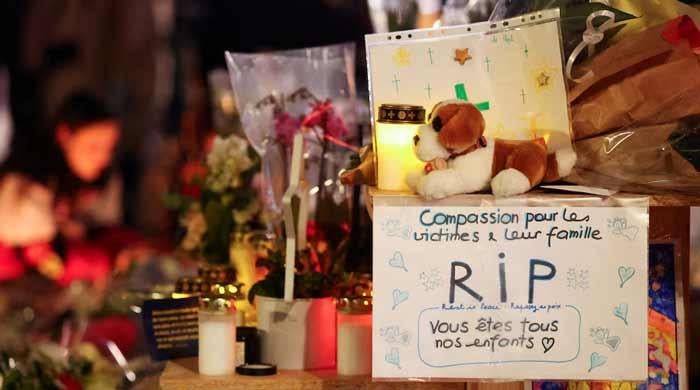
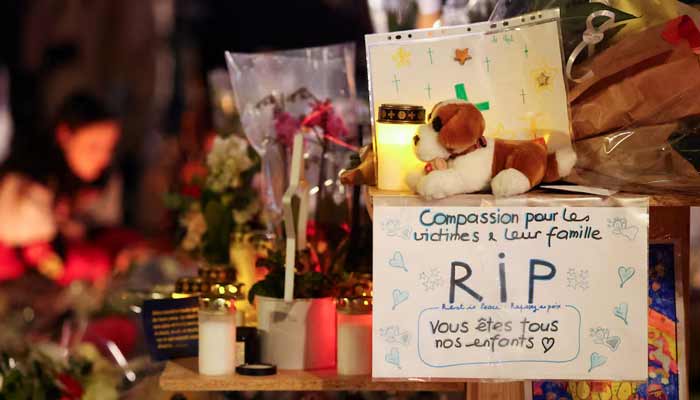
Teenagers — as young as 14 and 15 — were among those who died in the New Year’s Eve bar fire that killed 40 people in Switzerland, police said on Sunday, as the Pope offered his sympathies to the victims and their families.
Police in Valais said they had identified 16 more of those who died in the blaze in Crans-Montana, one of the worst disasters in recent Swiss history.
The newly identified victims included 10 Swiss nationals, two Italians, one person with Italian-Emirati citizenship, one Romanian, one person from France and one from Turkiye, Valais police said. No names were released.
Hundreds of mourners attended a church service in the town on Sunday morning, where Bishop Jean-Marie Lovey said condolences had poured in from around the world, including from the Pope.
“Countless people join us — people whose hearts are broken,” Lovey told the service. “Many expressions of sympathy and solidarity reach us.
“Pope Leo XIV joins in our sorrow,” he added. “In a moving message, he expresses his compassion and his care for the victims’ families and strengthens the courage of all who are suffering.”
More victims identified
The youngest person identified so far is a 14-year-old Swiss girl, while two 15-year-old girls, also from Switzerland, were among the dead.
Ten of the other bodies identified on Sunday were teenagers aged 16 to 18, police said. Also identified were two Swiss men aged 20 and 31, and a French national aged 39.
In total, police have identified 24 of those who died in the blaze in the mountain resort.
Late on Saturday, police said two Swiss women aged 24 and 22, along with two Swiss men aged 21 and 18, had been identified.
The mother of a 16-year-old Swiss boy Arthur Brodard confirmed overnight that he was among those killed.
“Our Arthur has departed to party in heaven,” Laetitia Brodard-Sitre said on her Facebook page.
“Now we can start our mourning, knowing he is in peace,” she said.
National day of mourning
Switzerland will hold a national day of mourning on Friday, national president Guy Parmelin said on Sunday, with church bells ringing across the country and a minute’s silence planned.
“In this moment of reflection, everyone in Switzerland can personally remember the victims of the disaster,” Parmelin told newspaper Sonntagsblick.
The fire likely started when “fountain candle” sparklers were held aloft too close to the ceiling at the Constellation bar, the region’s chief prosecutor has said.
Some 119 people were injured, including many with severe burns, and several were transferred to burn units in hospitals across Europe. Work on identifying the dead and injured is continuing, the police said.
Two people who ran the bar are under criminal investigation on suspicion of offences including homicide by negligence, prosecutors said on Saturday.
- Tokyo says ballistic missiles launched from 900 to 950 km to East Sea.
- Analysts say move a message to China not to boost ties with Seoul.
- North Korea calls Venezuela “encroachment of sovereignty”.
North Korea launched ballistic missiles on Sunday, the day the leader of rival South Korea starts a state visit to China, Pyongyang’s chief ally, and just hours after the US attacked Venezuela.
The firings of at least two missiles, the country’s first in two months, further heighten global tensions after US President Donald Trump launched an assault in Venezuela in which President Nicolas Maduro was captured.
North Korea strongly denounced the US action, saying Washington “wildly violated the sovereignty of Venezuela” and the act shows “the rogue and brutal nature of the US”.
The North launched its missiles hours before South Korean President Lee Jae Myung began a state visit to China on Sunday in the hope of promoting peace on the Korean Peninsula during a summit with his counterpart Xi Jinping.
The launches from the capital Pyongyang into the sea between the Koreas and Japan represent “a message to China to deter closer ties with South Korea and to counter China’s stance on denuclearisation”, said Lim Eul-chul, a professor at the Institute for Far Eastern Studies in Seoul.
North Korea signals ‘we are different from Venezuela’
He said North Korea also wanted to send a message that “we are different from Venezuela” — as a nuclear and military power, ready to respond with “aggressive deterrence”.
Referring to North Korea’s leader Kim Jong Un, Bong Youngshik, a visiting professor at Yonsei University, said: “After seeing what’s happening in Venezuela right now, the person who would be most afraid is Kim Jong Un.”
Seoul and Tokyo criticised the North’s missile launches.
South Korea’s presidential office said it had held an emergency security meeting and urged North Korea to cease “provocative acts that violate United Nations Security Council resolutions”.
Japanese Defence Minister Shinjiro Koizumi said the launches threaten the peace and security of the region and the international community.
“Our government lodged a strong protest with North Korea and strongly condemned it,” Koizumi said in a statement.
US forces for the Indo-Pacific said in a statement, “This event does not pose an immediate threat to US personnel or territory, or to our allies,” adding the US was consulting closely with its allies and partners.
Kim Jong Un flexing military muscles before party congress
The missiles, launched around 7:50 am (local time) on Saturday, flew about 900 km (560 miles), South Korea’s military said. Japan said there were at least two missiles that flew about 900 km and 950 km.
The last time Pyongyang tested a ballistic missile was on November 7.
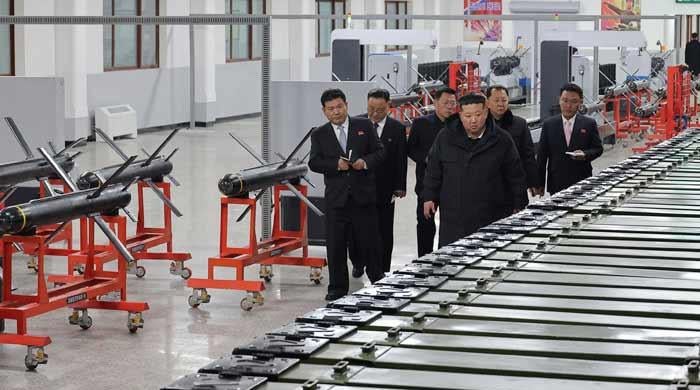
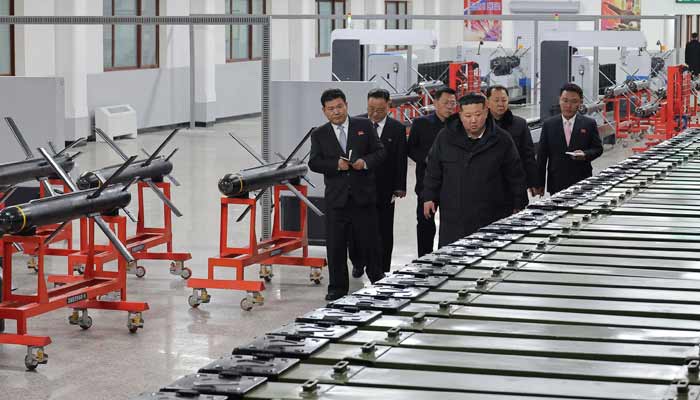
On Saturday, Kim Jong Un called for more than doubling the production capacity of tactical guided weapons during a visit to a munitions factory, North Korea’s state media reported.
In recent weeks, Kim has made a series of visits to weapons factories, as well as to a nuclear-powered submarine, and has overseen missile tests ahead of this year’s Ninth Party Congress of the Workers’ Party, which will set out major policy goals.
South Korea expects Beijing to play a role in promoting peace on the Korean peninsula, said Wi Sung-lac, Lee’s security adviser, without elaborating on details of the summit agenda.
Lee’s agenda with Xi includes persuading China to facilitate dialogue with North Korea, experts say, at a time when North Korea has dismissed an outreach from Lee, who took office seven months ago.


‘Sack king’ Garrett gets No. 23 to set NFL record

Giants honor owner John Mara during battle with cancer, with game ball from big win vs Cowboys

Tom Brady fans tease Alix Earle with romance comments

-
 Politics1 week ago
Thailand, Cambodia agree to ‘immediate’ ceasefire: joint statement
-
 Fashion1 week ago
Climate change may hit RMG export earnings of 4 nations by 2030: Study
-
 Entertainment1 week ago
Selena Gomez hits salon before ringing into the New Year
-

 Tech1 week ago
How Much Melatonin Should You Be Taking? And Should You Be Taking It at All?
-

 Tech1 week ago
New Year, New You With the Best Plant-Based Meal Kits We’ve Tested (and Tasted)
-

 Sports1 week ago
NFL Week 17 highlights: Texans’ C.J. Stroud throws for two TDs in 1Q
-

 Entertainment1 week ago
Kim Kardashian shares surprise beauty confession in Christmas Eve vlog
-
 Sports1 week ago
Imad Wasim announces divorce after over six years of marriage