

Fashion
From Gucci to Rolex: the rise and fall of luxury in music

By
Bloomberg
Published
August 14, 2025
“You know my style and I love Christian Dior.” If you’ve heard these lyrics at a party recently, you’re not alone. The infectious dance track, titled simply, “Dior,” has become a summer anthem, topping the charts in the UK and gaining traction in the US.
The timing could not be more perfect for the fashion brand itself. Bernard Arnault, chief executive officer of LVMH Moet Hennessy Louis Vuitton SE, has been on a mission to revive Christian Dior, and head designer Jonathan Anderson is starting to unveil his new creative vision.
Do such pop culture moments matter for companies? We’d say yes. Analysis by Bloomberg Opinion of songs in the Billboard Hot 100 and Hot Hip-Hop/R&B charts suggests that music offers an insightful way to map the fortunes of the luxury industry. It’s a useful complement to more traditional measures of brand buzz, such as Google searches and social media conversations.
The data show that name-checks in song lyrics skyrocketed during the luxury boom from late 2020 to early 2023, cementing fashion houses such as Louis Vuitton and Gucci as cultural phenomena. Since then, mentions have slumped, underscoring the crisis facing the industry, with sales down across the sector, many young people turning away from conspicuous consumption, and the share prices of LVMH and Gucci-owner Kering SA at multi-year lows. The rise and fall of some individual brands, as seen through music, is even more striking.
Many are now wondering when the worst will be over. Well, it’s worth paying attention to songs. A rapper mentioning the name of a luxury brand on a hot track is not something that can be factored into company sales projections or plugged into a financial model — but it can capture the cultural zeitgeist.
Our analysis focused primarily on hip-hop and R&B because these genres had the highest mention of luxury brands. But dance and electronica also feature luxury labels, such as Prada SpA and now Dior, as do pop songs in the Billboard Hot 100, such as Meghan Trainor’s 2022 hit “Made You Look,” which shouted out Gucci, Louis Vuitton and Versace.
There is a particular reason why hip-hop has come to encapsulate the luxury boom and bust. The rap community has long aspired to own top-end goods, and yet many European houses were famously reluctant to embrace streetwear. That changed a decade ago when LVMH appointed the late Virgil Abloh, the founder of influential label Off-White, as creative director of Louis Vuitton menswear in March 2018. The designer introduced the industry to a younger, more diverse audience that was passionate about music.
Between 2017 and 2022, sales of personal luxury goods rose by more than $100 billion, according to Bain & Co. In the US, much of this was driven by younger spenders who were affluent but not super wealthy. It fits that luxury aesthetics were in a “loud” phase characterized by bold colours and ostentatious logos.
At the same time, hip-hop and R&B were becoming more mainstream, accounting for a higher percentage of the Billboard Hot 100 and so amplifying its influence. Flashy, coveted items — think Rolex watches and Hermes handbags — were touted in popular songs. Indeed, Arnault said in early 2022 that Louis Vuitton wasn’t just a fashion business, it was a “cultural brand” too.
But as inflation and interest rates began soaring post-Covid, many of the new luxury customers came under pressure. Big bling retrenched and refocused its attention on older, wealthier shoppers, offering plainer styles and fewer logos. Streetwear faded from fashion and “quiet luxury” was born.
With the old money aesthetic came old-money price tags, further alienating younger buyers. This correlated with fewer high-end brand names, Gucci and Dior for example, appearing in lyrics in 2022 and 2023. (A broader range of labels, such as Goyard, with some price points below the megabrands, was included by hip hop and R&B stars.)
This helps explain why companies’ communications strategies, led by LVMH, are now coalescing around sport. For example, soccer star Kylian Mbappe was the face of Jonathan Anderson’s first collection for Dior, rather than a musician, such as A$AP Rocky, with whom the label previously collaborated.
But our analysis suggests that forfeiting music for sport would be a mistake. Brands want to reconnect with many of the customers they have priced out. The right reference at an opportune moment could enhance their efforts.
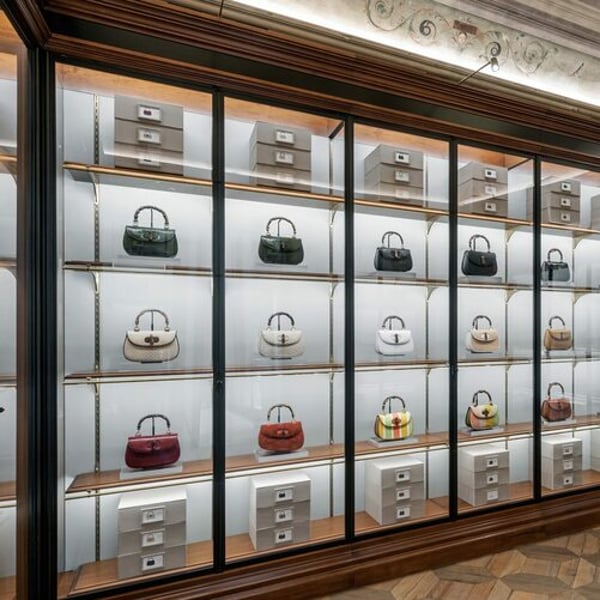
When it comes to individual brands, the most startling story is Gucci. Name-checks in lyrics started to take off in 2016, as designer Alessandro Michele’s maximalist style filtered through to fashion. This corresponded with a period of phenomenal sales growth. Boosted by a shoutout in Lil Nas X’s “Old Town Road,” featuring Bill Ray Cyrus, mentions reached their zenith in 2018 and 2019, a clear correlation with peak Gucci. Perhaps this could have been a warning that Gucci was becoming over-exposed — and a chance to think about how to evolve Michele’s opulent aesthetic.
Indeed, the label has struggled to redefine itself since Michele’s departure in late 2022, and in tandem, mentions in songs have languished. Given that at its peak, Gucci accounted for more than 60% of Kering’s sales, this is reflected in the parent’s performance.
Yet Gucci’s previous cultural cachet from songs is a base on which new creative director Demna Gvasalia can build, particularly as it has been so low-profile for three years. With LVMH focusing more on sport, for example, through its $1 billion sponsorship of Formula One motor racing, new Kering CEO Luca de Meo should prioritize music. Then he would have a decent shot at getting shoppers once more “Feeling Gucci,” as the 2018 song by Savage Ga$p puts it.
In contrast, Hermes International SCA has outperformed. This is consistent with mentions of the Birkin and Kelly bag maker in lyrics. It was the most referenced brand in 2021 and 2022, appearing in Cardi B’s number one hit “Up” among others.
After a dip in 2023, in line with many rivals, its mentions have bounced back, perhaps helped by the Birkin being featured in Shaboozey’s “A Bar Song (Tipsy),” which spent 19 weeks atop the Hot 100 last year. It seems that whatever the bag touches turns to gold.
Meanwhile, industry giant LVMH is facing its toughest year yet. Dior rode both the reinvention of the historic house and the rise of streetwear to almost quadruple sales to more than €9 billion ($10.6 billion) between 2018 and 2023, according to HSBC Research. It is now underperforming.
Notwithstanding the release of the MK and Chrystal dance track in June, Dior’s mentions in hip-hop and R&B have slumped since peaking in 2020. Given that it is LVMH’s second-biggest brand by sales (excluding beauty retailer Sephora), this appears in LVMH’s performance. Reassuringly for Arnault and LVMH investors, however, aside from a dip in 2023, mentions of Louis Vuitton have remained solid, including a name-check in Tyler, The Creator’s 2024 hit song “Sticky.” This reflects the fact that while embracing sport, Louis Vuitton still strengthened its connection to music through the appointment of Pharrell Williams as creative director of menswear in February 2023.
The relationship between music and luxury goes beyond the conglomerates, too.
Gripes about excessive price rises from some consumers and a creative hiatus following the death of Karl Lagerfeld in 2019 precipitated a 4% decline in sales at privately held Chanel Ltd last year. Yet in welcome news for Chanel’s billionaire owners, the Wertheimer family, the brand was mentioned more frequently than its competitors in hip-hop and R&B music in 2023 — thanks in part to multiple hits by Nicki Minaj. It was quite a smart move when the house named Kendrick Lamar as a brand ambassador earlier this year, fresh off his Super Bowl half-time performance that sent searches for bootcut jeans soaring. (It’ll be even more so if the house ever expands into menswear.)
Prada’s embrace by hip-hop and R&B stars has been more modest compared with other houses, but the brand appeared in several other chart-topping songs between 2020 and 2023. “Ferrari Horses” by D-Block Europe and Raye, which featured the house prominently, reached number 14 on the UK Singles Chart in 2021. In September 2022, Prada got another jolt, from Sam Smith and Kim Petras’s number one Billboard Hot 100 smash “Unholy,” and also from Raye’s “Escapism,” her breakout hit released the following month. In 2023, “Ferrari Horses” was remixed and simply renamed “Prada,” which reached number 5 on Billboard’s Hot Dance/Electronica chart.
During this period, Prada’s sales growth was comparable to that of LVMH’s fashion and leather goods business, with the Italian label outperforming its bigger rival in 2022 and 2024. But our analysis showed that Prada’s mentions in hip-hop and R&B have been negligible since 2023. Given its embrace by artists a few years ago, Prada, which typically leans on art and food in its communications, might also consider enhancing its cultural relevance through music.
It’s not just handbags that have endured a boom and bust in music over the past five years. Pricey timepieces have also been on a rollercoaster ride.
Think iced-out bling, and Rolex immediately springs to mind. It’s instantly recognisable shorthand for success. Yet our analysis shows that its inclusion in lyrics peaked in 2014.
As mentions of Rolex declined, those of two other privately held manufacturers, Audemars Piguet and Patek Philippe, took off. This can be traced back to the appointment of Francois-Henry Bennahmias as CEO of Audemars Piguet in 2013. A former professional golfer, he recognised the power of celebrity and enlisted a roster of stars to promote the brand. In the years that followed, “AP” popped up in lyrics alongside Patek. (Audemars Piguet and Patek Philippe watches are more expensive and exclusive than many Rolexes.)
Future, who name-checks luxury brands in more top-50 hip-hop and R&B songs than any other artist, mentions Audemars or Patek in more than 50 songs. Both brands get a nod in “Life is Good,” featuring Drake, which spent six months on the hip-hop and R&B chart in 2020. According to experts at secondary watch platform A Collected Man, Drake’s mention of Patek is believed to reference a Nautilus 5726 — one of the watchmaker’s flagship models — customized to a design by Abloh.
Yet demand for even Audemars and Patek as well as Richard Mille (at times condensed to “Millie”) has weakened.
Another brand, Cartier, is not referenced as frequently as Rolex, Audemars Piguet and Patek Philippe, but its inclusion in lyrics remained steady until this year. Tyler, the Creator is arguably the best-known collector of Cartier timepieces, encouraging a style shift from chunky sports models to more delicate pieces. As he says in “Hot Wind Blows” from 2021: “The Cartier so light on my body, thought I floated here.”
Such a move wasn’t an accident. Former Cartier CEO Cyrille Vigneron, astutely capitalised on Gen Z’s adoption of the jeweller, initially through its Love bangles. He relaunched some of its iconic watches, such as the Panthere, augmented with sometimes racy advertising. His foresight paid off, helping Cartier become one of the few brands to defy the downturn in the secondary watch market. Its popularity has also enabled parent Cie Financiere Richemont SA to outperform LVMH in both sales and share price over the past year.
The lessons here? It pays to recognise when a brand is taking off and leaning into Gen-Z tastes. But houses must also know when to ease back, as Gucci learned the hard way. Richemont doesn’t want Cartier and sister-brand Van Cleef & Arpels, famed for its lucky clover bracelets, becoming too ubiquitous.
Our analysis underlines how badly luxury needs to reassert itself among younger consumers who draw inspiration from music.
It’s true that inflation in top-end goods is moderating, and that companies are also introducing more affordable products, such as beauty and fragrance. Labels are also finally shaking things up with a cadre of new talent: As well as Anderson at Dior and Demna at Gucci, Chanel has appointed Matthieu Blazy as its creative director. Kering houses Balenciaga and Bottega Veneta both have new designers, as do LVMH labels Loewe, Givenchy and Celine.
But more must be done to win over disenfranchised shoppers and make owning top-end goods desirable again. The popularity of hit song “Dior” shows that the luxury fatigue that has weighed on sales may be reaching its nadir. With carefully crafted strategies, brands can seep into popular culture once more. If the track turns out to be the catalyst for the house’s renaissance, that would be a strong signal for Arnault and the rest of the industry to turn the music up.








The package establishes a modern framework for both sides, enabling frictionless access to a market of 460 million consumers in key sectors, delivering economic benefits to both parties.
European Commission President Ursula von der Leyen and Swiss President Guy Parmelin yesterday signed a broad package of agreements aimed at deepening and expanding EU-Switzerland ties.
By aligning standards and rules in closely integrated areas, it will provide legal certainty, simplify trade in goods like medical devices and food products, and ease cross-border supply for businesses on both sides.
By aligning standards and rules in closely integrated areas, it will provide legal certainty, simplify trade in goods like medical devices and food products, and ease cross-border supply for businesses on both sides of the border.
Additionally, it will ensure more consistent rules for individuals who live, work or study across the EU-Swiss border. Switzerland will contribute to the development of legislation in the areas covered by the package and will have the opportunity to influence these rules as they are being designed.
“By modernising and deepening our ties across key sectors, from trade and transport to health and energy—we are strengthening legal certainty, fostering innovation and creating new opportunities for our citizens and businesses,” von der Leyen said in a release from the Commission.
The package includes updates to four already existing agreements, which already give Switzerland access to the EU internal market, regarding air transport, land transport, the free movement of persons and mutual recognition of conformity assessment.
New agreements on food safety, electricity, health and Switzerland’s participation in the EU Agency for the Space Programme were signed. A new agreement introduced a permanent and fair financial contribution by Switzerland to economic and social cohesion within the EU.
Apart from a protocol on parliamentary cooperation, the package includes also a joint declaration on the establishment of a high-level dialogue on the broad bilateral package.
Fibre2Fashion News Desk (DS)

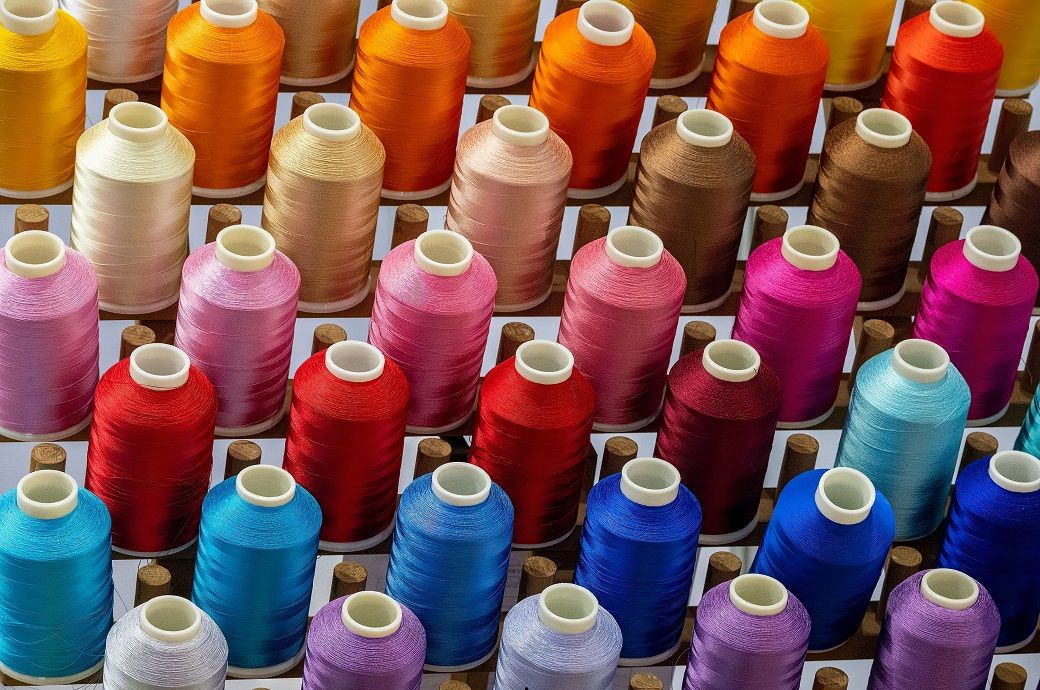
Following earlier increases in purified terephthalic acid (PTA), melt and PSF, Indian producers have now raised PFY prices. POY, FDY and PTY prices have been increased by ****;* per kg across all deniers and lustres with effect from March *, reflecting rapid cost pass-through amid heightened volatility in crude-linked value chains, according to the market sources.
In the previous weekly revision effective February **, ****, PTA was increased by ****;*.** per kg to ****;**.** per kg, while monoethylene glycol (MEG) was retained at ****;**.** per kg. Polyester melt prices were raised by ****;*.** per kg to ****;**.** per kg. Downstream PSF prices were also revised upward by ****;*.** per kg from March *.


Transfer rumors, news: Man Utd, Chelsea, Liverpool eye USMNT star Adams

80% Stocks Already In Bear Market; Should You Buy The Dip Or Run For Safety?

Barkbox Offers: Themed Dog Toys, All-Natural Treats, and Subscription Deals

-
 Business1 week ago
Households set for lower energy bills amid price cap shake-up
-

 Politics6 days ago
What are Iran’s ballistic missile capabilities?
-

 Politics6 days ago
US arrests ex-Air Force pilot for ‘training’ Chinese military
-

 Sports1 week ago
Top 50 USMNT players of 2026, ranked by club form: USMNT Player Performance Index returns
-
 Business6 days ago
Attock Cement’s acquisition approved | The Express Tribune
-

 Fashion6 days ago
Policy easing drives Argentina’s garment import surge in 2025
-

 Sports6 days ago
Sri Lanka’s Shanaka says constant criticism has affected players’ mental health
-
 Business1 week ago
Lucid widely misses earnings expectations, forecasts continued EV growth in 2026