

Business
FTSE 100 falls back amid renewed US-Iran tension

The FTSE 100 started the week on the back foot on Monday as hopes for a peace deal in the Middle East once more hung in the balance.
“Just when you think it is safe to go back in the water, the alarm is sounded again,” said Tom Stevenson, investment director, Fidelity International.
The FTSE 100 closed down 58.55 points, 0.6%, at 10,609.08. The FTSE 250 ended 265.71 points lower, 1.2%, at 22,940.21, and the AIM All-Share fell 1.77 points, 0.2%, to 808.34.
Friday’s optimism gave way to renewed fears that hostilities could resume in the Middle East war after Iran closed the Strait of Hormuz following its brief reopening.
“The market mood is very different at the start of the week compared to Friday,” said Kathleen Brooks, research director at XTB.
The price of crude oil had plunged Friday after Iran said it would again allow ships to pass through the key shipping route, the Strait of Hormuz.
But prices rose once more on Monday as Iran closed the waterway and said the US blockade and seizure of an Iranian cargo ship breached the two-week ceasefire.
Brent oil traded higher at 94.45 dollars a barrel on Monday afternoon, compared with 89.15 dollars at the time of the equities close in London on Friday.
Ms Brooks said the jump in oil prices and pull-back in stocks is a reminder that the current ceasefire that expires on Wednesday is “fragile”.
On Monday, Iran insisted it has no plan to attend a new round of negotiations with the US, although US President Donald Trump said he was sending negotiators to Pakistan for talks.
In European equities on Monday, the CAC 40 in Paris ended down 1.1%, and the DAX 40 in Frankfurt fell 1.2%.
In New York, the Dow Jones Industrial Average was down 0.1%, the S&P 500 was 0.3% lower, and the Nasdaq Composite declined 0.5%.
Strategists at HSBC and UBS remained bullish on equity markets despite the latest market unease.
“Our view remains that we have passed peak geopolitical risk. Both sides have a strong incentive to find a deal. That said, we have been urging investors to expect a bumpy road to a lasting peace,” said Mark Haefele at UBS.
While, Max Kettner at HSBC said: “Despite the recent rally across the risk asset spectrum our sentiment and positioning framework still sends a buy signal. In short: be quick.”
The yield on the US 10-year Treasury stretched to 4.26% on Monday compared with 4.24% on Friday. The yield on the US 30-year Treasury widened to 4.89% from 4.88%.
The pound eased to 1.3535 dollars on Monday afternoon from 1.3556 dollars on Friday. Against the euro, sterling firmed to 1.1486 euros from 1.1481 euros.
The euro traded lower against the greenback, falling to 1.1786 dollars on Monday from 1.1805 dollars on Friday. Against the yen, the dollar was trading higher at 158.58 yen, up from 158.08 yen.
On London’s FTSE 100, oil majors BP and Shell benefited from the rising oil price, up 2.9% and 2.5%, recouping some of Friday’s heavy falls, while British Airways owner IAG fell 2.2%.
On the FTSE 250, Renishaw led the risers, up 6.2%, as it raised full-year guidance reflecting buoyant demand and a further “substantial expansion of our order book”.
The Gloucestershire-based supplier of manufacturing technologies, analytical instruments and medical devices now expects revenue in the financial year to June of £775 million to £805 million, raised from guidance of £740 million to £780 million provided in February.
It projects adjusted pre-tax profit of £145 million to £165 million, lifted from £132 million to £157 million.
Plus500 gained 3.8% as it said customer income reached a five-year record high in the first quarter of 2026 as it forecast full-year revenue and earnings ahead of market expectations.
Reflecting a strong first quarter of 2026, the Israel-based trading platform operator said it expects 2026 revenue and Ebitda to be ahead of current market expectations which it put at 779.3 million dollars and 360.4 million dollars respectively.
Chief executive David Zruia said: “The group delivered an excellent performance in the quarter, with strong growth across key financial and operational metrics.”
Elsewhere, bid interest drove shares of Evoke and Advanced Medical Solutions higher.
William Hill owner Evoke jumped 4.1% after it said it is in discussions with US casino operator Bally’s Intralot regarding a possible all-share takeover offer worth more than £200 million.
Back in December, Evoke kicked off a strategic review, which it said could include a sale of the company, after the UK Government budget which the gambling firm warned would lift yearly duty costs by up to £135 million.
Meanwhile, Advanced Medical Solutions rose 16% as it confirmed it is in talks regarding a possible offer for the company, little more than 12 months after another potential suitor failed to secure a deal with the firm.
On Saturday, Sky News reported that Boston-based private equity firm TA Associates was preparing an offer for AMS worth around 280 pence per share, or £600 million in total.
On Monday, the Cheshire-based surgical dressings company confirmed the talks with TA Associates, but stressed there can be no certainty that a firm offer will be made.
In March 2025, AMS was the subject of bid interest from London-based mid-market private equity firm Montagu Private Equity LLP, although no formal offer materialised.
AJ Bell investment director Russ Mould noted the latest takeover talks mean that 20 firms on the UK stock market are already involved in bid discussions this year.
“Even though the would-be buyers are yet to set a price tag for five of the proposed transactions, the total value of bids on the table is already £29.3 billion, equivalent to the aggregate reached across all successful bids in 2025, and the largest sum at this stage for any year this decade,” he pointed out.
Mr Mould said the level of interest “suggests that would-be buyers still believe the UK stock market offers value”.
Gold traded at 4,806.14 dollars an ounce on Monday, down from 4,869.13 dollars at the same time on Friday.
The biggest risers on the FTSE 100 were Centrica, up 6.90p at 204.30p, BP, up 15.90p at 556.90p, Shell, up 78.50p at 3,274.50p, British American Tobacco, up 82.00p at 4,224.00p and SSE, up 47.00p at 2,516.50p.
The biggest fallers on the FTSE 100 were Metlen Energy & Metals, down 1.88p at 33.70p, Antofagasta, down 175.50p at 3,783.50p, Barratt Redrow, down 11.10p at 268.00p, Rolls Royce, down 48.20p at 1,262.40p and Fresnillo, down 120.00p at 3,662.00p.
Tuesday’s global economic calendar has UK unemployment and average earnings data at 7am, followed by US retail sales figures.
Tuesday’s local corporate calendar has a trading statement from miner Rio Tinto and half-year results from Primark owner Associated British Foods.
Contributed by Alliance News
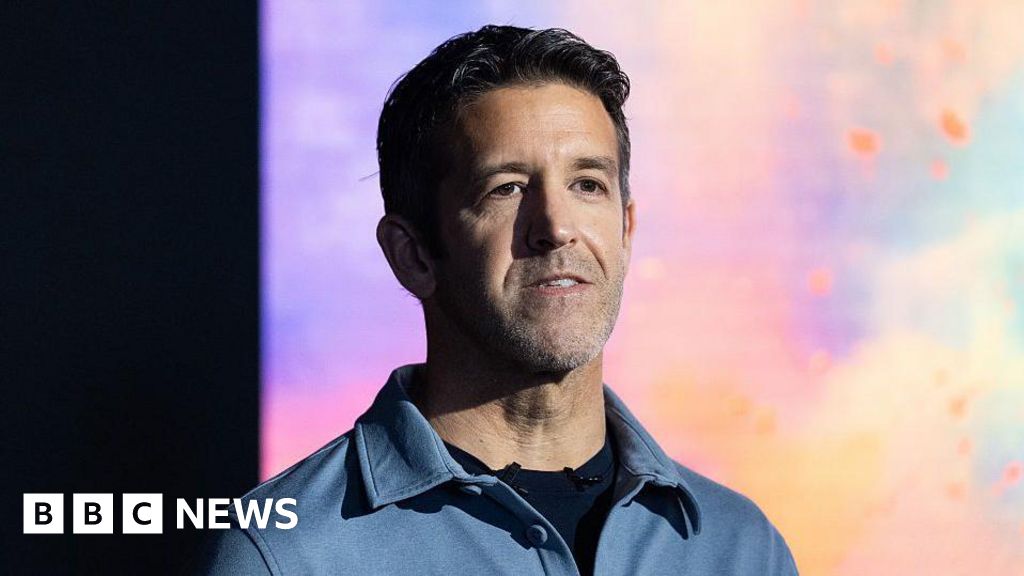
John Ternus will take over running the technology giant as Cook steps up to become executive chairman.
Source link
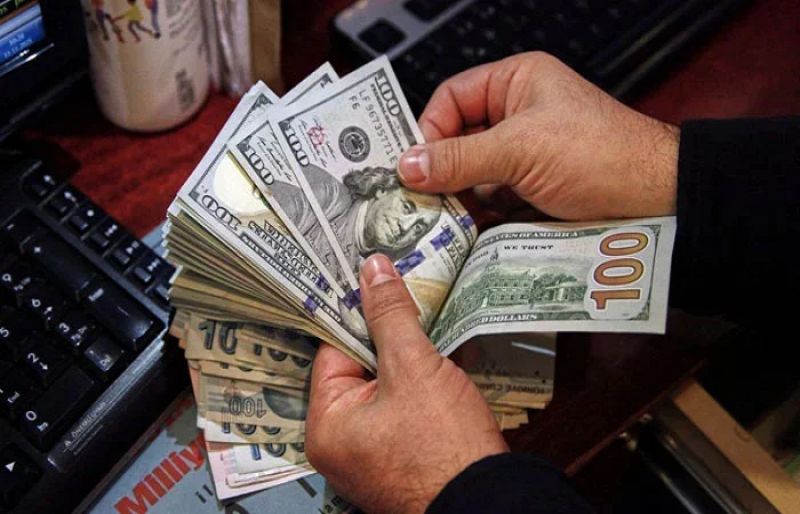
The State Bank of Pakistan (SBP) has received $1 billion from the Ministry of Finance of the Kingdom of Saudi Arabia, marking the second tranche of a $3 billion deposit agreed recently, the central bank said on Tuesday.
According to the statement issued by the central bank, the second tranche was received with a value date of April 20, 2026.
The first tranche of $2 billion had already been received on April 15, 2026, bringing the total inflows under the arrangement to $3 billion.
The development comes days after Prime Minister Shehbaz Sharif’s visit to Saudi Arabia, where he engaged in diplomatic efforts aimed at promoting regional peace.
During his visit, the premier met Crown Prince Mohammed bin Salman in Jeddah and expressed appreciation for the Kingdom’s continued support for Pakistan’s economic stability. He also conveyed solidarity with Saudi Arabia in light of recent regional developments.
Earlier on April 16, Finance Minister Muhammad Aurangzeb had announced that Saudi Arabia would provide $3 billion in additional financial support, with disbursement expected shortly.
He also noted that Riyadh had extended the tenure of its existing $5 billion deposit, removing the earlier annual rollover requirement.
The Saudi funding has strengthened Pakistan’s external position as it repaid $2 billion in debt to the United Arab Emirates (UAE).
The amount was kept with the central banks as a safe deposit.
Saudi Arabia has been a key financial partner for Pakistan, having provided support packages during previous economic challenges, including a $6 billion assistance programme in 2018 comprising deposits and oil facility arrangements.
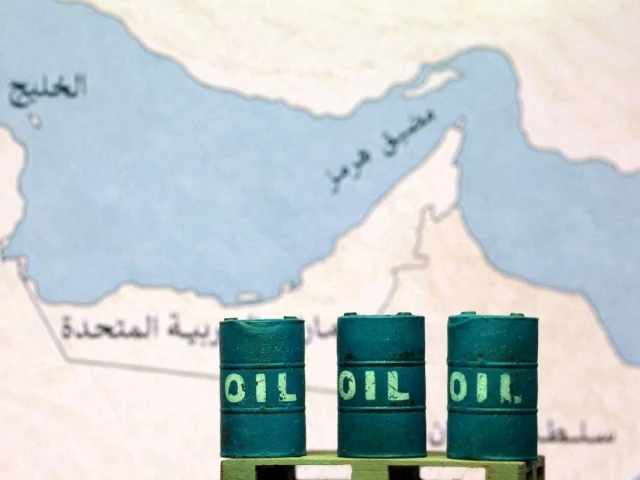
Crude plunged on Friday after Tehran said it would allow ships to transit the Strait of Hormuz
A map showing the Strait of Hormuz, also known as Madiq Hurmuz, and 3D printed oil barrels are seen in this illustration taken March 26, 2026. PHOTO: REUTERS
HONG KONG:
With the end of a two-week ceasefire approaching, the White House said Vice President JD Vance was ready to return to Pakistan for fresh negotiations to end a conflict that has sent crude soaring and revived inflation fears.
However, the Islamic Republic’s position remained uncertain as it accused Washington of violating their fragile truce through its blockade of the country’s ports and seizure of a ship.
Crude plunged on Friday after Tehran said it would allow ships to transit the Strait of Hormuz, which had been effectively closed since the war began on February 28.
Read: US positive on Iran deal but talks still uncertain as ceasefire end nears
But the commodity rebounded on Monday as Iran closed the waterway again, citing the blockade and seizure.
Donald Trump has similarly accused Tehran of violating the ceasefire by harassing vessels in the Strait of Hormuz, the transit passage for about one-fifth of global oil.
The US president said the blockade would not be lifted until an agreement had been reached.
“THE BLOCKADE, which we will not take off until there is a ‘DEAL,’ is absolutely destroying Iran,” Trump said on social media. “They are losing $500 Million Dollars a day, an unsustainable number, even in the short run.”
He told PBS News that Iran was “supposed to be there” at the talks in Pakistan.
“We agreed to be there,” he said, warning that if the ceasefire expired “then lots of bombs start going off”.
He separately told Bloomberg News it was “highly unlikely” he would extend the truce.
Based on its start time, the truce theoretically expires overnight on Tuesday, Iran time, although in his comments to Bloomberg Trump said the end was Wednesday evening Washington time.
The Middle Eastern country’s parliament speaker, Mohammad Bagher Ghalibaf, said “Trump wants to turn this negotiating table into a surrender table or justify renewed hostilities, as he sees fit”.
“We do not accept negotiations under the shadow of threats, and in the last two weeks we have been preparing to show new cards on the battlefield,” he wrote on X.
Still, investors remained largely upbeat that the two sides will eventually come to a deal that will reopen the strategic strait.
US benchmark crude West Texas Intermediate rose more than 1%, while Brent was also higher.
Tech rally
Seoul led the equity market gains thanks to a resumption of the tech rally that had pushed the Kospi to multiple records before the war, while Tokyo and Taipei were also well up.
Hong Kong, Singapore and Manila also advanced, although Shanghai and Sydney fluctuated.
That came even after a down day on Wall Street, where the S&P 500 and Nasdaq Composite retreated from Friday’s record closes.
Asia had opened “with a gentle lean into risk as signs Iran may join talks with the US offer a pathway, however narrow, toward easing tensions ahead of the ceasefire deadline”, wrote SPI Asset Management’s Stephen Innes.
“Markets are pricing the possibility of progress rather than its certainty,” he said.
“Trump’s remark that a ceasefire extension is ‘highly unlikely’ if no deal is reached has effectively put a clock on the market.
“However, traders recognise the playbook. Hard deadlines and firm rhetoric often soften as negotiations evolve, but the presence of a timeline still sharpens positioning and raises the stakes around each headline.”
In company news, Japanese arms firms enjoyed healthy buying after Tokyo said on Tuesday it would ease decades-old export rules, paving the way for the sale of lethal weapons overseas.
The policy shift, which ends Tokyo’s self-imposed restraint on the sale of lethal arms, comes as it seeks to enter the international arms market, hoping to bolster national defence as well as boost economic growth.
Fujitsu climbed 2.4%, NEC added 3.7%, and Mitsubishi Electric was up 0.9%, while Mitsubishi Heavy gained 0.4%.
Key figures around 0230 GMT
West Texas Intermediate: DOWN 1.2% at $88.50 a barrel
Brent North Sea Crude: DOWN 0.4% at $95.12 a barrel
Tokyo – Nikkei 225: UP 1.3% at 59,596.10 (break)
Hong Kong – Hang Seng Index: UP 0.3% at 26,427.75
Shanghai – Composite: DOWN 0.2% at 4,073.82
Euro/dollar: DOWN at $1.1780 from $1.1786 on Monday
Pound/dollar: DOWN at $1.3525 from $1.3535
Dollar/yen: UP at 158.98 yen from 158.88 yen
Euro/pound: UP at 87.10 pence from 87.07 pence
New York – Dow Jones: FLAT at 49,442.56 (close)
London – FTSE 100: DOWN 0.6% at 10,609.08 (close)


Scam messages offering ships safe transit through Hormuz, warns security firm

UN Security Council denounces killing of French peacekeeper in Lebanon
Apple names new boss to replace Tim Cook after 15 years

-

 Fashion5 days ago
France’s LVMH Q1 revenue falls 6%, shows resilience amid Iran war
-

 Sports1 week ago
The case for Man United’s Fernandes as Premier League’s best
-

 Entertainment1 week ago
Palace left in shock as Prince William cancels grand ceremony
-
 Business1 week ago
UK could adopt EU single market rules under new legislation
-

 Entertainment6 days ago
Is Claude down? Here’s why users are seeing errors
-

 Fashion1 week ago
Energy emerges as biggest cost driver in textile margins
-
 Business1 week ago
Delta Air Lines unveils first new Delta One suite in premium cabin arms race
-

 Tech1 week ago
A Lot of Shops Won’t Fix Electric Bikes. Here’s Why