

Business
Gatwick airport second runway approved by transport secretary

Katy AustinTransport correspondent and
Jamie WhiteheadBBC News
 PA Media
Transport Secretary Heidi Alexander has approved plans for a second runway at London Gatwick Airport, as the government looks for economic growth opportunities.
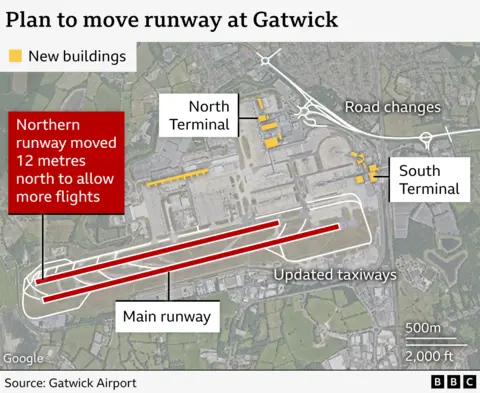
The £2.2bn privately-financed project involves in effect moving the current Northern Runway 12 metres to bring it into regular use, as well as other developments, including extending the size of terminals.
The airport says its plans will bring jobs and boost the local economy. But there has long been opposition from campaigners and groups worried about the impact on the surrounding area.
Gatwick currently handles about 280,000 flights a year. It says the plan would enable that number to rise to around 389,000 by the late 2030s.
A government source has described the plans as a “no-brainer for growth,” adding that “it is possible that planes could be taking off from a new full runway at Gatwick before the next general election.”
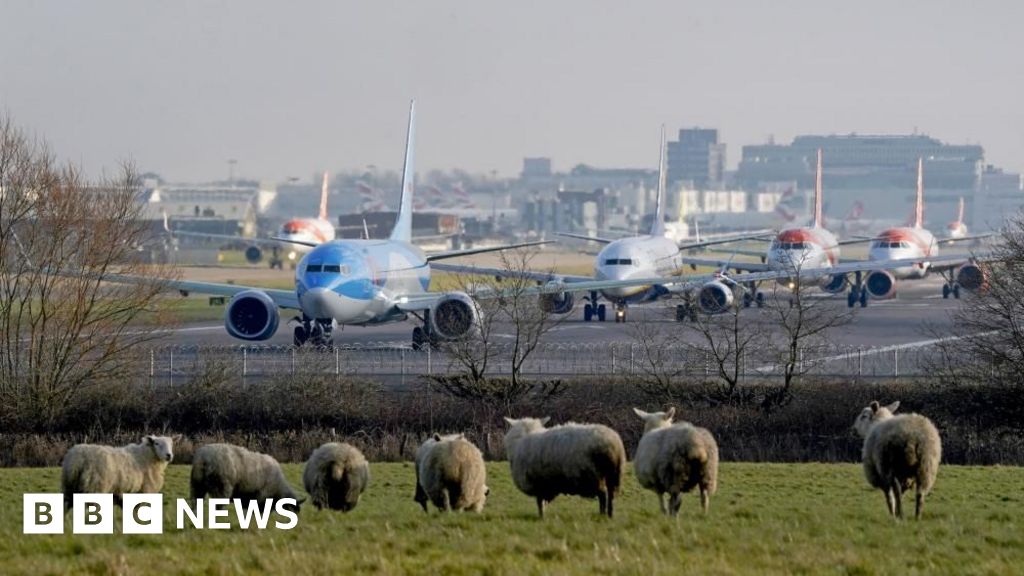
London Gatwick, in West Sussex, is currently Europe’s busiest single-runway airport with more than 40 million passengers using it every year.
The plans approved by Ms Alexander would include adding 40,000 more flights before the second runway opens, and 70,000 more – almost 190 a day – once it is fully up and running.
The airport says that passenger numbers could rise to up to 80 million.
Currently, the Northern Runway is currently only used for taxiing or as a back up.
The second runway would be used for short haul flights, with capacity also freed up for more long-haul services from the main runway.

The decision to approve the expansion plan had been expected in February, but at the time, the transport secretary only said she was “minded to grant consent” for the Northern Runway planning application.
It emerged planning inspectors had expressed concerns over the effect the proposals would have on several aspects on the area surrounding the airport, including traffic and noise.
In April, Gatwick Airport agreed to stricter noise controls, an enhanced insulation scheme for nearby residents, and having 54% of air passengers using public transport before the Northern Runway opened.
To achieve this target, the airport said, third parties – including the Department for Transport – would need to “support delivery of the necessary conditions and improvements required to meet this target,” giving the example of reinstating the full Gatwick Express rail service.
Before the Covid-19 pandemic, the Gatwick Express ran a service of four trains per hour non-stop between the airport and London Victoria, this was reduced to two trains per hour from 2022.
Gatwick Airport also proposed a cars-on-the-road limit if the 54% target could not be met before the first use of the Northern Runway to address possible road congestion concerns.
It added that if neither the target nor the cars-on-the road limit could be met, the runway plans would be delayed until the required £350m of road improvements had been completed.
“This would make sure any additional road traffic flows can be accommodated and any congestion avoided,” the airport said.
“This government has taken unprecedented steps to get this done, navigating a needlessly complex planning system, which our reforms will simplify in future,” the government source said.
“Any airport expansion must be delivered in line with our legally binding climate change commitments and meet strict environmental requirements.”
Chris Curtis, who chairs the Labour Party’s growth group, welcomed the approval but said “radical planning reform” was needed to enable future projects to be completed more swiftly.
Shadow transport secretary Richard Holden welcomed the decision as “a vital step towards driving economic growth”.
But he said approval should have been made months ago and accused Labour of creating “uncertainty for businesses and local communities”.
But there is strong opposition to any expansion, particularly from climate campaigners.
Green Party leader Zack Polanski said approval of the expansion plan was a “disaster for the climate crisis”.
Hannah Lawrence, spokesperson for Stay Grounded, said “We need an immediate end to airport expansion and money put into improving sustainable transport such as trains.”
In February, Greenpeace UK policy director Douglas Parr said the extension would not drive economic growth. “The only thing it’s set to boost is air pollution, noise, and climate emissions,” he added.
Alex Chapman, senior economist at left-of-centre think tank New Economics Foundation, also argued the move would not create new jobs, but would just shift them from other parts of the country.
“People are already perfectly able to catch cheap flights on holiday or travel for business,” he added.
Unite the Union general secretary Sharon Graham backed Gatwick having a second runway, but warned it would need “to come with guarantees of well paid, unionised jobs and proper facilities for workers”.

Sally Pavey, chair of Communities Against Gatwick Noise Emissions (CAGNE), said she was worried about “uncontrollable noise, ramifications on the roads, decline in air quality… and climate change”.
“We can’t keep ignoring climate change and it would be wrong to allow a new ‘bucket and spade’ runway, as we put it, at the expense of residents and the economy,” she said.
The group would take legal action through a judicial review if the expansion goes ahead, she added.
Gatwick’s is the latest in a string of airport expansion approvals, most recently Luton’s in June.
The government has also expressed support for a third runway at the country’s biggest airport, Heathrow, but that would be a much more complex, costly and controversial project.

Butter, chocolate, coffee and milk have all seen prices rocket. Tracing back through the story of one particular supermarket staple begins to explain why
Source link
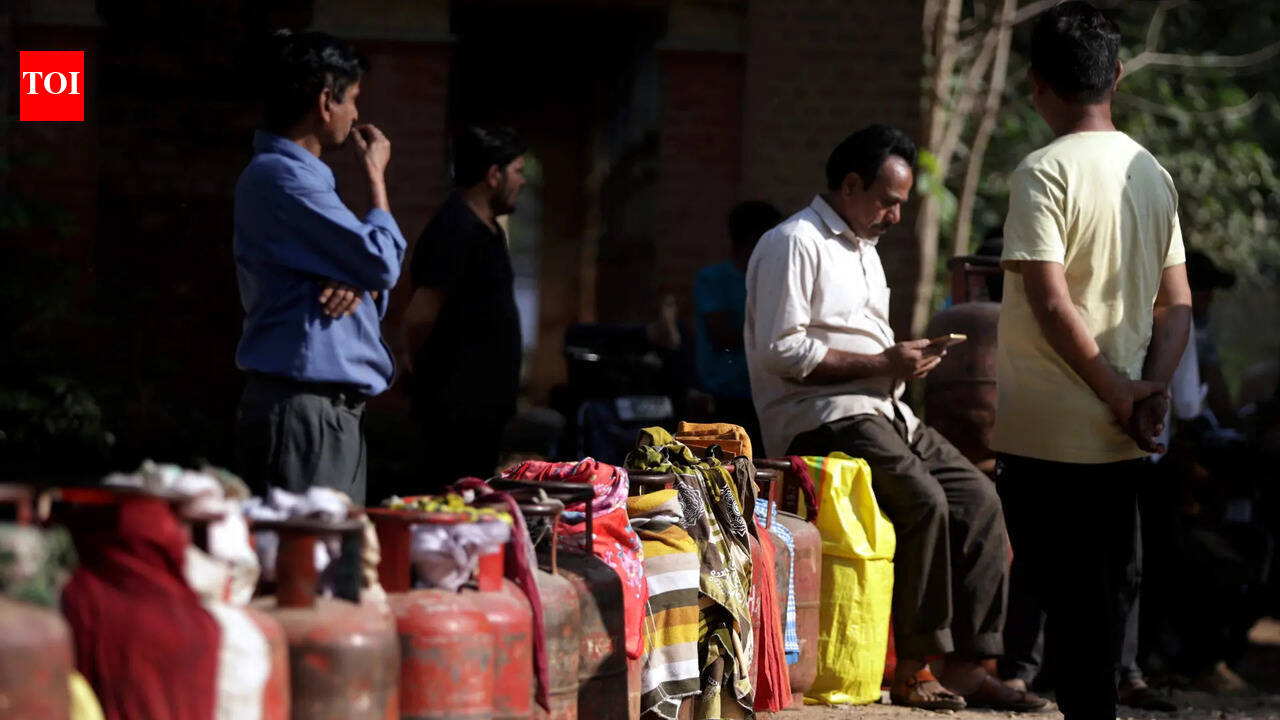
MUMBAI/BENGALURU: The restaurant industry is struggling to run regular operations due to the meagre supplies of LPG cylinders . With the govt’s move to hike commercial LPG allocation to up to 70%, it will take some time before the measure actually translates into sustained supply, executives said. “Supply is still hugely limited and erratic. A feeling of uncertainty looms large,” said Anurag Katriar, founder at Indigo Hospitality. The key question is how quickly this revised allocation will translate into on-ground availability, said Pradeep Shetty, vice-president at Federation of Hotel & Restaurant Associations of India (FHRAI).A walk along Indiranagar’s 12th Main, known for its cluster of independent restaurants, reflects the strain. “It is all hand-to-mouth at this point,” said Nikhil Gupta, who runs brands including The Pizza Bakery and Paris Panini . The move doesn’t directly help the restaurant sector which is still getting 20%-30% of LPG supplies, said Sagar Daryani, co-founder & CEO at Wow! Momo Foods and president at National Restaurant Association of India (NRAI). State-wise, the supply situation varies with some such as Maharashtra, Karnataka, Rajasthan restricting allocation for restaurants, hurting the sector , Daryani said.
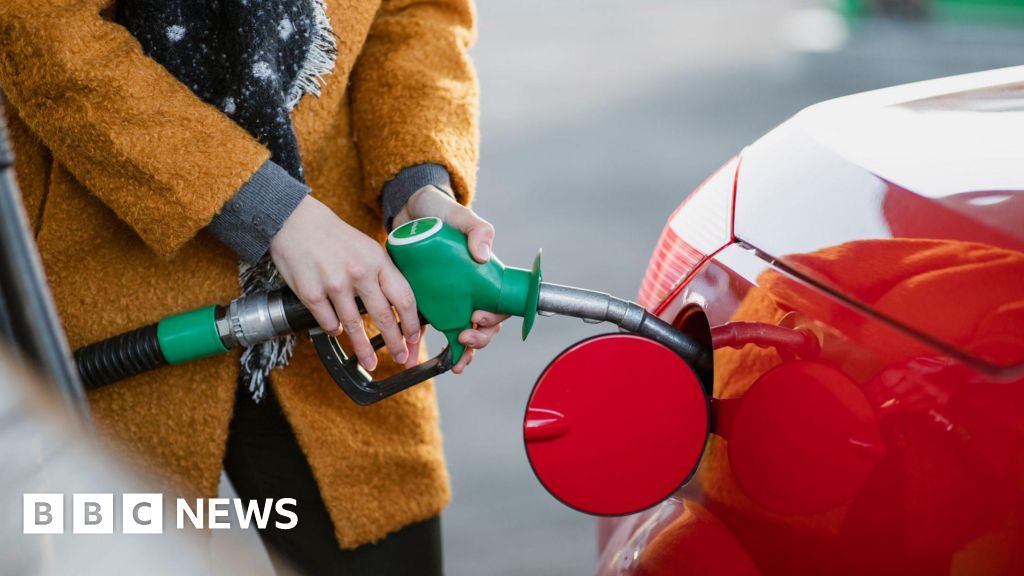
Motorists are facing higher fuel prices ahead of Easter break due to the conflict in the Middle East, the RAC says.
Source link


EU Parliament, Council reach deal on major reform of Customs Code
Why supermarket prices really became sky high in the UK

Which key Iranian figures have been assassinated in US-Israeli strikes?

-
 Business1 week ago
Flipkart group CFO to leave co amid IPO plans – The Times of India
-
 Business1 week ago
Video: The Effects of High Oil Prices
-

 Fashion1 week ago
China’s textile & apparel exports surge 17% to $50 bn in Jan-Feb 2026
-

 Sports1 week ago
Rating Adidas’ 2026 World Cup away shirts: Argentina, Spain, Mexico and more
-

 Fashion1 week ago
The hidden $1.62 war tax now embedded in every garment you source
-

 Sports1 week ago
American Conference Commissioner Tim Pernetti thanks Trump for Army-Navy game executive order
-
Tech1 week ago
The Corsair 4000D RS PC Case Keeps Your System Cool
-

 Tech1 week ago
‘Uncanny Valley’: Nvidia’s ‘Super Bowl of AI,’ Tesla Disappoints, and Meta’s VR Metaverse ‘Shutdown’