

Politics
Global bets surge ahead of US-Iran dialogue



TEXAS: As diplomatic activity intensifies ahead of anticipated peace talks between the United States and Iran in Islamabad, a parallel surge is unfolding far from negotiating tables in the fast-moving world of online prediction markets, where hundreds of millions of dollars are being wagered on the outcome of the conflict.
On platforms such as Polymarket and Kalshi, traders are placing real-money bets on whether the fragile ceasefire will hold, whether negotiations will succeed, and how the broader confrontation might evolve. The scale of activity reflects a global consensus: the situation is both highly consequential and deeply uncertain.
Available data suggests that more than $300 million has been traded across Iran-related markets, transactions often described as “trading” rather than betting, with over $250 million concentrated in a single market tied to the timing and nature of a ceasefire.
Participants are effectively pricing probabilities: Will the Islamabad talks yield a breakthrough, or will tensions reignite?
Market sentiment, as reflected in these trades, remains cautious. The likelihood of a comprehensive and lasting peace agreement is currently viewed as limited, with implied probabilities ranging between 20% and 40%.
By contrast, a temporary or partial outcome such as an extension of the ceasefire or a limited diplomatic understanding is seen as more plausible, with estimates exceeding 50%.
At the same time, positions anticipating renewed escalation or a breakdown of the ceasefire hover between 30% and 50%, underscoring a widespread lack of confidence in long-term stability.
In some cases, traders have already reaped substantial gains. According to market reports, several participants earned more than $600,000 by correctly anticipating the ceasefire announcement before it became public, raising questions in some quarters about the possibility of insider information.
Analysts note that prediction markets have evolved beyond speculative entertainment into a serious barometer of geopolitical sentiment, where financial exposure intersects with information, analysis, and risk.
Meanwhile, international media outlets are describing the Islamabad talks as a “fragile but pivotal moment”. Yet there is broad agreement among analysts that the ceasefire itself remains tenuous, with core disputes unresolved.
Iran’s nuclear programme, control over the Strait of Hormuz, and ongoing hostilities in Lebanon continue to cast a long shadow over any diplomatic progress.
For Pakistan, the stakes are particularly high. Islamabad’s role as a mediator could enhance its diplomatic standing, but the risks are equally significant. Should the talks fail, the economic and security repercussions — especially through energy markets and regional instability are likely to be felt well beyond the negotiating room.
Experts caution that while financial wagering on geopolitical crises is not new, the scale of activity surrounding the US-Iran confrontation marks a turning point. Modern conflicts, they argue, are no longer confined to battlefields. Their impact ripples through financial systems, digital platforms, and global public opinion alike.
As attention turns to Islamabad, where negotiations are set to begin within hours, the outcome remains uncertain. What is clear, however, is that the world is watching and, in many cases, quite literally investing in what comes next.
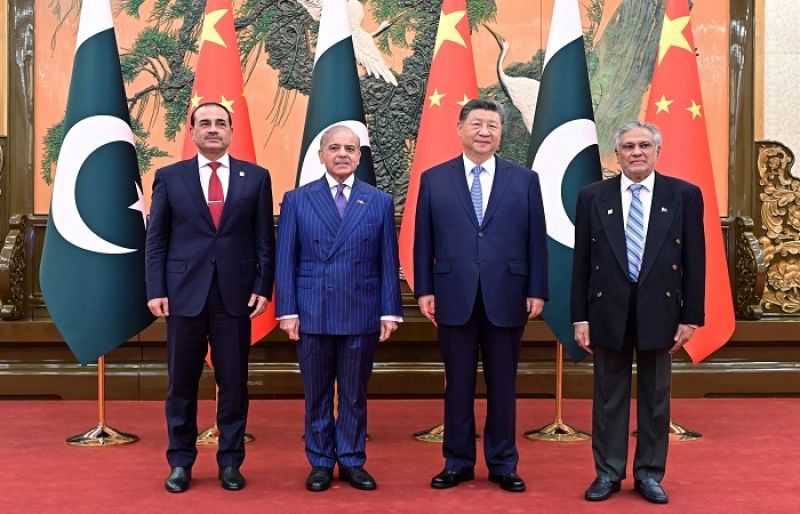
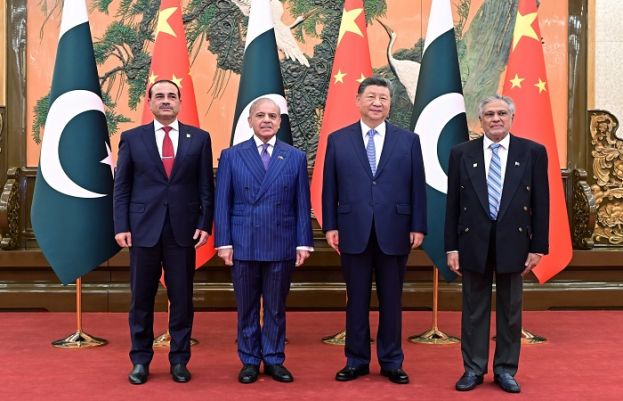
During the meeting, Xi said China and Pakistan had forged an “unbreakable traditional friendship” and stressed that Beijing prioritises its ties with Islamabad in neighbourhood diplomacy.
He also referred to the PM Shehbaz as an “old friend”, underscoring close bilateral relations between the two countries.
President Xi conveyed good wishes to the people of Pakistan and welcomed Chief of Army Staff (COAS) and Chief of Defence Forces (CDF) Field Marshal Asim Munir on his visit to China, noting that he had recently returned from Iran.
“Positive efforts and mediation measures for peace are commendable,” he said, while appreciating Pakistan’s constructive role in regional affairs.
“Despite changing global circumstances, relations with Pakistan remain our priority,” President Xi said, adding that strategic mutual trust and practical cooperation had played a significant role in the development of bilateral ties.
He said the friendship between the two nations was being carried forward from generation to generation and both sides were ready to build a stronger shared future for the benefit of their peoples.
PM Shehbaz expressed pleasure over visiting China and congratulated the people of both countries on completing 75 years of diplomatic relations.
“The credit for this everlasting friendship goes to our founding leaders,” the prime minister said, adding that both countries had worked tirelessly over more than seven decades to strengthen bilateral relations.
The premier said that Pakistan and China were “iron brothers” bound in a unique relationship and reaffirmed Islamabad’s commitment to further deepening bilateral cooperation.
The prime minister also praised China’s progress under President Xi’s leadership, calling the country a major global economic and military power with an important role in promoting global development and peace.
Referring to the Belt and Road Initiative and the China-Pakistan Economic Corridor, PM Shehbaz said that both projects symbolised prosperity, development and friendship between the two countries.
The meeting comes shortly after the premier held a meeting with his Chinese counterpart Li Qiang at the Great Hall of the People.
Earlier, upon arriving at the Great Hall, PM Shehbaz was accorded a warm welcome by the Chinese premier before the two sides held delegation-level talks on bilateral cooperation and regional developments.
During the welcoming ceremony, the two leaders introduced members of their respective delegations as the national anthems of Pakistan and China were played. A guard of honour was also presented to PM Shehbaz.
Prime Minister Shehbaz introduced Deputy Prime Minister Ishaq Dar, Chief of Army Staff (COAS) and Chief of Defence Forces (CDF) Field Marshal Asim Munir and other members of the Pakistani delegation, while Premier Li introduced members of the Chinese cabinet.
Speaking during the meeting, PM Shehbaz stressed the need for joint Pakistan-China efforts to ensure peace and stability in the Middle East, thanking Chinese President Xi Jinping and Beijing’s leadership for supporting Islamabad’s ceasefire initiatives.
The prime minister said that Pakistan fully supported President Xi’s four-point agenda aimed at promoting regional peace and stability.
He added that Deputy Prime Minister Ishaq Dar and the Chinese foreign minister had also announced a five-point programme to help advance ceasefire efforts in the Middle East.
The premier said that the ongoing crisis in the Middle East had impacted not only economies across the world but Pakistan as well.
For his part, the Chinese premier said that Pakistan had maintained close coordination with China and played a positive role in promoting regional peace.
He added that Beijing remained committed to strengthening traditional friendship and expanding bilateral cooperation with Pakistan.
The Chinese Premier said the upcoming meeting between President Xi and PM Shehbaz would provide strategic guidance for deepening bilateral relations between the two countries.
For his part, PM Shehbaz thanked the Chinese leadership for inviting him to visit China and said every visit to the country revealed new development and progress.
“Pakistan and China are celebrating 75 years of their historic friendship and diplomatic relations,” the premier said, adding that the foundations of the relationship were laid by the founding leaders of both countries.
The prime minister also expressed condolences over the deadly coal mine explosion in China’s Shanxi province, saying Pakistan stood in complete solidarity with the affected families.
Referring to the ongoing regional situation, PM Shehbaz said that the world was passing through a “critical phase” and noted that Pakistan had played a “sincere role” in facilitating contacts between the United States and Iran.
He said that Field Marshal Munir had recently returned from Tehran and played an important role in contacts between the Iranian and American leaderships.
“We pray that peace is restored permanently. Considerable progress has been made, and matters are moving in the right direction,” the prime minister added.
‘MoUs signed’
During the high-level meeting, the two countries signed 15 accords of cooperation in multiple areas, including economy, environment and climate change, agriculture and food security, trade, media, science and technology, counterterrorism, and education.
PM Shehbaz and the Chinese premier witnessed the signing ceremony as government functionaries from both sides exchanged the documents.
Among the MoUs signed were economic development cooperation, environment and climate change cooperation.
They also signed the letter of handover for veterinary vaccines donation, along with the protocols on dried fruits, nuts, and maize to be exported to China.
Both countries also inked MoUs on conformity assessment cooperation, news cooperation, and for cooperation between the Party School of the CPC Central Committee and Pakistan National School of Public Policy.
The ceremony also featured the signing of an MoU on co-production of documentaries and people-to-people exchanges in science and technology.
In the areas of trade and capacity building, the two sides signed the MoU on free trade and multilateralism, the letter on counterterrorism equipment cooperation, and the MoU on human resource development cooperation.
The two countries also signed MoUs on cooperation in the agriculture sector, and for cooperation between China Foreign Affairs University and the Foreign Service Academy of Pakistan.
Politics
Iran will not surrender to ‘excessive’ US demands, seeks full restoration of its rights: President Pezeshkian
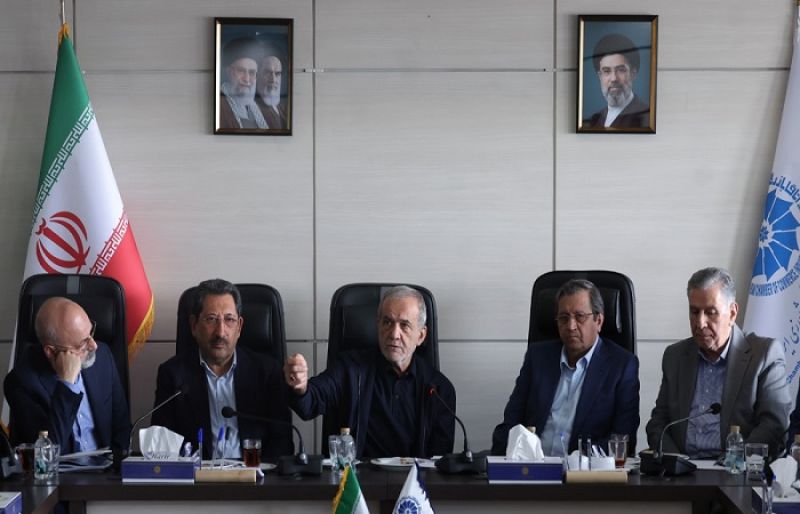
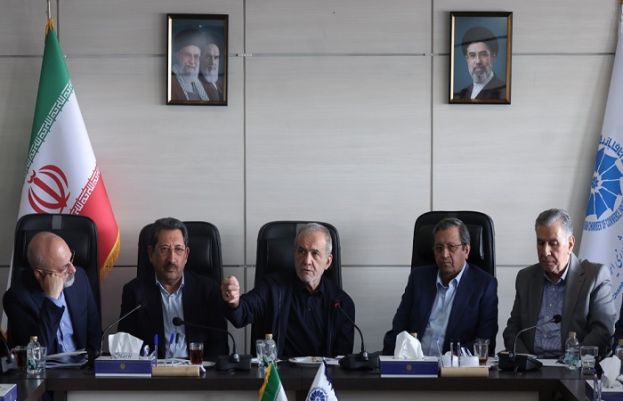
President Masoud Pezeshkian has declared that Iran will not surrender to US pressures and excessive demands, saying the country’s negotiators will ensure the full restoration of the nation’s rights through the diplomatic process.
Speaking at a meeting with members of the Chamber of Commerce on Monday, Pezeshkian noted that after failing on the military front, the enemy has now concentrated its efforts on economic warfare.
“The Islamic Republic of Iran will not surrender to excessive pressures and demands under any circumstances,” he said.
On February 28, the United States and Israel initiated an unprovoked war against Iran with the assassination of Leader of the Islamic Revolution Ayatollah Seyyed Ali Khamenei and several high-ranking military commanders.
In response, the Iranian Armed Forces carried out 100 waves of counterattacks over 40 days, targeting US and Israeli military assets, which resulted in significant damage.
A Pakistani-mediated two-week ceasefire was brokered on April 8, enabling the ongoing negotiations in Islamabad.
The president added that despite the enemy’s shift to economic warfare following its military failures, “the government and the private sector, through solidarity, cohesion, and joint cooperation, will successfully navigate this phase as well.”
Pezeshkian praised the role of the private sector and economic actors in managing the country’s sensitive situation, describing them as pioneers of the economic front in the enemy’s comprehensive hybrid war.
He said that maintaining market stability, preventing economic volatility, and meeting the country’s needs under wartime conditions have been made possible through the efforts, dedication, and effective presence of economic actors and producers.
“During the recent crisis, no noticeable shortage of goods or serious market disruption was observed,” the president added.
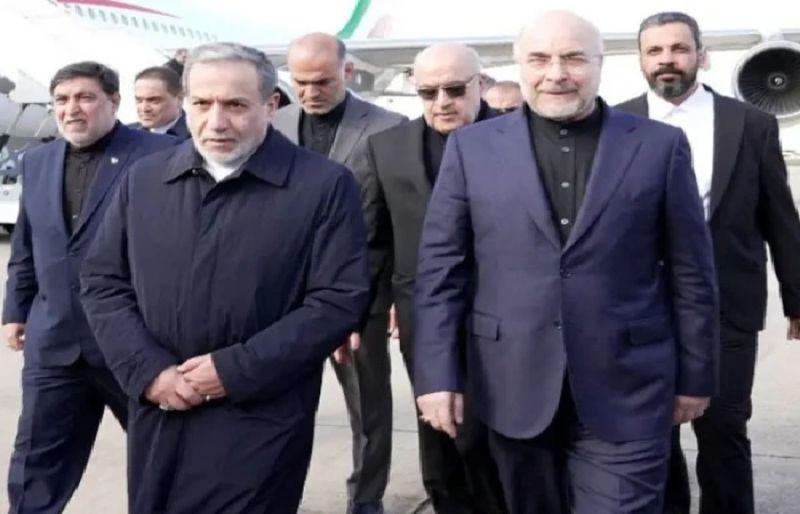
Iranian Parliament Speaker Mohammad Baqer Qalibaf and Foreign Minister Abbas Araghchi are in Doha to hold talks with top Qatari officials amid diplomatic efforts to end the unprovoked US-Israeli war against Iran.
The Iranian delegation, led by Qalibaf as the top negotiator in the talks with the US, arrived in the Qatari capital on Monday as part of an ongoing diplomatic process that began in recent weeks through Pakistan’s mediation efforts aimed at ending the imposed war and has continued since then, IRNA reported.
According to the news agency, the Iranian team is scheduled to hold consultations with senior Qatari officials regarding certain aspects to put an end to the unlawful war of aggression.
Meanwhile, Mehr news agency also reported that the delegation plans to meet Qatari Emir Sheikh Tamim bin Hamad Al Thani.
Mutual issues and topics related to the end of the US-Israeli aggression and the removal of sanctions on Iran are on the agenda of the talks, it said.
It added that Governor of the Central Bank of Iran, Abdolnasser Hemmati, is also accompanying the delegation.
Indirect talks between Iran and the US, mediated by Pakistan and facilitated by Qatar, continue based on the Islamic Republic’s 14-point proposal to reach a memorandum to end the war.
Iranian Foreign Ministry spokesman Esmaeil Baghaei told reporters on Monday that the indirect talks with the United States are centered on ending aggression on all fronts and that the nuclear issue or the management of the Strait of Hormuz are not to be discussed.
On Saturday, Baghaei said Iran and the United States have edged closer to finalizing the 14-point memorandum, halt American maritime aggression, and secure the release of Iran’s blocked assets.
Speaking in a televised interview, he said Iran’s focus at this stage remains exclusively on ending the US-Israel war based on its proposal, which has been shuttled back and forth several times.
The criminal US-Israeli aggression against Iran began on February 28 with airstrikes that assassinated senior Iranian officials and commanders, including Leader of the Islamic Revolution Ayatollah Seyyed Ali Khamenei.
Iranian Armed Forces responded by launching daily missile and drone operations targeting locations in the Israeli-occupied territories as well as US military bases and assets across the region.
Furthermore, Iran retaliated against the strikes by closing the Strait of Hormuz, which resulted in a significant increase in oil prices and its by-products.
On April 8, forty days into the war, a Pakistan-brokered temporary ceasefire between Iran and the US took effect.
Negotiations ensued in the Pakistani capital, Islamabad, but stopped short of an agreement amid Washington’s maximalist demands and insistence on unreasonable positions.


Adam Copeland, Christian Cage snap 25-year drought, win AEW Tag Team Championship at Double or Nothing

Bracket set, regionals begin May 29

A Swimmer Broke a World Record at the “Steroid Olympics”

-

 Tech1 week ago
Why Is Your Grill So Dumb? The Best Grills Set Temp Like an Oven
-

 Tech1 week ago
This Solar-Powered Smart Sprinkler Keeps My Lawn Watered Without Any Power Cables
-

 Fashion5 days ago
US cotton planting advances to 41%, concerns persist in Texas
-

 Sports5 days ago
Todd Monken says Shedeur Sanders has ‘come miles’ as Browns quarterback competition heats up
-

 Fashion4 days ago
ICE cotton sees mixed trend as rain forecasts weaken sentiment
-
 Fashion1 week ago
Turkiye’s current account deficit expected to widen in 2026: Minister
-

 Entertainment1 week ago
Princess of Wales praised as ‘step ahead’ of royal family
-

 Fashion1 week ago
India’s Pearl Global’s FY26 revenue crosses $521 mn milestone