You could argue, and people have, that the top gay dating apps are now optimized for monetization and juicing engagement loops. Increasingly overrun with bots, they are at times even devoid of actual connection.
Grindr, with its 15 million monthly active users, is drowning in ads while pushing expensive upsells on users. (In February, as part of its “gAI” overhaul, the company announced a new premium monthly subscription tier for $500.) Sniffies was beloved by cruisers until the seismic reaction in April to Match Group’s $100 million investment sparked concerns that another queer space could get absorbed into a larger dating conglomerate.
As public backlash against popular queer apps continues to mount, a batch of tech entrepreneurs are scrambling to meet the demand by doubling down on privacy-conscious, community-driven alternatives.
Calum Bowden, who posts under the internet persona @donjackoghue, launched MeetMarket in March. Currently only available as a web app, MeetMarket includes all the core features of your typical hookup app—a customizable profile, a grid of nearby users—with one major difference. It was built on a decentralized identity system, meaning MeetMarket doesn’t store users’ emails, passwords, or personal information. Users store everything on their device, giving them full control and ownership over their data and how it’s shared. Messages on the platform are end-to-end encrypted, and Bowden says it will always be ad-free, even for nonpaying members. (A monthly membership costs €12, or $13.99.)
“Decentralization and data privacy make a lot of sense for queer people in general, and especially in hostile legal environments or in the US right now, where you don’t really know what digital platforms actually have your best interest in mind,” says the 34-year-old PhD student in Berlin who studies the sociology of technology and organization.
Within the first 48 hours of MeetMarket’s launch on March 24, over 12,000 people had signed up, and some 60,000 people have used it since. The app averages 5,000 weekly visitors, according to Bowden, though there is not a lot of concurrent activity in the same cities. “It’s become more social than necessarily driving an immediate hookup.” But casual encounters do still happen, he says. “The Midwest bottom jockeys are eating meet market up,” one user noted on X.
Bowden didn’t anticipate public sentiment would sour on Sniffies just a few weeks after his launch. Still, the timing of it couldn’t have been more serendipitous. “When Sniffies announced their investment from Match Group, I was like, how are they fueling my fire?” he asks. “This is exactly the model that venture capital leads to. This is exactly why these economic models for technology are so bad, because they basically force the gentrification of a digital platform.” Sniffies did not immediately respond to a request for comment.
A self-described “utopian conspirator,” Bowden is the cofounder of Trust, a nonprofit that operates as a kind of incubator to prototype ideas “as a critique of technology and the status quo,” he says. With MeetMarket, he wanted to create an app that gave users more agency over their experience without cheapening it.
It can sometimes seem like Big Dating wants people to believe that it is the only answer to cure their romantic woes—Bumble CEO Whitney Wolfe Herd recently told Axios that there isn’t much longevity in niche apps—but the opposite is proving just as true, as people seek out more specificity and intention in their online dating experience.
“Gay men have tribes, subcultures, aesthetics, and different ways they want to be seen,” says Justin Finnegan, a 35-year-old software engineer in Toronto who last year created Chunkr, a gay hookup app that has resonated with bears, chubs, cubs, and their admirers despite originally being for all gay men.
As we get out of the house, the gear-obsessed WIRED Reviews team is writing about our favorite bags and EDCs. Today, reviewer Boutayna Chokraneraves about her love for her Lululemon gym bag. You can also check out other Bag Check stories where WIRED writers share their carryall of choice.
I have long had a soft spot for messenger bags. There’s a retro Silicon Valley vibe to the crossbody that I respect: It implies you move fast, travel light, and keep your world compartmentalized. The unfortunate practical reality of many a messenger bag, though, is chronic neck and shoulder pain. With all of its weight relying on one strap, a single shoulder is left to bear all the burden. After a few blocks adorned with a messenger, you may feel that your style choice has transformed into a full-on punishment. After years of testing various incarnations of messenger bag—including micro slings and cavernous totes—I’d made peace with this trade-off. Beauty is pain, after all.
Then I met the comfort-forward, durable, and compact-yet-cavernous Lululemon 3-in-1 Duffle.
Lululemon
3-in-1 Gym Duffle Bag 30L
True to its name, it’s a multi-use transport system that is easy to reconfigure when my commute demands a different carry. You can grab it by the top handles, sling it across your body when you need your hands, or detach the shoulder strap and wrap it around your yoga mat to use it as a stand-alone mat carrier. No matter how you task it to carry your stuff, rest assured the bag’s design promises utility and comfort: The strap is cushioned enough to spare your shoulder, resilient enough to handle the load of your gym gear, and springy enough to double as a stretching strap. Every component of the duffel has a reason to exist, and some of them even have two.
I’ve been toting this duffel for the gym four days a week since January 2025, which is about as real-world a test as it gets. It has endured Chicago at its most extreme: sleet, wet snow, and torrential rain. The water-repellent nylon shrugs off all elements without any fanfare. The bag dries fast, resists grime, and—most impressively to me—doesn’t hold onto odor. Trust me, I’ve pushed that boundary more than once with sweaty clothes after hot Pilates and have found the included drawstring pouch effectively quarantines everything.
It’s also low-maintenance: After a trip to the beach, a couple of quick shakes cleared out any memory of sand. This duffel requires blessedly minimal upkeep, save for the occasional spot clean, making it a refreshingly low-effort option for commuters who don’t need another chore on their to-do list.
The design is deceptively compact. Externally, it presents as a modest and understated gym bag. But peek inside, and you’ll immediately see that this duffel, with its shocking 30-liter capacity, is Poppins-esque. There’s a dedicated shoe compartment on the side that accommodates up to a men’s size 14, though I prefer to use the bottom section for footwear to keep the main cavity flexible. There’s a slot for a 24-ounce water bottle, interior pockets for keys, AirPods, and other small essentials that tend to disappear into bag voids, and there’s still room for a change of clothes, a Theragun, and a dopp kit. Nothing about this bag feels over-engineered, but nothing feels missing, either.
The Psyche probe, launched in October 2023 on its way to the metallic asteroid it studies, recently performed a flyby of Mars to take advantage of its gravitational pull and continue its trajectory toward the asteroid belt. During the maneuver, the spacecraft obtained new images of the red planet.
Psyche passed within 4,609 kilometers, or 2,864 miles, of the Martian surface, and was boosted to a higher velocity after completing the gravity assist. On the approach, NASA activated onboard cameras, magnetometers, and gamma ray and neutron spectrometers to calibrate each instrument using the planet’s atmosphere and terrain.
In recent images released by the space agency, the rugged Martian surface can be seen in detail, along with traces of the solar wind that, around craters and the south polar cap, is rich in water ice.
“We’ve captured thousands of images of the approach to Mars and of the planet’s surface and atmosphere at close approach. This dataset provides unique and important opportunities for us to calibrate and characterize the performance of the cameras, as well as test the early versions of our image processing tools being developed for use at the asteroid Psyche,” said Jim Bell, Psyche’s imager instrument lead at Arizona State University.
One of the first pictures taken by the Psyche mission.
Photograph: NASA/JPL-Caltech/ASU
According to the mission scientists, after its flyby of Mars, the probe reached a speed of 1,600 kilometers (or 994 miles) per hour while moving its orbit by one degree. The goal is to reach Psyche in the summer of 2029.
Close approach to the south polar cap of Mars, where it is likely that water can be extracted.
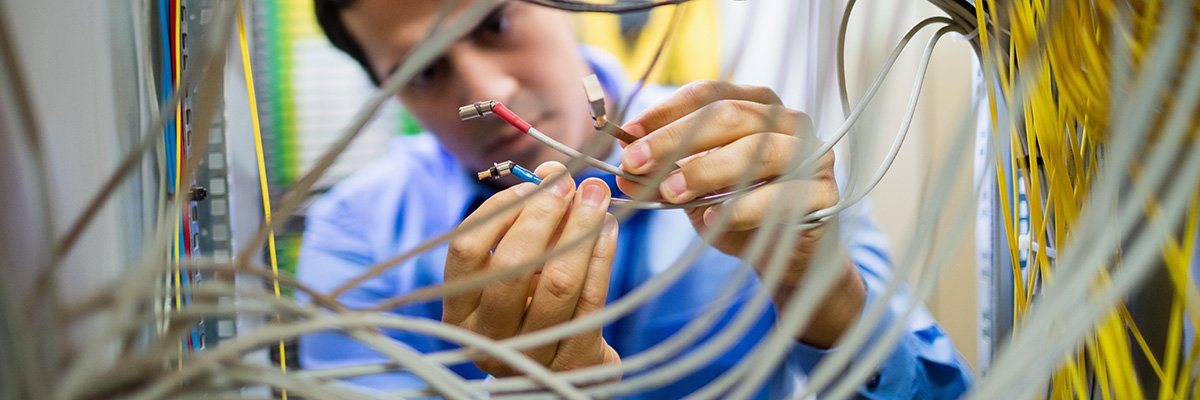
Last year, analyst Forrester reported that while IT departments manage billion-dollar portfolios, their internal operations lag in automation, coordination and visibility. The complexity of managing a modern IT architecture means network management must evolve. This is not something that is entirely new.
Automation is part of the functionality available in modern network management tools. Big data analysis of network log files is used in security information and event management (SIEM), and machine learning (ML) is helping network administrators identify potential issues before they affect the business.
Phil Huang, business development and field application manager at D-Link, explains: “We have been offering a pure cloud management platform for networks for a number of years and the AI [artificial intelligence] assistance behind such network management gives us the ability to monitor in real time and also proactively try to alert of any potential problems that may arise.”
Advances in tooling potentially reduce the complexity of network management. Matt Stava, CEO and chairman of third-party support firm Spinnaker Support, says this changes the role of IT administrators and programmers. Looking specifically at network skills, he says: “The need for a Cisco-certified expert is getting less and less right now.”
Modern networking skills
Modern IT infrastructure means that having an industry-certified network specialist is becoming less relevant. In a March 2026 blog post, Amit Katz, vice-president of ethernet switch at Nvidia, highlights the shifts occurring in network management.
In the post, Katz points out that while the value of a new network administrator may have previously been measured by their level of expertise in a particular networking command line interface (CLI), the advent of hybrid cloud and DevOps means there is a growing shift towards application programming interfaces (APIs).
“Skills in Ansible, Salt [the open source automation framework] and Python now have more value than a Cisco certification,” he says.
Now, Katz believes the tasks network administrators need to do are very different from the way they used to monitor and manage networks.
Skills in Ansible, Salt and Python now have more value than a Cisco certification Amit Katz, Nvidia
“You’ve moved from tools that polled devices across the datacentre using SNMP [Simple Network Management Protocol] and NetFlow [which monitors IP traffic] to new switch-based telemetry models where the switches proactively stream flow-based diagnostic details,” he notes in the blog post.
And according to Katz, while network administrators have a lot of experience introducing new workloads into datacentres – some of which have unique networking requirements – building an AI cluster is actually very different.
He writes: “It is tempting to think that AI is just a bigger and faster big data application. But AI is different, and AI can be hard without the right tools.”
AI also has a role to play in helping network administrators manage this complexity more easily. Information Services Group (ISG), a research and advisory firm, says organisations are taking advantage of the enhanced capabilities of AI and ML to automate configuration changes and optimisation across the network.
In an ISG article about how AI is transforming network operations, Marc Herren, a director at ISG, notes that AI can analyse network data and identify patterns to automatically generate configurations that optimise performance.
He says Cisco and Juniper Networks, the latter now being part of Hewlett Packard Enterprise, are developing intent-based networking products that use AI to understand an administrator’s intent and automatically configure the network accordingly. Such technology is essential to keep on top of ever-more-complex network management.
Network complexity
In a presentation at Microsoft Build 2025, Phil Gervasi, director of technical evangelism at Kentik, spoke about how networks are growing in complexity. They now span different clouds, datacentres, edge computing and hybrid IT infrastructure, all of which introduce new challenges for network management.
“The volume of telemetry, events and logs has exploded beyond human capacity to analyse in real time,” he told attendees. At the same time, as Gervasi noted, network teams are under pressure to improve the mean time to resolution of an issue, and maintain uptime without expanding headcount.
The volume of telemetry, events and logs has exploded beyond human capacity to analyse in real time Phil Gervasi, Kentik
“What AI offers is not magic, but a better way to correlate data, forecast performance and understand network behaviour in context. So, in short, AI helps operators move from reacting to predicting,” he added.
While ML is being used in networking for capacity planning, anomaly detection and baselining, Gervasi said that large language models (LLMs) offer a different approach to network management. “Unlike classical data models, which rely on structured data, LLMs operate on unstructured information like documentation, configuration files and tickets,” he told Build 2025 delegates. However, LLMs are probabilistic, which means they can produce inconsistent and different answers to the same prompts.
They also hallucinate. To get around these limitations, Gervasi stressed the need to ensure quality of training data, proper evaluation and controlled model behaviour. These are key to keeping LLM responses honest.
Privacy and regulation are also issues for LLMs, especially when handling network data that could contain sensitive information. Some IT operations challenges are inherent to AI use. For Gervasi, IT decision-makers need to be aware of the difficulties that may arise when integrating real-time telemetry, dealing with diverse data types, and managing compute costs for AI workloads.
But, despite these caveats, Gervasi believes the real power of LLMs lies in their ability to synthesise vast volumes of data into information that can then be used by people to make better decisions.
The starting point in using AI for network management is collecting network telemetry logs, helpdesk ticket and configuration files. Those then need to be cleaned up and stored in a format that can be accessed by the AI system.
Gervasi told delegates that one of the most effective ways to use this information is through retrieval augmented generation (RAG). As an example, he said when a user submits a query, the system converts the question into a mathematical representation, which searches a vector database for semantically related data, such as telemetry, past incidents or documentation.
“The LLM then synthesises an answer, using both its general knowledge and the retrieved context,” he explained.
Another use for LLMs is in text-to-structured query language (SQL), which, as Gervasi noted, enables network engineers to use natural language, where their queries are converted by the LLM into an SQL query and then, where relevant, provide a graphical representation of the data.
Once the data is in a format the AI model can process, agentic AI is a natural progression. “An LLM doesn’t just respond to prompts, but acts kind of like the brain, coordinating multiple tools,” he says.
During the presentation, Gervasi spoke about how with agentic AI powering network management, an agent could run a trace route, collect network telemetry, consult a knowledge base, and then generate a remediation plan, all autonomously, but with human oversight.
This is something that is likely to provide autonomous operations behind commercial network provider services. Analyst Gartner expects that AI will be embedded into managed network services (MNS) by 2028, to increase and enhance operational efficiency and enable more informed decision-making.
According to Gartner, AI will be used to ensure that networks are robust and agile enough to adapt to changing demands and traffic patterns. “Looking ahead three to five years from now, we anticipate significant transformation in MNS due to extensive use of AI and automation,” the analyst firm stated in its AI will transform managed network services in the next three years report.
For Stava and other industry watchers, the hot skill is agentic AI and the ability to integrate AI agents into workflows to achieve a business outcome. And these outcomes are increasingly IT-focused, especially as IT teams are being asked to do more with fewer resources and being put under increasing strain to support companies’ appetites for all things relating to AI.
But AI also has a big role to play in making networks more manageable. As network management becomes more automated and networks become self-healing, network engineers will need to learn how to integrate the latest tooling with agentic technology to provide the data stream for AI-powered network management.

























 Entertainment1 week ago
 Tech1 week ago
 Tech1 week ago
 Fashion5 days ago
 Fashion7 days ago
 Fashion4 days ago
 Fashion1 week ago
 Fashion6 days ago