

Fashion
Global FDI dips 3% in H1 2025 amid weak investor sentiment: UNCTAD

The drop was driven by developed economies, where cross-border mergers and acquisitions (M&As)—which normally make up a large share of their FDI—fell 18 per cent to $173 billion, UNCTAD said in its latest Global Investment Trends Monitor.
Global FDI declined 3 per cent in H1 2025, marking a continued two-year slump as trade tensions, high borrowing costs, and geopolitical uncertainty curbed investor confidence, according to UNCTAD.
Developed economies saw an 18 per cent fall in M&As.
Greenfield and renewable projects dropped sharply, though AI-driven investments and sovereign wealth fund activity may aid recovery later in 2025.
Developing economies fared better overall, with flows remaining flat, though trends diverged by region. Inflows rose 12 per cent in Latin America and the Caribbean, 7 per cent in developing countries in Asia but fell 42 per cent in Africa.
High borrowing costs and economic uncertainty continued to squeeze investment in industry and infrastructure in H1 2025. Announcements of greenfield projects—when firms build new operations abroad—fell 17 per cent in number, driven by a 29 per cent decline in supply-chain-intensive manufacturing such as textiles, electronics, and automotives amid tariff uncertainty.
The international project finance—critical for infrastructure development—also declined, with deal numbers down 11 per cent and value 8 per cent. The trend was more positive in developing economies, where project finance deals fell only 2 per cent after two years of sharp declines. Despite fewer deals, the total value jumped 21 per cent, lifted by a few large-scale projects in Panama, the United Arab Emirates, and Uzbekistan. A broad recovery has yet to emerge.
Despite fewer projects, the value of global greenfield investment rose 7 per cent, lifted by major projects in artificial intelligence (AI) and the digital economy. For example, the United States recorded $237 billion in new greenfield projects in H1 2025—nearly matching the 2024 total and four times the past decade’s half-year average. More than half of the value came from AI-related sectors, particularly semiconductors (~$103 billion) and data centres (~$27 billion).
Investment in sectors critical to the Sustainable Development Goals (SDGs) continued to fall in early 2025. SDG-related investment projects in developing countries were down 10 per cent in number and 7 per cent in value, following steep declines last year. Projects in least developed countries (LDCs) are on track to fall another 5 per cent in 2025, possibly hitting their lowest level since 2015.
Internationally financed projects—including those in transport and utilities—remained about 25 per cent below the decade average. In LDCs, project finance in infrastructure fell another 85 per cent in value. Greenfield infrastructure activity declined 31 per cent in value and 25 per cent in number, led by sharp contractions in Latin America and the Caribbean (–78 per cent in value and –43 per cent in number).
Renewable energy investment, the largest SDG-relevant sector, also weakened. Globally, international project finance in the sector—which has accounted for nearly two-thirds of global totals in recent years—fell another 9 per cent in number and 10 per cent in value.
Global greenfield projects in renewable energy also declined 55 per cent in number and 21 per cent in value. In developing economies, projects fell 23 per cent. In LDCs, they declined by 31 per cent in number and 18 per cent in value.
Investment in water and sanitation fell 40 per cent, with no new projects in Africa or LDCs and a 97 per cent decrease in Latin America and the Caribbean. Only agrifood systems and health showed positive trends in developing economies, with investment holding steady in agrifood and rising 37 per cent in health, driven primarily by new projects in Asia.
The global investment climate will remain challenging through the rest of 2025. Geopolitical tensions, regional conflicts, economic fragmentation, and efforts to de-risk supply chains continue to weigh on flows. Still, easing financial conditions, rising M&A activity in the third quarter, and higher overseas spending by sovereign wealth funds could support a modest rebound by year-end.
Fibre2Fashion News Desk (SG)








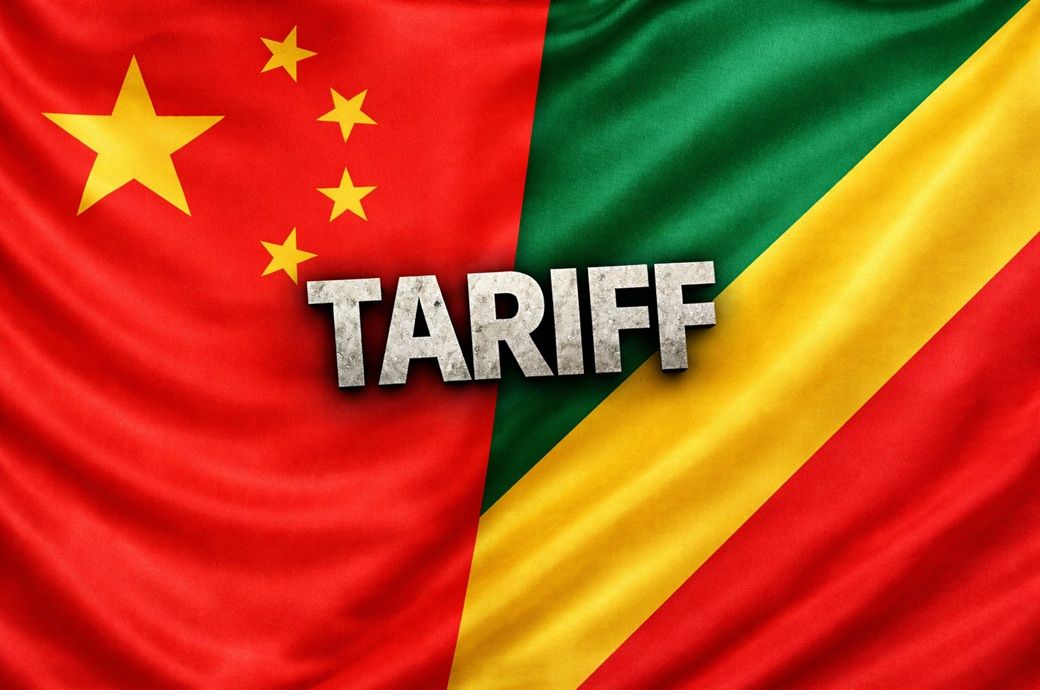
The measure implements tariff reduction commitments made under the ‘Early Harvest Arrangement of the Agreement on Economic Partnership for Shared Development’ between the two countries.
China will implement preferential tariff rates on selected imports from the Republic of the Congo starting April 1 under the Early Harvest Arrangement of their economic partnership agreement.
The move announced by the Customs Tariff Commission, is aimed at fulfilling tariff reduction commitments, enhancing bilateral trade cooperation and advancing long-term economic ties between the two countries.
The commission said the move is in line with China’s tariff law and reflects the country’s continued efforts to expand opening-up and strengthen trade ties with African partners.
Officials stated that the preferential tariff treatment will help deepen bilateral economic and trade cooperation and support the development of a higher-level community with a shared future between China and the Republic of the Congo.
The Early Harvest Arrangement, signed in November 2025, marked the first such agreement of its kind between China and an African country, paving the way for broader market access and phased tariff reductions.
Fibre2Fashion News Desk (JP)
These countries are particularly vulnerable to rising oil prices and potential supply disruptions, it noted in a recent article.
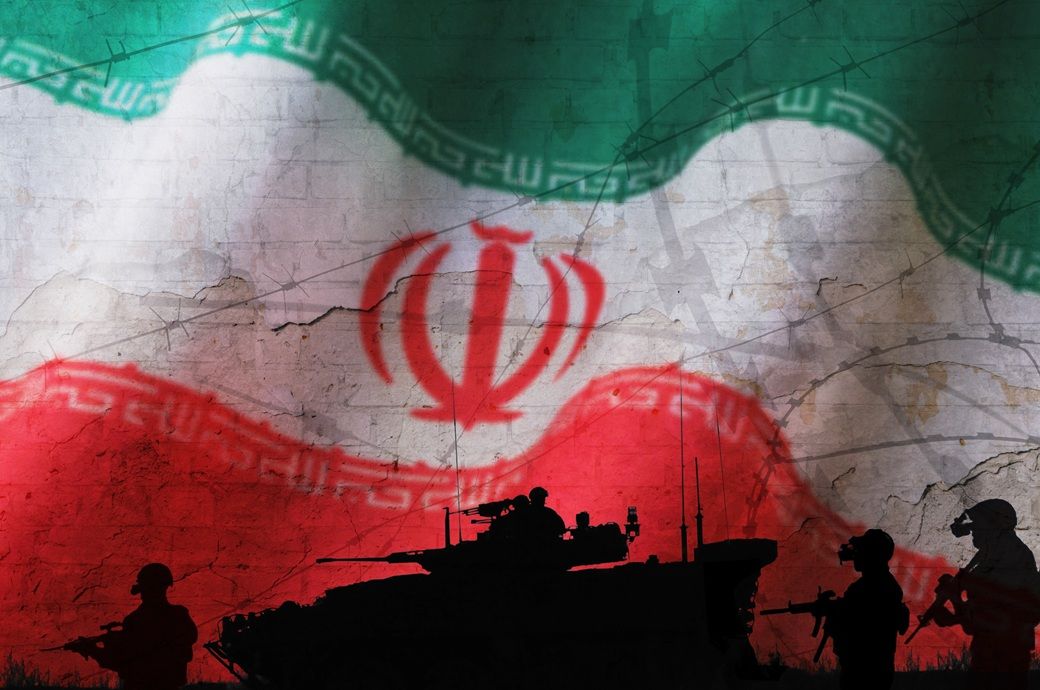
The Iran war poses a greater risk to Bangladesh, Pakistan and Sri Lanka, and to a lesser extent Laos, due to their high dependence on imported energy and limited reserves, S&P Global Ratings said.
These countries are particularly vulnerable to rising oil prices and potential supply disruptions.
All four governments are likely to see significant credit metric deteriorations, if the conflict is prolonged.
In our base case scenario, the war is unlikely to have a material impact on our sovereign ratings on these countries, but a more prolonged price and supply shock in global energy markets could cause more pronounced credit damage.
Pakistan, Sri Lanka, and Bangladesh are showing signs of economic recovery. The three countries have made progress, but sustained high energy prices and potential disruptions to trade and remittances could derail their fragile economies.
S&P Global Ratings believes the higher-income Asia-Pacific (APAC) economies are better placed to weather temporary disruptions to oil and gas supply from the Middle East.
Even where they are highly dependent on imported energy, they generally have more significant oil reserves to meet the shortfall in imports. They also have financial resources to acquire available supply in the spot oil and gas markets to secure needed energy, the rating agency noted.
Lower-income economies in the region do not enjoy such flexibility. The sovereign ratings on some may face pressure if the supply disruption persists longer than our assumptions. Bangladesh, Laos, Pakistan and Sri Lanka are among this group. These economies have one thing in common: a high dependence on imported energy products.
The Middle East war is likely to have a more severe impact on these economies, due to their fuel import bills, and generally weaker fiscal and external reserves to withstand supply shortages and high oil prices.
Among the four sovereigns, Laos is likely to fare better due to the dominance of hydropower in its energy mix.
Bangladesh, with government revenues at only around 9 per cent of gross domestic product, has fewer options to cap electricity and fuel prices through fiscal means.
All four governments are likely to see significant credit metric deteriorations, through inflation and currency channels, if the Middle East conflict is prolonged. However, the impact on the agency’s ratings on these sovereigns may be limited, as the generally low rating levels have already captured a significant share of the risks.
S&P Global Ratings’ base case for the Middle East war assumes that elevated hostilities will persist into early April, with the Strait of Hormuz facing material disruptions.
Fibre2Fashion News Desk (DS)
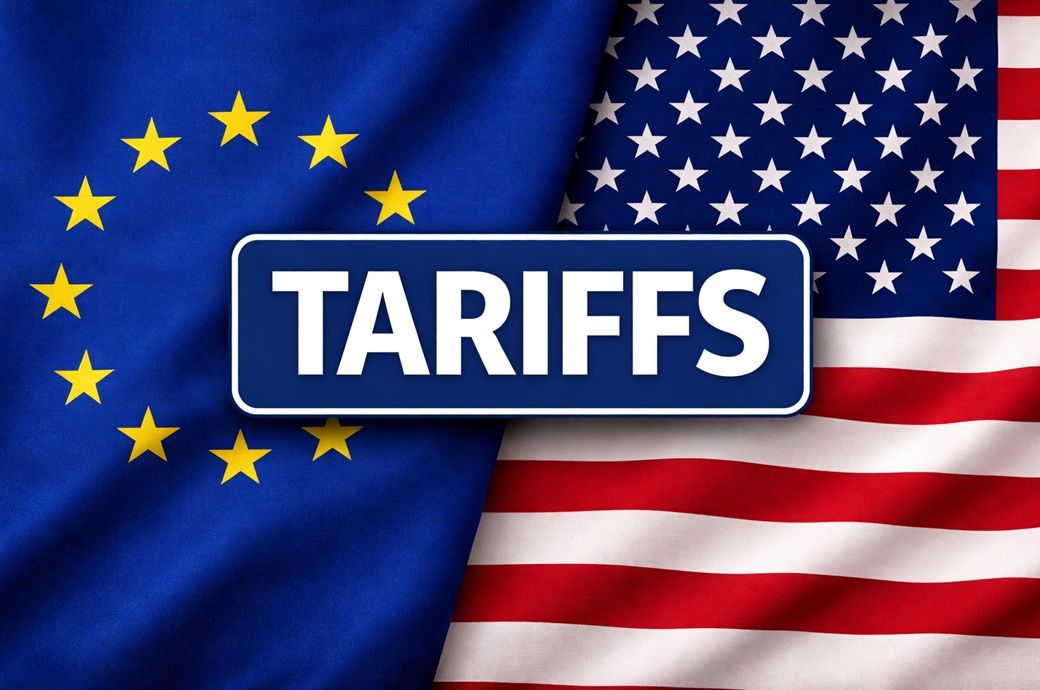
On July 27, 2025, in Turnberry, Scotland, US President Donald Trump and European Commission President Ursula von der Leyen reached a deal on tariff and trade issues, outlined in a joint statement published on August 25.
EU Parliament members have adopted their position on two proposals implementing the tariff aspects of the EU-US Turnberry trade deal.
The texts, if agreed with EU members, will eliminate most tariffs on US industrial goods and offer preferential market access for many US seafood and agricultural goods.
The members strengthened the proposed suspension clause, and introduced ‘sunrise’ and ‘sunset’ clauses.
The texts, if agreed with EU member states, will eliminate most tariffs on US industrial goods and provide preferential market access for a wide range of US seafood and agricultural goods, in line with the commitments made in summer 2025 between the EU and the United States.
The MEPs strengthened the proposed suspension clause, which would allow the tariff preferences with the US to be suspended under a number of conditions.
For instance, the Commission would be able to propose suspending all or some trade preferences if the US were to impose additional tariffs exceeding the agreed 15-per cent ceiling, or any new duties on EU goods, a release from the Parliament said.
The suspension clause could also be activated if the US undermines the objectives of the deal, discriminated against EU economic operators, threatened member states’ territorial integrity, foreign and defence policies, or engaged in economic coercion, it noted.
The MEPs have introduced a ‘sunrise clause’ that means the new tariffs would only become effective if the US respects its commitments. These conditions include the US lowering its tariffs on EU products with a steel and aluminium content below 50 per cent, to a tariff of maximum 15 per cent.
Furthermore, for EU products with a steel and aluminium content of above 50 per cent, unless the US reduces its tariffs to a maximum of 15 per cent, EU tariff preferences for US exports of steel, aluminium and their derivative products would cease to apply six months after the entry into application of the regulation.
The members also agreed on an expiry date for the main regulation on March 31, 2028. This could only be extended via a new legislative proposal, to be submitted following a thorough impact assessment of the effects of the regulation.
The European Commission would be tasked with monitoring the impact of the new rules and would be able to suspend the new tariffs temporarily, should US imports reach a level that could cause serious harm to EU industry.
Fibre2Fashion News Desk (DS)


2026 NFL draft: Latest buzz on Ty Simpson, Jeremiyah Love

Iran’s soccer team honors victims of elementary school airstrike

Tiger Woods arrested at crash scene on suspicion of DUI, sheriff says

-
 Business7 days ago
Flipkart group CFO to leave co amid IPO plans – The Times of India
-

 Fashion7 days ago
China’s textile & apparel exports surge 17% to $50 bn in Jan-Feb 2026
-
 Business1 week ago
Video: The Effects of High Oil Prices
-

 Sports1 week ago
Rating Adidas’ 2026 World Cup away shirts: Argentina, Spain, Mexico and more
-
 Fashion1 week ago
The hidden $1.62 war tax now embedded in every garment you source
-

 Sports1 week ago
American Conference Commissioner Tim Pernetti thanks Trump for Army-Navy game executive order
-
Tech1 week ago
The Corsair 4000D RS PC Case Keeps Your System Cool
-

 Tech1 week ago
‘Uncanny Valley’: Nvidia’s ‘Super Bowl of AI,’ Tesla Disappoints, and Meta’s VR Metaverse ‘Shutdown’