

Business
Gold prices in Pakistan Today – January 28, 2026 | The Express Tribune

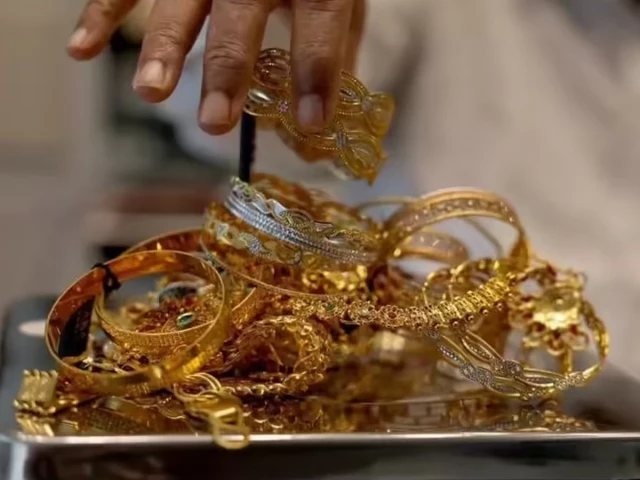
Gold and silver prices in Pakistan surged to historic levels on Wednesday following heightened geopolitical tensions and uncertainty in global markets.
The spike comes amid strained relations between the European Union and the United States, the arrival of a US aircraft carrier in the Middle East, and Iranian military exercises near the Strait of Hormuz.
In the international bullion market, the price of gold per ounce jumped $211 to $5,293. This pushed 24-carat gold per tola in local markets up by Rs21,100 to Rs551,662, setting a one-day record.
The price per 10 grams also rose from Rs18,090 to Rs472,961.
Silver prices followed suit, with international rates rising $2.36 per ounce to $114.27. In local markets, silver per tola climbed from Rs271 to Rs11,911, while per 10 grams it increased by Rs232 rupees to Rs10,211.
Spot gold jumped 1.7% to $5,275.68 an ounce by 0940 GMT after scaling a record $5,311.31. Prices gained more than 3% in the previous session.
US gold futures for February delivery jumped by 3.7% to $5,271.70 an ounce.
Spot silver edged down 0.2% to $112.82 an ounce after hitting a record high of $117.69 on Monday. It has gained nearly 60% so far this year.
Spot platinum was up 0.1% at $2,644.35 an ounce, having hit a record $2,918.80 on Monday, while palladium was also up 0.1% at $1,935.57.
Read: Gold eases despite global rally
Earlier on Tuesday, gold prices in Pakistan eased by Rs1,500 , diverging from a powerful rally in international markets where bullion surged beyond the historic $5,000 per ounce threshold, driven by intensifying economic and geopolitical uncertainty and sustained safe-haven demand.
In the domestic market, the price of gold per tola declined by Rs1,500 to Rs530,562, according to rates issued by the All-Pakistan Gems and Jewellers Sarafa Association (APGJSA). Similarly, the price of 10-gram gold fell by Rs1,286 to Rs454,871.
The modest pullback followed Monday’s sharp rally, when gold surged by Rs10,900 per tola to hit a record Rs532,062, reflecting the strong transmission of the global price breakout into local markets.
Internationally, spot gold rose 1.3% to $5,079.62 per ounce by 1441 GMT, after touching an all-time high of $5,110.50 on Monday and closing at $5,014.29, according to Reuters. The metal has now gained more than 62% since 2025, marking one of the strongest annual rallies in modern market history. Analysts attribute the surge to persistent safe-haven demand amid geopolitical instability, currency volatility, and heightened macroeconomic uncertainty.
Meanwhile, silver in Pakistan rose by Rs212 to Rs11,640 per tola, reflecting broader volatility across precious metal markets as investors reposition portfolios in response to global risk dynamics.



Business
India’s retail inflation jumps to over one-year high at 3.48 per cent in April – The Times of India
India’s retail inflation rose to a more than one-year high of 3.48 per cent in April from 3.40 per cent in March, driven mainly by higher food prices, according to data released by ministry of statistics & programme implementation on Monday. Food inflation, measured by the Consumer Food Price Index (CFPI), also accelerated to 4.20 per cent in April from 3.87 per cent last month, indicating broader price pressures across household essentials. Meanwhile, inflation in rural areas stood at 3.74 per cent, higher than the 3.16 per cent recorded in urban India.Among key items, silver jewellery recorded the sharpest inflation at 144.34 per cent in April, though slightly lower than 148.42 per cent in March. Gold, diamond and platinum jewellery inflation also remained elevated at 40.72 per cent. Among key food items, tomato prices surged 35.28 per cent year-on-year in April, while potato and onion prices remained in deflation at minus 23.69 per cent and minus 17.67 per cent, respectively. The personal care and miscellaneous goods category recorded the sharpest inflation at 17.66 per cent, while transport inflation remained largely flat at minus 0.01 per cent. India’s retail inflation has now risen for the second consecutive month, inching closer to the Reserve Bank of India’s 4 per cent medium-term target. The RBI last month projected CPI inflation for 2026-27 at 4.6 per cent and warned that elevated global energy prices due to the Middle East conflict, along with possible El Niño conditions affecting the monsoon, could pose upside risks to inflation.
Business
From buying less gold to cashing in old reserves: How bullion industry plans to cut India’s import bill – The Times of India
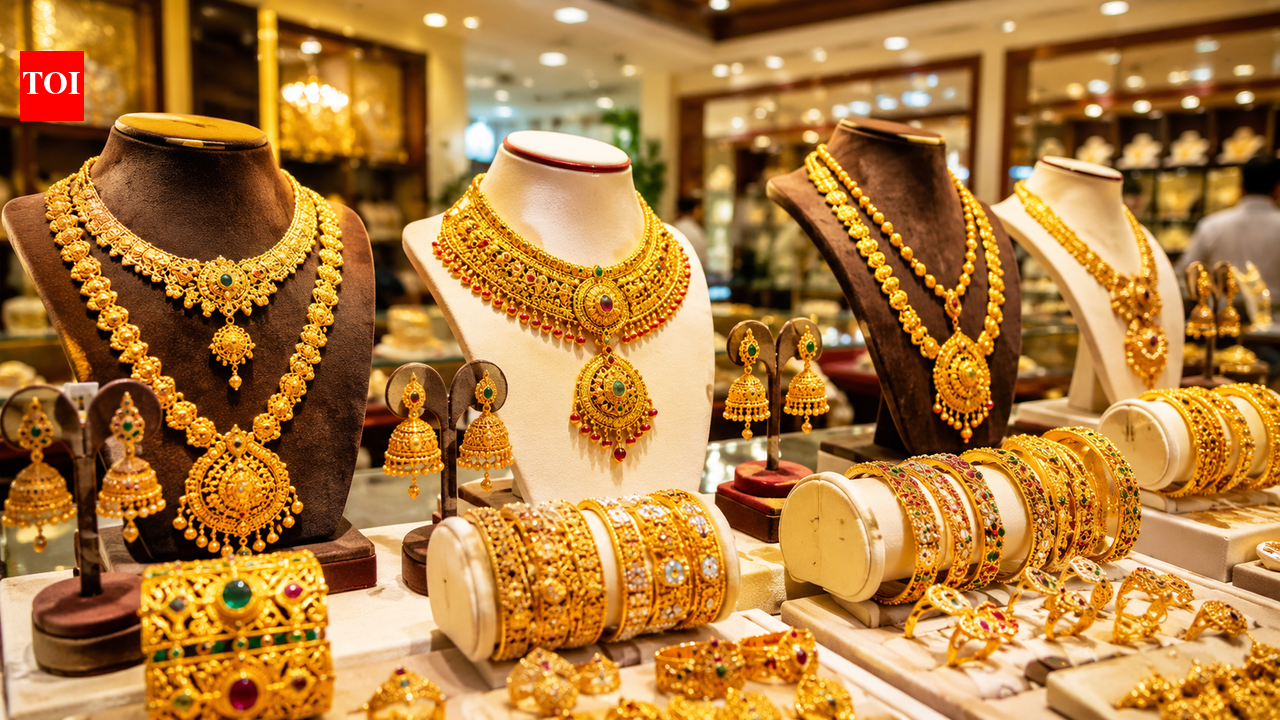
As rupee continues to breach multiple record lows, pressure on India’s balance of payments is growing. To protect foreign exchange reserves and help stabilise trade balance, Prime Minister Narendra Modi has urged people to cut down on gold purchases.But if not buying new gold, could household gold be turned into working capital instead?PM Modi’s call has brought fresh attention to an old issue, with major bullion and jewellery bodies once again suggesting steps to the government and the Reserve Bank of India (RBI) to reduce gold imports, use more household gold, and better manage how imported gold is used.Their proposals include limiting imported gold mainly for jewellery exports, bringing jewellers into gold monetisation schemes, making gold metal loans (GML) work more like bank cash credit, and reducing tax on interest earned from gold deposits, ET reported.Meanwhile, India’s gold imports jumped 24% to a record $71.9 billion in 2025-26, with more than 721 tonnes imported during the financial year.What are the proposals:Under the system proposed by the Precious Metals Refineries Forum (PMRF), imported gold would be channelled as one-year gold metal loans (GML) for jewellery exporters, while gold collected from household deposits, once refined locally, would be used to meet domestic demand through jewellers and retailers.The model suggests that depositors could earn 2-2.5%, with GML interest rates set at around 3-4%.Industry players cited by ET have pointed out that some tax changes will be needed to make this work, especially when physical gold is converted into electronic gold receipts (EGR).“The 3% notional loss of GST amount on conversion puts off customers. The government can always recover the tax when EGR is converted back into physical gold for selling. Concessions on capital gains when deposit is encashed on maturity along with income tax relief on accrued interest could be considered,” James Jose, president of PMRF told the financial daily.Why past gold schemes failed Many in the industry believe earlier gold monetisation schemes did not succeed because jewellers were not properly included and because gold deposits and loans did not work together like a banking system. Without that, institutions accepting gold deposits face major risks from price swings and currency changes.This is why trade bodies are calling for a more complete system with bank support, secure vaults in multiple locations, renewable GMLs like working capital, and proper collateral safeguards.Indian households are estimated to hold over 30,000 tonnes of gold, but despite repeated discussions during times of trade deficit and capital outflows, there is still no strong institutional system to bring this gold into the formal economy.Commenting on why earlier schemes did not work, Rajesh Rokde, chairman of All India Gem and Jewellery Domestic Council (GJC) said, “I feel the schemes did not take off because jewellers were not part of them. About 10-20% of the gold with families would be in bullion form. Most don’t sell, expecting prices to rise. If some gold can be tapped, if necessary purified and converted into digital gold in a system where jewellers are involved, imports would dip significantly,” According to one representation, collection and purity testing centres (Cptcs) and related agencies have said that collected gold can be processed within 48 hours before being moved by logistics firms to secure bank-approved vaults.Sources said members of the Indian Bullion and Jewellers Association (IBJA) held discussions with central bank officials last week on exports and monetisation, though the IBJA spokesman declined to share details.
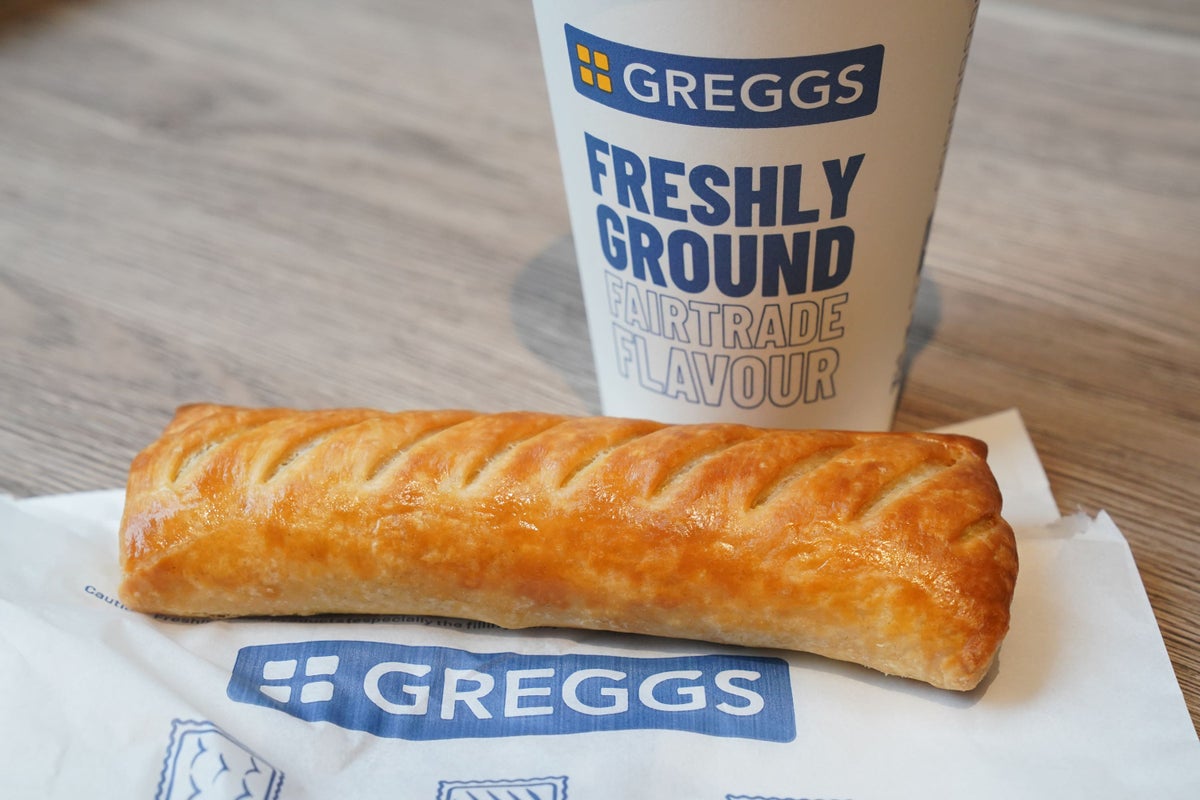
Greggs has revealed its meal deals have gone up in price again as the bakery chain reeled in health-conscious and younger customers with new menu picks.
The company, which runs 2,759 shops, also cautioned that prices could go up further if the war in the Middle East continues to result in higher costs for businesses.
Roisin Currie, the chief executive of Greggs, told the Press Association that Greggs’s two-part breakfast deal, incorporating a roll and a drink, had risen from £3.15 to £3.25.
The breakfast deal had already gone up from £2.95 in October.
Furthermore, its core lunch deal has increased to £4.25, and its “big deal”, which incorporates a main, side and a drink, had risen to £5.25.
The “big deal” cost £5 when it was introduced in September last year.
Ms Currie said the price changes had already taken effect and there were no current plans for more.
It comes as the retailer is expecting its costs to rise by around 3% over 2026, but said it had taken steps to mitigate the impact such as securing fixed-price energy and fuel deals and purchase agreements for food and packaging.
However, Greggs warned that a “prolonged” conflict in the Middle East means it, along with other food retailers, “will likely see higher overall cost inflation through the end of 2026 and into 2027”.
Ms Currie told PA: “So we don’t see it in the coming months but we do see towards the end of the year and into next year, as the conflict goes on, then there will be an inflationary increase on our costs.
“Where significant inflation comes through to any businesses then that does get passed through at some point to the customer.
“We work really hard to protect our customers and make sure that we offer great value.”
Ms Currie added that customers continue to be “worried” about the uncertain geopolitical environment and “very focused on trying to make sure their budgets can go as far as possible”, which she said was benefiting Greggs as a lower-cost food chain.
It comes as Greggs revealed its sales had increased in recent months in an improvement to its performance after a slowdown in sales growth at the beginning of the year.
Sales in company-managed shops, rather than franchises, increased by 2.5% in the first 19 weeks of 2026, compared like for like with the same period last year.
This increased to 3.3% in the most recent 10 weeks, compared with the year before.
Greggs said new menu items like its chicken roll – an alternative to the staple sausage roll – and its range of matcha drinks were proving popular, while appealing to new and younger customers.
It has also been adding healthier items to its menu to cater to growing demand for nutritious and protein-rich foods including a range of salads, with a new chicken Caesar salad launching last week.
Ms Currie said the company was focused on “following the trends that the consumer is looking for”.
Greggs has been expanding its chain of shops having opened 41 during 2026, while closing 21, amid a target to open 120 on net over the year.
It also announced on Tuesday that its only international outlet will be opening at Tenerife South airport later this month as bosses hope to cash in on the millions of people passing through the travel hub each year.


US T&A exports decline 10% to $5 bn on softer regional demand
India’s retail inflation jumps to over one-year high at 3.48 per cent in April – The Times of India

India’s Arvind Fashions reports strong FY26 growth across channels

-

 Politics1 week ago
Iran weighs US reply delivered via Pakistan as Trump signals opposition to deal terms
-

 Tech1 week ago
DHS Demanded Google Surrender Data on Canadian’s Activity, Location Over Anti-ICE Posts
-
 Business1 week ago
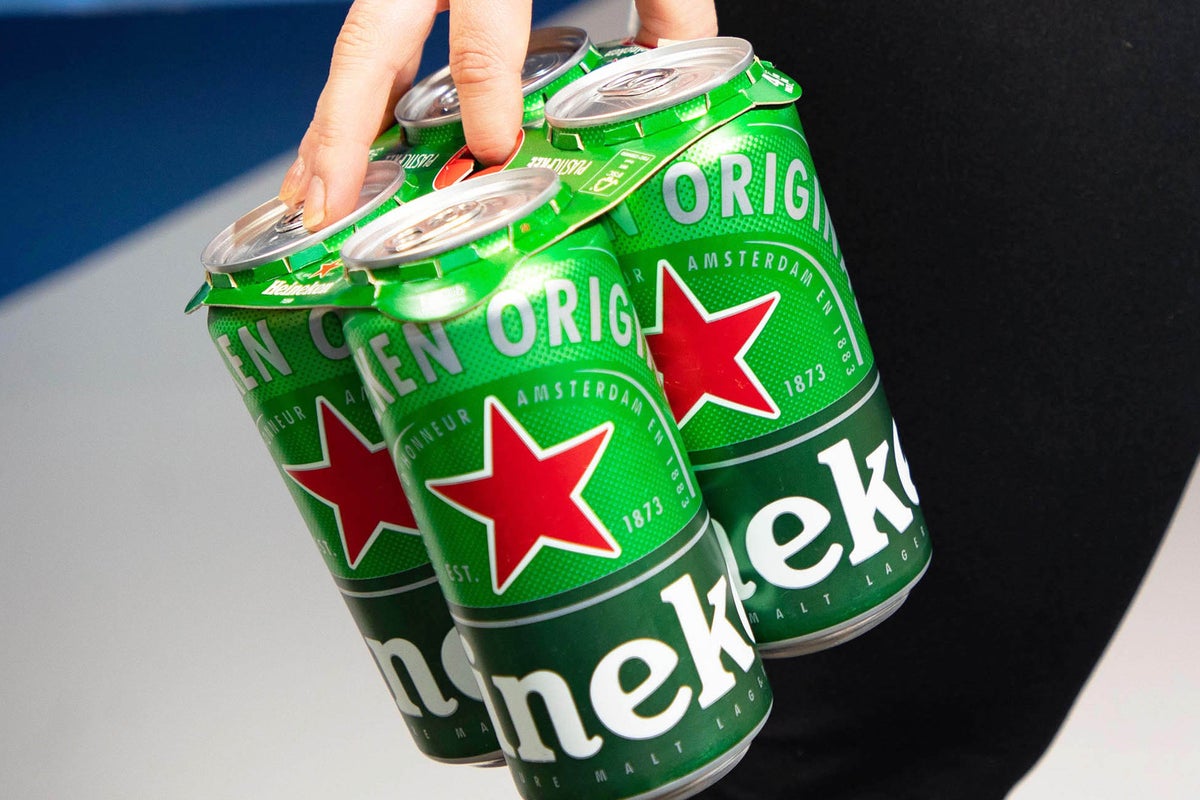
Heineken to invest £44.5m in hundreds of pubs creating 850 jobs
-

 Entertainment1 week ago
Jelly Roll reacts to daughter Bailee Ann’s major life milestone
-
 Business1 week ago
Heineken plans huge investment in hundreds of UK pubs ahead of World Cup
-

 Entertainment1 week ago
Passage: In memoriam
-

 Tech4 days ago
A new frontier: Identity stack evolves for agentic systems | Computer Weekly
-

 Tech4 days ago
‘Orbs,’ ‘Saucers,’ and ‘Flashes’ on the Moon: Pentagon Drops New UFO Files