

Business
Gold & silver price prediction today: MCX Gold to remain bullish? Here’s the outlook – The Times of India


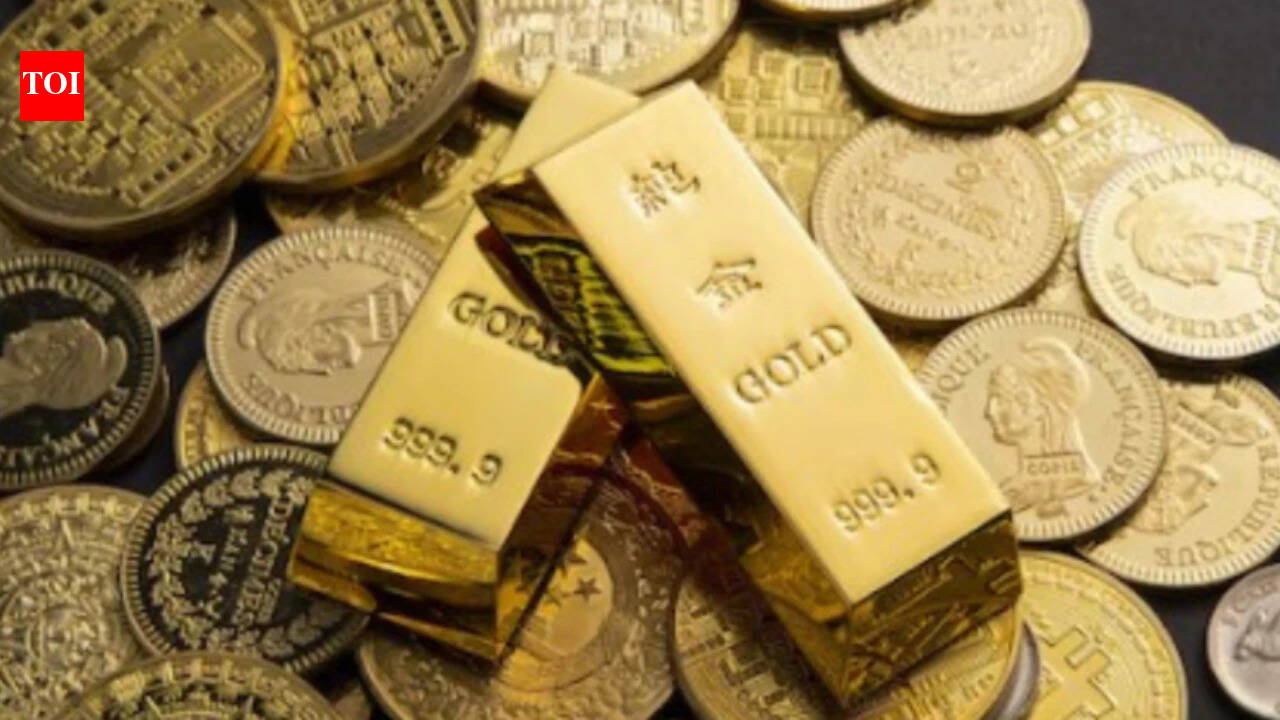
Gold and silver price prediction today: Gold prices and silver prices continue to exhibit a bullish trend, says Abhilash Koikkara, Head – Forex & Commodities, Nuvama Professional Clients Group. He shares his views on gold and silver:
MCX GOLD Price Outlook
MCX Gold continues to remain on a bullish trajectory, despite witnessing some correction ahead of the recent Federal Reserve meeting. The pullback was more of a profit-booking phase rather than a trend reversal, as the broader sentiment for gold still favors the upside. Currently, gold prices have approached a very crucial support zone around ₹1,09,000 levels, which is likely to act as a strong floor for the metal. As long as prices sustain above this level, the overall structure remains positive, keeping buyers in control.The resilience of gold at this support indicates that market participants are still positioning themselves for higher levels. Key drivers such as global uncertainty, demand for safe-haven assets, and expectations of interest rate policies continue to lend strength to the metal. Technically, holding above the support opens the possibility of a move towards ₹1,11,000 levels in the near term. A decisive breakout above this level may further extend the bullish momentum.On the downside, a breach below ₹1,09,000 could invite fresh selling pressure, but until that occurs, the outlook stays constructive. Traders and investors are advised to remain cautiously optimistic, with a focus on buying at dips near the support zone.
MCX Gold Trading Strategy
- CMP 109800
- Target 111000
- Stoploss 109000
MCX Silver Price Outlook
MCX Silver witnessed a healthy correction from ₹1,30,000 to ₹1,26,000 levels ahead of the recent Federal Reserve meeting, as traders preferred to book profits and stay cautious before the policy outcome. However, this decline appears more like a short-term retracement rather than a reversal in trend. The broader structure of silver continues to remain positive, supported by robust industrial demand, safe-haven buying, and global cues that favor precious metals in the medium term.Currently, silver is finding strong support near ₹1,25,000 levels, which is expected to act as a cushion against further downside. As long as prices sustain above this zone, the bias remains firmly upward. On the higher side, silver has the potential to rebound towards ₹1,29,000 levels, a zone that may act as immediate resistance. A sustained move above ₹1,29,000 could even pave the way for retesting the ₹1,30,000 levels once again.From a technical perspective, dips towards support are being viewed as fresh buying opportunities by traders, indicating continued bullish sentiment. On the flip side, a break below ₹1,25,000 may invite additional weakness. Until then, the outlook remains constructive, and investors may consider a buy-on-dips strategy.
MCX Silver Trading Strategy
- CMP: 126840
- Target:129000
- Stoploss: 125000
(Disclaimer: Recommendations and views on the stock market and other asset classes given by experts are their own. These opinions do not represent the views of The Times of India)






Molecules that can capture heat could be a useful technology to decarbonise heating.
Source link

The city is responsible for 80% of the world’s natural history TV shows.
Source link

NEW DELHI: The West Asia conflict is pushing govt to look at a faster transition towards renewable energy, including the possibility of increasing ethanol blending in petrol from 20-25%, although in a calibrated manner. This will come along with increased refining capacity within the country, so that there is a buffer in the system and greater domestic resilience, those familiar with the discussions said, pointing out that sustaining refineries at 100% capacity is not sustainable.While Barmer refinery has begun operations, expansion at Numaligarh is underway and work on integrated refineries on the west coast is also under focus. Apart from a mega refinery in Maharashtra, a new facility in Gujarat is also planned.Officials said rising use of renewables, biofuels and hydrogen in the energy mix was no longer just an environmental issue, but a strategic necessity in a situation like the present one, where the military conflict in West Asia has disrupted global energy supplies, triggering a supply crisis and a surge in oil and gas prices.According to officials, 20% ethanol blending has helped India save 4.5 crore barrels of crude annually and reduce foreign exchange outflow by around ₹1.5 lakh crore so far. Given the concerns over fuel efficiency and impact on vehicles, govt is expected to take a gradual approach that addresses the anxiety on ethanol blending. The third pillar on energy is expanding the strategic petroleum reserves.


CDF Munir to address Marka-e-Haq victory ceremony at GHQ tomorrow

Putin says army fighting ‘aggressive’ Nato-backed force in Victory Parade address

I Tried the Best Captioning Smart Glasses, and Only One Leads the Pack

-

 Politics6 days ago
Iran weighs US reply delivered via Pakistan as Trump signals opposition to deal terms
-

 Tech1 week ago
This Indigenous Language Survived Russian Occupation. Can It Survive YouTube?
-

 Fashion1 week ago
Canada’s Lululemon appoints Esi Eggleston Bracey to board of directors
-

 Fashion1 week ago
US’ J.Jill, Inc. appoints Kimberly Wallengren as CMO
-
 Business1 week ago
Government hikes jet fuel prices by 5% for international airlines – The Times of India
-

 Fashion1 week ago
US’ Gap partners with Victoria Beckham on timeless wardrobe essentials
-
 Business1 week ago
Apollo Sports Capital and Tom Dundon make landmark $225 million investment in pickleball
-

 Fashion1 week ago
AAFA pushes for swift US House passage of key anti-counterfeiting law