

Tech
Google is training its AI tools on YouTube videos: These creators aren’t happy

Santa Ana, California-based entrepreneur Charlie Chang spent years posting finance videos on YouTube before he made a profit.
Today, Chang’s media business oversees more than 50 YouTube channels, along with other digital sites, and generates $3 million to $4 million in annual revenue, he said.
But lately, he’s been faced with a new concern: that YouTube’s moves in artificial intelligence will eat into his business.
“The fear is there, and I’m still building the channels, but I am preparing, just in case my channels become irrelevant,” Chang, 33, said. “I don’t know if I’m gonna be building YouTube channels forever.”
YouTube’s parent company, Google, is using a subset of the platform’s videos to train AI applications, including its text-to-video tool Veo. That includes videos made by users who have built their livelihoods on the service, helping turn it into the biggest streaming entertainment provider in the U.S.
The move has sparked deep tensions between the world’s biggest online video company and some of the creators who helped make it a behemoth. Google, creators say, is using their data to train something that could become their biggest competitor.
The schism comes at a pivotal time for Google, which is in a race with rivals including Meta, OpenAI and Runway for dominance in the market for AI-driven video programs. Google has an advantage due to YouTube’s huge video library, with more than 20 billion videos uploaded to its platform as of April.
Many creators worry such tools could make it easier for other people to replicate the style of their videos, by typing in text prompts that could produce images or concepts similar to what popular creators produce. What if AI-generated videos became more popular than their material? Creators say they can’t opt out of AI training and that Google does not compensate them for using videos for such purposes.
“It makes me sad, because I was a big part of this whole creator economy, and now, it’s literally being dismantled by the company that built it,” said Kathleen Grace, a former YouTube employee who is now chief strategy officer at Vermillio, a Chicago-based company that tracks people’s digital likenesses and intellectual property.
“I think they should be with pitchforks outside San Bruno.”
YouTube, founded in 2005, was built on creators posting content. At first, the user-generated videos were amateurish. But eventually, creators got more sophisticated and professional, doing more elaborate stunts and hiring staff to support their productions.
Key to YouTube’s early success was its investment in its video creators. The San Bruno, California-based company shares ad revenue with its creators, which can be huge. That business model has kept creators loyal to YouTube. As they grew their audiences, that in turn increased advertising revenue for both YouTube and creators.
Video creators are typically not employees of YouTube or Google. Many are independents who have built businesses by posting content, making money through ads, brand deals and merchandise.
The creator economy is a bright spot amid struggles in the entertainment industry. Last year, there were more than 490,000 jobs supported by YouTube’s creative ecosystem in the U.S., according to YouTube, citing data from Oxford Economics. YouTube has a greater share of U.S. TV viewership than Netflix and the combined channels of Walt Disney Co., according to Nielsen.
YouTube said it has paid more than $70 billion to creators, artists and media companies from 2021 to 2023.
The company has encouraged creators and filmmakers to use Google’s AI tools to help with brainstorming and creating videos, which could make them faster and more efficient. Some creators said they use AI to help hash out concepts, cut down on production costs and showcase bold ideas.
YouTube is also developing tools that will help identify and manage AI-generated content featuring creators’ likeness. Additionally, it made changes to its privacy policy for people to request removal of AI-generated content that simulates them on the platform, said company spokesman Jack Malon.
“YouTube only succeeds when creators do,” Malon said in a statement. “That partnership, which has delivered billions to the creator economy, is driven by continuous innovation—from the systems that power our recommendations to new AI tools. We’ve always used YouTube data to make these systems better, and we remain committed to building technology that expands opportunity, while leading the industry with safeguards against the misuse of AI.”
But already, creators say they are facing challenges from other people who are using AI to re-create their channels, cutting into their revenue and brand recognition.
“They’re training on things that we, the creators, are creating, but we’re not getting anything in return for the help that we are providing,” said Cory Williams, 44-year-old Oklahoma-based creator of Silly Crocodile, a popular animated character on YouTube.
In other cases, people are using AI to make deepfake versions of creators and falsely posing as them to message fans, said Vermillio’s Grace.
When people upload videos to YouTube, they agree to the company’s terms of service, which grants a royalty-free license to YouTube’s business and its affiliates.
But many creators said they were not aware YouTube videos were used to train Veo until they read about it in media reports. Melissa Hunter, chief executive of Family Video Network, a consulting firm for family-focused creators, said tools like Veo didn’t exist when she signed YouTube’s terms of service years ago.
Back in 2012, Hunter’s son (then 8 years old) wanted to start a YouTube channel together. Her son, now 22, is against AI for environmental reasons, so Hunter made those videos private. But Hunter said Google can still see those videos, and she’s concerned they were used to train Veo without her permission.
“It’s frustrating, and I don’t like it, but I also feel totally helpless to do anything,” Hunter said.
While there are other social media platforms such as TikTok and Instagram that also support content creators, YouTubers say they have already built large audiences on Google’s platform and are reluctant to leave.
“Creators are in a tough spot where this is the best platform to make money … to build real loyal fans,” said Jake Tran, 27, who makes documentary YouTube videos on money, power, war and crime. “So are you going to give up just because Google is using it to train their AI?”
Last year, Tran’s YouTube business made around $1 million in revenue. Tran is also founder of the Scottsdale, Arizona-based skin-care business, Evil Goods, and together, his businesses employ 40 to 45 part-time and full-time workers.
Other AI companies, including Meta and OpenAI, have come under fire by copyright holders who have accused them of training AI models on their intellectual property. Disney and Universal Pictures sued AI business Midjourney in June for copyright infringement.
Tech industry executives have said that they should be able to train AI models with content available online under the “fair use” doctrine, which allows for the limited reproduction of material without permission from the copyright holder.
Some legal experts think creators might have a case if they decided to take their issue to court.
“There’s room to argue that simply by agreeing to the terms of service, they have not granted a license to YouTube or Google for AI training purposes, so that might be something that could be argued in the lawsuit,” said Mark Lezama, a partner at law firm Knobbe Martens. “There’s room to argue on both sides.”
Eugene Lee, CEO of ChannelMeter, a data and payments company for the creator economy, said he believes the only way creators can win is by using AI, not by fighting against it.
“Creators should absolutely embrace it and embrace it early, and embrace it as part of their production process, script generators, thumbnail generators—all these things that will require human labor to do in a massive amount of time and resources and capital,” Lee said.
Nate O’Brien, a Philadelphia creator who oversees YouTube channels about finance, estimates that his revenue will be flat or decline slightly, in part because it’ll be more challenging to get noticed on YouTube.
“It’s just a numbers game there,” O’Brien said. “But I think generally a person making a video would still perform better or rank better than an AI video right now. In a few more years, it might change.”
To prepare for the growth of AI content, O’Brien has been experimenting with using AI for videos on one of his channels, asking his assistant to take a script based on an existing video he made on a different channel and using AI to voice it. While the views have not outpaced the human-created videos, the AI-generated videos are lower in production cost. One garnered 5,000 views, 27-year-old O’Brien said.
Some creators have opted to share their video libraries with outside AI companies in exchange for compensation. For example, Salt Lake City YouTube creator Aaron de Azevedo, who oversees 20 YouTube channels, said he shared 30 terabytes of video footage in a deal with an AI company for roughly $9,000.
“There’s a good chunk of change,” De Azevedo, 40, said. “It was good, paid for most of my wedding.”
2025 Los Angeles Times. Distributed by Tribune Content Agency, LLC.
Citation:
Google is training its AI tools on YouTube videos: These creators aren’t happy (2025, August 29)
retrieved 29 August 2025
from https://techxplore.com/news/2025-08-google-ai-tools-youtube-videos.html
This document is subject to copyright. Apart from any fair dealing for the purpose of private study or research, no
part may be reproduced without the written permission. The content is provided for information purposes only.













Though most people associate the beginning of March with the hopefulness of spring and the indignities of daylight saving time, there’s another important event taking place yards all over the country: hummingbird season.
While many species of hummingbirds can be seen in regions year-round, others are migratory, and this time typically marks their return from wintering grounds in Central and South America. These tiny birds can lose up to 40 percent of their body weight by the time they arrive here after having flown thousands of miles, and since many flowers haven’t bloomed yet, nectar feeders can be a source of essential fuel.
Though I test smart bird feeders year-round, I don’t use hummingbird feeders as often as I should, as it’s imperative that they be cleaned and refilled with new nectar every two or three days (a ratio of 1:4 granulated sugar to water is best, and avoid any dyes or additives) to prevent deadly bacteria and mold, and I don’t always have the time.
But if you are going to invest the energy in maintaining a hummingbird feeder, right now is the best time, as you have a chance to see migratory species you might not otherwise encounter, such as black-chinned hummingbirds. A smart feeder helps you ID them, whether they’re stopping at your feeder on their way north or arriving at their final destination.
Birdbuddy’s Pro is the smart hummingbird feeder I recommend and use myself when I’m not actively testing. The app is easy to navigate and sends cleaning reminders, the built-in solar roof keeps the battery charged, and, unlike other feeders, only the shallow bottom screws off for refilling. No having to pour sticky nectar through a narrow opening, or turn a giant cylinder upside down and risk spilling.
Note that it’s not perfect; the sensor is inconsistent and doesn’t capture every hummingbird that visits, but for the camera quality (5 MP photos, 2K video with slow-motion, 122-degree field of view) and ease of use, it’s a foible I’m willing to put up with. If you already have another Birdbuddy feeder, the hummingbird feeder images and videos will integrate seamlessly into your app feed.

Birdbuddy
Pro Smart Solar Hummingbird Feeder
Right now, the feeder is 37 percent off on Birdbuddy’s website—a deal I usually don’t see outside of shopping events like Black Friday or Amazon Prime Day. Note that the feeder only runs on 2.4 GHz Wi-Fi, and while it is fully functional without a subscription, a Birdbuddy Premium subscription will let you add friends and family members to your account so they can see the birds as well. That’s $99 a year through the app.
Power up with unlimited access to WIRED. Get best-in-class reporting and exclusive subscriber content that’s too important to ignore. Subscribe Today.
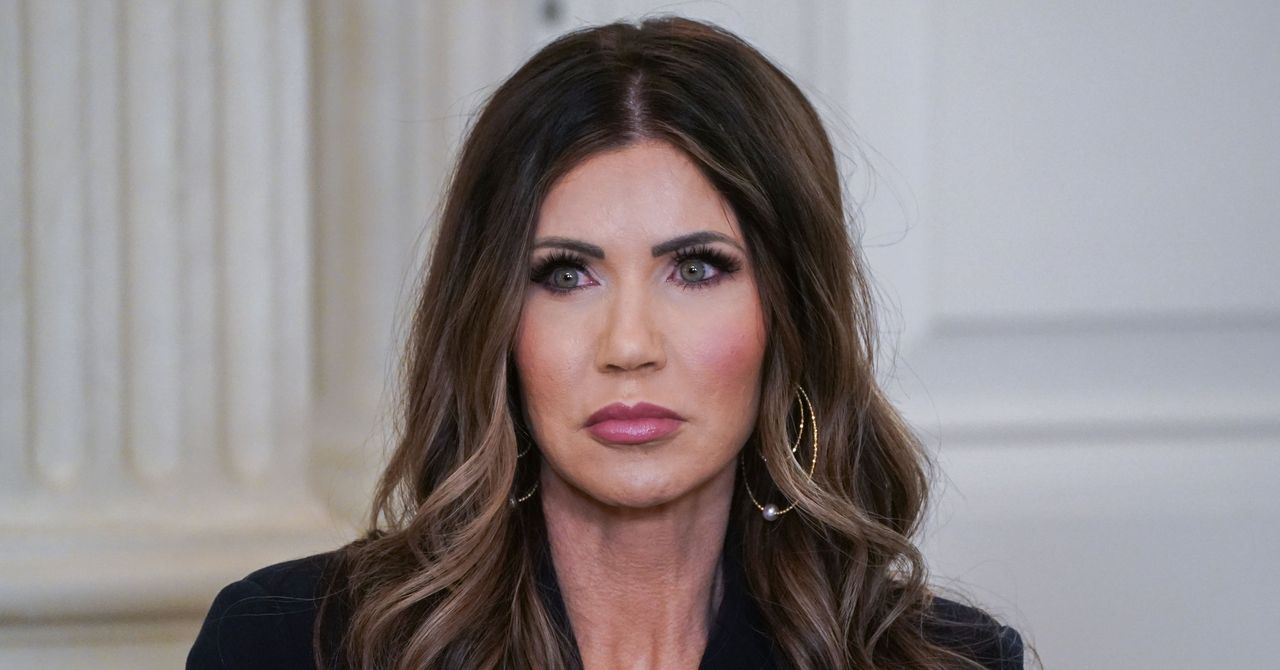
After a tenure marked by controversy and a contentious week of Congressional hearings, secretary Kristi Noem is out as head of the Department of Homeland Security.
President Donald Trump announced in a Truth Social post on Thursday that Noem would be replaced by senator Markwayne Mullin of Oklahoma, a staunch Trump ally and immigration hardliner. “The current Secretary, Kristi Noem, who has served us well, and has had numerous and spectacular results (especially on the Border!), will be moving to be Special Envoy for The Shield of the Americas, our new Security Initiative in the Western Hemisphere we are announcing on Saturday in Doral, Florida,” Trump wrote. “I thank Kristi for her service at ‘Homeland.’”
DHS did not immediately respond to a request for comment.
The agencies under DHS include Immigration and Customs Enforcement, US Customs and Border Protection, the Cybersecurity and Infrastructure Security Agency, the Federal Emergency Management Agency, US Citizenship and Immigration Services, the US Coast Guard, and others. It’s a sprawling network whose vast responsibilities and rapidly expanding budget have put it at the center of the Trump administration’s radical overhaul of immigration and border policy.
Speculation has swirled around Noem’s departure for months. Critics have assailed DHS’s aggressive immigration enforcement tactics, while Noem and figures like White House border czar Tom Homan have reportedly been at odds over how to execute the administration’s mass deportation agenda, with Noem and senior adviser Corey Lewandowski said to have emphasized sheer numbers of arrests and deportations above other considerations.
The relationship between Noem and Lewandowski has itself been a subject of controversy, with CNN reporting that a September meeting between the two and president Donald Trump grew “contentious.” Last month, the Wall Street Journal reported that Lewandowski attempted to fire a pilot during a flight for failing to bring Noem’s blanket from one plane to another during a transfer.
The ousted secretary faced mounting scrutiny over the deaths of US citizens during federal operations in Minneapolis, including the killings of Renee Good and Alex Pretti by federal agents under Noem’s employ. In both cases, Noem publicly labeled the deceased “domestic terrorists,” framing echoed by Trump and other key administration officials. Video evidence, witness testimony, and an independent autopsy contradicted the agency’s claims, including early assertions that Pretti brandished a firearm.
Scrutiny of Noem’s tenure extends beyond the fatal shootings in Minneapolis to a broader pattern of aggressive enforcement tactics, warrantless raids, and mass detention camps. A secretive policy directive issued in May 2025, first reported by the Associated Press, authorized ICE agents to forcibly enter private residences without a judicial warrant. The memo, signed by acting ICE director Todd Lyons, instructed agents to rely solely on an administrative removal document to bypass Fourth Amendment requirements. The policy led to multiple documented instances of federal agents entering the wrong homes, including a January raid in Minnesota where agents removed a US citizen at gunpoint with no legitimate reason.
A record 53 people died in ICE or CBP custody last year, according to House Democrats on the Committee on Homeland Security. Concurrently, Noem has initiated a $38 billion procurement effort to buy and refurbish up to 24 warehouses across the country, aimed at converting them into mass detention camps for people awaiting deportation.
Noem’s tenure has led to controversy at other DHS agencies as well. Her insistence on approving any contracts or grants over $100,000 at the department have caused particular strain at FEMA, which has experienced a massive backlog of funding that has slowed normal processes at the agency. A report issued from Senate Democrats Wednesday found that Noem’s vetting process at FEMA has caused more than 1,000 contracts, grants, and awards to be held up. Multiple FEMA employees have told WIRED that this process has made the agency less ready to respond to disasters and threats.

HOKA’s max-stacked Rocket X Trail combines road race shoe energy with boosted grip from a 3-mm lugged outsole. If you’re looking for a fast shoe to go on the attack, this is it. It’s also fantastic for all round comfort. In testing, I laced up the Rocket X Trail and ran 3 hours (just short of 19 miles) fresh out of the box, across roads, forest gravel trails, some grass and through some serious water. It delivered efficiency and energy whether I was moving at marathon pace or with heavier, tired, ragged footfalls in the latter miles.
The rockered, supercritical midsole uses HOKA’s liveliest foam, similar to those you find in its race-ready road shoes, along with a carbon plate. That combines for a really fun ride that’s smooth, springy and fast and really consistent. It’s also highly cushioned, so you will sacrifice a lot of ground feel for that big stack springy softness. It’s also less stable over very lumpy terrain. But on open, flat, runnable mixed terrain, it’s excellent.
The lightweight uppers have a race-shoe-ready feel and after running through ankle-deep flooded sections, they shed water really quickly. This is a pricey road-to-trail shoe, it’s versatile and there’s plenty of winter road potential, too.
| Specs | |
|---|---|
| Weight | 9.45 oz |
| Heel-to-toe drop | 6 mm |
| Lug depth | 3 mm |


Don’t Risk Birdwatching FOMO—Put Out Your Hummingbird Feeders Now

Savannah Guthrie visits “Today” studio, says she intends to return to show

Princess Anne marks milestone moment at UCL with historic Cloisters reopening

What are Iran’s ballistic missile capabilities?

India Us Trade Deal: Fresh look at India-US trade deal? May be ‘rebalanced’ if circumstances change, says Piyush Goyal – The Times of India

Attock Cement’s acquisition approved | The Express Tribune

-
 Politics1 week ago
What are Iran’s ballistic missile capabilities?
-
Business7 days ago
India Us Trade Deal: Fresh look at India-US trade deal? May be ‘rebalanced’ if circumstances change, says Piyush Goyal – The Times of India
-
Business1 week ago
Attock Cement’s acquisition approved | The Express Tribune
-

 Politics1 week ago
US arrests ex-Air Force pilot for ‘training’ Chinese military
-

 Fashion1 week ago
Policy easing drives Argentina’s garment import surge in 2025
-
 Business1 week ago
Households set for lower energy bills amid price cap shake-up
-

 Fashion7 days ago
Texwin Spinning showcasing premium cotton yarn range at VIATT 2026
-

 Sports1 week ago
Sri Lanka’s Shanaka says constant criticism has affected players’ mental health